

Zombie Rush: Idle Survival
- Reviews
- 4.3
- Version
- 0.0.17
- Installs
- 50,000+

Screenshots
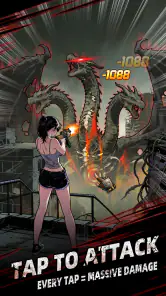


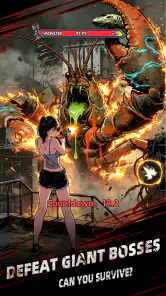
 Analysis by Frivlyz
Zombie Rush: Idle Survival is the kind of arcade game I reach for when I want a quick burst of action without committing to a long story campaign or a complicated control scheme. Its central idea is easy to understand: tap through zombie encounters, keep pushing forward, and build enough momentum to survive the next wave. The simplicity is useful, but it also means the game depends heavily on how well its progression keeps each short session interesting.
I spent time with it as a lightweight mobile game rather than treating it like a full-scale action RPG. That distinction matters. This is not a game I would choose for deep exploration, a large narrative, or precise console-style combat. I see it more as a compact survival loop for spare moments: a commute, a short break, or the few minutes before going to bed. When approached with those expectations, its straightforward design makes sense.
The game is free to download, with optional purchases ranging from $0.99 to $99.99 per item. It is rated Teen, runs on Android versions starting with 7.0, and comes from DREAMWEAVE GAMES LIMITED. The current release is version 0.0.17, so I would also view it as a young product whose direction may still become clearer over time. That version number is important context: what works today should be judged as the present experience, not as a promise of a finished, content-heavy game.
How the current version feels to play
I would start this section by judging the game on the feel of a single short session, not on how much progress it promises over time. That makes it easier to notice whether tapping stays engaging or slips into routine, and whether the idle layer gives me a useful reason to return. The next section looks at what its current release suggests about the experience today.
A tap-first arcade loop
The appeal is immediate accessibility. You do not need to learn a long list of commands before the action begins. Tapping gives the game a direct, physical rhythm, and that rhythm suits short sessions particularly well. I found it easy to start playing without preparing a build, studying a map, or remembering a complicated objective from a previous session.
That simplicity also creates the main design challenge. In a deeper action game, variety can come from movement, aiming, positioning, enemy behavior, equipment, and level design. In a tap-focused zombie game, the developers have fewer tools available to keep the player engaged. The satisfaction therefore depends on whether each encounter changes the decision you are making, rather than merely asking for more taps at a faster pace.
For me, the best way to approach the game is in small bursts. I would not sit down expecting an uninterrupted evening of play. Instead, I would use it as a quick arcade distraction, checking in when I want something more active than a puzzle but less demanding than a competitive multiplayer match.
Gaming Stories You May Enjoy

Dancing Road Turns Short Breaks Into a Test of Rhythm and Timing

Super Stylist Makes Every Outfit a Test of Taste and Patience

Dominoes on Your Terms: Who Should Play and Who Should Pass

Pokémon GO Makes the Familiar World Feel New

Chess.com Turns Rematches Into Rivalries, but Community Has Its Costs

Archery Battle 3D Review: Sharp Aiming, Unclear Feedback
Why the idle element changes the experience
The “idle survival” positioning suggests a game designed around progress that can continue beyond constant manual input. That can be convenient, especially for players who enjoy watching a run develop and returning to collect the results. It also creates a trade-off: the more progress happens automatically, the less every individual tap may feel like a meaningful action.
I recommend paying attention to which moments actually require your involvement. If a session is most enjoyable when you are choosing when to push forward, improve your survival chances, or spend earned resources, then the idle layer supports the arcade action. If the game starts to feel like a sequence of routine claims and upgrades, it may become background entertainment rather than something you actively play.
This is one of the useful ways to judge whether it suits you. Players who like incremental progress and frequent check-ins may appreciate the format. Players who want every second to demand precise movement or tactical execution may find the automatic side less satisfying than a traditional zombie shooter or action roguelike.
Its place among other arcade games
Compared with a conventional endless runner, this game puts more emphasis on surviving a zombie threat than on memorizing lanes and avoiding obstacles. Compared with a twin-stick shooter, it is less about aiming and movement precision. Compared with a large idle RPG, it appears more immediate and arcade-oriented rather than built around a wide roster of characters and elaborate menus.
That middle position is useful. It can work for someone who wants the theme and urgency of a zombie game but does not want the control demands of a full shooter. The downside is that fans of those alternatives may miss what makes their preferred genres compelling. A runner offers constant movement, a shooter offers hands-on accuracy, and a larger idle game often offers extensive collection systems. This title has to earn attention through the pace of its own tap-and-survive loop.
What the current release tells me about its direction
Because the game is at version 0.0.17, I would treat its present shape as a snapshot rather than assume its systems are settled. That perspective helps separate what I can enjoy now from what I might hope to see later. I also think it is a good reason to make spending decisions slowly, based on the free loop I actually play.
Version 0.0.17 is meaningful context
Seeing version 0.0.17 makes me cautious about judging the game as a final statement from DREAMWEAVE GAMES LIMITED. It indicates a product still early in its public life, and that changes how I interpret both its strengths and its rough edges. A compact feature set may be intentional for now, while uneven pacing or limited variety may be areas that later releases address.
The game was released on July 24, 2026, and its current audience is still relatively modest compared with long-established mobile hits. It has passed 50K installs and holds a 4.3 average from around 700 ratings, with 23 written reviews. Those figures suggest that early players are responding positively overall, but they do not tell me that the game has already reached the depth or polish of a mature arcade franchise.
For a new player, the practical takeaway is simple: this is a reasonable time to try it if you enjoy seeing a game develop, but not the best choice if you require a large amount of proven endgame content from the first download. I would keep expectations focused on the core loop and judge the game by whether that loop is enjoyable before spending anything.
How early development affects the player
Early games can be appealing because their systems are easier to understand. There may be less menu fatigue, fewer layers competing for attention, and a clearer relationship between tapping, surviving, and improving. I appreciate that kind of directness when I only have a few minutes.
The opposite side is uncertainty. A player who starts now may become attached to a particular pace or progression routine, only to see later updates change the balance. That is not automatically negative, but it is a reason to avoid treating optional purchases as necessary investments. I would first play enough free sessions to understand whether the basic loop remains enjoyable without buying acceleration.
The current version also means that expectations should be separated from evidence. I can see a foundation for a quick zombie arcade game, but I would not assume that future releases will add particular modes, systems, or story content. Those would be welcome possibilities, not features I would count on today.
What existing users are likely to notice
Players who already started in an earlier release will probably care most about consistency. In a game built around repeated survival attempts, even small changes to pacing can affect the feeling of progress. A faster early game may make new users feel welcome while making experienced users feel that their familiar rhythm has disappeared. A slower progression system can have the opposite effect.
My advice for existing players is to judge updates by how they affect decision-making, not only by how much new content appears. A new reward is useful if it gives you a reason to change your approach. A new layer of tapping is less valuable if it simply extends the same routine. The strongest evolution would be one that gives returning players new choices without making the basic controls harder for newcomers.
It is also worth revisiting spending habits after an update. Because the game is free and includes in-app purchases, a change in progression can alter how attractive an item feels. I would avoid buying immediately after a major change and instead play several normal sessions, see where the new friction appears, and decide whether the purchase solves a real problem or merely shortens a loop I was already enjoying.
Practical ways I would play it
For a game built around brief visits, the way I fit it into a day matters as much as the mechanics. I would use each check-in to test whether progress changes my next decision, rather than opening the game out of habit. The following section turns that approach into practical routines and ways to assess whether the game is earning your attention.
A realistic everyday session
Imagine having eight minutes before a bus arrives. I would open the game, play through a few encounters, check whether my accumulated progress gives me a meaningful improvement, and stop without feeling that I had abandoned a complicated quest. That is where the format makes sense. It asks for attention, but not the kind of uninterrupted focus required by a ranked match or a story mission with a long cutscene.
At home, I would use it differently. I might play actively for a short period, then leave the game and return later to see what progress has accumulated. The important habit is not to let the idle side dictate every check-in. If returning becomes a chore, the game has stopped serving its purpose as a casual arcade diversion.
A useful progression habit
My first tip is to separate testing from spending. Play the same general style for several sessions before purchasing anything. This helps reveal whether your enjoyment comes from the tapping itself or only from faster progression. If the basic action already feels repetitive, paying to move through it more quickly will not fix the underlying issue.
My second tip is to treat upgrades as experiments rather than automatic rewards. When you receive an improvement, notice what changes in your next run. Does it let you survive a situation that previously stopped you? Does it make the opening minutes feel smoother? Or does it simply increase a number without changing your choices? The answer tells you more about the value of progression than the size of the reward.
My third tip is to use short sessions to identify fatigue. Play until the loop stops feeling active, then close the game. This is especially useful for tap-based titles because repetition can become tiring before the player notices it. Stopping early preserves the game’s strongest quality: its ability to provide a quick, low-commitment burst.
Who will enjoy it most
I would recommend it to casual arcade players, zombie-theme fans who prefer simple controls, and people who like idle progress but still want a little direct interaction. It is also a sensible option for someone who wants a free game to sample without learning a large system on the first day.
It may be a good fit for younger teens within the stated Teen content rating, although parents should still consider the zombie theme and the presence of optional purchases. The free entry point makes experimentation easy, but it does not remove the need to understand how purchases can affect a child’s device or account.
I would skip it if your priority is precise combat, a rich campaign, deep character customization, or a large competitive community. A dedicated action shooter will give you more control, while a mature idle RPG may offer more collection depth. This game is strongest when you want the compact middle ground, not when you expect it to replace those genres.
Where the experience still has room to grow
A simple arcade loop can be appealing precisely because it asks little of me, but that same simplicity puts pressure on variety and pacing. I would look for changes that make survival choices feel different, not merely longer, and keep my expectations grounded in the current release. The final section weighs those trade-offs alongside the purchase options before reaching a recommendation.
Repetition is the main risk
The core interaction is easy to grasp, but easy to grasp can also mean easy to exhaust. The game needs its survival situations and progression decisions to keep feeling distinct. If the answer to every problem is simply tapping longer or checking back more often, the novelty will fade quickly.
This is the limitation I would watch most closely. I can accept a small early release having a narrow scope, but I still need the existing loop to provide changing priorities. Even without adding elaborate systems, better pacing, more meaningful choices, or clearer reasons to alter a run would help the game remain active rather than automatic.
The free-to-play balance needs attention
The purchase range runs from $0.99 to $99.99 per item, which is a wide span for a game built around short sessions. I would not call the presence of purchases a problem by itself, but the experience should make the free path feel worthwhile. The test is whether a player can enjoy regular progress without feeling repeatedly pushed toward payment.
For my own use, I would set a firm rule: no purchase until the game has demonstrated that it can hold my attention through its free loop. If an item saves time, I would ask whether I am buying convenience or repairing a progression pace that feels intentionally slow. That distinction is particularly important in idle games, where waiting and acceleration are closely connected.
What I would like to see next
Future development would benefit from changes that deepen the zombie survival decisions without abandoning the accessible tap controls. I would rather see meaningful variation in how a run unfolds than a long list of decorative additions. New content should give returning players a reason to make different choices, not just more reasons to repeat the same action.
I would also value clearer communication around progression whenever the game changes. Early adopters need to understand what has shifted, while new players need a clean introduction. Since version 0.0.17 places the game in an early stage, the quality of that evolution may become as important as the current tap mechanic itself.
My recommendation after playing
Zombie Rush: Idle Survival works best as a free, compact arcade game with an idle layer, not as a fully developed zombie adventure. I like its low barrier to entry and the way it fits naturally into short breaks. The combination of tapping and survival progress can be satisfying when I treat each session as a quick check-in rather than a major gaming event.
At the same time, I would keep the recommendation measured. The current version is early, repetition is the biggest threat to long-term interest, and the optional purchase range means I would play for a while before spending. The 4.3 average and growing install base are encouraging signs of initial appeal, but they are not a substitute for deciding whether the moment-to-moment loop suits your taste.
If you want a simple zombie-themed distraction and enjoy watching incremental progress build between sessions, I think it is worth trying for free. If you want hands-on shooting, deep strategy, or a substantial campaign, I would choose a different arcade or action game. My final view is that this is a promising small-scale experience whose future value will depend on how convincingly its updates turn repeated tapping into fresh survival decisions.
Zombie Rush: Idle Survival Pros and Cons
Pros
- Simple idle mechanics make progress easy with little active play.
- Auto-battle lets you continue earning rewards while multitasking.
- A wide roster of survivors adds variety to team-building.
- Short upgrade sessions suit quick mobile gaming breaks.
- Zombie waves provide a satisfying sense of constant progression.
Cons
- Offline rewards may feel limited compared with time spent actively playing.
- Higher stages can encourage repeated upgrades and resource grinding.
- Team choices may feel less meaningful once optimal combinations are found.
- Frequent reward prompts can make the interface feel somewhat cluttered.
- Performance may drop on older devices during crowded zombie battles.
Frequently Asked Questions
What is Zombie Rush: Idle Survival about?
Zombie Rush: Idle Survival is a mobile survival game that combines idle progression, squad management, and zombie combat. You build and improve a team of survivors, collect resources, unlock stronger abilities, and fight through increasingly difficult stages. Its idle mechanics allow your characters to continue earning some rewards even when you are not actively playing, making it suitable for short sessions as well as longer gameplay periods.
Can Zombie Rush: Idle Survival be played offline?
Some parts of Zombie Rush: Idle Survival may remain accessible without a constant internet connection, particularly basic progression or previously loaded gameplay sections. However, online access is commonly required for features such as advertisements, cloud synchronization, events, leaderboards, purchases, and reward claims. Availability can vary by version and device, so you should not assume that every mode will work offline before downloading it.
Is Zombie Rush: Idle Survival free to download and play?
Zombie Rush: Idle Survival is generally available as a free download, but it may include optional in-app purchases and advertising. You can usually progress without spending money by collecting idle rewards, completing missions, and upgrading your survivors, although paid items may speed up development or provide additional resources. Players should review the store listing and enable purchase restrictions if children use the device.
Does the game require a powerful Android or iOS device?
The game is designed as a mobile title and normally runs on many modern Android and iOS devices, especially because its presentation is less demanding than a high-end 3D action game. Nevertheless, performance can depend on your device’s processor, available storage, operating-system version, and memory. Older phones may experience slower loading, reduced visual performance, or battery drain during extended sessions.
What should new players know about progression and upgrades?
Progression depends heavily on choosing upgrades carefully and maintaining a balanced survivor team. Instead of improving only one character, it is usually better to develop damage, defense, and support abilities together so your squad can handle different enemy waves. Save important resources for meaningful upgrades, check daily objectives, and collect idle rewards regularly, since consistent progress is a major part of the game’s design.


