

Baby Panda Care
- Reviews
- 3.8
- Version
- 8.71.00.00
- Installs
- 100,000,000+

Screenshots
 Analysis by Frivlyz
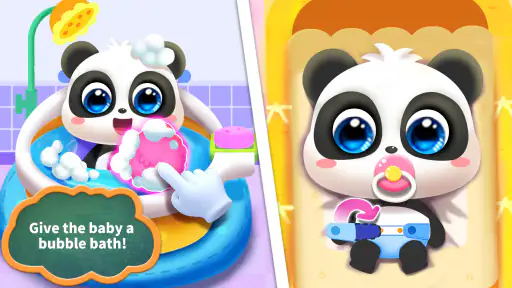
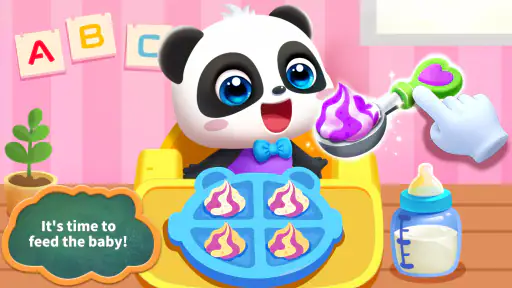
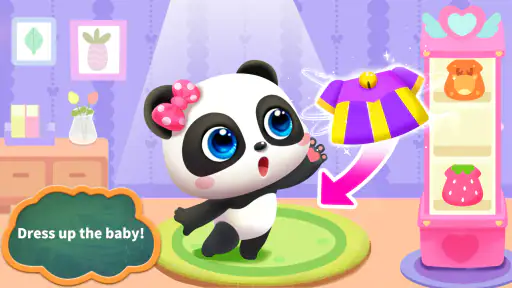
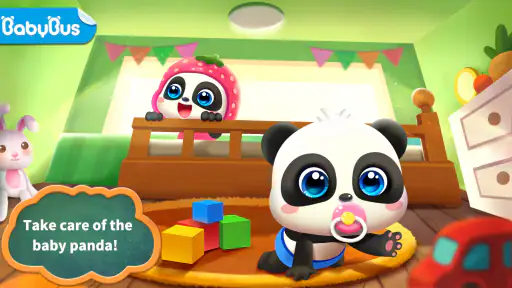
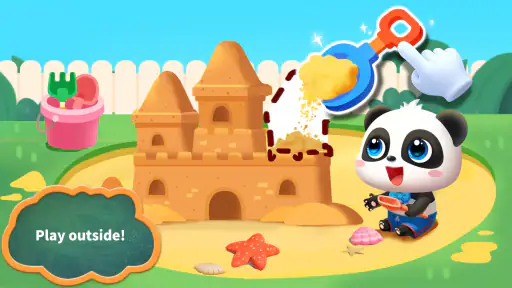
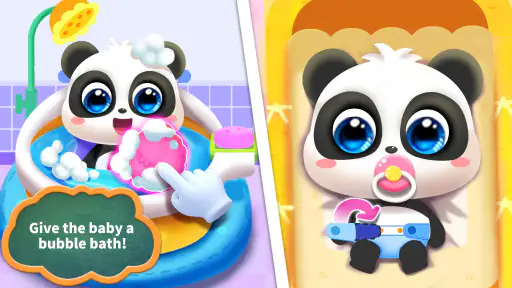
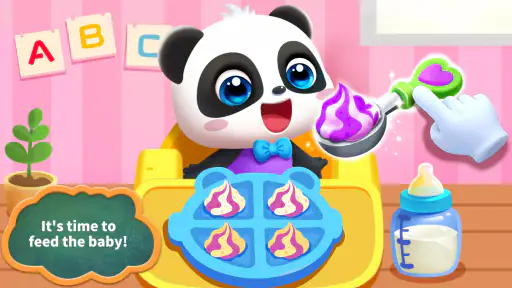
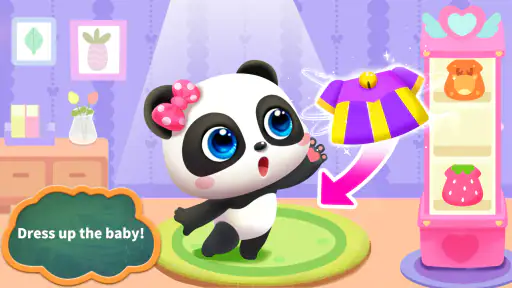
I see Baby Panda Care as a small, guided pretend-play activity rather than a broad learning course. Its central appeal is easy to understand: a child looks after a baby panda through everyday care routines, and the play is built around feeding, bathing, and bedtime. That familiar setup gives young children a simple role to step into, which can make it easier to begin playing without an adult explaining a complicated game first.
What the free download does—and what it doesn’t promise
The game is free to download, so a parent can try its basic appeal without paying upfront. It also offers in-app purchases priced from $1.99 to $5.49 per item. I would keep that distinction clear for a child: free access does not mean every possible item or option is included at no cost. If a child may tap around independently, I’d review purchase controls on the device and agree on a simple rule before handing it over.
I wouldn’t judge the purchase value by the listed range alone. Whether an optional purchase feels worthwhile depends on what it unlocks and how often your child returns to the game; that’s a family decision, not something the price by itself can settle. The sensible approach is to let a child try the free experience first, then consider spending only if a particular paid item clearly adds something they want and you’re comfortable with the cost. There’s no need to buy anything just to find out whether the basic care routine suits them.
Our Stories on Baby Panda Care
Why Baby Panda Care is a Must-Have Educational Game
NewsWhy Chess - Play and Learn is Our App of the Week
NewsHow Little Panda: Princess Makeup Blends Fun with Learning
NewsWhy School Party Craft Stands Out in Mobile Gaming
NewsUnlocking the Secrets of Piano Game: Classic Music Song
NewsTie Dye: Mastering the Art of Digital Fabric Design
NewsA World of Fun and Learning
When you first launch Baby Panda Care, you're greeted with a cute, cuddly panda that instantly grabs your child's attention. The app revolves around taking care of this adorable panda by feeding it, bathing it, and putting it to sleep. It sounds simple, right? But here’s the kicker: each task is designed to teach kids essential life skills. For example, while feeding the panda, children learn about different food groups and the importance of a balanced diet. It's like sneaking veggies into a smoothie – they won't even know they're learning!
Interactive and Easy to Use
The interface is super intuitive, even for toddlers. With bright colors and interactive elements, kids can easily navigate through the app without needing constant supervision. One of the things I love about this app is how it encourages independent play. Kids can explore different activities, and each one is crafted to promote problem-solving and critical thinking. It's all about letting them learn at their own pace while having a blast.
As a practical routine, I’d treat it as a short, shared activity first: sit with your child, let them choose a care task, and ask what they think the panda needs next. That gives you a chance to see whether the touch interactions make sense to them and whether they enjoy repeating the routine. Once they understand the basic pattern, they can try playing more independently while you stay nearby. The game can be a useful bridge between screen play and conversation, but it shouldn’t be expected to teach a child a full lesson on nutrition or personal care by itself.
A useful detail for caregivers is to observe how a child responds to the sequence rather than assuming every toddler will find it effortless. If they get stuck, a quick demonstration may help; if they rush through, asking them to explain their choice can slow the play into a more thoughtful activity. I’d also keep sessions tied to a natural pause—before a meal or while waiting at home—rather than using the game as a substitute for hands-on play, reading, or rest. The point is to make a familiar routine engaging, not to turn every quiet moment into screen time.
Gaming Stories You May Enjoy

Dancing Road Turns Short Breaks Into a Test of Rhythm and Timing

Super Stylist Makes Every Outfit a Test of Taste and Patience

Dominoes on Your Terms: Who Should Play and Who Should Pass

Pokémon GO Makes the Familiar World Feel New

Chess.com Turns Rematches Into Rivalries, but Community Has Its Costs

Archery Battle 3D Review: Sharp Aiming, Unclear Feedback
What kind of play it supports
Because the panda’s care is the focus, the experience is more role-play than open-ended building or a structured school lesson. Compared with drawing apps, it gives a child a clear sequence of actions; compared with broad educational collections, it offers a narrower theme that is easier to grasp but may have less variety for a child who wants many different subjects. I see that as a trade-off, not a flaw: a focused routine can suit a young child who likes caring for a character, while a child who quickly tires of repeating familiar tasks may prefer a game with more kinds of activities.
It can also be a gentle way to talk about routines without presenting the child with a quiz. You might connect the panda’s bedtime to the family’s own evening routine, or talk about what makes a meal varied while the child plays. I’d keep those conversations light and follow the child’s interest. If they simply want to tap through the care actions, that is still pretend play; there’s no need to turn the app into a test or insist that every interaction becomes a teaching moment.
Who is likely to get the most from it
I’d consider it for preschool-age children who enjoy animals, pretend caregiving, and repeating simple actions. It may also work for a younger child alongside an adult who can help with the device and talk through what is happening. The game is rated Everyone, but that broad rating doesn’t mean every child will have the same attention span or get the same value from it. A child who prefers fast competition, complex goals, or a wide range of creative tools may find the care-focused loop too limited.
For a realistic everyday use, imagine a short wait at home while a parent prepares dinner. The child can choose one of the panda’s care activities, complete a small pretend routine, and then put the device away when it is time to eat. That works best when an adult sets the boundary and treats the game as one option, not an automatic way to fill every gap. If you need a genuinely hands-off activity for a long stretch, I wouldn’t rely on this title to provide that; young children may still want help, interaction, or a change of activity.
Developer, availability, and staying current
BabyBus makes the game, which fits its child-oriented educational focus. It has been available since November 30, 2011, and its current version is 8.71.00.00. The long-running presence may be reassuring to families looking for an established title, but I’d still check that it runs properly on the particular device before making it part of a routine. The minimum operating system is Android 5.0, a useful compatibility check for Android households; availability and requirements can differ across platforms, so confirm the relevant store page for your device.
Its scale is substantial: it has over 100 million installs, an average rating of 3.8 from around 198,000 ratings, and about 2,900 written reviews. Those figures suggest many families have tried it, but they don’t tell me whether it will suit one child’s preferences. I’d use them as context, then let the child’s response to the care activities decide. A popular game can still be the wrong fit for a child who dislikes repetition or wants more varied challenges.
Limits worth considering before you install
The biggest trade-off is focus. Feeding, bathing, and bedtime create a recognizable caregiving theme, but they also set expectations: this is not a general-purpose learning library, a creative sandbox, or a substitute for an adult explaining real-world habits. If you want an app centered on letters, numbers, drawing, or a broad set of topics, another educational game may match that goal better. If what you want is a simple pretend-care scenario, the narrow focus is precisely why this one may be easier to introduce.
I’d also be cautious about assuming that an educational label guarantees a particular learning outcome. The activities can give parents openings to talk about routines and choices, but a child’s understanding comes from the wider context, including everyday experiences and conversation. For that reason, I see the game as a playful prompt, not a lesson plan. It is most useful when it complements ordinary caregiving rather than replacing it.
Safe and Kid-Friendly
Another crucial aspect of Baby Panda Care is its commitment to safety. In today's digital age, it's essential to have an app that's not only entertaining but also secure. This app boasts a kid-friendly environment with no ads or in-app purchases, so you can let your child play without any worries. Plus, the content is regularly updated to keep things fresh and exciting.
There is one important correction to keep in mind when planning a child’s access: the game has in-app purchases, with items priced from $1.99 to $5.49. I would not treat it as purchase-free or assume that a young child can browse without supervision. The game’s Everyone rating describes its broad content suitability; it doesn’t remove the need for a parent to manage device settings, explain purchase boundaries, and check how the child is using the app.
Parents often want to know whether it can be left with a child immediately, whether purchases are required, and whether it is suitable for older children. My practical answer is to try the free download together first, check the purchase controls, and watch how the child handles the simple care routine. You can begin without paying, but optional purchases exist; and while the Everyone rating makes it broadly accessible, an older child looking for deeper challenges may outgrow the activity style. That quick trial is a more reliable guide than assuming one age label covers every family’s needs.
My buy-or-skip verdict
For me, this is an easy low-commitment try for a young child who likes animals and caring pretend play. It is free to download, with optional paid items, so I’d start at no cost and decide later whether anything beyond the free experience is worth buying. I would skip it if your priority is a wide-ranging curriculum, complex gameplay, or an activity that reliably occupies a child without adult involvement. As a focused panda-care game, though, it can make a short screen break feel more purposeful and give you a natural starting point for talking about everyday routines.
In conclusion, Baby Panda Care offers a rich blend of fun and education. It's a fantastic tool for parents who want their kids to learn essential skills while still enjoying themselves. Whether it's the interactive tasks, the adorable graphics, or the educational value, this app is a winner in my books. So, why not give it a try and watch as your child learns and grows with Baby Panda?
Baby Panda Care Pros and Cons
Pros
- Engaging animations and sounds.
- Simple interface for kids.
- Educational content included.
- Offline play available.
- No in-app purchases.
Cons
- Limited content variety.
- Repetitive gameplay.
- Ads can be distracting.
- Requires storage space.
- No multiplayer options.
This Game in Other Languages
Frequently Asked Questions
What is Baby Panda Care and how does it work?
Baby Panda Care is an interactive educational game designed for children. It allows kids to take care of a virtual baby panda by feeding, bathing, and playing with it. The game aims to teach children about responsibility and empathy in a fun and engaging way. Players can interact with the panda using simple touch controls, making it accessible even for young children.
Is Baby Panda Care safe for children to use?
Yes, Baby Panda Care is designed with children’s safety in mind. The app contains no inappropriate content, and there are no in-app purchases that could be accidentally made by children. Additionally, the game encourages positive play patterns and learning, ensuring a safe and educational experience for young users.
Does Baby Panda Care require an internet connection to play?
No, Baby Panda Care does not require an internet connection to play. Once the app is downloaded and installed, all of its features and activities are accessible offline. This makes it a convenient option for parents who want their children to enjoy the game while traveling or in areas with limited internet connectivity.
What age group is Baby Panda Care suitable for?
Baby Panda Care is suitable for children aged 3 to 6 years old. The game is designed to be simple and intuitive, allowing young children to navigate and play without assistance. Its educational content is tailored to this age group, focusing on basic life skills and emotional development in an entertaining way.
Can Baby Panda Care be played on both Android and iOS devices?
Yes, Baby Panda Care is available on both Android and iOS platforms. Parents can download the app from the Google Play Store for Android devices and the App Store for iOS devices. The game is optimized for a wide range of devices, ensuring smooth performance regardless of the platform used.


