

My Cafe — Restaurant Game
- Reviews
- 4.5
- Version
- 2026.6.0.1
- Installs
- 100,000,000+

Screenshots


 Analysis by Frivlyz
I can see My Cafe — Restaurant Game working best as a shared-device game in a household where people enjoy taking turns with a small, ongoing project. One person might care most about decorating, another about trying recipes, while someone else enjoys chatting with customers. That variety makes it easy to pass the phone or tablet around, but the café is still one player’s save, not a shared family workspace. I’d agree on whose progress is being played before handing over the device, especially if different people want to make their own choices.
Taking turns without losing track
A practical routine is to let each person handle one short task rather than have everyone tap through the same session. One turn could focus on arranging the café; another could be spent serving customers or checking an order. That keeps the game’s different activities visible without turning a casual break into a long negotiation over every decision. If the device is passed around, it also helps to say what you changed before the next person starts, since a new player may otherwise rearrange something the previous one had just finished.
The game suits households that like light collaboration, but I would not treat township participation as a substitute for coordinating with people sitting nearby. Township play involves other players and shared goals, while passing one device around is a separate arrangement. If your household wants a game where everyone has an independent character and clearly separated turns, a title built around local multiplayer would be a better fit. Here, the fun is in tending one evolving café, not in competing side by side on the same screen.
Keeping play and spending in perspective
It is free to download, but optional in-app purchases range from $0.99 to $399.99 per item. That wide range is worth discussing before a child or another family member uses a device connected to a payment method. I’d set expectations about asking before any purchase and use the device’s own purchase safeguards where appropriate. The game’s regular management loop is the main attraction, so I would not assume that spending is necessary to enjoy its decorating, customer stories, or gradual progress.
Another useful boundary is time. Restaurant tasks and special orders can make it tempting to check back repeatedly, particularly when a player is eager to move forward. For a relaxed household routine, I’d treat it as a game to visit during a chosen break rather than something that needs constant attention. That approach keeps the café’s ongoing goals enjoyable without letting its prompts dictate the day.
Setting Up Your Dream Café
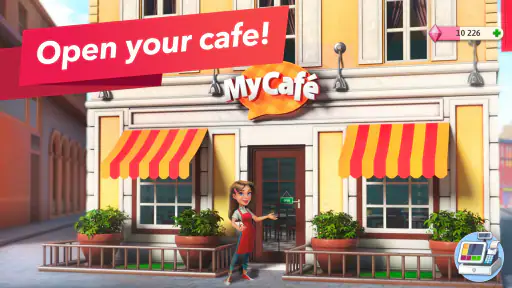
When you first start My Cafe, you're greeted with a quaint little spot that’s just waiting for your personal touch. The game kicks off with a tutorial, which I found super helpful. It walks you through the basics of setting up your café, from choosing the right furniture to mastering the menu. Honestly, it feels like you’re part of a charming little community right from the get-go.
Design and Decor
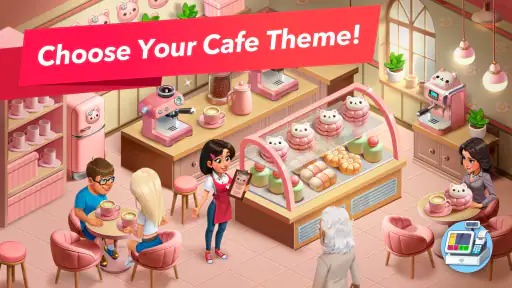
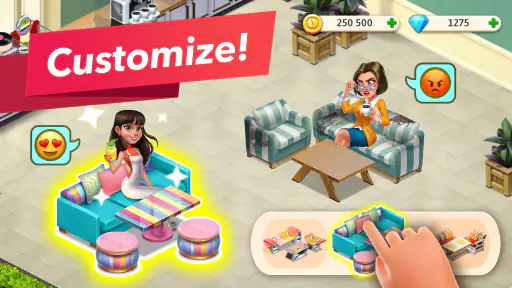
One of the coolest parts? The customization options are off the charts! You can really let your inner designer shine. I mean, whether you’re into a sleek modern look or something more rustic, there’s a style for everyone. Picking out tables, chairs, and even the wallpaper is a blast. Plus, as you progress, more themes unlock, which keeps things fresh and exciting.
Gaming Stories You May Enjoy

Dancing Road Turns Short Breaks Into a Test of Rhythm and Timing

Super Stylist Makes Every Outfit a Test of Taste and Patience

Dominoes on Your Terms: Who Should Play and Who Should Pass

Pokémon GO Makes the Familiar World Feel New

Chess.com Turns Rematches Into Rivalries, but Community Has Its Costs

Archery Battle 3D Review: Sharp Aiming, Unclear Feedback
For me, the best way to approach decorating is to choose a direction before spending time on individual details. A consistent style makes the café feel intentional, while changing several pieces at once can make it harder to decide what actually improved the space. If you share the device, agree on a general look first; otherwise, a well-meaning co-player may undo a design you were slowly building. I’d also save major redecorating for a moment when I can focus, rather than squeezing it into a quick check-in.
That distinction matters because decorating is not the same kind of satisfaction as serving customers. If you enjoy visual tinkering, you can spend your attention on furniture and themes; if you prefer a clear task, the menu and customer interactions offer a more directed way to play. The café’s appeal comes partly from moving between those modes, but players who want a pure design sandbox may find the management layer gets in the way, while people seeking a demanding business simulator may find the decoration side too prominent.
Mastering the Menu
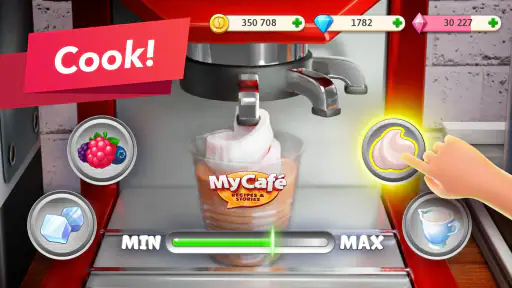
Now onto the food and drinks, which is basically the heart of your café. The game offers a plethora of recipes to discover and serve. From fancy espressos to mouth-watering pastries, you get to concoct all sorts of delicious items. Managing the menu is key to keeping your customers happy and your coffers full. Oh, and did I mention the special orders? They add a nice little challenge and reward system.
When I’m deciding what to do in a short session, I’d check the active customer requests before getting distracted by cosmetic changes. A special order gives the visit a concrete purpose, whereas browsing décor can easily turn a brief break into a longer one. If an order feels like a poor fit for the time I have, I’d focus on another manageable café task instead of treating every request as urgent. That small choice helps the game feel like a set of options rather than a checklist that must be cleared at once.
The menu also gives the game a different rhythm from a simple tap-and-wait casual title. There is a satisfying sense of learning what the café can offer, but players who mainly want instant action may find recipe progression and business upkeep slower than they’d like. I see it as a better match for someone who enjoys a little planning between bursts of activity, not for someone expecting a fast arcade challenge or a realistic cooking game centered on hands-on food preparation.
Engaging with Customers
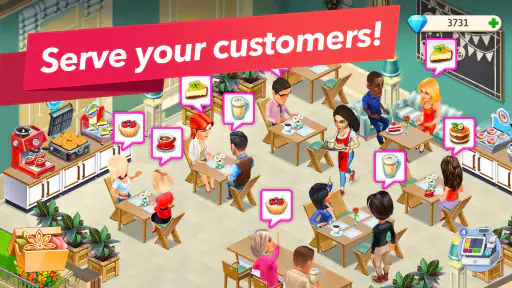
This game isn’t just about pretty furniture and tasty treats. It’s also about the people! Each customer has a story, and interacting with them is a lot of fun. You get to know their personalities, likes, and dislikes, which makes the game feel more personal. Plus, listening to their stories can sometimes lead to special missions or rewards, so it pays to be sociable.
The story-led exchanges are a useful change of pace when the business loop starts to feel repetitive. I’d give them attention when I’m in the mood to follow a character thread, rather than tapping through just to get back to the café layout. They add context to the customers, but they do not turn the game into a traditional narrative adventure: the core remains running and developing the restaurant. That balance is a strength for players who want a bit of personality alongside management, and a limitation for anyone looking for a story-first game.
Building Relationships
The social aspect is surprisingly deep for a mobile game. You can chat with customers, help them with their problems, and even influence their decisions. It’s like being a bartender and a therapist rolled into one, and I love it. It adds a layer of depth that keeps you coming back for more.
For a younger player, I’d frame these conversations as fictional character stories, not as advice for real-life problems. The game is rated Everyone, which makes its age context broad, but the rating alone does not decide whether its ongoing goals, in-app purchases, or social elements suit a particular child. I’d play alongside a younger family member at first and see how they respond to the stories and the temptation to keep checking in. Adults who want a quiet, low-pressure café game may also prefer to focus on decorating and orders rather than following every conversation.
One trade-off is that conversations invite attention in a way that routine serving does not. If I have only a minute, I’d avoid opening a story thread unless I’m ready to read and make a choice; otherwise, I can leave that part for a longer visit. This makes play easier to fit around shared-device use: someone can take a quick turn on a straightforward task, while the person who cares about the characters can return to the narrative later.
Making Business Decisions
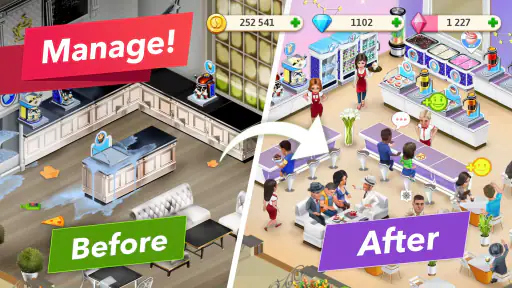
Running a café isn’t all fun and games, though. You’ll need to make smart business decisions to keep things running smoothly. From pricing your items to deciding when to expand, there’s always a strategic element at play. It’s a great mix of creativity and management that keeps you on your toes.
I would avoid changing several business choices at once if I’m trying to understand why a session feels easier or harder. Adjusting one thing, then paying attention to the result, gives a clearer sense of how the café’s choices fit together. It is a small, practical habit, but it stops the management side from becoming a blur of taps. Players who like comparing options and making incremental decisions will get more from this layer than someone who just wants to decorate without thinking about the business.
Compared with the usual casual restaurant games, this one leans more heavily on the combination of customer stories, café styling, and ongoing management. A simpler serving game is a better pick if you want a short, self-contained round with little to remember afterward. A deeper simulation may suit you better if you want detailed operational systems above all else. I’d choose this game for a middle ground: recognizable café tasks, a personal space to shape, and characters that give the routine some narrative color.
The Social Side
Let’s not forget about the social features. You can join or create your own township, which is basically a group of players who work together to achieve goals. It’s a great way to make friends and get some extra rewards. Plus, there’s a competitive edge if you’re into that sort of thing.
Township play is most appealing when I want goals that extend beyond my own café. It also changes the feel of the game: a player who likes independent progress may prefer to keep their attention on personal design and customer tasks, while someone who enjoys coordinating with a group has another reason to return. I would not join solely because competition sounds rewarding; it is a better fit when the shared objective itself feels fun, even on days when I’m not focused on rankings.
Teamwork and Events
Participating in events with your township can be really rewarding. It’s all about teamwork, and you get to strategize together to climb the leaderboards. It’s nice to have that community feel, and it makes the game more engaging.
For a household, the useful distinction is between helping one another decide how to develop a café and participating in a player group with its own goals. Those are not the same kind of coordination. If family members take turns on a single save, they can agree on priorities before a session; if one person would rather play without group expectations, township participation may not be the reason to keep playing. I’d let each player decide how much social involvement they actually enjoy instead of treating it as compulsory.
A realistic routine might be checking the café during a quiet moment after school or work, handling one order, then handing the device back without expecting the next person to continue a specific event strategy. That keeps shared play friendly and prevents one player from feeling responsible for everyone’s progress. People who prefer games they can pause and forget without any social coordination may be happier with a single-player puzzle or a short-round casual game.
Who Will Enjoy the Ongoing Café
Melsoft Games Ltd developed this free casual game, which has a 4.5 average from around 4.5 million ratings and over 100 million installs. It first appeared on May 25, 2016, and its current version is 2026.6.0.1, with Android support starting at version 6.0. Those figures suggest a well-established audience, but popularity is not a guarantee that its pace or social layer will suit you. I’d recommend it most to players who like returning to a familiar project, making small choices, and seeing a café take shape over time.
It is less suitable if you want a fully offline-feeling, one-and-done experience, dislike progression systems, or are bothered by optional spending prompts. It is also not my first choice for a household that expects separate personal saves on one shared device; I’d check how the game is being used before letting several people treat the same café as their own. Someone seeking a direct local multiplayer contest should look elsewhere, while a player who enjoys taking turns on a shared project may find that limitation manageable.
Final Thoughts
Overall, My Cafe — Restaurant Game is a delightful escape into the world of café management. It’s got a little bit of everything: creativity, strategy, social interaction, and even a touch of drama with the customer stories. Whether you’re a casual gamer or someone who loves diving deep into strategy games, there’s something here for you.
If you haven’t tried it yet, I’d say give it a shot. It’s free to play, and there’s a whole world of coffee and confectionery waiting for you to explore. Just be warned — once you start, it’s pretty hard to put down!
My Cafe — Restaurant Game Pros and Cons
Pros
- Engaging storyline with diverse characters.
- Frequent updates with new features.
- Customizable cafe designs.
- Interactive social elements.
- Real-time chat with players.
Cons
- In-app purchases can be pricey.
- Some tasks require waiting.
- Requires stable internet connection.
- Limited offline play options.
- Advertisements can be intrusive.
This Game in Other Languages
Frequently Asked Questions
What is the main objective of My Cafe — Restaurant Game?
In My Cafe — Restaurant Game, the primary goal is to build and manage your own cafe. Players are tasked with designing the layout, hiring staff, and creating a menu to attract and satisfy customers. The game combines strategy and creativity, allowing players to expand their cafe and serve unique recipes while engaging in a storyline with various characters.
Is My Cafe suitable for children, and what age group is it best for?
My Cafe is generally suitable for children, though it is rated for ages 12 and up due to some in-game purchases and mild mature themes in conversations. The game’s colorful graphics and engaging storyline make it appealing for teenagers and older players who enjoy management and simulation games.
Does My Cafe require an internet connection to play?
Yes, My Cafe requires an internet connection to access all its features, including social interactions and updates. While some aspects of the game can be enjoyed offline, a stable connection ensures you can fully engage in events, trade with friends, and receive regular content updates.
Are there in-app purchases in My Cafe, and how do they affect gameplay?
My Cafe does include in-app purchases that allow players to buy in-game currency and special items. While these purchases can speed up progress, they are not necessary to enjoy the game fully. Players can still advance by completing tasks and serving customers without spending real money.
What are some tips for progressing quickly in My Cafe?
To progress quickly in My Cafe, focus on completing orders and quests to earn coins and experience. Upgrading equipment and hiring efficient staff can optimize service speed. Engaging in special events and trading with friends also provides additional rewards. Planning your cafe layout strategically can enhance customer satisfaction and boost earnings.


