

Matchington Mansion
- Reviews
- 4.4
- Version
- 1.203.0
- Installs
- 100,000,000+

Screenshots





 Analysis by Frivlyz
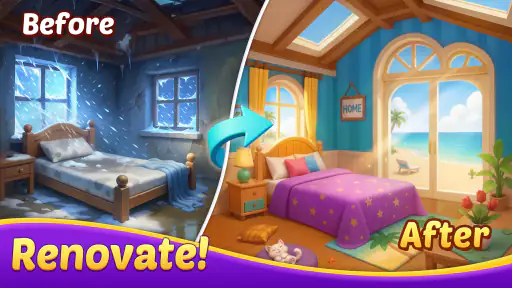
My first impression of Matchington Mansion was that its puzzle boards and renovation setting belong together more naturally than I expected. A level gives me a compact problem to solve; the reward then lets me make a visible choice about the house. That connection is the game’s strongest idea: progress is not just a number going up, but a room gradually taking shape.
It is a free puzzle game from Magic Tavern, Inc., built around matching tiles and restoring a mansion. The game is rated for Everyone, so its bright presentation and straightforward basic rules suit a broad audience. Its appeal is more particular, though: I’d recommend it most to people who like short puzzle sessions and enjoy having a decorative project waiting on the other side of each win.
A small renovation gives each puzzle a purpose
The mansion works as more than a pretty backdrop. It gives the matching levels a reason to exist, and the stars earned from completing them become the means of moving the restoration forward. I like that simple loop because it makes a level feel connected to something I can see, rather than asking me to clear board after board with no change in the surrounding world.
That structure also gives the game a useful stopping point. If I have only a few minutes, I can try a puzzle and decide whether to continue based on how close I am to the next renovation task. If I have longer, the house and its story provide a reason to keep going. The trade-off is that anyone who wants a puzzle game with no narrative or decorating layer may find the extra framing unnecessary.
The game has a 4.4 average from around 2.4 million ratings, and it has been installed over 100 million times. Those figures point to a large audience, but they do not tell me whether its particular mix will suit you. I’d treat the mood and progression loop as the real test: if choosing furnishings sounds satisfying rather than distracting, the basic premise is likely to land.
Storybook art, with choices that make rooms feel personal
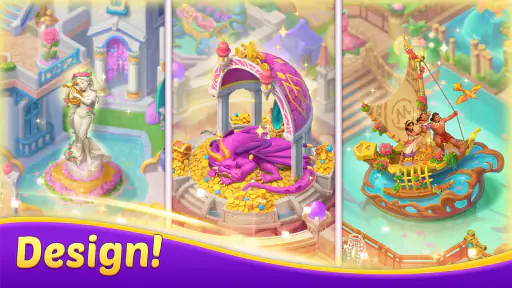
The visual style leans into a colorful, storybook version of a grand home. Rooms and objects are presented with enough detail to make restoration feel tangible, while the bright look keeps the puzzles approachable rather than stark. In my experience, that consistency matters: the board game and the house feel like parts of one world, not separate modes stitched together.
Renovation choices add a little ownership to the process. Instead of treating every cleared level as an abstract win, I can use the reward to move the mansion toward a look I prefer. A practical tip is to think of these choices as part of the entertainment, not as a strategy for improving puzzle performance. Their value is personal: a room that feels more like my taste makes the next return visit more inviting.
Gaming Stories You May Enjoy

Dancing Road Turns Short Breaks Into a Test of Rhythm and Timing

Super Stylist Makes Every Outfit a Test of Taste and Patience

Dominoes on Your Terms: Who Should Play and Who Should Pass

Pokémon GO Makes the Familiar World Feel New

Chess.com Turns Rematches Into Rivalries, but Community Has Its Costs

Archery Battle 3D Review: Sharp Aiming, Unclear Feedback
That emphasis will not work equally well for everyone. If you enjoy comparing decorative options and watching a space change, the visual payoff can make slow progress feel worthwhile. If you prefer a single fixed goal and do not care about interiors, the renovation decisions may feel like pauses between the parts you actually want to play. I see that as a genuine preference split, not a flaw that one audience should have to ignore.
Sound and pacing make it an easy game to dip into
The overall mood is light, and the puzzle-and-renovation cycle lends itself to brief visits. I find that useful when I want a low-pressure break: solve a board, make progress on the house, then put the phone away. The story gives those sessions a thread, but the basic appeal does not depend on remembering every plot detail before coming back.
Its pacing is less ideal when I want uninterrupted, demanding puzzle play. The broader experience asks me to care about the mansion and its cast as well as the board. That variety keeps the game from feeling like a sequence of identical challenges, but it also means the puzzle is not the only focus. Players who prefer pure match-three action may be happier with a more stripped-back alternative that keeps them on the board and out of a longer progression loop.
I would approach it as a game for the gaps in a day, rather than something that needs a dedicated stretch of attention every time. For example, after finishing a small household task, I might play one level while taking a short break, then use the reward to choose a renovation item. That routine gives both halves of the game a clear role without turning a casual session into a commitment.
How the matching and renovation loop holds up
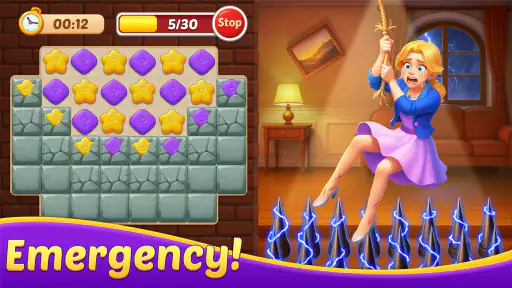
The core rule is easy to understand: match three or more tiles of the same color to clear them. As play advances, boosters and obstacles add complications, so success depends on reading the board rather than repeating one move. I like that the basic action remains familiar while the surrounding challenge changes; it gives newcomers a gentle entry point without promising that every later puzzle will feel effortless.
When a level becomes difficult, I find it helps to pause and identify what the board is actually asking me to clear before making the first match. That small habit can prevent moves from being spent on combinations that look satisfying but do little for the objective. It is a useful way to approach the game’s growing complexity, especially for players who would otherwise rush through a board and then wonder why progress stalled.
Familiar match-three rules, shaped by mansion goals
Compared with a conventional match-three game focused almost entirely on clearing boards, this one gives each win a second purpose: earning progress toward restoration and story. That extra layer is its distinguishing strength, but it is also the main trade-off. A player who wants quick, self-contained puzzles may prefer a simpler alternative; someone who enjoys a continuing project may find the mansion gives the familiar format more staying power.
The developer, Magic Tavern, Inc., presents the game as a free download, with optional in-app purchases ranging from $0.29 to $139.99 per item. I would go in with a simple personal rule: treat purchases as optional conveniences, not as part of the basic promise of playing. If you are sensitive to spending prompts in free games, decide your boundary before you start and keep the renovation choices focused on what you genuinely enjoy.
It first released on October 11, 2017, and the current version is 1.203.0; it requires Android 6.0 or later. Those details make it easier to judge whether it fits a device and whether you are looking at the current release. The game is free to try, but the practical question is whether you like its combined loop enough to keep returning without feeling hurried toward a purchase.
Who will enjoy the mansion—and who may not
I’d suggest it to players who like bright puzzle games, visible long-term progress, and small creative decisions. It can also suit someone looking for a light, repeatable break: the matching rules are easy to grasp, while the renovation gives each successful session a modest payoff. People who enjoy following a cast of characters may appreciate having a story alongside the levels, rather than a puzzle experience that resets emotionally after every board.
I would skip it if your priority is a demanding, mechanics-first puzzle with minimal interruptions, or if decorating choices hold no appeal. It may also be a poor fit if optional purchases make free-to-play progression frustrating for you; even when spending is not required to enjoy a game, the presence of purchase options can change how relaxed it feels. In that case, a paid puzzle game with a clearly bounded experience may be a better match.
For a first session, I’d focus on learning how objectives and obstacles interact instead of trying to optimize every move. Then treat the renovation selection as a chance to see whether the home-building side genuinely motivates you. That quick test answers the most useful question early: are you here mainly for the puzzle boards, or does the promise of shaping the mansion make you want another round?
A balanced recommendation for a casual puzzle break
Matchington Mansion combines an approachable matching game with a decorative project and a continuing story. Its art direction helps those pieces feel coherent, while the gradual introduction of obstacles gives the board play room to develop. I enjoy the way a small win can lead to a visible change in the house; I also recognize that players looking for uninterrupted puzzles may consider the same structure a detour.
It is a sensible choice if you want a friendly game to revisit in short sessions and enjoy watching a fictional home evolve. I would not recommend it as a substitute for a focused puzzle challenge, or to someone who dislikes free-to-play purchase options. For me, its best quality is the mood created by the connection between matching, story, and restoration. If that combination sounds relaxing rather than busy, it is worth giving the mansion a visit.
The first thing that caught my attention with Matchington Mansion is its delightful blend of interior design and puzzle-solving. You’re not just matching tiles aimlessly; you’re on a mission to restore an entire mansion to its former glory. Each successful puzzle completion gives you stars, which are the currency to unlock furniture, decorations, and even entire rooms.
As you progress, the storyline unfolds, and you meet a colorful cast of characters. Each character has their own backstory and adds to the overall charm of the game. I found myself genuinely invested in their stories, eager to see how everything would unfold.
Gameplay Mechanics: A Match Made in Heaven
The core mechanic of the game is quite simple: match three or more tiles of the same color to clear them from the board. However, what sets this game apart are the unique boosters and obstacles that are introduced as you advance. From cupcakes to cushions, each element offers a new challenge, keeping the gameplay fresh and engaging.
One thing I appreciated is how the game gradually increases in complexity. Just when you think you’ve got it all figured out, a new twist is added. It’s this constant evolution that keeps the game from becoming monotonous.
Design and Aesthetic Appeal
Visually, Matchington Mansion is a feast for the eyes. The graphics are vibrant and detailed, making the mansion and its surroundings come to life. I found the design elements to be quite satisfying, especially when unlocking new pieces of furniture or decorations.
Even the smallest details are thoughtfully crafted, from the intricate patterns on the carpets to the elegant design of the furniture. It’s apparent that a lot of love and effort went into making the game visually appealing.
Building Relationships and Unraveling Mysteries
What I love about Matchington Mansion is the emphasis on story and character development. As you restore the mansion, you’re also uncovering secrets hidden within its walls. The game weaves a narrative that is both engaging and heartwarming.
The interactions with characters add depth to the game. Whether it’s helping a friend with their own renovation project or discovering the mysterious history of the mansion, there’s always something new to explore.
In-Game Economy and Progression
Like many free-to-play games, Matchington Mansion includes in-app purchases. While these can expedite your progress, I found that it’s entirely possible to enjoy the game without spending a dime. The balance between earning stars and spending them on renovations feels fair, and there’s always the option to replay levels for more stars.
The daily challenges and events also offer opportunities to earn additional rewards, keeping the gameplay dynamic and rewarding.
Final Thoughts: A Mansion Worth Visiting
Overall, Matchington Mansion is an enchanting blend of puzzle-solving and storytelling. It’s the perfect game for those who enjoy a mix of creativity and challenge. Whether you’re a fan of interior design or simply love a good story, this game has something to offer.
If you’re ready to embark on a journey filled with puzzles, mystery, and a touch of magic, then I highly recommend giving Matchington Mansion a try. It’s a delightful escape that’s sure to keep you entertained for hours.
So, grab your virtual toolbelt and get ready to transform your very own mansion. Who knows what secrets you’ll uncover along the way?
Matchington Mansion Pros and Cons
Pros
- Engaging puzzles with increasing difficulty.
- Charming storyline with interesting characters.
- Customizable mansion decor adds personal touch.
- Frequent updates with new levels and features.
- No internet needed for offline play.
Cons
- Some levels can be frustratingly difficult.
- In-app purchases can be quite expensive.
- Ads can interrupt gameplay at times.
- Energy system limits extended play sessions.
- Requires significant storage space on device.
This Game in Other Languages
Frequently Asked Questions
What is Matchington Mansion and how does it work?
Matchington Mansion is a match-3 puzzle game where players renovate and decorate a mansion. You complete levels by matching colorful tiles to earn stars, which are then used to progress the storyline and unlock new areas of the mansion. As you advance, you encounter unique characters and uncover hidden secrets.
Do I need an internet connection to play Matchington Mansion?
While Matchington Mansion can be played offline, some features require an internet connection. For example, accessing special events, leaderboards, and syncing progress across devices all need online access. Playing offline limits these features, but you can still enjoy the basic gameplay and continue with renovations.
Are there in-app purchases in Matchington Mansion?
Yes, Matchington Mansion offers in-app purchases. These can include extra lives, boosters, and special decoration items. While the game is free to download and play, these purchases can enhance your experience or help you overcome difficult levels. Players can enjoy the game without spending money, but progress may be slower.
How challenging is Matchington Mansion for new players?
Matchington Mansion offers a gradual difficulty curve, making it accessible for new players. Early levels are designed to introduce basic mechanics and strategies. However, as you progress, the puzzles become more challenging, requiring strategic thinking and planning. The game balances challenge with fun, keeping players engaged.
Can I play Matchington Mansion with friends?
Yes, you can connect Matchington Mansion to your Facebook account to interact with friends. By doing so, you can see their in-game progress, share lives, and compete on leaderboards. This social feature adds a competitive edge to the game and allows you to enjoy shared experiences with friends.


