

Homescapes
- Reviews
- 4.7
- Version
- 7.5.5
- Installs
- 100,000,000+

Screenshots







 Analysis by Frivlyz
I like games that give a small break a sense of direction, and this one does that by pairing tile puzzles with a house that gradually changes. A level is a quick, self-contained challenge; the renovation gives those wins a visible purpose. That combination is the main reason I kept playing, though it also means progress depends on enjoying both parts rather than just one. Homescapes is a casual game from Playrix, and its gentle domestic setting gives familiar match-3 play a warmer frame than a bare board of colored pieces.
A familiar puzzle loop with a personal payoff
The basic rhythm is easy to understand: match tiles, finish the level, earn a star, then spend it on a task around Austin’s home. The connection between puzzle and renovation is more than a decorative menu. A completed level moves the story of the house forward, so even a small choice can make the space feel more like a place I am shaping rather than a sequence of disconnected stages.
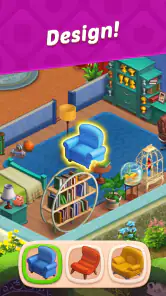
That structure is a good fit if you enjoy visible progress but do not want to plan a whole design project. You are choosing among presented options, not working with an open-ended interior-design tool. I found that distinction useful: the decorating gives me a bit of creative input, while the game keeps decisions quick and guided. If you want full control over layouts, measurements, or a personal design portfolio, a dedicated design app will suit you better.
How the home gives the puzzles their mood
The rooms, furniture, and household repairs make the setting feel coherent. The mansion gives the game a reason to move from one improvement to another, and Austin’s role ties those changes to a character rather than presenting them as anonymous chores. Its bright, friendly art style supports that tone. I found the visual payoff especially welcome after a difficult level: the board asks for concentration, then the house offers a calmer, tangible result.
There is a trade-off in that steady cycle. If decorating is the part you like most, the match-3 levels are still the gate you have to pass through to keep changing the house. If you mainly want a puzzle challenge, the renovation tasks and story can feel like pauses between boards. I would think of the two elements as linked, not as optional modes that can be separated without changing the experience.
Sound and pacing in short sessions
The cheerful music and sound effects reinforce the light atmosphere rather than trying to make every move feel dramatic. I found that a useful fit for short sessions: a few levels can sit comfortably between everyday tasks, and the domestic setting makes the game feel less intense than a competitive action title. The sound also helps give taps and completed objectives a sense of response, although players who prefer quiet puzzle solving may want to lower the volume or play without it.
The pacing is less predictable once levels become harder. An early board can feel like a quick warm-up, while a later one may require several attempts and more careful decisions. That variation keeps the puzzles from being entirely automatic, but it can interrupt a relaxed session when I only have a minute or two. I would start a level when I have enough time to focus rather than assume every board will fit into a tiny break.
Gaming Stories You May Enjoy

Dancing Road Turns Short Breaks Into a Test of Rhythm and Timing

Super Stylist Makes Every Outfit a Test of Taste and Patience

Dominoes on Your Terms: Who Should Play and Who Should Pass

Pokémon GO Makes the Familiar World Feel New

Chess.com Turns Rematches Into Rivalries, but Community Has Its Costs

Archery Battle 3D Review: Sharp Aiming, Unclear Feedback
Small decisions that make play feel better
One practical habit is to look over the whole board before making the first match. The most obvious move is not always the one that helps with the level’s objective, and a little planning can create better matches or keep useful space open. I try to prioritize what the board is asking me to accomplish instead of clearing tiles simply because a match is available. That approach matters more as the puzzles grow tougher.
I also treat stars as progress markers rather than a reason to rush through every task. When a renovation choice appears, I take a moment to compare the options and pick what suits the room’s style. The game’s guided choices make this low-pressure, but pausing briefly makes the house feel more personal. If I am playing only for puzzles, I move on quickly; if I want the design payoff, I slow down and enjoy the change.
For a realistic routine, I can see this working well during a coffee break or while waiting for an appointment: complete a board, make one house improvement, and stop at a natural point. It is less suited to someone who needs every session to deliver a major story development or who dislikes being asked to replay a challenge. The best use is a series of small returns, not a game I would choose when I want a long, uninterrupted narrative.
Where it sits among casual games
Compared with a plain match-3 game, the renovation gives each win a longer-term context and adds a visual reward beyond the board. Compared with a home-design game, the puzzle requirement is much more central, and the decorating is guided rather than freeform. That makes this a useful middle ground for someone who likes both, but a compromise for a player who wants either deep puzzle variety or unrestricted design tools.
The game is free to download and has in-app purchases ranging from $0.29 to $199.99 per item. I would approach those as optional spending, not as part of the basic appeal: the core loop is matching and using earned stars to progress through household tasks. Still, anyone sharing a device or managing purchases should be aware that optional items are offered. The game is rated for Everyone, which suits its mild, cheerful presentation, while the purchase range is worth keeping in mind for younger players.
It has a 4.7 average from around 13 million ratings and more than 100 million installs, which reflects a very broad audience. Those figures tell me it is an established casual choice, but they do not guarantee that its particular mix will suit every player. If you want competitive pressure, a purely story-driven game, or puzzle boards without renovation interruptions, I would look elsewhere. If the idea of making steady progress in a welcoming setting sounds appealing, the blend is much more persuasive.
What to expect before settling in
The current version is 7.5.5, and it runs on Android 5.0 or later. Those details matter if you are checking an older device before installing. The game is also available as a free download, but the presence of paid items means it is sensible to check purchase settings if children use the device. I would not treat the free price as a promise that every optional convenience is free; it simply makes trying the basic experience easy.
One question people often have is whether the game is relaxing or demanding. My answer is that it shifts between the two. The home scenes and bright presentation are soothing, but a difficult board can ask for patience and planning. Another practical question is whether decorating requires design expertise: it does not, because the choices are presented in a straightforward way. The real decision is whether you enjoy making small choices and seeing them accumulate.
For players who want a focused puzzle workout, I would recommend a more direct match-3 alternative. For people who want to design every detail themselves, a dedicated room-planning app is a better fit. I would recommend this game to someone who likes approachable puzzles, visual change, and a light ongoing story, and who is content with a guided renovation rather than total creative freedom.
A Journey Through Puzzles and Designs
Homescapes offers a unique blend of match-3 puzzles and home renovation. The premise is simple yet engaging: help Austin the butler bring warmth and comfort back to his childhood home by solving puzzles that earn you stars, which are then used for home improvements. It’s this combination of strategic thinking and creative freedom that makes the game irresistible. I spent countless hours rearranging furniture, picking out wallpaper, and choosing the perfect décor to transform the dreary old mansion into a vibrant living space.
Gameplay and Mechanics
The game mechanics are straightforward. You solve puzzles by matching tiles to complete levels and earn stars. The puzzles start easy but don't be fooled – they quickly become challenging and require some serious thought. I found myself planning several moves ahead, akin to a chess game, as the levels progressed. The satisfaction of completing a particularly tough level is immense, and the reward of redecorating a room adds an extra layer of motivation.
Another aspect I enjoyed is the variety of tasks beyond just decorating. From fixing the staircase to renovating the garden, there’s always something new to do. The steady change in setting helps the experience feel like more than a string of similar boards, though the puzzles remain the central test of patience and planning.
Visuals and Sound
Visually, the game is a treat. The graphics are colorful and detailed, bringing each room and aspect of the house to life. I found the animations smooth and the character designs charming. The music and sound effects complement the visuals perfectly, adding to the immersive experience. The cheerful tunes kept me engaged, and I often found myself humming along as I played.
Community and Social Features
One of the highlights for me was the community aspect of the game. You can connect with friends, compete in various in-game events, and even join teams for additional rewards. This social element adds a competitive edge and a sense of camaraderie, making the game not just about personal achievement but also about teamwork and collaboration.
In conclusion, this is more than just a game; it’s a creative outlet and a mental exercise wrapped in a fun, engaging package. Whether you’re a fan of puzzle games or home design, it offers something for both interests. The combination of challenging puzzles, home renovation, and social interaction makes it a distinctive choice among casual games. I would give it a try if you enjoy that particular blend, while keeping in mind that its guided decorating and level-based pacing are not for everyone.
Homescapes Pros and Cons
Pros
- Engaging storyline with diverse characters
- Plenty of levels to keep you entertained
- Beautiful graphics and design
- Frequent updates with new challenges
- Easy to understand and play
Cons
- In-app purchases can get expensive
- Levels get progressively harder
- Requires internet connection
- Long load times occasionally
- Advertisements can be intrusive
This Game in Other Languages
Frequently Asked Questions
What is the main objective of Homescapes?
Homescapes is a match-3 puzzle game where players help the protagonist, Austin the Butler, renovate his childhood home. The primary goal is to complete levels by swapping and matching pieces to earn stars. These stars are then used to complete tasks, such as redecorating rooms and solving the mysteries of the house, offering a blend of engaging puzzles and storytelling.
Are there any in-app purchases in Homescapes?
Yes, Homescapes offers in-app purchases that enhance gameplay. Players can buy coins, boosters, and additional lives to help them progress through difficult levels. While the game is free to download and play, these purchases can provide advantages and expedite the renovation process, especially when players encounter challenging levels.
Is an internet connection required to play Homescapes?
While Homescapes can be played offline, some features, like events, leaderboards, and daily rewards, require an internet connection. Playing offline limits access to these features, but players can still enjoy the core gameplay of completing match-3 levels and progressing through the story without internet access.
How does the life system work in Homescapes?
In Homescapes, players start with five lives, and each failed level attempt costs one life. Lives regenerate over time, with one life refilling every 30 minutes. Alternatively, players can purchase additional lives through in-app purchases or receive them as gifts from friends. Managing lives efficiently is crucial for continuous gameplay, especially in challenging stages.
What are the special boosters in Homescapes and how do they help?
Homescapes features several boosters, such as the Hammer, Bomb, and Rainbow Ball, which assist in completing levels. These boosters can clear pieces, remove obstacles, or create powerful combinations, making it easier to achieve level objectives. Players earn boosters through gameplay, events, or by purchasing them, enhancing their strategic options and overall experience.


