

Smash Colors
- Reviews
- 4.3
- Version
- 1.1.44
- Installs
- 100,000,000+

Screenshots
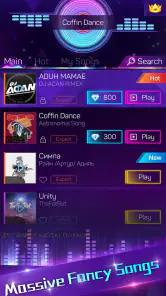
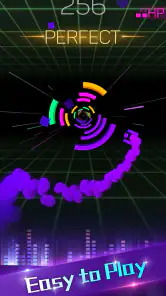
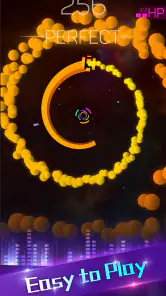
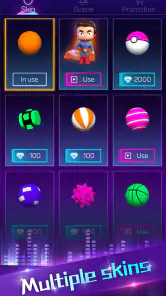
 Analysis by Frivlyz
I like mobile games that give me something to do in a spare minute without making me learn a complicated control scheme. Smash Colors fits that mood: it asks me to steer a ball through a sequence of colored targets, but matching the color is only half the job. The beat gives each move its timing, so a run can feel simple at first and suddenly demand sharper attention. It is a music game built around quick action and immediate feedback, rather than a long story or a deep set of systems.
From the First Move to the Next Run
That compact setup is what makes the game easy to try and surprisingly easy to keep playing. I can start without much preparation, see straight away whether my timing is working, and decide after a run whether I want another go. The appeal is not just the bright presentation; it is the small cycle of action, response, and reset that makes a short attempt feel complete while leaving room to improve.
First Impressions: A Burst of Colors
Upon launching Smash Colors, the first thing that catches your eye is the explosion of colors. It’s like stepping into a digital rainbow, where every color is more vivid than the last. The game doesn’t waste any time in getting you into action. With its simple yet effective interface, you can jump straight into the gameplay without any fuss.
Our Stories on Smash Colors
Smash Colors: The Strategic Symphony of Mobile Gaming
NewsPiano Fire: EDM Music & Piano—Igniting Your Rhythm Game Passion
NewsDancing Road Turns Short Breaks Into a Test of Rhythm and Timing
NewsSuper Stylist Makes Every Outfit a Test of Taste and Patience
NewsDominoes on Your Terms: Who Should Play and Who Should Pass
NewsPokémon GO Makes the Familiar World Feel New
NewsThat quick start is useful when I have only a little time, but it also means the game’s central demand arrives immediately: watch the path, read the color, and act at the right moment. There is little room to drift into the experience passively. I need to pay attention to what is coming next, and the bright effects that make the screen lively can also compete for that attention. If visual intensity wears you out, the same style that gives the game its energy may feel busy after repeated runs.
Gameplay: Follow the Beat
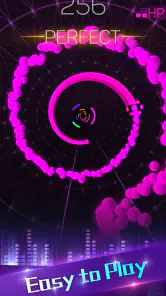
The gameplay is pretty straightforward yet addictive. You control a ball, navigating it along a path filled with vibrant circles. The catch? You need to smash through circles that match your ball’s color, all while grooving to some catchy tunes. The rhythm is the heart of the game, making it crucial to keep your fingers and ears in sync.
In practice, I find it helps to look a little ahead rather than stare only at the ball. The ball is the immediate focus, but the next color and the approaching beat are what give me time to prepare. When I concentrate only on the current impact, I am more likely to react late to a change. This small adjustment turns the run from frantic tapping into a more deliberate pattern of watching, listening, and moving.
What I love about the game is its ability to get progressively challenging. Just when you think you’ve got the hang of it, Smash Colors throws in a twist with speed changes and unexpected beats that keep you on your toes. It’s all about timing and reflexes, and honestly, it’s quite the adrenaline rush!
Gaming Stories You May Enjoy

Chess.com Turns Rematches Into Rivalries, but Community Has Its Costs

Archery Battle 3D Review: Sharp Aiming, Unclear Feedback

Should You Switch to Geometry Dash Meltdown? A Test of Timing and Patience

Fidget Toys Trading・Pop It 3D: What Happens When the Game Stumbles
NBA LIVE Mobile Makes the Season the Main Event
Sonic Forces: PvP Battle Race - Speed and Strategy Combined
Those shifts also explain why a familiar track or section can feel different on a later attempt: knowing the basic pattern does not remove the need to stay alert. I treat a missed match as a cue to notice what distracted me—was I watching the effects instead of the path, or acting on the music without checking the color? That quick self-check is more useful than simply tapping faster. The game rewards controlled reactions, not just eagerness.
Graphics and Sound: A Sensory Delight
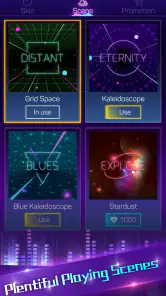
Visually, the game is stunning. The colors are not just there for aesthetics; they play a crucial role in the gameplay, making every level feel like a new adventure. The soundtracks are equally impressive. With a wide range of genres, from electronic to pop, each track is perfectly synced, adding to the immersive experience.
If you’re someone who appreciates good music and vibrant visuals, Smash Colors is a feast for the senses. Each level feels like a mini-concert, and I often find myself nodding to the beat as I play.
Sound is part of the control language here, so I get more from a run when I can hear the track clearly. Headphones can help me focus on the pulse in a noisy place, while playing quietly or with the sound off makes the color-matching side more prominent and the rhythm less useful. That trade-off matters: this is not quite the same as a conventional reflex game with music added as decoration. The beat is part of how I judge when to move.
What a Short Session Looks Like
A realistic time to try it is during a short break: I open the game, make one run, and see whether I can keep the ball aligned through the changing targets. If I miss, the next attempt has a clear purpose—I want to respond earlier to a color shift or keep time through a faster passage. That gives a few spare minutes a satisfying shape without requiring me to remember a plot or manage a long session.
For a better first impression, I would try it somewhere I can give the screen and audio a little attention rather than while walking or juggling another task. The controls may be simple, but the combination of timing, color, and movement still asks for focus. In a noisy commute, the visuals may carry more of the load; in a quiet room, listening closely can make the rhythm easier to follow. Neither situation changes the basic game, but the setting can change how readable it feels.
Where It Fits Among Music Games
Compared with a typical music game that asks me to hit notes as they arrive, this one puts more emphasis on guiding a moving ball through matching targets. That makes it a good fit if I want music tied to visible movement and quick reactions, rather than a screen organized around a conventional note track. Compared with a general arcade reflex game, the soundtrack is more than background atmosphere: it shapes the pace and helps make a run feel musical.
The trade-off is that players who want detailed music practice, a calm listening experience, or lots of control over how they engage with a song may prefer a different kind of rhythm game. Here, the attraction is the immediate challenge and the sensory punch. It is best approached as a compact action game with a strong musical pulse, not as a substitute for learning an instrument or exploring music in depth.
Who Will Enjoy It—and Who May Not
I would recommend it to someone who enjoys quick retries, bright arcade presentation, and the satisfaction of getting a little better through timing. It also suits players who like having sound guide their decisions, but do not want to spend a long time learning rules before the action begins. The simple premise makes it approachable, while the changes in pace give attentive players a reason to keep refining their reactions.
I would skip it if intense colors, fast visual changes, or repeated reflex challenges are not your thing. It may also be a poor match when I want to relax with music rather than actively track a moving target. The game’s appeal depends on staying engaged with the screen and beat; if I am looking for a slower, more forgiving experience, a different music game or a straightforward music player would serve that purpose better.
Access, Cost, and Practical Fit
Smash Colors is free to download, and its in-app purchases range from around a dollar to around twenty dollars per item. I would start with the free experience and decide for myself whether anything beyond it matters to how I play. The presence of optional purchases is worth keeping in mind, especially if I prefer games where spending is not part of my routine; I would check the purchase prompts carefully rather than treating every offer as necessary.
The game is made by BADSNOWBALL HONGKONG LIMITED. It has an average rating of 4.3 from around 346,000 ratings, with about 9,100 written reviews and over 100 million installs. Those figures suggest a widely tried game, but they do not tell me whether its particular mix of color, speed, and music suits my taste. The age rating is Mature 17+, so that is another practical detail to check before choosing it for a younger player.
On Android, the listed minimum operating-system requirement is version 5.1, and the current version is 1.1.44. If I am deciding whether an older device can run it, checking that system requirement is a useful first step. The game’s quick, attention-heavy format is also better suited to a phone session where I can see the screen comfortably and hear the beat than to playing while distracted.
Why Another Session Begins
The loop works because each run gives me a direct answer: I either keep up with the color and timing or I do not. Then I can reset with a concrete adjustment in mind, rather than replaying only for its own sake. That sense of a manageable challenge is the game’s strongest hook. It turns a failure into a small experiment—watch farther ahead, listen for the change, or avoid rushing the next move—and makes another attempt feel worthwhile.
Still, that reset can lose its appeal if I am not in the mood to repeat a similar kind of challenge. There is no need to force a long session. I find the game works best in short bursts, when the quick feedback feels energizing instead of repetitive. If a run starts to feel like noise rather than a rhythm I can follow, taking a break is a better choice than trying to brute-force my way through it.
Why You Should Give It a Try
So why should you download Smash Colors? Well, if you’re looking for a game that offers more than just mindless tapping, this is it. It’s a game that challenges your rhythm skills while keeping you entertained with stunning visuals and catchy tunes. Plus, it’s super easy to pick up, making it perfect for those quick gaming sessions on the go.
My recommendation comes with a clear condition: try it if you want music and reflexes working together, and keep your sessions short enough that the rapid feedback stays fun. If what you want is a deep rhythm simulator or a low-stimulation way to listen to songs, it is not the right match. But for a fast, colorful challenge that can turn a spare moment into a focused attempt, it has a distinct appeal.
In conclusion, Smash Colors is more than just a game; it’s an experience. Whether you’re a casual gamer or a rhythm game enthusiast, there’s something here for everyone. So grab your headphones, turn up the volume, and dive into the colorful world of Smash Colors. Trust me, you won’t be disappointed!
Smash Colors Pros and Cons
Pros
- Engaging rhythm-based gameplay.
- Visually appealing graphics.
- Easy to learn controls.
- Regular updates with new content.
- Supports offline play.
Cons
- Limited song selection.
- In-app purchases can be pricey.
- Ads can interrupt gameplay.
- Requires a lot of storage space.
- Can be repetitive over time.
This Game in Other Languages
Frequently Asked Questions
What is Smash Colors, and how does it work?
Smash Colors is a vibrant and engaging rhythm-based game available on both Android and iOS platforms. Players navigate through colorful tracks by tapping to the rhythm of various music tracks. The goal is to match the colors and beats to progress through levels. The game features intuitive controls, vibrant graphics, and a wide selection of songs from different genres to keep players entertained.
Is Smash Colors free to play, or are there in-app purchases?
Smash Colors is free to download and play. However, like many mobile games, it offers in-app purchases. Players can buy in-game currency or premium features, such as extra lives, exclusive tracks, or ad-free experiences. While the game is enjoyable without spending money, these purchases can enhance the gameplay experience for those who wish to invest in additional content.
What are the system requirements for Smash Colors?
To run Smash Colors smoothly, users need a device with at least Android 5.0 or iOS 10.0. The game requires a minimum of 2GB of RAM and a stable internet connection for downloading songs and updates. It's designed to perform well on a range of devices, but newer models will provide a better visual and performance experience.
Does Smash Colors require an internet connection to play?
Smash Colors requires an internet connection for initial setup, downloading new songs, and receiving updates. However, once the songs are downloaded, players can enjoy them offline. This makes it convenient for gaming on the go or in areas with limited connectivity, as long as the content is pre-downloaded.
How can I improve my skills in Smash Colors?
Improving in Smash Colors involves practicing regularly and familiarizing oneself with the rhythm patterns of each track. Players can start with easier levels to build confidence before progressing to more challenging ones. Utilizing headphones can also enhance the gaming experience by allowing players to better sync with the music. Additionally, watching tutorials and gameplay videos can provide tips and strategies from experienced players.


