

Paper Fold
- Reviews
- 4.5
- Version
- 200365
- Installs
- 100,000,000+

Screenshots
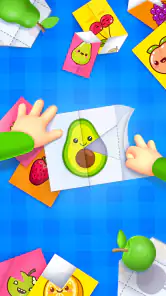
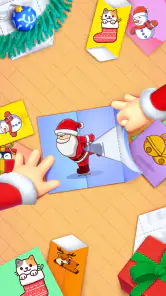
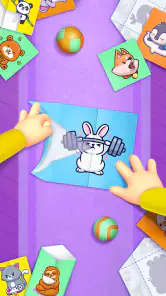
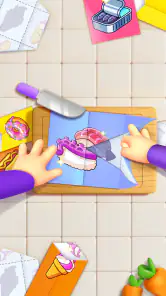
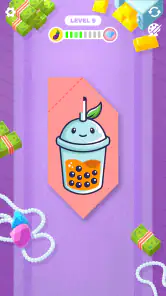
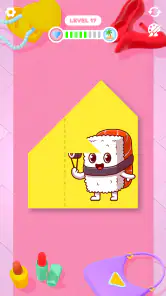
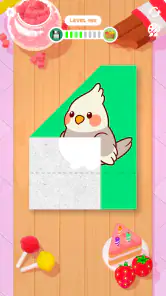
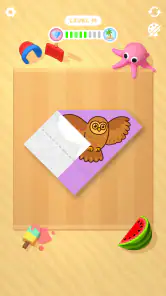
 Analysis by Frivlyz
I reach for a folding puzzle when I want something light that still asks me to pay attention, and Paper Fold fits that mood well. Its central idea is easy to grasp: arrange folds in the right order until a partly hidden picture comes together. The appeal is less about speed or competition and more about spotting how one small move changes the whole image. I find it best in short sessions, when I have a few spare minutes and want a clear task rather than a demanding game to sink into.
What a quick session feels like
The first few puzzles are approachable, so I can understand the interaction without a lengthy tutorial or a complicated set of rules. That makes the game easy to recommend to someone who does not usually play puzzle games. The challenge comes from thinking ahead: a flap that looks correct on its own may cover the part of the picture I need to reveal next. Instead of tapping at random, I get better results by looking at the visible shapes and considering which layer should move first.
That small pause before a fold is the heart of the experience. It gives the game a gentle mental rhythm: inspect, make a choice, then see whether the picture agrees. I would not describe it as a deep logic game, but it does reward attention and spatial reasoning. If I am tired, the forgiving feel makes it easier to keep trying; if I want complex deduction or a long-term challenge, I would choose a more demanding puzzle instead.
Speed, interruptions, and longer play
Paper Fold is built around individual picture puzzles, so it is easy to fit a round into a wait, a quiet break, or a short trip. The folding animation gives each decision a little visual payoff, but the pace is not designed to test reflexes. I can take a moment to examine a shape rather than racing a clock. That makes it a calmer alternative to quick-match games, although anyone looking for fast action may find its measured rhythm too gentle.
When I play for longer, the main strain is not complicated controls; it is that the basic folding idea remains the focus. The pleasure depends on each new picture making me reconsider the order of moves. If I find myself repeating the same kind of solution, my attention can drift. A useful way to keep the session enjoyable is to stop after a few puzzles and return later, rather than expecting the game to provide the changing objectives or escalating systems of a larger puzzle adventure.
Reliability and the feel of play
The presentation is clean, and the controls are simple enough that I can concentrate on the paper rather than learning an interface. The animation and soft fold sounds contribute to a relaxed mood, especially in a quiet setting. As with any game on a phone, the experience can depend on the device and the conditions in which I use it; I would not treat a smooth-feeling session as a promise that every phone or every situation will behave identically. The practical upside is that the game’s basic idea does not ask me to manage a complex control scheme while I play.
If a puzzle does not work out, I can treat it as a chance to rethink the sequence rather than a high-stakes failure. My tip is to pause after an incorrect fold and inspect what changed: the newly exposed edge or covered detail can suggest why the order matters. That is more useful than repeating the same taps quickly. The game’s relaxed style suits trial and error, but it is still more satisfying when I make a deliberate adjustment instead of relying on luck.
Gaming Stories You May Enjoy

Dancing Road Turns Short Breaks Into a Test of Rhythm and Timing

Super Stylist Makes Every Outfit a Test of Taste and Patience

Dominoes on Your Terms: Who Should Play and Who Should Pass

Pokémon GO Makes the Familiar World Feel New

Chess.com Turns Rematches Into Rivalries, but Community Has Its Costs

Archery Battle 3D Review: Sharp Aiming, Unclear Feedback
Who it suits—and who may prefer another puzzle
I would suggest it to casual players, families looking for an uncomplicated screen-time activity, and anyone who likes visual puzzles but does not want timers or elaborate rules. It can also work as a small reset between tasks: one or two pictures give my attention a single, manageable focus. For a child, the simple premise is appealing, though an adult should still decide whether the overall app experience is appropriate for their household. The content rating is Everyone, and the game is free to download.
It is less suitable for someone who wants a story, a competitive leaderboard, deep strategy, or a large variety of puzzle mechanics. Compared with a traditional jigsaw game, this asks me to reason about layer order rather than assemble many separate pieces. Compared with a match-style puzzle, it feels slower and more tactile, with less emphasis on chains or quick pattern matching. Those differences are the point, but they also make it a matter of taste. I would switch to a broader puzzle collection if I wanted several kinds of brainteasers in one place.
Everyday use and practical choices
A realistic use for me is opening it while waiting for a coffee or sitting through a short gap between appointments. I can focus on a single image, put the phone away when my turn comes, and pick it up again when there is another pause. It is not the game I would choose if I needed to keep track of a long story or coordinate play with friends. Its strength is that the central task is self-contained: I can enjoy a brief attempt without planning a whole evening around it.
For a more thoughtful approach, I look at the picture as a set of overlapping regions instead of treating each paper corner as an isolated move. I try to identify which visible detail must remain uncovered at the end, then work backward to decide what should fold over it and what must stay exposed. This is not a special mode or hidden tool; it is simply a way of reading the puzzle that makes the visual logic clearer. It also helps me distinguish a genuine mistake from a fold that only looks untidy halfway through.
The developer is CASUAL AZUR GAMES, and the game sits in the puzzle category. It has a 4.5 average from around 1.1 million ratings, with roughly 15,000 written reviews and over 100 million installs. Those figures suggest that the simple premise has reached a broad audience, but they do not tell me whether its particular pace will suit you. I would use the short sessions as the deciding test: if unfolding a picture feels calming rather than repetitive, it is likely a good fit.
Device fit, cost, and expectations
The game is free, with in-app purchases priced at $3.99 per item. I would treat that as an optional spending decision rather than a reason to expect a different style of play; the appeal remains the paper-folding puzzles. The current version is 200365, and the minimum operating-system requirement is Android 7.0. Those details are useful when deciding whether an older device is a candidate, but they are not a guarantee of identical performance across every model. If a phone is already struggling with games, I would keep expectations modest and see how it handles this one before settling in for a long session.
For everyday use, I also think about where I am playing. The animations and subtle sounds are part of the calm presentation, but in a quiet room I might lower the volume or mute the phone so the game stays unobtrusive. On a crowded commute, a bright screen or background distractions can make it harder to inspect small picture details; a short, stationary break is a better setting when I want to reason carefully. These are ordinary trade-offs of a visual phone puzzle, not reasons to avoid it outright.
Unfolding the Basics
So, what’s the deal with Paper Fold? At its core, it’s a puzzle game where you fold pieces of paper to form pictures. Sounds straightforward, right? It is, but that’s the beauty of it. The game starts off easy, almost lulling you into a false sense of confidence. The initial levels are like a warm-up, gently easing you into the mechanics of folding.
As you progress, the challenge ramps up. You’ll find yourself pausing to think about the sequence of folds needed to complete each picture. Trust me, it’s a lot more strategic than it seems at first glance. Each fold changes the layout, and one wrong move can mean starting over. Luckily, the game is forgiving, so you can experiment without much penalty, which keeps the frustration levels low and the fun high.
Visuals and Interface
If you’re anything like me, you’ll appreciate a game that’s easy on the eyes. Paper Fold delivers just that with its clean and minimalist design. The colors are vibrant, and the interface is intuitive, making navigation a breeze. There’s something oddly satisfying about the way the paper folds and unfolds on the screen.
The animations are smooth, which adds to the overall experience. It’s almost meditative in a way, watching the paper transform with each tap. And if you’re a fan of ASMR, the subtle sound effects that accompany each fold are a delightful touch.
Why You'll Love It
One of the standout features of Paper Fold is its accessibility. It’s a game that anyone can pick up and play, regardless of age or skill level. Whether you have five minutes or an hour, it’s easy to jump in and out without feeling like you’ve lost your place. This makes it a perfect companion for those short breaks throughout the day.
I also love how it manages to be both challenging and relaxing. The puzzles are engaging enough to keep you hooked, but not so difficult that they become frustrating. It strikes a perfect balance, which is not an easy feat for a puzzle game.
Room for Improvement
No app is perfect, right? While Paper Fold is a fantastic game, there are a couple of areas where it could improve. For one, the game could benefit from a few more features to keep things fresh. Perhaps introducing different modes or timed challenges could add an extra layer of excitement.
Additionally, while the ads aren’t overwhelming, they can sometimes interrupt the flow of the game. An option to remove them with a one-time purchase would be a welcome addition for those of us who prefer an ad-free experience.
Final Thoughts
All in all, Paper Fold is a delightful little app that offers a unique and refreshing take on puzzle games. It’s one of those rare finds that manages to be both mentally stimulating and wonderfully relaxing at the same time. If you’re looking for a new game to unwind with, give this one a try. Just be warned—you might find yourself folding paper long after you intended to stop!
Paper Fold Pros and Cons
Pros
- Intuitive and easy-to-use interface.
- Visually appealing with colorful designs.
- Provides a relaxing and fun experience.
- Challenging puzzles with increasing difficulty.
- No intrusive ads during gameplay.
Cons
- Limited levels can be completed quickly.
- Requires internet for some features.
- Occasional lag on older devices.
- In-app purchases can be expensive.
- Lacks multiplayer or social features.
This Game in Other Languages
Frequently Asked Questions
What is the main objective of Paper Fold?
Paper Fold is a relaxing puzzle game where the main objective is to fold pieces of virtual paper in the correct order to create a specific image. Each level presents a new challenge as players must figure out the right sequence of folds to match the target picture. It's a game that combines strategy with creativity.
Is Paper Fold suitable for all age groups?
Yes, Paper Fold is designed to be enjoyed by players of all ages. Its simple mechanics and intuitive gameplay make it accessible for children, while the increasing difficulty of levels offers a satisfying challenge for adults. The game’s charming design and engaging puzzles provide a delightful experience for everyone.
Does Paper Fold require an internet connection to play?
No, Paper Fold can be played offline, making it perfect for those looking to enjoy a game on the go without needing an internet connection. However, some features, such as updates or additional level packs, may require connectivity to download. Players can enjoy the core experience entirely offline.
Are there in-app purchases in Paper Fold?
Yes, Paper Fold offers in-app purchases. While the game is free to download and play, players have the option to purchase hints or additional content to enhance their experience. These purchases are entirely optional, and the game can be completed without spending money, though players may find them helpful for difficult levels.
How does Paper Fold handle user data and privacy?
Paper Fold is committed to protecting user privacy. The app collects minimal data necessary for gameplay and ensures that any information gathered is handled in accordance with privacy laws. Players can review the app's privacy policy within the settings to understand what data is collected and how it is used, ensuring transparency and security.


