

Geometry Dash Lite
- Reviews
- 4.4
- Version
- 2.2.144
- Installs
- 500,000,000+

Screenshots
 Analysis by Frivlyz
I usually reach for Geometry Dash Lite when I want a game I can understand in seconds but can keep practicing for much longer. Its one-touch rhythm-platforming gives every attempt a clear purpose: watch the pattern, time the tap, and learn from what went wrong. That clarity is a real strength, though the sharp difficulty and constant restarts mean it is not an easygoing choice for every player.
Jumping into the Basics
At first glance, Geometry Dash Lite seems deceptively simple. You’re a square, and your mission, should you choose to accept it, is to navigate through a series of treacherous obstacles. The catch? You have to time your jumps perfectly, or it's back to the start for you. It’s like a dance, where every move needs to be in perfect harmony with the beat. This game doesn’t just test your reflexes; it also tests your patience.
Reading the action and finding your way
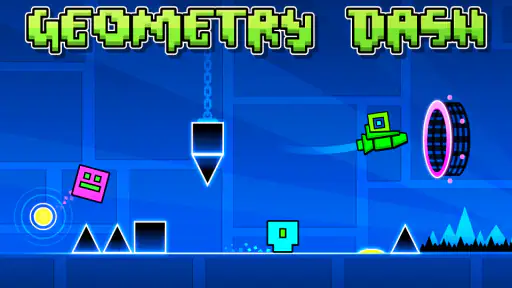
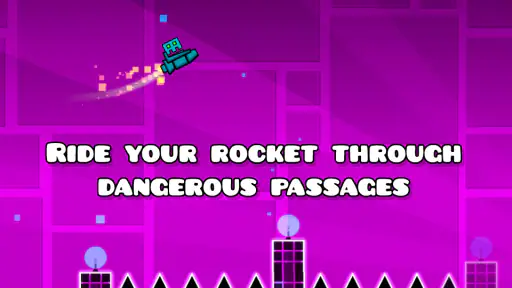
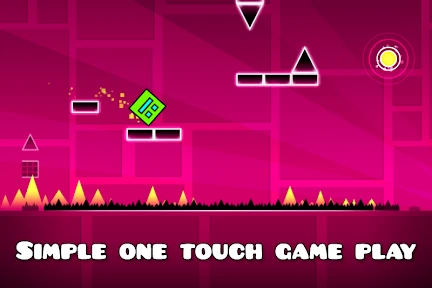
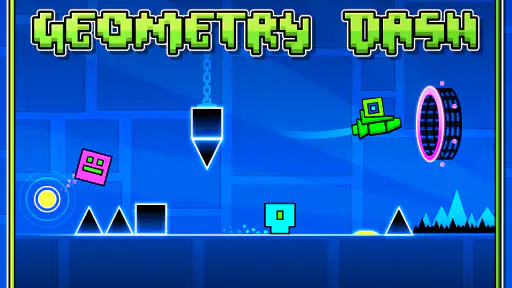
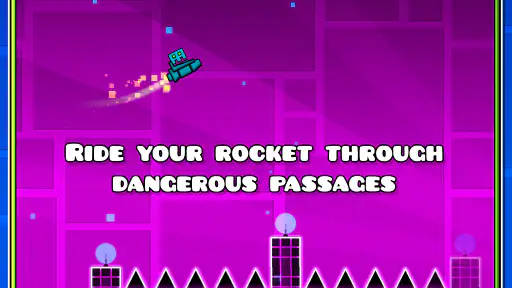
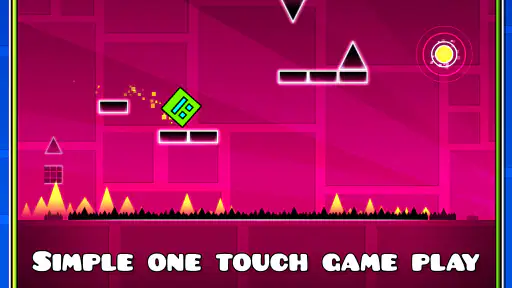
The screen keeps the main task easy to read: the character moves forward, obstacles approach, and your input is about timing. That visual simplicity makes it quick to understand even if you have never played a rhythm platformer. I also like that I can focus on the immediate route instead of navigating a complicated control scheme or a screen crowded with unrelated systems.
Our Stories on Geometry Dash Lite
Temple Run: How an Endless Runner Became a Gaming Icon
NewsUnlocking the Secrets of Extreme Car Driving Simulator
NewsPokémon GO Is Better on Modern Phones, but Less Forgiving
NewsSubway Surfers: The Timeless Thrill of Endless Running
NewsGalaxy Attack: The Arcade Revival Captivating Modern Gamers
NewsDraw Climber: Redefining Arcade Gaming with Creative Mechanics
NewsThere is a useful distinction between recognizing what to do and being able to do it consistently. The next obstacle may be visible, but the game still asks you to react at the right moment, and a small timing error can end a run. If you are new, I would treat early attempts as a way to learn the visual language of each level rather than as a test you must pass on the first try. Watching how hazards are spaced can help you anticipate the next action instead of tapping only at the last instant.
Music and Rhythm
One of the standout features of Geometry Dash Lite is undoubtedly its music. Each level is perfectly synced with a catchy tune that not only sets the pace but also helps guide your jumps. It’s almost hypnotic. You’ll find yourself bobbing your head to the rhythm as you try to nail that perfect run. The tracks are so well-integrated that they become an essential part of the gameplay experience.
That musical guidance is helpful, but I would not rely on sound alone. A rhythm that feels intuitive during one stretch can be harder to follow when your attention is divided or the timing feels unfamiliar. A practical approach is to notice both the beat and the visual spacing, then use whichever cue is clearer at a particular moment. If you are practicing a difficult section, keeping your attention on one cue at a time can make it easier to tell whether a miss came from late timing or from misreading the obstacle.
Visuals and Aesthetics
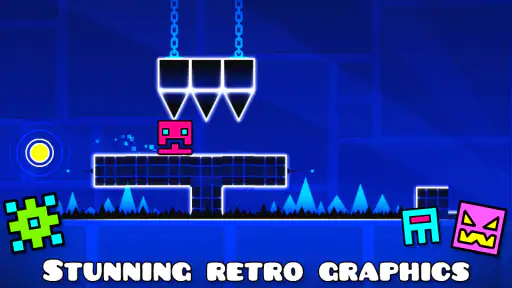
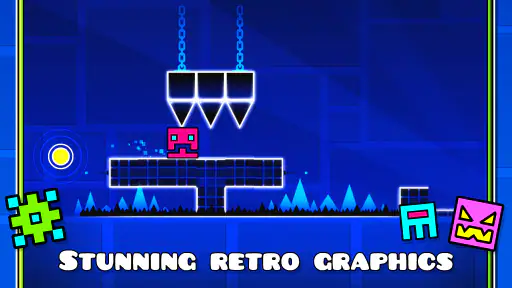
Visually, the game is a treat. Its bright colors and geometric shapes create a vibrant world that’s both challenging and engaging. Each level has its own unique style, making every moment feel fresh and exciting. It’s like being inside a neon rave, with all the adrenaline and excitement that comes with it.
Gaming Stories You May Enjoy

Dancing Road Turns Short Breaks Into a Test of Rhythm and Timing

Super Stylist Makes Every Outfit a Test of Taste and Patience

Dominoes on Your Terms: Who Should Play and Who Should Pass

Pokémon GO Makes the Familiar World Feel New

Chess.com Turns Rematches Into Rivalries, but Community Has Its Costs

Archery Battle 3D Review: Sharp Aiming, Unclear Feedback
Comfort, reactions, and different players
The clean shapes help keep the action recognizable, but the bright, fast-moving presentation can still feel intense. I would not describe the visual style as quiet or restful: the screen is designed to hold your attention while hazards arrive in quick succession. If busy movement or strong color contrast tires you, try a short session first and see how it feels rather than assuming the simple shapes will make the whole experience gentle.
The control idea is easy to grasp, which can suit players who prefer a small number of direct actions. The hard part is the fine timing: repeated taps demand coordination and quick reactions, so a player with limited hand movement, tremor, or slower response time may find the central challenge frustrating. There is no need to judge that as a failure; the game’s appeal depends heavily on precise input, and that is exactly where its accessibility is limited for some people.
When a short session works best
A realistic way to fit the game into a day is to try a level during a brief wait, such as while a kettle boils or before meeting a friend. The basic loop makes it easy to begin without a long setup, but I would choose a stopping point before opening it. A failed attempt naturally invites another, and a quick break can stretch longer than intended when you are close to clearing a section.
For a calmer setting, the music can be part of the appeal; in a shared room, on public transport, or somewhere you need to stay aware of people around you, the same sound and visual focus may be less suitable. I would keep the volume considerate and avoid playing when attention needs to remain on the surroundings. The game is most comfortable when you can look at the screen and concentrate without having to divide your focus.
How it compares with other arcade games
Compared with an arcade game built around collecting items, exploring a space, or choosing among many actions, this one puts nearly all of its weight on timing a route through obstacles. That narrow focus is refreshing if you want a direct skill challenge, and less appealing if you want variety in the moment-to-moment controls or room to recover from mistakes. Many arcade games let you improvise; here, learning the pattern and executing it accurately are the main rewards.
It also differs from more relaxed platformers where you can pause to consider a jump or move at your own pace. The rhythm-led flow creates momentum, so hesitation can be as troublesome as rushing. If you enjoy improving through repetition, that structure can feel fair and satisfying. If you prefer exploration, forgiving checkpoints, or a gentle difficulty curve, another platformer will probably be a better fit.
Challenges and Frustrations
Be warned, though. This game is hard. Like, really hard. It’s one of those games where you’ll find yourself saying, “Just one more try,” until you realize it’s 3 AM. But that’s part of the charm. The satisfaction of finally conquering a level after countless attempts is indescribable. It’s a test of perseverance, and when you finally succeed, it’s worth every minute.
When a level keeps stopping you at the same point, I find it more useful to pause briefly than to hammer through attempts while annoyed. Try to identify the specific obstacle that is causing trouble and pay attention to the timing immediately before it. A small reset in concentration can be more helpful than simply trying harder. This also makes the challenge easier to assess: if you enjoy refining a repeated sequence, the difficulty may motivate you; if retries quickly stop being fun, the same design can become a chore.
What’s more, the game doesn’t give you any shortcuts. You can’t pay to win, and there are no power-ups to help you out. It’s just you, your reflexes, and your willpower. It’s refreshing in a world where many games bombard you with in-app purchases.
Who should try it, and who may want something else
I would recommend it to players who like quick arcade challenges, enjoy music-led action, and feel pleased by gradual improvement more than by constant novelty. It is also a good choice when you want a game whose basic idea is immediately understandable. The free price makes it easy to try without committing money, while its broad reach—over 500 million installs—shows that the format has found a large audience. RobTop Games is the developer behind this long-running arcade game, first released on September 15, 2013.
The game has an average rating of 4.4 from around 7.7 million ratings, with roughly 495,000 written reviews. Those figures suggest plenty of players have formed an opinion, but they cannot tell you whether its demanding timing suits your hands, attention, or taste. I would skip it if you want a forgiving game to play while distracted, dislike restarting after mistakes, or need a slower pace. It is rated Everyone 10+, which is useful context for families, but an age rating does not guarantee that the rapid action will suit every child.
Practical expectations before installing
The game is free, and the current version is 2.2.144; it requires Android 5.0 or later. Those details make it straightforward to check basic compatibility, but I would still think about the kind of play you want. This is not the best pick for a player who expects a gentle tutorial to remove the challenge, or for someone who wants to progress by collecting upgrades rather than practicing execution.
One question people often have is whether it works for a quick play session. The mechanics make a short attempt easy to start, but the restart loop can make it hard to stop, so it is better to decide in advance whether you have a minute or a longer stretch. Another is whether the soundtrack is merely background: in my experience, it is part of the timing and mood, but visual attention remains important too. And if a level feels impossible, the most useful next step is usually to slow down, observe the pattern, and make a deliberate attempt rather than treating every failure as a reason to tap faster.
Final Thoughts
Geometry Dash Lite is more than just a game; it’s an experience. It’s a journey filled with challenges, rhythm, and a whole lot of jumping. Whether you’re a casual gamer looking for a quick thrill or a hardcore player seeking your next big challenge, this game has something for everyone. So, if you haven’t already, give it a try. But beware, once you start, it might be hard to stop.
My recommendation comes with one important qualification: this is a game about precision, repetition, and concentrated play, not a universally comfortable arcade option. Its straightforward presentation lowers the barrier to understanding, while its fast timing raises the barrier to succeeding. If that trade-off sounds appealing, it can turn spare moments into satisfying practice. If you need slower action, more flexible controls, or a less stimulating screen, choosing a different kind of platformer is a sensible decision rather than a missed opportunity.
Geometry Dash Lite Pros and Cons
Pros
- Engaging rhythm-based gameplay.
- Variety of challenging levels.
- Simple yet addictive mechanics.
- Frequent updates and new content.
- Colorful and dynamic graphics.
Cons
- In-app ads can be intrusive.
- Limited features in the Lite version.
- High difficulty for some players.
- Requires precise timing and reflexes.
- No offline mode available.
This Game in Other Languages
Frequently Asked Questions
What is Geometry Dash Lite and how does it differ from the full version?
Geometry Dash Lite is a rhythm-based action platformer game where players control a square icon navigating through levels filled with obstacles. The Lite version offers a taste of the full game with fewer levels and features. Unlike the full version, it lacks a level editor and additional complexities, making it ideal for beginners or those wanting a free trial before purchasing the full game.
Is Geometry Dash Lite free to play and are there in-app purchases?
Yes, Geometry Dash Lite is free to download and play, making it accessible to a wide audience. However, it does include ads, which can be removed through in-app purchases. While the Lite version is quite enjoyable, some players might opt for the premium version to unlock more levels and eliminate advertisements, enhancing their gaming experience.
What devices are compatible with Geometry Dash Lite?
Geometry Dash Lite is compatible with both Android and iOS devices, allowing a broad spectrum of users to enjoy the game. The game runs smoothly on most smartphones and tablets, but it is advisable to have the latest OS updates for optimal performance. Players can check the specific requirements on the app's download page in their respective app stores.
How many levels are available in Geometry Dash Lite and are they challenging?
Geometry Dash Lite offers 13 levels, each with its own unique soundtrack and design. These levels are challenging, requiring quick reflexes and timing to navigate through intricate obstacles while listening to rhythmic music. Although fewer than the full version, these levels are enough to test a player's skill and provide hours of entertainment, especially for those new to the game.
Can players create their own levels in Geometry Dash Lite?
No, the level creation feature is exclusive to the full version of Geometry Dash. Geometry Dash Lite does not support user-generated content, which means players can only experience the pre-designed levels included in the game. However, this limitation helps keep the app lightweight and accessible, providing a straightforward gaming experience.


