

Mobile Legends: Bang Bang
- Reviews
- 4.1
- Version
- Varies with device
- Installs
- 500,000,000+

Screenshots


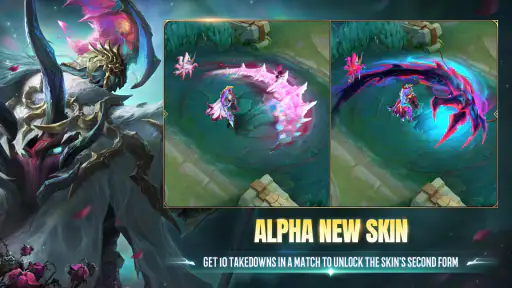
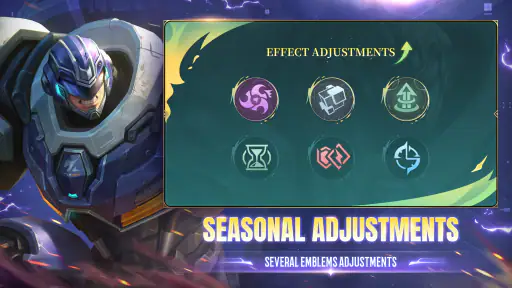
 Analysis by Frivlyz
I would approach Mobile Legends: Bang Bang as a team game first and a quick phone distraction second. Its central appeal is getting four teammates to make sensible decisions together while five opponents try to disrupt them. That makes each match more involving than a simple action game, but it also means a short session can demand more attention than I planned to give it. When I have a clear stretch of time and want active, tactical play, it can be a satisfying choice; when I only have a moment between errands, I would rather not start a match I may need to leave.
Where new players tend to get stuck
The opening tutorial helps with the basic controls and match flow, but learning what to do in a live 5v5 game is a different challenge. Knowing how to move and use abilities does not automatically teach when to help a teammate, when to defend, or when to stop chasing an opponent. I found the best way to get past that early uncertainty was to focus on one role and a small number of heroes instead of trying to understand the entire roster at once.
That choice is useful because each hero’s abilities change how I read a fight. A Tank can absorb pressure, a Marksman may need space to deal damage, and a Support can make a teammate’s position safer. Those are broad roles rather than a promise that every match will follow a script. I treat them as clues for what my team might need, then adjust to what is actually happening instead of assuming my preferred playstyle is always the right answer.
Our Stories on Mobile Legends: Bang Bang
Why Mobile Legends: Bang Bang Is a Must-Play MOBA
NewsWhy Free Fire MAX Redefines Mobile Action Gaming
NewsWhy PUBG MOBILE Reigns Supreme in Mobile Gaming
NewsDancing Road Turns Short Breaks Into a Test of Rhythm and Timing
NewsSuper Stylist Makes Every Outfit a Test of Taste and Patience
NewsDominoes on Your Terms: Who Should Play and Who Should Pass
NewsSetup checks before a match
Stable play starts before the first fight. I check that the phone has enough battery, that the connection is behaving normally, and that I can give a match my attention without needing to switch tasks. A multiplayer game depends on both the device and the network, so a problem that looks like sluggish control can have more than one cause. If a match feels rough, I avoid changing several things at once; I first check whether the connection is steady, then close distractions or restart the game if needed.
The game is free to start, with optional in-app purchases listed from $0.49 to $111.40 per item. I would treat purchases as optional extras, not as a requirement for learning the core team play. It is also rated Teen, so I would keep that audience guidance in mind when deciding whether it suits a younger player. MOONTON has kept this mobile action game active since its October 31, 2016 release, and it has an average rating of 4.1 from around 37 million ratings, with over 500 million installs. Those figures speak to its broad reach, but popularity alone cannot tell me whether its pace, team dependence, or competitive pressure will suit a particular person.
Getting Started
So, what’s the first thing you’ll notice when you open Mobile Legends: Bang Bang? Well, you’re greeted by a colorful and inviting interface that screams "dive into battle!" The game is designed to be user-friendly, making it easy for both MOBA veterans and newbies to get started. You’ll go through a quick tutorial that’s pretty straightforward, and it gives you a solid foundation on how the game mechanics work.
Gameplay and Features
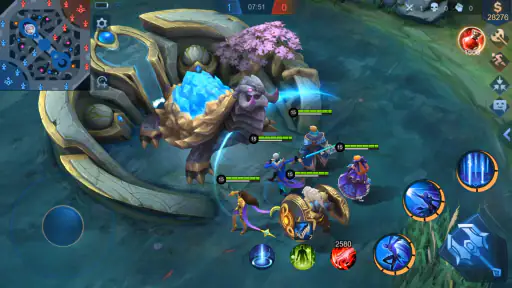
Now, let’s talk about gameplay. Each match is a 5v5 battle where you team up with players around the world to destroy the enemy’s base. It’s all about strategy and skill, and trust me, it can get pretty intense! You have a roster of heroes to choose from, each with unique abilities and roles such as Tank, Marksman, or Support. Whether you prefer going on the offensive or playing it safe with defense, there’s a hero for you.
Gaming Stories You May Enjoy

Pokémon GO Makes the Familiar World Feel New

Chess.com Turns Rematches Into Rivalries, but Community Has Its Costs

Archery Battle 3D Review: Sharp Aiming, Unclear Feedback

Should You Switch to Geometry Dash Meltdown? A Test of Timing and Patience

Fidget Toys Trading・Pop It 3D: What Happens When the Game Stumbles
NBA LIVE Mobile Makes the Season the Main Event
The matches are fast-paced, usually lasting around 10 minutes, which is perfect for mobile gaming. You won’t need to dedicate hours to see some action, and that’s a big plus in my book.
In practice, I get more from a match when I set a small objective before it begins: watch my positioning, stay with the team, or pay attention to defending rather than chasing. A narrow goal gives me something useful to learn even when the result is a loss. It also makes experimentation less chaotic. If I try a new hero, I can focus on understanding that hero’s role instead of judging the whole game by one unfamiliar match.
This is a helpful way to decide whether the game fits an everyday routine. If I have a quiet break and enough time to finish a match, the compact format can work well. If I am waiting for a call, commuting through an unreliable connection, or likely to be interrupted, I would choose a game that can be paused or played in shorter independent rounds instead. The team format is part of the fun, but it also makes leaving midway more disruptive than stopping a solo game.
Recovering when a session goes wrong
When controls feel delayed or a match stops feeling responsive, I try to separate a temporary network issue from a broader device problem. I check whether other online activity is working, move to a steadier connection if one is available, and avoid repeatedly tapping controls in frustration. If the game itself seems stuck, closing and reopening it is a simple first step; I would also make sure the device is not overloaded with other active apps. These are basic checks, not a guarantee that every problem is fixable from the player’s side.
If I have to leave a match, I do not assume that restarting will erase the consequences of leaving. The more practical choice is to start only when I can stay for the session and to tell teammates what I can through the available communication tools. I keep chat short and useful: a clear signal about where I am going or what I intend to defend is more helpful than a stream of messages during a fight. That habit reduces distraction for me and gives teammates a better chance to understand my plan.
A poor result is not always evidence that I chose the wrong hero. I look back at one concrete decision—whether I split away from teammates, ignored a threatened area, or entered a fight without support—rather than blaming every loss on matchmaking or controls. This makes improvement less frustrating and helps me decide whether I actually want to queue again. If I am annoyed or rushing, stopping for the day is often better than turning a casual session into a string of careless matches.
Graphics and Sound
The graphics are vibrant and engaging, which adds to the overall excitement of the game. The characters are well-designed, and the battlefields are detailed enough to make you feel like you’re in the thick of it. The sound effects and background music are also on point, enhancing the immersive experience. I found myself getting lost in the game’s world, which is exactly what you want from a mobile game.
That visual clarity matters for more than atmosphere: in a crowded fight, I need to follow several characters and ability effects at once. The bright presentation makes the action feel lively, though a busy screen can still be a lot to process when I am new to a hero or trying to watch the whole team. I give myself time to learn the battlefield rather than expecting to read every clash perfectly from the start. Sound adds impact, but I do not rely on it as my only way to understand what is happening, especially when playing somewhere I need to keep the phone quiet.
Community and Competitiveness
One of the standout aspects of Mobile Legends is its community. The game has a massive player base, and it’s always buzzing with activity. Whether you’re looking to join a clan or just want to play a quick match, there’s always someone online. The competitive scene is pretty wild too. There are ranked matches for those who want to prove their skills and climb the leaderboard. It’s challenging, sure, but incredibly rewarding when you start winning.
The social side is a genuine advantage if I want opponents and teammates rather than computer-controlled action, but it also means other people’s choices affect my match. A team can disagree about what to do, and not every player communicates in a useful way. I get the best experience when I treat chat as coordination rather than a place to argue. Someone who finds competitive losses or unpredictable teammates stressful may prefer a single-player action game, where progress does not depend on a group of strangers making compatible decisions.
Compared with other mobile MOBAs, this is most appealing to someone who wants the familiar team-versus-team structure on a phone and is willing to learn its particular heroes and habits. A different MOBA may suit a player better if its pace, interface, or community feels more comfortable; the broad genre resemblance does not make every title interchangeable. Compared with casual action games, this one asks for more attention to teammates and objectives, so I would not choose it as a hands-free way to fill a spare minute.
A Few Tips
Before wrapping up, let me give you a couple of tips. First, communication is key. Use the in-game chat to coordinate with your team. Secondly, don’t be afraid to experiment with different heroes to find your perfect match. Each hero has a learning curve, but that’s part of the fun!
I would add one practical limit to that advice: experiment when you can pay attention, not when you are already struggling to keep up with a match. I learn more by changing one thing at a time—my hero, my positioning, or my focus—than by trying several unfamiliar choices together. For a newer player, a dependable role and a simple plan can make team fights easier to follow. Once those basics feel natural, exploring other heroes becomes more informative and less like guessing.
For a realistic routine, imagine getting home with a quiet break before dinner. I would check the connection and battery, choose a hero I know, and play a match with one goal in mind. If I have only a few minutes before I need to leave, I would not queue; I would save the game for a time when I can finish without rushing. That small decision makes the short-match format more enjoyable and is fairer to the four people relying on me.
Some readers will also wonder whether the game is suitable for a first-time MOBA player. I think it can be, because the tutorial provides an entry point and the roles give beginners a basic way to think about team contribution. But the tutorial is only the beginning: learning when to engage, retreat, or help a teammate takes practice. If someone wants action without studying patterns or accepting occasional team frustration, a less competitive mobile game is likely a better fit.
Another reasonable question is whether spending money is necessary. The game is free to play, and its listed purchases are optional in-app items. I would begin without buying anything and decide only after I understand what I enjoy about the game. That keeps the decision tied to personal value rather than pressure to keep up. The same restraint applies to competitive play: climbing ranks can be motivating, but it is not the only worthwhile way to enjoy a match.
Device and connection problems deserve a little patience, too. The minimum operating-system requirement is Android 4.4, but meeting that threshold does not by itself guarantee that every phone will feel equally smooth. Before assuming the game is at fault, I would check for an unstable connection, limited device resources, or interruptions from other apps. If the issue persists after basic checks, I would avoid making repeated changes during a live match and try again later under more stable conditions.
The clearest reason to skip this game is not that it lacks action; it is that its action is tied to a team and a competitive match. Players who need pause-anytime progress, dislike coordinating with strangers, or have a habit of being interrupted may find the format more demanding than relaxing. On the other hand, if you enjoy learning a hero, reading a developing fight, and adjusting your plan alongside other players, the structure gives you plenty to work on beyond simply aiming or tapping quickly.
In conclusion, Mobile Legends: Bang Bang is a game that offers an exhilarating MOBA experience right on your mobile device. With its fast-paced matches, diverse hero roster, and vibrant community, it’s no wonder it has become a favorite among gamers. So, if you’re ready to embark on epic battles and strategic gameplay, give it a shot. You might just find yourself hooked!
My more measured recommendation is to try it when you can give a full match your attention, then judge it by how much you enjoy the teamwork as well as the combat. It is a strong fit for mobile players who want competitive 5v5 action and are willing to improve gradually; it is a weaker fit for anyone who needs a fully pauseable, interruption-proof pastime. MOONTON’s game has broad appeal, but the right reason to keep playing is simple: you enjoy making decisions with a team, even when a match does not go your way.
Mobile Legends: Bang Bang Pros and Cons
Pros
- Diverse hero roster for strategic gameplay.
- Regular updates keep the game fresh.
- Strong community and eSports presence.
- Smooth gameplay with minimal lag.
- Free to play with fair in-app purchases.
Cons
- Matches can be time-consuming.
- High learning curve for beginners.
- Toxicity in player community.
- Requires stable internet connection.
- In-app purchases can be tempting.
This Game in Other Languages
Frequently Asked Questions
What is Mobile Legends: Bang Bang?
Mobile Legends: Bang Bang is a popular multiplayer online battle arena (MOBA) game designed for mobile devices. Players form teams to battle against each other in real-time matches, using a variety of heroes, each with unique abilities and roles. The game emphasizes strategic teamwork and skillful play, making it a favorite among competitive gamers.
Is Mobile Legends: Bang Bang free to play?
Yes, Mobile Legends: Bang Bang is free to download and play. However, the game does offer in-app purchases for various items, such as skins, heroes, and other customization options. While these purchases can enhance the gaming experience, they are entirely optional and not necessary to enjoy the core gameplay.
What are the system requirements for Mobile Legends: Bang Bang?
To run Mobile Legends: Bang Bang smoothly, Android devices should have at least 2GB of RAM and run on Android 4.1 or higher. For iOS users, the game requires iOS 9.0 or later. Ensuring your device meets these requirements will help provide a smoother, more enjoyable gaming experience.
Can I play Mobile Legends: Bang Bang with friends?
Absolutely! Mobile Legends: Bang Bang is designed to be played with friends. You can invite friends to join your team, or you can meet new players in the game. The social aspect is a key feature, allowing players to communicate, strategize, and work together to win battles.
How does Mobile Legends: Bang Bang ensure fair play?
Mobile Legends: Bang Bang has implemented several measures to ensure fair play. This includes an anti-cheat system to detect and prevent cheating, as well as a reporting system for players to report inappropriate behavior. The game also uses a matchmaking system to pair players with others of similar skill levels, ensuring balanced and competitive matches.


