

Turbo Driving Racing 3D
- Reviews
- 3.8
- Version
- 3.3
- Installs
- 100,000,000+

Screenshots
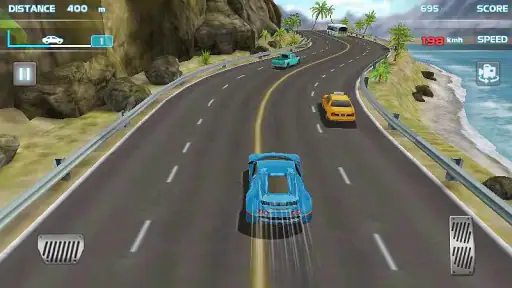
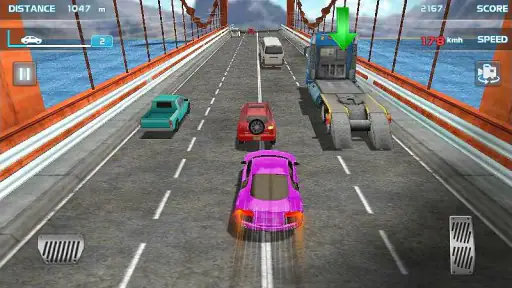
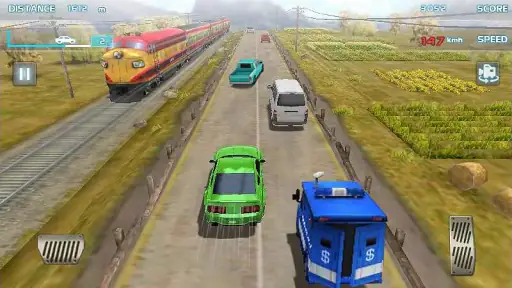
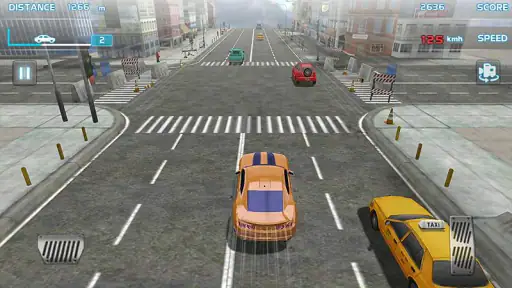
 Analysis by Frivlyz
I like mobile racing games best when they give me a quick dose of speed without asking me to learn a complicated simulation. Turbo Driving Racing 3D aims for that easy-to-grasp appeal: it puts traffic, cars and fast decisions at the center of each run. My first impression is of a game built for short bursts of play, where a few seconds of hesitation can matter as much as acceleration. It is a free racing game from TerranDroid, and its focus is less on recreating a full motorsport weekend than on making ordinary roads feel like a reflex test.
First Impressions: Taking the Wheel
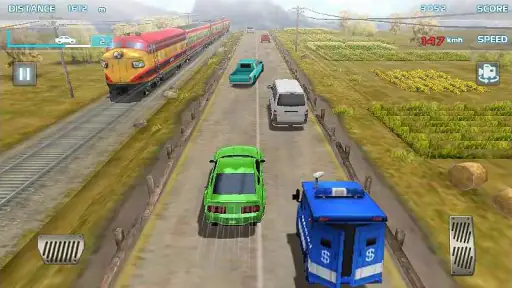
When you first fire up Turbo Driving Racing 3D, you’re immediately greeted by vibrant graphics and a user-friendly interface. It’s like walking into a candy store for car enthusiasts. The game doesn't waste any time; it throws you right into the driver's seat with a straightforward tutorial that even a non-gamer could understand. I loved how intuitive the controls felt. Swiping left and right to navigate through traffic felt natural, as if I was actually weaving through lanes on a busy highway.
A quick start, with a specific kind of driving in mind
That low barrier to entry is a real strength if you want to start playing immediately rather than spend time adjusting a complicated setup. The basic appeal is easy to understand: read the traffic, find a safe opening, and keep moving. For a new player, I’d treat the opening runs as practice rather than trying to chase the biggest score straight away. Learning how much room a lane change needs is more useful than making a risky move for one extra pickup.
The game is rated Everyone, and its approachable presentation makes it a straightforward choice for casual play. It is also a substantial, established mobile game, with more than 100 million installs and an average rating of 3.8 from around 902,000 ratings. Those figures suggest a broad audience, but they don’t mean every racing fan will enjoy its particular style. I’d recommend it most to someone who likes quick traffic-dodging runs, not to a player looking for a detailed track racer or a realistic driving simulator.
Graphics and Sound: A Feast for the Senses
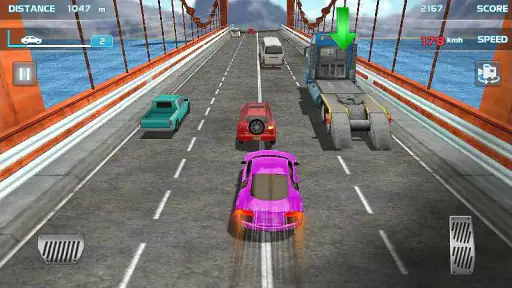
Let’s talk about those graphics. For a mobile game, the visuals are surprisingly detailed. Each car is designed with precision, and the cityscapes are dynamic with a day-night cycle that keeps things interesting. The sound design complements the visuals perfectly. The roar of engines and the screeching of tires make you feel like you’re in the middle of a Fast & Furious movie. Trust me, a good pair of headphones can really amp up the experience.
The visual mood helps turn familiar road traffic into the game’s main event. Cars and the changing city backdrop give each run a sense of movement, while the engine and tire sounds reinforce the urgency of close decisions. I find that this combination works better when I’m actively watching the road than when I’m playing distractedly: the atmosphere invites concentration, even though the controls are simple. Headphones can make the sound more involving, but they aren’t essential to understanding what is happening on screen.
There is a trade-off in this presentation. The emphasis on speed and traffic gives the game an energetic identity, but it is not the same visual language as a circuit racer with carefully staged corners and a clear finish-line contest. Here, the road itself is the challenge. If you prefer open exploration, quiet scenery or a measured pace, the busy roadway may feel repetitive rather than immersive.
Gaming Stories You May Enjoy

Dancing Road Turns Short Breaks Into a Test of Rhythm and Timing

Super Stylist Makes Every Outfit a Test of Taste and Patience

Dominoes on Your Terms: Who Should Play and Who Should Pass

Pokémon GO Makes the Familiar World Feel New

Chess.com Turns Rematches Into Rivalries, but Community Has Its Costs

Archery Battle 3D Review: Sharp Aiming, Unclear Feedback
Gameplay: Speed and Strategy
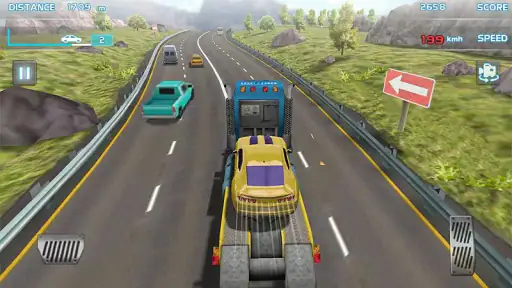
Now, onto the heart of the game: the gameplay itself. The objective is simple – race through traffic, collect coins, and earn upgrades. But don’t be fooled by its simplicity; the game packs in a surprising amount of strategy. You’re not just racing against time, but also trying to collect as many coins as possible without crashing. It’s a delicate balance that keeps you on your toes.
The useful decision is not simply whether to move toward a coin, but whether the route to it leaves you with a safe next move. I try to look one opening beyond the immediate pickup instead of steering at the nearest reward automatically. That small habit makes runs feel less like random swerving and more like a series of choices. When traffic closes in, preserving a clean line is often better than gambling on a tempting coin and losing the run.
That balance also gives the game a natural stopping point for short sessions. I can play a run while waiting for a coffee or taking a break, then decide whether I want another attempt based on how the last one went. It doesn’t require a long stretch of uninterrupted attention, though the traffic demands enough focus that I wouldn’t treat it as a game to play while walking or doing something else.
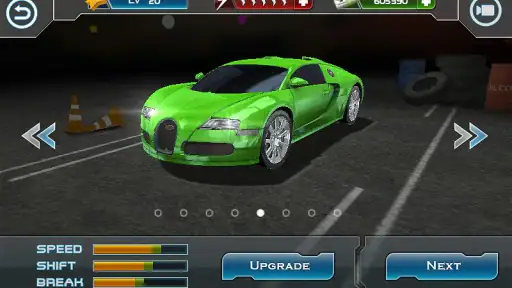
The variety of cars available is impressive, and each vehicle comes with its own set of attributes. As you progress, unlocking new cars and upgrades becomes an addictive pursuit. The customizations allow you to tweak your ride to your liking, making it not just about speed but also style. It’s like having your own mini garage in your pocket.
For progression, I’d think about upgrades as a way to shape how you want to play, rather than assuming that the most expensive option is automatically the best choice. A car that feels comfortable to control can be more useful than one that looks like a flashy step up if you keep crashing in dense traffic. Try to notice what ends your runs—late lane changes, chasing coins too aggressively, or struggling to recover after a close pass—and let that guide what you work toward next.
This is also where the game differs from many conventional racing alternatives. A track racer typically asks you to learn corners, braking points and a repeatable route; this game puts more weight on reacting to changing traffic and balancing rewards against risk. That makes it easier to dip into than a deeper racing sim, but less suited to someone who wants a structured championship or precise control over every aspect of a car’s handling.
The Challenge Factor: Keeps You Coming Back
One of the aspects I particularly enjoyed was the challenge factor. The traffic becomes increasingly dense as you advance, making each race a test of reflexes and strategy. It’s not just about mindless speeding – you need to plan your moves and sometimes, a little patience goes a long way. Completing achievements and climbing the leaderboard adds another layer of competition that’s hard to resist.
The changing pressure means that the same basic control can feel different as a run develops: an open stretch encourages momentum, while denser traffic rewards restraint. My practical advice is to avoid treating every gap as an invitation. Waiting briefly for a safer opening can protect a promising run, especially when you are trying to collect coins without sacrificing control. If the challenge starts to feel frustrating, taking a short break is a better reset than repeating the same risky approach immediately.
Competition can add a personal goal, but it is not the main reason I’d recommend the game. The most satisfying loop is improving your own judgement and seeing how long you can manage the traffic. Players who need a carefully balanced multiplayer race or a strong sense of sporting progression may find that a more conventional racing title fits them better.
Monetization: Free but Fair
Of course, being a free app, there are in-app purchases. However, I found them to be quite fair. You can enjoy the game without spending a dime, but if you’re someone who likes to speed up progress, the option is there. Ads are present, but they’re not overwhelmingly intrusive, which is a big plus in my book.
Purchases range from $1.99 to $99.99 per item, so I’d approach optional spending with a clear limit rather than treating it as a necessary part of play. The core appeal is the driving challenge, and there is no need to buy something simply because a run went badly. If you are considering a purchase, first spend some time learning the controls and deciding whether you enjoy repeating runs; that gives you a better sense of whether faster progression would genuinely improve your experience.
The game’s current version is 3.3, and it supports Android 5.0 and later. It originally arrived on November 12, 2014, so its long presence on mobile helps explain its familiar, direct style. That can be a plus if you want a simple pick-up-and-play racer, though players who expect the presentation and systems of a newer, more elaborate release may prefer to compare alternatives before settling in.
Where It Fits in a Daily Routine
A realistic use case is a short break between tasks: I can open the game, make a few attempts, and put it down without needing to remember a lengthy mission or rebuild a complicated strategy. It suits a commute only when I’m safely seated and not responsible for driving; the quick reactions it asks for are a reason to keep it to appropriate moments, not a reason to play on the move. At home, it can also work as an uncomplicated hand-off game for someone curious about racing but not ready for a simulation.
It is less appealing for long sessions if you need every run to introduce a new track, story beat or elaborate objective. Repeating the traffic challenge is central to its appeal, and that loop can lose its charm if you prefer a steady stream of new environments. I’d also steer away if you want a calm, hands-off experience: the sound and pace make the game feel active, and the traffic keeps asking for attention.
For a racing fan choosing between this and a more realistic driving game, the deciding question is what kind of satisfaction you want. Choose this one for immediate reactions, coin decisions and short attempts. Choose a simulator or track-focused racer if careful braking, tuning a full setup or learning a course is the point. Neither approach is inherently better; they reward different moods and different amounts of time.
Final Lap: Is It Worth Your Time?
So, what’s the final verdict on Turbo Driving Racing 3D? If you're a fan of racing games and enjoy a good challenge, it’s definitely worth a download. It’s a game that brings the thrill of racing to your fingertips with style and precision. Sure, it’s not without its minor flaws, but the overall experience is more than enough to keep you entertained during those idle moments. Give it a go, and who knows, you might just find yourself hooked like I did!
My recommendation comes with a clear boundary: try it if you want a free, accessible traffic racer that turns brief sessions into small tests of timing. Skip it if your idea of racing depends on realistic vehicle simulation, long-form events or a slow, scenic drive. The game’s mood is energetic, its central decisions are easy to grasp, and its progression gives you a reason to return; its repeated traffic-focused loop is also exactly what may wear thin for some players.
Overall, I’d keep it in mind as a casual option rather than a replacement for every kind of racing game. Start with a few runs, focus on safe openings before chasing every coin, and see whether the rhythm of reading traffic clicks for you. If it does, the combination of colorful roads, engine sound and quick choices makes a handy little arcade escape. If it doesn’t, a track racer or driving sim will probably offer the kind of depth you’re after.
Turbo Driving Racing 3D Pros and Cons
Pros
- Impressive 3D graphics enhance gameplay.
- Responsive controls for smooth handling.
- Variety of cars and tracks to unlock.
- Addictive gameplay with competitive leaderboards.
- Offline mode available for uninterrupted play.
Cons
- In-app purchases can be quite pricey.
- Limited customization options for vehicles.
- Repetitive soundtrack lacks variety.
- Occasional ads interrupt gameplay.
- No multiplayer mode for online racing.
This Game in Other Languages
Frequently Asked Questions
What are the main features of Turbo Driving Racing 3D?
Turbo Driving Racing 3D offers an exhilarating arcade racing experience with stunning 3D graphics and realistic car handling. Players can choose from a variety of cars and customize them with upgrades. The game features multiple challenging tracks set in different environments, providing endless entertainment for speed enthusiasts.
Is Turbo Driving Racing 3D free to play?
Yes, Turbo Driving Racing 3D is free to download and play on both Android and iOS devices. However, it contains in-app purchases that allow players to buy upgrades, new cars, and other features. These purchases are optional and not necessary to progress in the game.
What are the system requirements for Turbo Driving Racing 3D?
For Android users, Turbo Driving Racing 3D requires Android version 4.1 or higher. iOS users need to have iOS 8.0 or later. The game is compatible with most smartphones and tablets, but for the best experience, a device with a good graphics processor is recommended.
How does the customization feature work in Turbo Driving Racing 3D?
Players can customize their cars by upgrading engines, tires, and other components to improve performance. Visual customizations, such as changing paint colors and adding decals, are also available. Customizations enhance gameplay by allowing players to tailor their vehicles to specific racing styles and strategies.
Does Turbo Driving Racing 3D require an internet connection?
Turbo Driving Racing 3D can be played offline, making it convenient for gaming on the go. However, an internet connection is necessary for accessing certain features, such as in-app purchases and leaderboards, which allow players to compare their scores globally.


