

Hill Climb Racing 2
- Reviews
- 4.5
- Version
- 1.65.3
- Installs
- 100,000,000+

Screenshots
 Analysis by Frivlyz
I tend to enjoy racing games most when the driving itself gives me something to learn, rather than asking me only to steer around corners. That is the appeal of Hill Climb Racing 2: its physics-based hill driving turns acceleration, braking and airtime into a small balancing act. A run can look silly when the vehicle bounces or lands badly, but those moments are also useful feedback. I quickly learn that pushing the throttle constantly is not a reliable way to reach the finish.
Made by Fingersoft, this free racing game has a 4.5 average from around 4.7 million ratings and more than 100 million installs. It is rated for Everyone, so its playful presentation suits a broad audience, though the competitive races still reward patience and practice. I see its central strength as the way the terrain makes control matter: the same vehicle can feel manageable on one slope and awkward on the next.
Gameplay that Keeps You Hooked
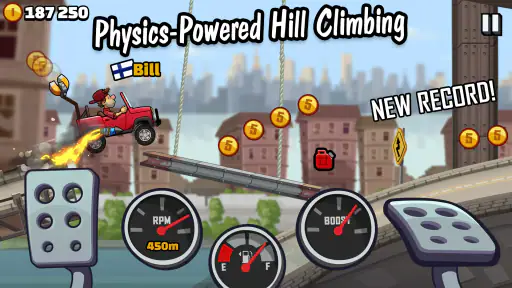
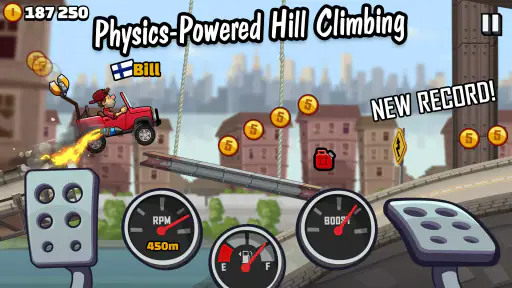
The first thing that caught my attention was the addictive gameplay. Hill Climb Racing 2 is all about driving your way through various terrains, from rocky hills to snowy mountains. The physics-based mechanics make every jump and crash hilariously unpredictable. Unlike many racing games that can get monotonous, this one keeps you on your toes. You never quite know what to expect next, and that’s part of the fun!
Our Stories on Hill Climb Racing 2
Why Hill Climb Racing 2 Stands Out in Mobile Gaming
NewsRace Master 3D: Car Racing's Edge Over Mobile Rivals
NewsRally Fury - Extreme Racing: The Ultimate Mobile Speed Challenge
NewsDancing Road Turns Short Breaks Into a Test of Rhythm and Timing
NewsSuper Stylist Makes Every Outfit a Test of Taste and Patience
NewsDominoes on Your Terms: Who Should Play and Who Should Pass
NewsThat unpredictability is not just comic decoration. It means a race is partly about reading the ground ahead and partly about correcting the vehicle in midair. A jump that looks like a chance to gain time can become a poor landing if I hold the accelerator without thinking. I get better results by easing off before a crest, then making small adjustments while airborne instead of trying to force every jump. The useful lesson is that controlled momentum often beats frantic input.
This gives the game a different feel from the usual lane-based racer, where the main task is choosing a route or avoiding traffic at speed. Here, the track’s rises and dips are the challenge, and the driving can feel closer to a sequence of miniature balance puzzles. Players looking for realistic car handling or long, smooth circuits may prefer a conventional racing game; the appeal here is the exaggerated response and the need to adapt to uneven ground.
Learning the Rhythm of the Hills
When I first approach a new stretch, I try to notice where the vehicle is likely to leave the ground and where it will come down. That small habit helps me decide when to accelerate and when to let the vehicle settle. If a run goes wrong, I treat the crash as a cue to change one input on the next attempt, rather than repeating the same approach and hoping for luck. This makes short sessions feel purposeful without turning them into serious practice.
The controls and physics also make this a handy game for brief breaks. I can start a race, focus on one immediate goal, and stop when I need to return to something else. It does not require the same kind of sustained concentration as a long simulation race. Still, the simple entry point should not be mistaken for a guaranteed win: once I care about finishing ahead, careful timing matters more than simply keeping the vehicle moving.
Gaming Stories You May Enjoy

Pokémon GO Makes the Familiar World Feel New

Chess.com Turns Rematches Into Rivalries, but Community Has Its Costs

Archery Battle 3D Review: Sharp Aiming, Unclear Feedback

Should You Switch to Geometry Dash Meltdown? A Test of Timing and Patience

Fidget Toys Trading・Pop It 3D: What Happens When the Game Stumbles

NBA LIVE Mobile Makes the Season the Main Event
A practical routine is to make one change at a time when a particular section keeps causing trouble. I might try less throttle over a crest, or avoid overcorrecting during a jump, then see whether the landing improves. Changing several habits at once makes it harder to tell what helped. That approach is especially useful for anyone who finds the physics funny but initially frustrating: the game is easier to read when I treat each failed attempt as information.
Customization Galore
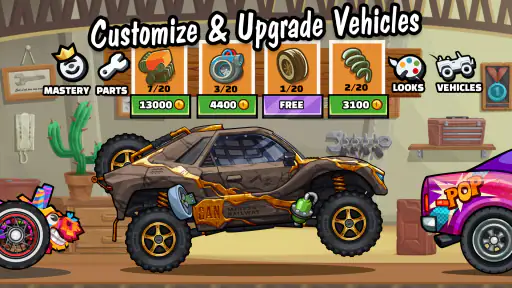
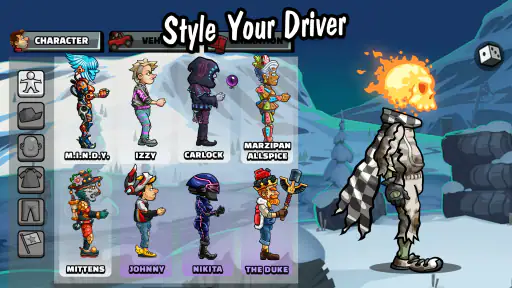
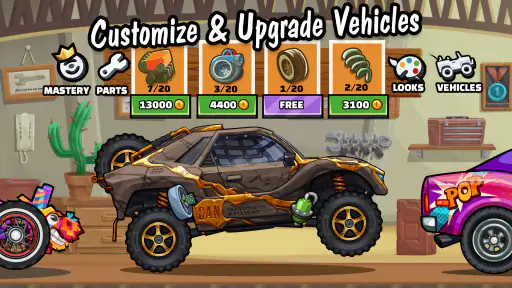
One of my favorite aspects is the customization options. You can pimp out your ride with a variety of upgrades and styling options. Whether you want a red sports car or a monster truck, the choices are practically endless. Plus, the game lets you customize your character’s appearance, which adds a nice personal touch.
For me, the practical value of upgrades is not only making a vehicle look different; it is having room to shape how I approach the driving. I would avoid spending resources just because an option looks exciting if I am still struggling to control my current setup. First getting comfortable with a vehicle makes it easier to judge whether a change actually helps. Styling, on the other hand, is a straightforward way to make a character or ride feel more like mine without affecting how seriously I take a race.
That distinction helps keep customization enjoyable rather than turning it into a checklist. Someone who likes tinkering can make this a reason to keep returning, while a player who only wants a quick race can focus on driving and ignore cosmetic choices. If you prefer a racing game where tuning is highly technical and detailed, this is a lighter kind of customization; its best use is giving progression a personal touch, not replacing the core challenge of handling hills.
Multiplayer Madness
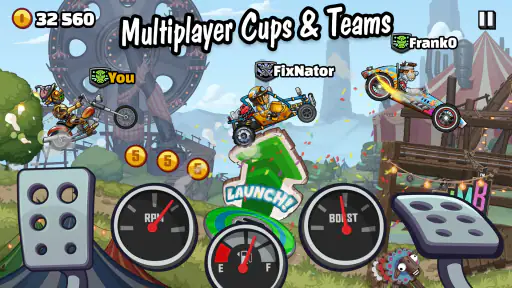
If competing against AI isn’t enough, Hill Climb Racing 2 offers a multiplayer mode where you can race against real players. This feature amps up the excitement as you compete for the top spot on the leaderboard. Trust me, nothing beats the satisfaction of overtaking another player right before the finish line.
Racing against people changes how I think about a run. In a solo attempt, I can focus on learning a difficult section; in competition, the urge to chase another racer can tempt me to accelerate when a measured landing would be safer. I try to keep my attention on the terrain rather than reacting to every move around me. That is a small but important trade-off: multiplayer adds urgency, yet the same impulsive decisions that make a race exciting can also send a vehicle bouncing out of control.
This mode is a good fit when I want a clear, immediate goal and enjoy comparing my performance with others. It is less suited to someone who finds leaderboards stressful or wants a quiet, story-led experience. Compared with racing games that build their appeal around realistic car classes or lengthy championships, the draw here is the quick contest and the comic drama of trying to keep a vehicle composed over rough ground.
Visuals and Soundtrack
The visuals are vibrant and engaging, with a cartoonish style that adds to the game’s charm. The soundtrack is equally appealing, with upbeat tunes that keep you pumped during races. It’s the kind of game where the aesthetics perfectly match the playful nature of the gameplay.
The readable, lively presentation helps make crashes feel more amusing than punishing. That matters because mistakes are part of learning the handling, and a game that treated every failed landing as a grim setback would make repeated attempts less inviting. I find the visual style particularly suitable for casual play: it keeps the mood light even when I am trying to improve a result. If you mainly want photorealistic vehicles and a serious motorsport atmosphere, this deliberately playful look will probably not be the reason to choose it.
It also makes the game easy to share as a low-pressure recommendation. A friend who does not normally play racing games can understand the basic aim quickly, then discover the finer timing through play. I would not describe that as making every race effortless; rather, the presentation lowers the barrier to trying while the physics provides a reason to keep improving.
Freemium Model
Now, let’s talk about the freemium model. The game is free to download, but there are in-app purchases available for those who want to accelerate their progress. While it’s possible to enjoy the game without spending a dime, the temptation to buy that shiny new upgrade is always there. However, I found that the game is generous with rewards, so you won’t feel too pressured to make purchases.
The available in-app purchases range from $0.99 to $99.99 per item, so I would approach optional spending deliberately rather than treating every suggested upgrade as necessary. A useful personal rule is to play for a while before deciding whether a purchase would solve a real frustration or simply satisfy a momentary urge after a difficult race. The current version is 1.65.3, and the game requires Android 7.0 or later. Those details make it easier to check basic compatibility before installing, while the free entry point lets curious players try the driving without committing money upfront.
For an everyday example, this is the sort of game I would open while waiting for a friend or filling a short gap between errands. I can aim to improve how I handle one hill, enjoy a quick multiplayer contest, or make a small bit of progress, then put it down. If I wanted a deep, uninterrupted racing session with realistic vehicle behaviour, I would choose another kind of racer instead. The short-session appeal is real, but it does not mean the game has the simulation depth that fans of serious motorsport may expect.
Parents and younger players may appreciate the Everyone content rating and bright, comic tone, while anyone sharing a device should still be aware that optional purchases are part of the experience. For a child, I would make the spending expectations clear before play, rather than assuming that a free download means there can never be a purchase prompt. For adults, the same distinction is useful: the game can be enjoyed as a free casual racer, but its purchase options are worth keeping in mind.
The strongest reason to choose this over another mobile racing game is also the clearest reason to skip it. If you enjoy learning how a vehicle responds to slopes, jumps and landings, the physics gives each race a distinctive little problem to solve. If you would rather focus on steering through traffic, realistic cornering, or a more serious competitive atmosphere, this is probably not the right fit. I would recommend it most to players who like light competition, comic mishaps and the satisfaction of getting a little more control with each attempt.
In conclusion, Hill Climb Racing 2 has successfully captured my attention with its delightful blend of challenging gameplay, customization options, and fun graphics. It’s a game that’s easy to pick up but hard to put down. Whether you’re a casual gamer or a racing enthusiast, this game has something for everyone. So buckle up, hit the gas, and get ready for a wild ride!
Hill Climb Racing 2 Pros and Cons
Pros
- Engaging gameplay with diverse tracks.
- Frequent updates with new features.
- Smooth graphics and animations.
- Easy controls and intuitive interface.
- Competitive multiplayer options.
Cons
- In-app purchases can be costly.
- Requires internet for multiplayer.
- Battery drains quickly during play.
- Limited vehicle customization options.
- Occasional connectivity issues.
This Game in Other Languages
Frequently Asked Questions
What platforms is Hill Climb Racing 2 available on?
Hill Climb Racing 2 is available for both Android and iOS devices. You can download it from the Google Play Store for Android devices and from the Apple App Store for iOS devices. The game is free to download and play, although it offers in-app purchases for additional content and features.
Is Hill Climb Racing 2 free to play?
Yes, Hill Climb Racing 2 is free to play. However, the game includes in-app purchases that allow players to buy coins, gems, and other items to enhance their gameplay experience. While these purchases can help advance quicker, they are not necessary to enjoy the game, as it can be played and enjoyed without spending any money.
What are the main features of Hill Climb Racing 2?
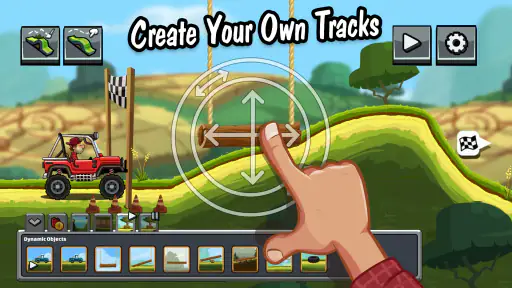
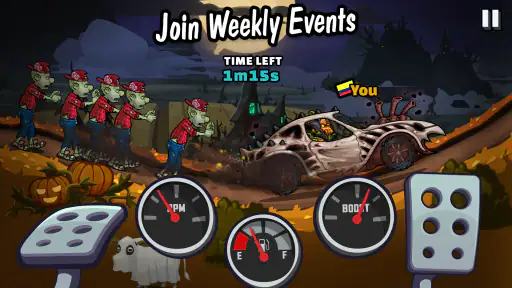
Hill Climb Racing 2 offers a variety of exciting features, including multiple vehicles to unlock and upgrade, diverse tracks to race on, and competitive multiplayer modes. Players can customize their vehicles and characters, participate in weekly events, and enjoy the game's physics-based racing dynamics. The game also features leaderboards to compete with friends and other players globally.
Do I need an internet connection to play Hill Climb Racing 2?
While Hill Climb Racing 2 can be played offline, certain features require an internet connection. For instance, to participate in multiplayer races, access leaderboards, and join weekly events, you'll need to be connected to the internet. However, the single-player mode is fully accessible offline, allowing you to enjoy the game anytime, anywhere.
How can I progress faster in Hill Climb Racing 2?
To progress faster in Hill Climb Racing 2, it's important to improve your racing skills and upgrade your vehicles. Players can earn coins and gems through races, which can be used to enhance vehicle performance. Engaging in daily and weekly challenges can also provide additional rewards. Additionally, players can choose to make in-app purchases to speed up their progress, though this is entirely optional.


