

Tiles Hop EDM Rush Music Game
- Reviews
- 4.3
- Version
- 7.6.4
- Installs
- 500,000,000+

Screenshots


 Analysis by Frivlyz
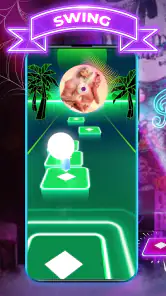
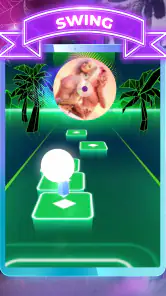
My first week with Tiles Hop: EDM Rush was built around short sessions: one run while waiting for a drink, another when I wanted a quick break, and then one more because I was sure I could land the next sequence. The appeal is immediate. You guide a bouncing ball from tile to tile in time with the music, using left and right swipes to keep it on course. That basic idea is easy to grasp, but the timing asks for more attention as the pace rises. I found it satisfying precisely because the rules are simple and the challenge comes from my own consistency.
Why the first sessions click
The game gives a clear, tactile goal: follow the beat, anticipate where the ball should land, and recover when my timing slips. That makes it approachable even if I do not usually play rhythm games. I can start without learning a long set of instructions, yet a familiar song does not automatically make a run easy. Keeping my eyes on the tiles while listening for the beat creates a small but engaging test of coordination.
It is especially well suited to little pockets of free time. A realistic use case is a commute break or the few minutes before an appointment: I can play briefly, put the phone away, and return later without needing to remember a complicated story or a long sequence of objectives. I would not choose it when I want a quiet, hands-off music experience, though. The ball needs active steering, and the visual motion is part of the appeal, so this is a game to focus on rather than simply leave running in the background.
Our Stories on Tiles Hop EDM Rush Music Game
Why DOP 2: Delete One Part is Our Puzzle Game of the Week
NewsGuess Their Answer - IQ Games: A Refreshing Twist on Trivia
NewsWhy Hungry Shark Evolution is a Must-Play Arcade Hit in 2023
NewsShooting Ball: The Strategic Sports Game You Can't Miss
NewsRoyal Match: The Puzzle Game That Rules Them All
NewsEA SPORTS FC™ Mobile Soccer: A Game-Changer with OS Updates
NewsWhat keeps the rhythm going
At its core, Tiles Hop: EDM Rush is about controlling a bouncing ball and guiding it along a path of tiles in sync with the music. Simple, right? But don't let the simplicity fool you. As the tempo picks up, so does the challenge. You’ll need quick reflexes and sharp timing to keep the ball hopping perfectly in tune. The controls are intuitive—just swipe to the left or right to move your ball. It's easy to learn but difficult to master, which is what makes it so addictively fun!
A visual and musical hook
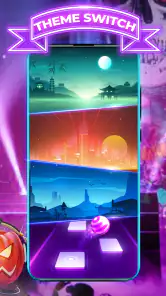
The visuals are nothing short of mesmerizing. As you progress through levels, the backgrounds explode with vibrant colors and effects that are perfectly matched to the beat of the music. This isn’t just a game; it’s an audiovisual experience. The music, oh the music! From EDM to pop and rock, the game features a wide array of tracks that will keep your adrenaline pumping. You might even find yourself discovering new favorite songs along the way.
That pairing of sound and motion is also where I notice the main trade-off. Bright effects can make a run feel lively, but they compete for attention with the tile path. When I care more about accuracy than spectacle, I focus on the ball’s next landing rather than trying to take in every background change. Playing with sound makes the rhythm easier to follow; if I need to keep things quiet, I can still use the visible path, but I find the experience less connected to the music.
Personal touches and repeat play
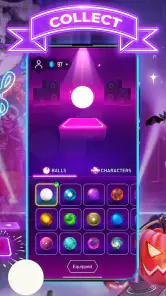
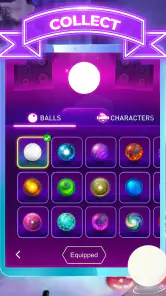
Customization is another big win for Tiles Hop: EDM Rush. You can choose from a variety of skins for your ball, each adding a personal touch to your gameplay. Plus, the game frequently updates with new tracks and challenges, ensuring that there’s always something fresh to look forward to. Competing on the leaderboard adds a competitive edge, motivating you to improve your score and climb the ranks.
Gaming Stories You May Enjoy

Dancing Road Turns Short Breaks Into a Test of Rhythm and Timing

Super Stylist Makes Every Outfit a Test of Taste and Patience

Dominoes on Your Terms: Who Should Play and Who Should Pass

Pokémon GO Makes the Familiar World Feel New

Chess.com Turns Rematches Into Rivalries, but Community Has Its Costs

Archery Battle 3D Review: Sharp Aiming, Unclear Feedback
For me, the best way to use those options is to treat them as small reasons to return, not as the main event. A different ball skin can make a familiar run feel a little more personal, while a new challenge gives me a concrete target when simply replaying a track has lost its pull. Leaderboards are most useful if I enjoy comparing results and refining a run; if I prefer playing entirely at my own pace, that competitive layer may not matter much.
There is a useful distinction between variety and lasting depth here. New tracks and challenges can refresh the routine, but the central activity remains steering the ball to the beat. I would not expect customization to transform how the game plays, and I would not keep returning solely to collect a different look. The durable appeal comes from wanting to improve my timing or finding a track that makes me want another attempt.
Who will enjoy it—and who may not
If you’re someone who thrives on challenges, you’ll appreciate the variety of difficulty levels. Whether you’re a casual player looking to relax or a hardcore gamer seeking a challenge, there’s something here for everyone.
I think it is a particularly good fit for players who like music-led action but do not want the commitment of a lengthy campaign. It also works for someone who enjoys chasing a cleaner result through repetition: each attempt offers an immediate chance to adjust timing and movement. On the other hand, players who want deep control schemes, a narrative to follow, or a wide range of fundamentally different activities may find the loop too narrow after the initial novelty fades.
Compared with a conventional piano-tile game, this asks me to guide a moving ball across a path rather than simply react to tiles arriving in a familiar lane. Compared with a music player, it turns listening into an active task, so it is less suitable when I want to choose an album and do something else. That difference is the point: I would pick this for a quick coordination challenge, but choose a passive music app for background listening or a more varied rhythm game if I wanted mechanics that change substantially from song to song.
Making a short session work
A small practical tip is to begin a session when I can give the screen and sound my attention. Looking away during a fast passage makes it harder to judge the next landing, while trying to play in a noisy moment can make the beat less useful as a cue. I also find it better to think of each run as a focused attempt rather than a way to multitask. That keeps the game enjoyable and makes mistakes feel like feedback instead of an interruption.
For everyday use, I would keep it as a break-time game rather than a default activity for every spare minute. If I have only a short pause, I can play a little and stop; if I have more time, I can work on a track or compare a score. This flexible session length is a real strength, but it does not mean every session will feel fresh. When I am tired or not in the mood to concentrate, the same quick reflexes that make a good run rewarding can make the game feel demanding.
Month-to-month value and upkeep
The longer-term question is whether it earns space after the first burst of curiosity. I think it can, especially for someone who naturally returns to music games and enjoys modest goals: improve a run, try a newly available track, or see how a result compares. The developer is AMANOTES PTE. LTD., and the game has an average rating of 4.3 from around 3.3 million ratings, with over 500 million installs. Those figures show broad reach, but they do not guarantee that its particular rhythm loop will suit every player.
It is free to start, with in-app purchases ranging from $0.99 to $49.99 per item. I would approach optional spending as a personal choice rather than a requirement for enjoying the core idea. If I am only testing whether I like the timing and visual style, I can first play without treating purchases as part of the decision. That is a sensible way to judge whether the game has become a habit I genuinely want, rather than buying something during the excitement of the first session.
The game is rated Everyone 10+, and its current version is 7.6.4, with Android support listed from version 7.0. It was released on January 16, 2018, so it is not a brand-new release; its appeal rests on an established, recognizable format and continued additions such as tracks and challenges. In maintenance terms, I would not expect to manage a complicated collection or learn a large system just to return for a quick round. The practical burden is more about keeping the game available and deciding whether its recurring content still gives me a reason to open it.
Where fatigue can set in
The biggest source of fatigue is repetition. The ball-and-tile rhythm loop is immediately readable, but that also means the core interaction does not become a different game after several sessions. If I stop caring about improving a result or the songs no longer draw me in, cosmetic choices alone are unlikely to restore my interest. The colorful presentation can also be a lot when I want a calmer experience, and a difficult passage can feel unforgiving if I am playing casually rather than concentrating.
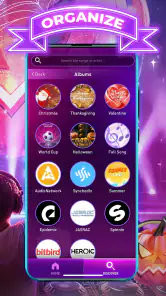
There is also a preference question around music. The game’s mix covers EDM, pop, and rock, but a player who mainly wants to hear particular artists or carefully curate a personal playlist should not assume that this is a substitute for a music service. I would choose it for the playable rhythm experience, not as a way to control what I listen to. Likewise, someone who dislikes score chasing may see the leaderboard as decoration rather than motivation, which reduces one of the reasons to replay familiar sections.
Those limits do not make it a poor fit; they help define the right one. I would skip it if I know I tire quickly of repeating a simple action, if bright movement bothers me, or if I want a rhythm game with a very different interaction for every track. I would recommend giving it a try if short, music-driven challenges sound appealing and a quick restart feels more inviting than frustrating.
My long-term verdict
For a game in the music category, Tiles Hop earns its place when I want an active, compact way to connect rhythm with quick decisions. It is more engaging than simply listening during a short break, but less suited to a session where I want a deep progression system or an expansive set of mechanics. The content updates and score competition can support a recurring habit, while the stable central loop is both its clearest strength and its main limit.
My recommendation is to treat it as a light game to keep around for the moments when I want a fast test of timing, not as something that must occupy every day. If the first-week excitement turns into a genuine urge to replay tracks and improve, it has enough straightforward appeal to remain useful. If that urge fades, there is no need to force a routine: its value depends on whether the music, movement, and challenge still make a spare few minutes feel well spent.
Final thoughts
In a world where mobile games often come and go, Tiles Hop: EDM Rush stands out as a game that’s here to stay. It’s the perfect blend of music, challenge, and fun wrapped up in a visually stunning package. Whether you’re on a quick break or settling in for a long session, this game will have you tapping your feet and nodding your head in no time. So grab your headphones, and let’s get hopping! Trust me, once you start, you won’t want to stop.
Tiles Hop EDM Rush Music Game Pros and Cons
Pros
- Addictive gameplay with rhythmic challenges.
- Wide variety of music tracks to enjoy.
- Simple controls make it easy to play.
- Visually appealing graphics and animations.
- Regular updates with new content and features.
Cons
- In-app purchases can be costly.
- Requires internet connection for some features.
- Advertisements can be intrusive.
- Limited offline play options.
- High battery consumption on some devices.
This Game in Other Languages
Frequently Asked Questions
What is Tiles Hop: EDM Rush Music Game all about?
Tiles Hop: EDM Rush Music Game is an engaging music rhythm game where players control a bouncing ball to hop on tiles in sync with the rhythm of various EDM tracks. It offers a unique combination of fast-paced gameplay and a wide selection of music tracks, providing a dynamic experience for both casual and hardcore music game enthusiasts.
Can I play Tiles Hop: EDM Rush Music Game offline?
Yes, Tiles Hop: EDM Rush Music Game can be played offline. This feature allows players to enjoy the thrilling music and challenging gameplay without needing an internet connection. However, some features, like leaderboard updates and song downloads, might require online access to function fully.
What are the main features of Tiles Hop: EDM Rush Music Game?
Tiles Hop: EDM Rush Music Game features a vast library of popular EDM tracks, intuitive controls that are easy to master, and stunning 3D graphics. Players can enjoy endless gameplay with new songs updated regularly, customize their balls and tiles, and compete on leaderboards. It's designed to keep players entertained and challenged as they improve their rhythm skills.
Is Tiles Hop: EDM Rush Music Game free to download and play?
Tiles Hop: EDM Rush Music Game is free to download and play on both Android and iOS devices. While the game provides a substantial amount of free content, it also offers in-app purchases. These can enhance the gaming experience by unlocking additional songs, removing ads, and acquiring special customizations.
What age group is suitable for playing Tiles Hop: EDM Rush Music Game?
Tiles Hop: EDM Rush Music Game is suitable for players of all ages. Its simple yet challenging gameplay appeals to both younger audiences and adults. The game's content is family-friendly, featuring music and visuals that are appropriate for children, while the competitive elements can keep older players engaged and entertained.


