

Magic Tiles 3™ - Piano Game
- Reviews
- 4.6
- Version
- 12.052.001
- Installs
- 500,000,000+

Screenshots





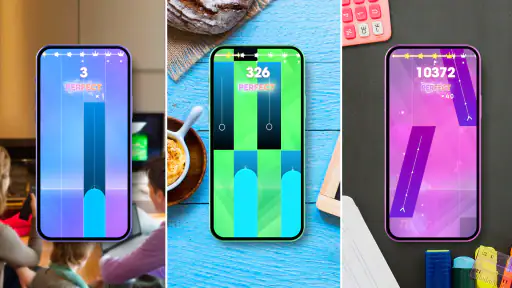


 Analysis by Frivlyz
The first thing I notice about Magic Tiles 3 is how quickly it turns a song into a small test of attention. The screen gives me a clear lane to follow, the notes arrive in time with the music, and my job is to keep my fingers moving without losing the beat. It is easy to understand in seconds, but staying accurate as a track speeds up is another matter. That quick shift from casual tapping to focused play is the game’s main appeal for me.
I also like that the mood is lively without asking me to learn a complicated control scheme. This is a music game from AMANOTES PTE. LTD., and it fits neatly into short breaks: I can try a song, see how well I keep up, then decide whether I want another run. It is free to start, though optional in-app purchases range from $0.99 to $49.99 per item, so I would treat spending as a personal choice rather than part of the basic appeal.
A bright visual language built for quick play
The art direction favors clarity over elaborate scenery. Tiles and motion take priority, which matters because I need to read the next beat at a glance rather than admire a busy screen. Color and animated backgrounds bring energy, while the central visual task stays easy to follow. That balance makes the presentation feel suited to a phone held close during a commute or a few minutes between other tasks.
Our Stories on Magic Tiles 3™ - Piano Game
Magic Tiles 3™: The Perfect Harmony of Fun and Creativity
NewsPiano Fire: EDM Music & Piano—Igniting Your Rhythm Game Passion
NewsHow Solitaire Grand Harvest Transforms the Classic Card Game
NewsPrecision and Skill: The Heart of Shooting Archery
NewsFidget Toys Trading・Pop It 3D: What Happens When the Game Stumbles
NewsFruit Ninja®: Thriving with New OS Enhancements
NewsThere is a useful trade-off here: the visuals give the music a playful setting, but the main attraction is still the timing challenge. I would not choose this for a story, exploration, or a richly detailed world. I would choose it when I want a compact, music-led activity with immediate feedback. The Everyone 10+ age rating also gives families a practical starting point when deciding whether the game fits a younger player, while individual comfort with screen time and purchases still deserves a conversation.
How the beat shapes the experience
Sound is more than decoration in a rhythm game, and I find that it helps make each successful sequence feel rewarding. When my taps line up with the track, the play feels fluid; when I drift, I notice the gap between hearing the beat and reacting to it. That makes the game satisfying in a way a silent tapping challenge would not be. Its piano-focused identity is a natural fit for players who enjoy following melody and rhythm, even if they have never studied an instrument.
The game’s store summary points to offline play and a Rush E challenge, which are useful clues for people choosing a music game for travel or a specific speed test. I would still plan around the practical setting: headphones can help me concentrate in a noisy place, while a quiet room makes it easier to hear timing without cranking the volume. If I am playing around other people, keeping the sound low or using headphones is a simple courtesy.
Where its simple controls become demanding
The central mechanic is easy to explain: tap the tiles as they arrive, and keep pace as the challenge increases. That simplicity is a strength on a touchscreen, because I can start without a tutorial-heavy learning curve. It is also the source of the game’s limits. A missed note can end a run, so a song that feels relaxing at first may become tense once the sequence gets faster. I see it as a reflex and rhythm test, not a substitute for learning piano technique or reading sheet music.
Gaming Stories You May Enjoy

Dancing Road Turns Short Breaks Into a Test of Rhythm and Timing

Super Stylist Makes Every Outfit a Test of Taste and Patience

Dominoes on Your Terms: Who Should Play and Who Should Pass

Pokémon GO Makes the Familiar World Feel New

Chess.com Turns Rematches Into Rivalries, but Community Has Its Costs

Archery Battle 3D Review: Sharp Aiming, Unclear Feedback
The original appeal of competing with other players and playing with multiple instruments can add variety beyond a solo run. Multiplayer makes sense when I want a direct challenge, while band play changes the feel from tracking one part to coordinating with a fuller musical arrangement. Those options are best for someone who enjoys a little pressure or wants a different kind of session; if I only want calm background music, the extra intensity may be the wrong fit.
Who will enjoy the pace, and who may not
I would recommend Magic Tiles 3 to someone who likes music games, short score-chasing sessions, and the satisfaction of improving through repeated attempts. It can also suit a casual player who wants a quick activity without committing to a long campaign. The game has been available since February 24, 2017, and its scale is clear in its audience: it has over 500 million installs, an average rating of 4.6 from around 3.3 million ratings, and about 108,000 written reviews.
A realistic use for me would be a few attempts while waiting for a friend or winding down after a busy day. I would choose a comfortable volume, focus on one track, and stop when I notice myself tapping tensely instead of enjoying the rhythm. For practice, repeating a difficult section can help me learn its pattern, but chasing a perfect run for too long turns a light pastime into a frustration loop. Taking a short break is often the better move than immediately restarting.
Compared with music games built around broader movement or instrument simulation, this one puts the emphasis on precise screen taps and fast reactions. That makes it more convenient than a setup that expects space or physical instruments, but less suitable if I want to learn real piano skills or play music freely. If your priority is relaxed listening, a music player is a better choice; if you want structured instrument practice, a teaching app will serve you better. This game is strongest when the goal is to interact with a song, not study it.
Small decisions that make sessions better
One practical tip is to treat each attempt as a timing check rather than a verdict on my ability. If a sequence feels too fast, I can pay attention to the musical pulse instead of staring only at the next tile; that often makes my taps feel less frantic. I also prefer playing while the phone is steady in both hands, since shifting my grip mid-run can interfere with accuracy. These are small adjustments, but they matter more in a game where a single lapse can break a run.
Another trade-off is the free-to-play model. Ads and purchase prompts can interrupt the flow, and optional purchases may be tempting when I want more content or a smoother experience. The listed purchase range runs from $0.99 to $49.99 per item, so I would check carefully before confirming anything, especially if a child is using the device. The game is free to download, but that does not mean every available extra is free.
For a quick decision, I would ask myself what I want from a music game. If I want immediate, touch-based rhythm play and do not mind restarting after mistakes, this is a good match. If I dislike time pressure, interruptions, or score chasing, a slower music experience is likely to suit me more. The current version is 12.052.001, and the listed minimum operating-system requirement is 7.0; I would check that my device meets it before installing.
A focused rhythm game with a clear mood
Magic Tiles 3 is a popular rhythm-based game that has captured the hearts of music lovers and gaming enthusiasts alike. Available on both Android and iOS platforms, this app combines the thrill of gaming with the soothing and exciting experience of playing music. As someone who has spent hours tapping away on my screen, let me walk you through what makes this app a standout choice.
At its core, Magic Tiles 3 is a simple yet addictive game. The concept is straightforward: tap the black tiles as they slide down the screen in time with the music. Miss a tile, and it’s game over! But don’t be fooled by its simplicity. The game ramps up in difficulty as you progress, challenging even the most seasoned players. With a vast library of songs spanning various genres, there’s always something new to play. Whether you’re into classical music, pop hits, or something more niche, you’ll find it here.
One of the standout features of Magic Tiles 3 is its multiplayer mode. You can compete against friends or other players from around the world in real-time battles. It’s thrilling to see who can keep up with the pace and make the fewest mistakes. Additionally, the game offers a band mode, allowing you to play with multiple instruments. This feature adds a layer of complexity and makes the gameplay even more engaging.
Graphics and Sound
The visual aspect of Magic Tiles 3 is clean and appealing. The animations are smooth, and the interface is intuitive, making it easy to navigate through the app. The vibrant colors and dynamic backgrounds add to the overall excitement of the game. But where the app truly shines is its sound quality. The music is crisp and clear, providing an immersive experience that’s akin to playing a real instrument. The synchronization between the music and gameplay is spot on, ensuring that each tap feels satisfying.
Challenges and Rewards
Magic Tiles 3 keeps you coming back for more with its variety of challenges and rewards. Daily quests and events provide an incentive to log in regularly and keep improving your skills. As you progress, you can unlock new songs and earn in-game currency to purchase additional content. The sense of achievement when you finally nail a difficult song is incredibly rewarding.
However, like many free-to-play games, Magic Tiles 3 does have its share of ads and in-app purchases. While these can be a bit intrusive at times, they don’t detract significantly from the overall experience. If you’re willing to spend a little, the ad-free version and premium features can enhance your gameplay immensely.
Final Thoughts
In conclusion, Magic Tiles 3 is more than just a game; it’s a musical journey that tests your reflexes and rhythm. Its diverse song selection, competitive multiplayer mode, and engaging gameplay make it a must-try for anyone who enjoys music and gaming. While it has a few minor drawbacks, the positives far outweigh them. So, if you’re looking for a fun way to unwind and challenge yourself, give Magic Tiles 3 a try. You won’t be disappointed!
Magic Tiles 3™ - Piano Game Pros and Cons
Pros
- Engaging gameplay with dynamic rhythm challenges.
- Wide variety of songs across multiple genres.
- User-friendly interface with smooth controls.
- Regular updates with new content and features.
- Enhances hand-eye coordination and reflexes.
Cons
- Game can be addictive and time-consuming.
- In-app purchases can become expensive.
- Advertisements interrupt gameplay frequently.
- Requires an internet connection to access all features.
- Limited free content without purchases.
This Game in Other Languages
Frequently Asked Questions
What is Magic Tiles 3 and how does it work?
Magic Tiles 3 is a rhythm-based mobile game where players tap on black tiles as they slide down the screen in sync with the music. The challenge lies in maintaining the rhythm and accuracy as the speed increases with progress. The game features a wide variety of songs across different genres, offering an engaging musical experience.
Is Magic Tiles 3 free to play?
Yes, Magic Tiles 3 is free to download and play. However, it includes in-app purchases and ads. Players can purchase a VIP subscription to remove ads, access premium songs, and gain other exclusive benefits. The game offers various pricing options for these in-app purchases, catering to different user preferences.
What are the system requirements for Magic Tiles 3?
Magic Tiles 3 requires iOS 9.0 or later for iPhone users and Android 4.1 or later for Android users. The game is compatible with a range of devices, but for the best experience, it's recommended to play on a device with good processing power and a responsive touch screen to ensure smooth gameplay.
Can I play Magic Tiles 3 offline?
Magic Tiles 3 can be played offline, allowing users to enjoy the game without an internet connection. However, some features, such as downloading new songs and accessing leaderboards, require an internet connection. To make the most of the game, it's advisable to connect to the internet occasionally.
How do I solve common issues in Magic Tiles 3?
For common issues like game crashes or lag, ensure your device meets the system requirements and has enough storage space. Restarting the app or device can also help. If problems persist, checking for updates or reinstalling the game from the app store might resolve the issue. For further assistance, contacting the app's support team is recommended.


