

Bricks Breaker Quest
- Reviews
- 4.2
- Version
- 2.1.14
- Installs
- 100,000,000+

Screenshots
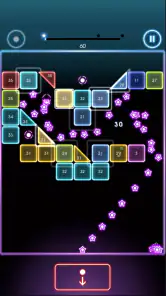
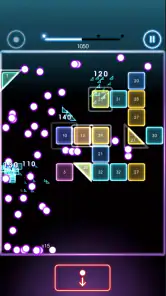
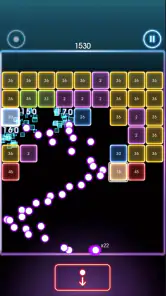

 Analysis by Frivlyz
If you’re like me and love a good casual game to unwind, then you’ve probably come across Bricks Breaker Quest. I recently took the plunge and downloaded it on my phone, and let me tell you, it's been quite the entertaining ride. Let’s dive into what makes this game a must-try for anyone looking for a fun yet challenging experience.
What’s the Deal with Bricks Breaker Quest?
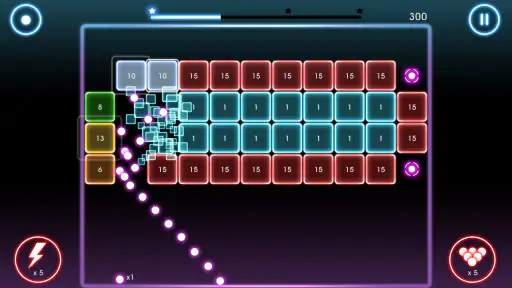
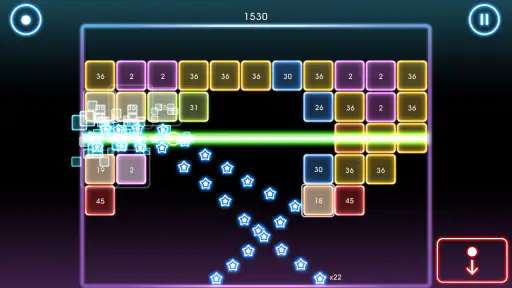
Bricks Breaker Quest is a modern twist on the classic brick-breaking genre. Remember those old-school arcade games where you had to bounce a ball to break bricks? This game takes that simple concept and amps it up with vibrant graphics, tons of levels, and some pretty cool power-ups. The goal is simple: clear the screen of bricks by shooting balls at them, but there's so much more under the hood that keeps you coming back for more.
Gameplay and Features
So, how does it play? It’s all about angles and precision here. You start with a single ball, and as you clear bricks, you can collect more balls, making it easier to smash through the increasingly challenging levels. What I love about this game is the balance between strategy and sheer fun. You’ll find yourself planning your shots like a pool shark, but also just having a blast watching those balls ricochet off the walls.
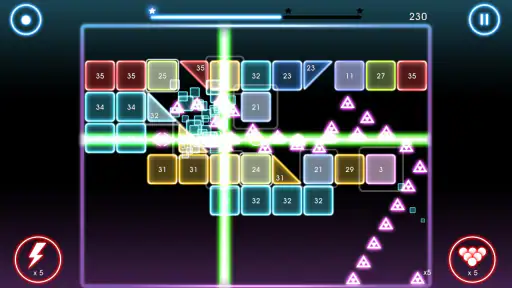
One of the standout features is the variety of levels. There are hundreds of them, each with unique challenges. Whether it’s bricks that require multiple hits or awkwardly positioned obstacles, every new level feels fresh. And don't even get me started on the power-ups! From explosive balls to laser beams, these little bonuses can turn a tough level into a cakewalk.
Finding a Useful Rhythm
The game works best for me when I treat each shot as a small problem to solve instead of tapping quickly just to see what happens. Before aiming, I look for a path that sends balls behind a cluster of bricks, where repeated rebounds can do useful work while the next shot is not yet available. A direct hit may remove a brick immediately, but an entry through a narrow gap can sometimes keep balls moving across the board longer. That difference makes aiming feel more thoughtful than simply choosing the nearest target.
A practical habit is to scan the whole layout before committing. Bricks that need several hits deserve attention, but the route to them matters too: an angle that reaches their back side may be more valuable than a shot that only chips away at the front row. When extra balls are available, I try to use the opportunity to spread hits across a section rather than fixating on one brick. It is not a guarantee of a clear, but it makes the action easier to follow and gives each launch a purpose.
This is also where the game’s simple controls can be both a strength and a source of friction. Aiming is easy to understand, so I can start playing without learning a complicated control scheme. Still, precision matters, and a small change in direction can alter where a long series of rebounds ends up. If I am tired or rushing, my decisions become less deliberate. I get more out of it when I slow down for a moment, pick a lane, and accept that a good shot is about the whole trajectory rather than one immediate impact.
Gaming Stories You May Enjoy

Dancing Road Turns Short Breaks Into a Test of Rhythm and Timing

Super Stylist Makes Every Outfit a Test of Taste and Patience

Dominoes on Your Terms: Who Should Play and Who Should Pass

Pokémon GO Makes the Familiar World Feel New

Chess.com Turns Rematches Into Rivalries, but Community Has Its Costs

Archery Battle 3D Review: Sharp Aiming, Unclear Feedback
Progress That Feels Visible
For a casual arcade game, progress does not need a complicated explanation to feel satisfying. Here, I can see the result of a choice on the board: a row is weakened, a route opens, or a difficult patch is closer to being cleared. The changing layouts give that progress a concrete shape. It is a useful contrast with games where advancement mostly means watching counters increase; in Bricks Breaker Quest, the immediate state of the bricks tells me whether a run is going well.
The sequence of levels also gives me a clear reason to continue without requiring a long session. I can finish a stage and feel that I have moved forward, or pause after a difficult attempt and return when I have more time. That makes it easier to fit into an ordinary day. It is particularly well suited to a short break when I want something more engaging than scrolling, but do not want to start a story-driven game that expects me to remember characters, objectives, and plot details later.
One small way I keep the experience from feeling repetitive is to judge a run by the quality of my decisions, not only by whether the screen clears quickly. If I found a useful angle or managed to send balls through a tight opening, that attempt still taught me something even if the board remained challenging. This mindset helps because brick-breaking games naturally repeat their core action. The layouts and obstacles give that action variation, but the pleasure still comes from aiming, watching the rebounds, and responding to what remains.
Difficulty, Patience, and the Occasional Stall
The challenge comes from the combination of brick durability, placement, and the limited opportunity to make each launch count. Early play is easy to understand, but later boards can ask for more careful choices. When a screen is crowded or a troublesome brick sits behind other targets, a quick straight shot may not accomplish enough. I appreciate that the game asks me to think about angles, although there are moments when a layout can feel stubborn rather than clever, especially if I have not found a good route into the mass of bricks.
When I am stuck, I find it more helpful to change the aim than to repeat the same kind of shot and hope for a better result. I look for gaps, consider which wall can redirect the balls, and focus on creating access to the harder-to-reach area. Power-ups can shift the situation, but I do not treat them as a substitute for reading the board. Their value depends on the current layout: a powerful effect can be wasted if the target area is already nearly clear, while a well-timed bonus can make a troublesome section manageable.
That uncertainty is part of the arcade appeal, but it also sets a limit on who will enjoy the game. If I want a tightly controlled puzzle where every move produces a predictable outcome, this is not quite that experience. Ball paths involve rebounds, and the pleasure comes partly from seeing a plan unfold across the board. Someone who prefers precise, quiet logic puzzles may find that too dependent on timing and luck. I think of it as a light strategy game with a physical, arcade-style payoff rather than a pure puzzle challenge.
Graphics and Sound
Visually, the game is a treat. The colors are bright, and the animations are smooth. It’s the kind of game that’s easy on the eyes, which is perfect for those long play sessions. The sound design complements the visuals nicely, with satisfying pops and cracks as you break through bricks. It's the kind of auditory feedback that makes you want to keep playing just to hear that next satisfying crackle.
The clear visual feedback matters for more than appearance. When balls are bouncing across the screen, I want to understand what they have hit and what remains without having to stop and decode a busy display. The bright colors and visible impacts help me follow the action, especially when several balls are in motion. The same emphasis on effects can be a matter of taste: if you prefer a very restrained presentation, the repeated movement and sound may feel busy over a longer session. I usually keep play to the length of a break when I want to stay focused and avoid turning the effects into background noise.
Who It Fits, and When Another Game Makes More Sense
This is a good pick for someone who enjoys simple rules with room to improve. I would suggest it to a friend who likes arcade games, wants a quick mobile diversion, and gets satisfaction from lining up a clever shot. It is also easy to recommend to a player who does not want to study a large set of controls before starting. The basic aim-and-break loop is quickly understood, while obstacles and tougher bricks give experienced players something to consider beyond tapping at random.
A realistic use for me is a few minutes while waiting for a meal or sitting through a routine pause in the day. I can open the game, focus on a level, and put the phone away without needing to follow a long sequence of events. If I have a longer stretch of free time, I may continue through more boards, but I do not need to reserve an evening to make sense of it. That flexible session length is one of its strongest everyday qualities.
It is less suitable when I want a game that constantly changes its central activity. The brick-breaking loop stays at the heart of play, so a player who gets bored by repeated aiming and rebounds may prefer a platformer, a racing game, or a puzzle game built around a different kind of decision. Compared with the usual alternatives in the arcade category, this is more about finding a productive trajectory than reacting to fast-moving hazards or trying to beat a timer. That makes it calmer than many reflex-heavy arcade games, though it still asks for attention and patience.
There is a second trade-off: casual does not mean every attempt is effortless. Some stages may demand more thought than I want to give when I am only trying to switch off. If I am looking for a game that never makes me reconsider a move, a very simple matching game may be a better fit. Bricks Breaker Quest is at its most enjoyable when I am willing to pause, inspect the board, and accept that a shot can have a delayed payoff as balls bounce around. The satisfaction comes from that small strategic layer, not from constant novelty.
Playing Without Turning It into a Chore
The game is free to play, and that makes it easy to try without committing money up front. It does include in-app purchases, priced from $0.99 to $109.99 per item, so I would approach optional spending thoughtfully rather than assuming every purchase is necessary. My advice is to play at your own pace first and decide whether the core loop is enjoyable on its own. If the appeal is the satisfying shot planning, there is no reason to treat buying something as part of the basic experience.
For me, the healthiest way to enjoy it is to set a natural stopping point: finish a stage, or stop when I notice that I am firing shots without considering their angles. That keeps the game in the role of a short diversion instead of a task I feel obliged to finish. Because the levels can become challenging, it is tempting to keep retrying immediately; taking a break can be more useful than pushing through when I am no longer paying attention.
It is also worth thinking about where and how you play. The game suits quick, focused sessions, but aiming benefits from being able to see the screen clearly and make a deliberate gesture. On a crowded commute or while juggling another task, I may not be in the right place to judge a shot carefully. I save it for moments when I can give the board a little attention, even if I only have a few minutes. That makes the experience feel more relaxing and reduces the frustration of careless launches.
Why You Should Download It
So, why pick up this game over the countless others in the app store? For one, it's free to play, which is always a plus. There are in-app purchases, but they’re not intrusive, and you can enjoy the game without spending a dime. It's one of those games that offers great entertainment value without constantly nagging you to buy something.
Another reason to download it is its perfect blend of relaxation and engagement. It’s the kind of game you can play for a few minutes while waiting in line or for hours on a lazy Sunday. It’s incredibly satisfying to watch a perfectly planned shot clear the board, and that keeps you coming back for more.
In practical terms, I would start with a short session and pay attention to whether I enjoy lining up shots as much as watching the impacts. That is the central question for deciding if it suits you. A player who enjoys trying different angles will likely find more to appreciate than someone who only wants quick, automatic progress. The appeal is not that every screen is dramatically different, but that even a familiar setup can invite a better approach on the next attempt.
The game comes from mobirix and sits firmly in the arcade space, with a straightforward format that is easy to understand on a phone. It is free, rated for Everyone, and has a 4.2 average from around 601,000 ratings, with more than 100 million installs. It was released on October 29, 2017, and version 2.1.14 supports Android 6.0 and later. Those details make it a familiar, accessible option for a wide range of players, while the age rating reflects its broad, uncomplicated style rather than a promise that every stage will be equally easy.
Final Thoughts
In the end, Bricks Breaker Quest is a delightful mix of strategy, luck, and good old-fashioned fun. Whether you're a seasoned gamer or just someone looking for a new way to pass the time, this game is worth checking out. Its intuitive mechanics, combined with engaging levels and rewarding gameplay, make it a standout in the mobile gaming world.
Give it a shot, and you might just find yourself hooked like I did. Happy brick breaking!
Bricks Breaker Quest Pros and Cons
Pros
- Engaging gameplay with intuitive controls.
- Variety of levels keeps it fresh.
- Minimal ads enhance the experience.
- Offline mode available for play anywhere.
- Simple graphics
- yet visually appealing.
Cons
- Repetitive music can become annoying.
- In-app purchases can be expensive.
- Occasional lag on older devices.
- Limited power-ups without purchases.
- No multiplayer mode available.
This Game in Other Languages
Frequently Asked Questions
What is Bricks Breaker Quest and how do I play it?
Bricks Breaker Quest is a captivating arcade game where your objective is to break bricks using a ball. Players swipe to aim and release the ball to hit and break bricks. Each brick requires a specific number of hits to break, and you must clear all bricks before they reach the bottom of the screen. Strategy and timing are key to mastering the game.
Is Bricks Breaker Quest free to play, or does it have in-app purchases?
Bricks Breaker Quest is free to download and play on both Android and iOS platforms. However, it offers in-app purchases that can enhance the gaming experience, such as power-ups and extra lives. These purchases are optional and not necessary to enjoy the game, but they can help players progress through challenging levels more easily.
Does Bricks Breaker Quest require an internet connection to play?
No, Bricks Breaker Quest does not require an internet connection to play, making it a great option for offline gaming. You can enjoy breaking bricks anytime and anywhere without worrying about connectivity. However, if you wish to access leaderboards or make in-app purchases, an internet connection will be necessary.
Are there any ads in Bricks Breaker Quest, and can they be removed?
Yes, Bricks Breaker Quest contains ads that appear between levels or when you opt to watch a video for additional rewards. If you find ads disruptive, you can choose to remove them by making a one-time purchase. This ad-free experience can enhance your gameplay by providing uninterrupted enjoyment.
What are the key features that make Bricks Breaker Quest engaging?
Bricks Breaker Quest offers a variety of features that keep players engaged, such as hundreds of challenging levels, unique power-ups, and daily rewards. The game’s simple controls and colorful graphics enhance the experience, while regular updates introduce new levels and features, ensuring that players always have something fresh to explore.


