

Among Us
- Reviews
- 3.9
- Version
- 2025.4.20
- Installs
- 500,000,000+

Screenshots

 Analysis by Frivlyz
I first notice how quickly a round can turn an ordinary chat into a small mystery. One moment I’m moving through a spaceship, focused on a job; the next, I’m weighing everyone’s story and wondering who has a reason to lie. That social shift is the real hook. Among Us is an action game from Innersloth LLC, but its most memorable moments come less from reflexes than from observation, timing, and the nerve to speak up.
What the free entry point really means
The game is free to download, which makes it easy to try with friends before deciding whether it suits your group. Optional in-app purchases range from $0.99 to $24.99 per item, so there is a paid layer, but the existence of those purchases should not be confused with a requirement to pay simply to give the game a chance. I’d approach the optional spending as a personal choice rather than assume it is necessary for the basic appeal.
That distinction matters if you are comparing it with a game that asks for payment before you can play at all. Here, the first decision is low-commitment: install it, see whether your friends enjoy the social deduction, and only then consider whether any optional purchase is worth it to you. I would set a spending limit in advance if you are browsing extras, especially when younger players are involved. The game is rated Everyone 10+, and purchases can still be a point to discuss with a family before playing.
Our Stories on Among Us
Worms Zone .io - Hungry Snake: A Vibrant Twist on Classic Gameplay
NewsWhy Mobile Legends: Bang Bang Is a Must-Play MOBA
NewsWhy Free Fire MAX Redefines Mobile Action Gaming
NewsWhy PUBG MOBILE Reigns Supreme in Mobile Gaming
NewsHunter Assassin: Mastering Stealth and Strategy in Mobile Gaming
NewsBraindom: The Puzzle Game That Challenges Your Mind
NewsWhere the value comes from
What keeps the experience worthwhile for me is how much a group can get out of a simple premise. A task run can be calm for a few minutes, then a report turns it into a fast argument about routes, alibis, and suspicious timing. The same players can tell a completely different story next round because the roles and the group’s decisions change the conversation. That variety comes from people reading one another, not from a long list of systems to master.
Its popularity is substantial: it has over 500 million installs and an average rating of 3.9 from around 13 million ratings. Those figures suggest a game many people have tried, but they do not guarantee that every lobby will be enjoyable. The quality of a session depends heavily on whether players communicate, take turns seriously, and can handle disagreement without turning a playful accusation personal.
Tradeoffs that affect a session
The simple presentation helps players focus on movement and discussion, but it also means this is not the best pick if you want a visually rich action game or a solo adventure with a strong narrative. Its central pleasure is social, so playing with a group that will not talk, or with strangers whose pace and attitude do not suit you, can flatten the experience. A round can also feel unfair when someone is eliminated early and has to wait while the others finish.
For a better first session, I’d agree on the tone before starting: are you playing casually for laughs, or trying to make careful deductions? That small choice prevents a mismatch between someone who wants a quick party game and someone treating every claim like a serious contest. It also helps to keep explanations short for newcomers. A new player who understands the goal and the meeting discussion can join in without being buried under strategy advice.
Gaming Stories You May Enjoy

Dancing Road Turns Short Breaks Into a Test of Rhythm and Timing

Super Stylist Makes Every Outfit a Test of Taste and Patience

Dominoes on Your Terms: Who Should Play and Who Should Pass

Pokémon GO Makes the Familiar World Feel New

Chess.com Turns Rematches Into Rivalries, but Community Has Its Costs

Archery Battle 3D Review: Sharp Aiming, Unclear Feedback
Who is likely to enjoy it
I recommend it most to friends, families, classmates, or coworkers who already enjoy bluffing games and lively group conversation. It can work as a short shared activity when people have time for several rounds, and it gives quieter players a reason to watch details before choosing when to speak. I would skip it if you mainly want precise action controls, a campaign to play alone, or a game that remains satisfying without other people’s participation.
On mobile, the practical question is whether your group can coordinate a session and communicate comfortably. If you are hoping to play during a brief break with no time to talk or wait between rounds, a self-contained puzzle or action game may be a better fit. If you have a group ready and want a game that turns a few minutes of downtime into a shared guessing game, the free download makes trying it an easy call.
The Gameplay: A Mix of Strategy and Deception
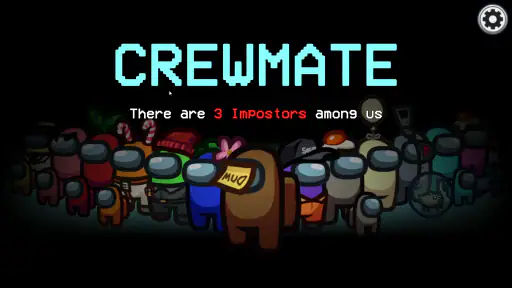
So, here's the deal with Among Us: You play as one of the crewmates on a spaceship, but there's a catch—one or more of you are impostors, and it's their job to take everyone out without getting caught. Sounds simple, right? Well, not quite. The crewmates have to complete tasks around the ship, and it's a race against time before the impostors strike. It’s this blend of strategy and deception that keeps the adrenaline pumping.
Task Time
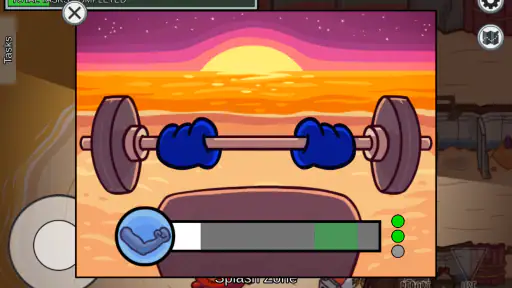
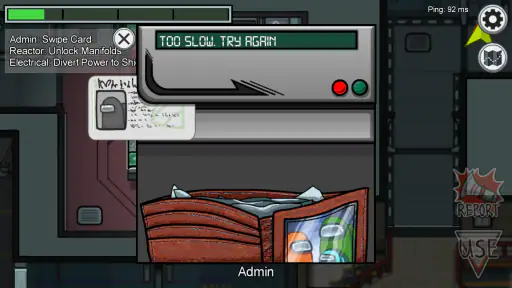
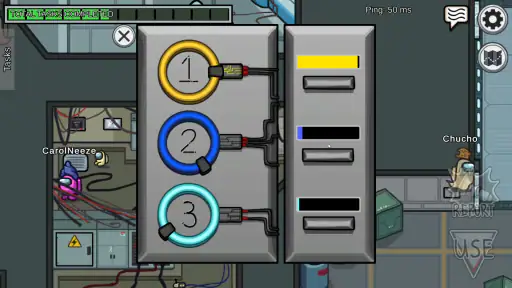
As a crewmate, your main objective is to complete all the tasks and, hopefully, not get sliced by the impostor. These tasks range from fixing wires to diverting power, all designed to make you feel like a legit space engineer. But watch your back while you do them because the impostor’s lurking around, ready to pounce.
A practical habit I’ve found useful is to treat each task trip as a route, not a series of isolated stops. Notice who crosses your path and where you were headed, then use that memory when a meeting begins. This is more helpful than trying to memorize every player’s movements: I focus on a couple of clear encounters and the order in which they happened. It gives me a grounded account to share without pretending I saw more than I did.
It also pays to resist the urge to rush through every task just to look busy. A player who pays attention to the map and to nearby movement is better prepared to explain their choices later. At the same time, overthinking every passerby can make the game feel tiring. I aim for a balance: complete the objective, stay aware, and save strong accusations for details I can actually describe.
The Art of Deception
If you get the role of the impostor, congratulations! Your mission, should you choose to accept it, is to blend in with the crewmates, sabotage their tasks, and take them out. It’s all about deception and quick thinking. You’ll need to think like a spy and act like a detective. Can you manage the chaos?
For an impostor, the strongest play is often restraint. Trying to explain every movement can draw more attention than giving a brief, plausible account and listening to what others noticed. I also find that a convincing lie has to fit the pace of the room: if everyone is casually chatting, a long courtroom speech sounds out of place; if the group is comparing details carefully, silence may be just as conspicuous. The point is not to dominate the conversation but to understand what the others can reasonably know.
This role can be stressful for players who dislike bluffing in front of a group. That is not a flaw in the player; it is simply the part of the game’s appeal that will not suit everyone. If someone feels uncomfortable being accused or having to invent a story, they may enjoy the crewmate role more, or prefer a cooperative game where the group solves a problem together rather than trying to mislead one another.
Emergency Meetings and Voting
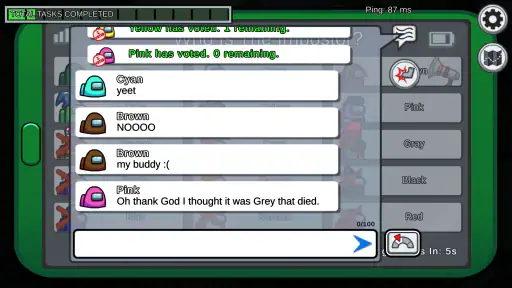
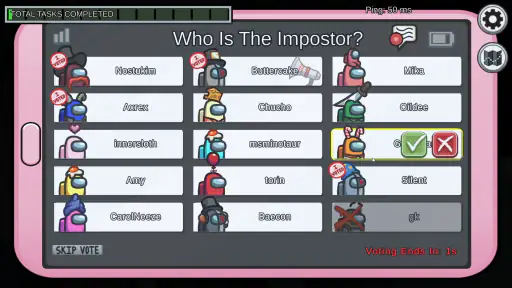
Ah, the emergency meetings. Here’s where the drama unfolds. When a dead body is reported or someone calls a meeting, the game shifts to a debate session where everyone can discuss who they think the impostor is. This is where you need your best poker face and a convincing argument, especially if you’re the impostor. It's like being in a real-life mystery dinner party, and honestly, it’s a blast!
My most useful meeting habit is to separate observation from interpretation. “I saw two players near this area” is more helpful than immediately declaring one of them guilty, because the group can test the detail against other accounts. It also makes it easier to revise a suspicion without losing face. If you are new, ask a focused question about where someone was or what they remember, rather than trying to solve the whole round in one speech.
Voting is not automatically proof that the group has reasoned well. Players can be mistaken, persuaded by confidence, or simply unable to agree. I try to treat a close call as a clue about what the group believes, not a final verdict on someone’s character. That keeps the banter light and makes it easier to play another round after a wrong accusation.
A realistic way to fit it into a day
Imagine a few friends have a little free time after class or while waiting for everyone to join a call. One person suggests a quick round, and the group agrees to keep the first game relaxed so newcomers can learn the rhythm. During play, each person notices a different detail; once a meeting starts, those fragments become the conversation. Even a mistaken vote can become a funny story afterward, provided the group understands that suspicion is part of the game and not a personal judgment.
That is where I see its best everyday use: not as background entertainment, but as a shared activity that gives a group something specific to discuss. It works less well when people are distracted, unable to communicate, or have to leave at unpredictable moments. If you only have a tiny gap and need to stop instantly, another mobile game with independent rounds or solo progress is a safer choice.
Simple presentation, social pressure
The game’s cartoon style keeps the spaces readable, and the sound effects help give movement and emergencies a sense of urgency without making the visuals feel busy. I do not come to it for spectacle; I come for the contrast between harmless-looking characters and the suspicion that builds as players compare accounts. Its presentation supports that tension rather than competing with it.
How it compares with other choices
Among action games, this is an unusual fit because the decisive moments are often conversations rather than fast aiming or elaborate combat. Compared with a conventional action title, it asks less of your reflexes and more of your memory, judgment, and willingness to speak. Compared with a cooperative puzzle game, it adds uncertainty between players: the group may be working toward a shared goal, but some participants are trying to mislead the rest.
That makes the choice fairly clear. Pick this when your group wants playful suspicion and discussion; choose a more traditional action game when you want direct control and constant movement, or a cooperative game when you want everyone openly solving the same challenge. It is not a universal replacement for either. Its value depends on whether the people around you enjoy the social friction that makes each meeting interesting.
Why It’s a Must-Play
What makes Among Us a must-play is its ability to bring people together, even when you’re suspecting each other of being a murderer. Whether you’re playing with friends or joining a random group online, it’s a great way to connect and have some laughs. Plus, the game encourages communication and strategic thinking, which is always a win in my book.
It has remained a widely played choice, but the actual experience still comes down to the room you enter. If you join a group of strangers, I would give the conversation a round to establish its tone before deciding whether it is your kind of lobby. With friends, a quick agreement about fair play and keeping accusations inside the game can prevent a lively debate from becoming uncomfortable. That small social boundary matters more than any clever tactic.
Innersloth LLC’s game is rated Everyone 10+ and has been available since June 15, 2018. The current version is 2025.4.20, and Android support starts at version 6.0. Those details make it useful to check device compatibility before installing, especially on an older phone. I would also keep the age rating and optional purchases in mind when deciding whether it is appropriate for a younger player.
My buy-or-skip verdict
So, if you’re looking for a game that’s equal parts fun, challenging, and absurdly entertaining, give Among Us a try. Just remember to trust no one... and maybe, just maybe, you’ll survive the next round.
My recommendation is to start with the free download and judge it by one question: does your group enjoy talking through uncertainty? If yes, there is plenty of social value in a game that can turn a short get-together into a series of memorable accusations and reversals. If you want a polished solo campaign, dependable action without discussion, or a calm experience with no bluffing, I would skip it and choose something built around those needs instead.
Among Us Pros and Cons
Pros
- Engaging multiplayer experience
- Cross-platform playability
- Easy to learn mechanics
- Regular updates and new content
- Great for social interaction
Cons
- Requires internet connection
- Can be repetitive over time
- Limited map variety
- In-game ads can be distracting
- Voice chat not integrated
This Game in Other Languages
Frequently Asked Questions
What is Among Us and how do I play it?
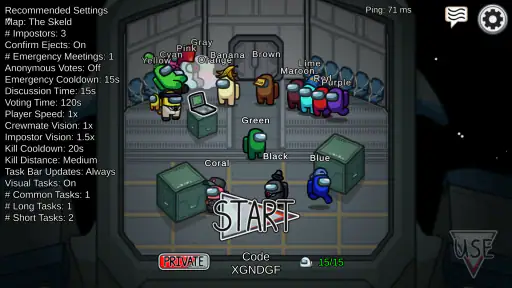
Among Us is a multiplayer game where players work together on a spaceship to complete tasks while trying to identify impostors among them. The game can be played with 4-15 players online or via local WiFi, where crewmates must complete tasks around the map while impostors try to sabotage them. Players can call emergency meetings to discuss and vote out suspected impostors. The game ends when all tasks are completed or the impostors are voted out.
Is Among Us free to play?
Among Us is free to play on mobile devices, both Android and iOS, with optional in-app purchases for cosmetic items like skins, hats, and pets. On other platforms like PC or Nintendo Switch, the game costs a small fee. The mobile version is supported by ads, which can be removed by purchasing the ad-free version.
Can I play Among Us with friends?
Yes, Among Us is designed to be played with friends. You can host a game and share the room code with your friends so they can join. The game supports both online multiplayer and local WiFi play, allowing you to enjoy the game with friends whether they're nearby or far away. Communication is key, so using a chat platform is recommended.
What are the system requirements for Among Us?
For mobile devices, Among Us requires Android version 6.0 or iOS 10.0 and above. The game is lightweight, so it runs smoothly on most modern devices. For PC, the game requires Windows 7 SP1+ and a 64-bit processor and operating system. It’s not graphically intensive, making it accessible on a wide range of devices.
Is there a way to customize my character in Among Us?
Yes, you can customize your character in Among Us. Players can choose different colors and add various cosmetic items such as hats, skins, and pets. Some of these items are available for free, while others can be purchased through in-app transactions. These customizations allow you to express your personality and stand out in the game.


