

Toon Blast
- Reviews
- 4.6
- Version
- 17659
- Installs
- 100,000,000+

Screenshots
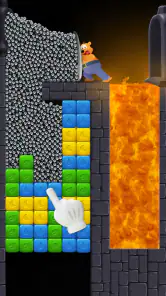
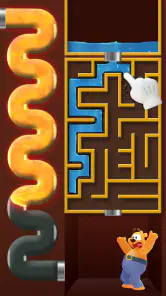
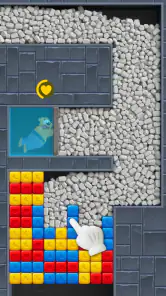
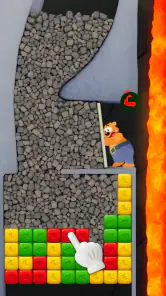
 Analysis by Frivlyz
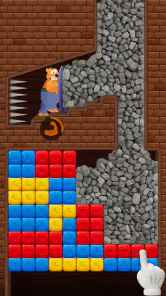
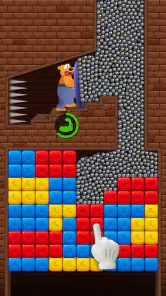
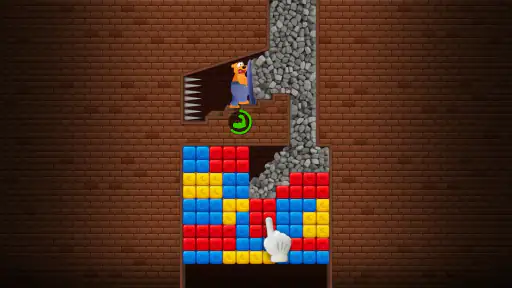
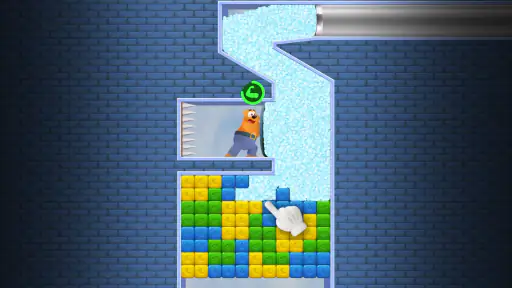
I approach Toon Blast as a small puzzle break rather than a game that needs a long, uninterrupted session. Its simple tap-to-clear idea is easy to grasp, but getting through a difficult board takes more thought than the bright presentation first suggests. That mix is its main appeal: I can start quickly, then decide whether I want one more level or a longer stretch of play.
A routine that makes each move count
My basic habit is to scan the whole board before tapping. It is tempting to clear the first sizeable group of matching cubes I see, but that can leave awkward colors split apart and make the remaining objective harder. I look for groups that help open space or set up a useful follow-up, then check what has changed before making the next move. A brief pause at the start often saves me from spending moves reactively later.
When a level does not go my way, I try not to repeat the same opening automatically. I look at which early clears led to a cramped board and change the first few taps on the next attempt. This is a practical way to learn a level without treating every failure as proof that I need a booster. It also makes the puzzle feel more like a sequence of decisions than a quick color-matching reflex test.
Our Stories on Toon Blast
Toon Blast: The Puzzle Game That Keeps You Hooked
NewsDancing Road Turns Short Breaks Into a Test of Rhythm and Timing
NewsSuper Stylist Makes Every Outfit a Test of Taste and Patience
NewsDominoes on Your Terms: Who Should Play and Who Should Pass
NewsPokémon GO Makes the Familiar World Feel New
NewsChess.com Turns Rematches Into Rivalries, but Community Has Its Costs
NewsSettings and session habits worth checking
I would check the available settings before settling into regular play, especially if I expect to use the game in quiet places or while commuting. I prefer keeping the screen comfortable for the environment and the audio at a level that does not distract me. Those small choices make the game easier to fit around everyday life, though I would not assume there is a special setting or shortcut that changes how a level works.
For short sessions, I set myself a simple stopping point: finish the level I am on, or stop after a failed attempt if I notice I am tapping out of frustration. That boundary matters in a game built around quick retries and ongoing progression. The free-to-play format is easy to try, but in-app purchases range from $0.49 to $199.99 per item, so I would treat purchase prompts as a reason to pause and consider whether I actually want to spend, rather than as part of the puzzle strategy.
Patterns that help without rushing
As I get more comfortable, I pay attention to how one clear changes the groups around it. Instead of chasing the biggest cluster every time, I consider whether a smaller move can bring colors together or leave a better setup for the next turn. When a level includes a clear objective, I keep that goal in view; a satisfying blast is not necessarily a useful one if it does little to advance the board.
I also separate a level’s challenge from my mood. If I am tired or distracted, I am more likely to overlook a better move, so I use those moments for easy progress rather than forcing a stubborn puzzle. That is a small but useful distinction: the game works well as a casual break, while its trickier boards reward attention. There is no need to turn every session into a test of patience.
Gaming Stories You May Enjoy

Archery Battle 3D Review: Sharp Aiming, Unclear Feedback

Should You Switch to Geometry Dash Meltdown? A Test of Timing and Patience

Fidget Toys Trading・Pop It 3D: What Happens When the Game Stumbles
NBA LIVE Mobile Makes the Season the Main Event

Sonic Forces: PvP Battle Race - Speed and Strategy Combined

Unlocking the Secrets of Piano Game: Classic Music Song
Where the puzzle can feel restrictive
The same focused design can become repetitive if I want a story-heavy adventure, a sprawling world to explore, or a puzzle game built around varied mechanics rather than clearing colored cubes. Toon Blast keeps its central interaction familiar, so players who tire quickly of that loop may find the steady level progression less appealing. Some difficult stages can also make progress feel slow, especially when I have used several attempts without finding a more promising opening.
I would also be cautious about treating boosters as a guaranteed solution. They can help in a tight spot, but they do not replace reading the board, and using them without a clear reason can make a resource feel wasted. For me, the better approach is to identify what is blocking progress first, then decide whether a helper addresses that exact problem. If it does not, another attempt with a different opening may be the more satisfying choice.
Who will enjoy the everyday rhythm
This suits people who like compact, colorful puzzles they can pick up between other tasks, and it is approachable for players who do not want complicated controls. A realistic use for me is a short wait in a café: I can play a level, put my phone away when my order is ready, and return later without needing to remember a complex chain of actions. The cartoon style also keeps the tone light, even when a board takes a few tries.
It is less suited to someone seeking a completely hands-off experience, a deep narrative, or a new puzzle mechanic in every session. Compared with number puzzles, which often reward slow calculation, Toon Blast is more about spotting useful groups and anticipating how a clear changes the board. Compared with match-three games that emphasize swapping pieces, its tap-to-clear approach asks me to judge clusters already on the board. If I want careful deduction, I would choose a different puzzle; if I want quick visual decisions, this is a better fit.
There is also a social option for players who enjoy shared goals: I can join or create a team and take part in team competition. That adds a reason to return beyond my own level progress, but it is not essential to enjoying the core puzzle. I would choose it when friendly group participation sounds fun, not because the game requires me to make the social side central.
The World of Toon Blast
Imagine stepping into a vibrant cartoon world where every level is a new challenge. That's exactly what this game offers. From the moment I downloaded it, I found myself immersed in a universe filled with lively characters and tricky puzzles that kept my fingers swiping and my brain ticking.
Gameplay and Features
So, what's the game all about? Well, it's essentially a match-three puzzle game. But don’t let that fool you into thinking it’s just another run-of-the-mill game. Each level presents a unique puzzle that you need to solve by matching cubes of the same color. The more cubes you match, the bigger the blast, and trust me, seeing those cubes explode in a burst of colors is oddly satisfying!
The game is designed with simplicity in mind. The controls are intuitive, making it easy for anyone to pick up and play. But don’t be mistaken; as you progress, the levels get more challenging, requiring a bit of strategy and a whole lot of patience.
Graphics and Animation
One of the things that stood out to me was the graphics. They're not just good; they're spectacular. The developers have done a fantastic job in creating a visually appealing game that draws you in with its bright colors and smooth animations. Each character you encounter has a unique personality, making the game even more engaging.
And let’s not forget the sound effects. They add an extra layer of fun to the game, making every cube you match sound like a little victory.
Challenges and Rewards
As you progress through the levels, the game introduces you to power-ups and boosters that can help you when you're stuck on a particularly challenging level. Trust me, these little helpers are lifesavers! You also get rewards for completing challenges, which adds a nice sense of accomplishment and keeps you coming back for more.
But what really got me hooked was the competitive edge. You can join a team or create one, and then battle it out with other teams to see who can climb the leaderboard the fastest. It’s a great way to engage with friends and adds a social element to the game.
Final Thoughts
In the end, Toon Blast is more than just a game; it's an experience. It's perfect for those moments when you need a quick mental break or just want to relax with something fun and not too demanding. The game is free to download with optional in-app purchases, but honestly, you can have a blast without spending a dime.
So, if you're looking for a game that offers a perfect blend of fun, strategy, and social interaction, give Toon Blast a try. Who knows, you might just find yourself joining the league of Toon Blasters!
How it fits among puzzle games
Peak developed this puzzle game, which arrived on August 25, 2017. Its broad appeal is reflected in an average rating of 4.6 from around 4.3 million ratings, alongside roughly 386,000 written reviews and over 100 million installs. Those figures suggest that the basic loop has reached a wide audience, but they do not mean every player will enjoy its pace: the experience is deliberately built around repeatable board-clearing rather than a sequence of unrelated puzzle formats.
It is free to play and rated Everyone, making it easy to try with family members or friends who prefer uncomplicated controls. The current version is 17659, and it requires Android 7.0 or later. I would still think about the intended player’s comfort with repeated attempts and optional spending, rather than treating the age label as a promise that every part of the experience will suit every household. Purchases are optional, but the listed range makes it sensible to review spending settings on the device if younger players may use it.
For someone deciding whether to install it, the key question is not whether the game is easy to understand; it is whether clearing colored groups stays satisfying after the novelty wears off. If you enjoy refining an approach to a board, the familiar format can be a strength. If you need each session to introduce a radically different rule, its consistency may feel like a limitation instead.
A practical way to decide when to use a helper
I try to identify the specific problem before using a booster: am I short on useful groups, is the target difficult to reach, or have I simply made an early move that narrowed my options? That distinction keeps a helper from becoming an automatic response to frustration. If the board is still workable, I would rather test another sequence; if one obstacle is clearly stopping progress, a booster may be more worthwhile there than at the start of a level.
Another useful habit is to stop after a run of inattentive moves. A reset in focus can be more valuable than pressing onward, particularly when the board needs planning. I also avoid judging a session by how many levels I clear. One carefully solved stage can feel more rewarding than several rushed attempts, and this keeps the game enjoyable when progression slows.
What to expect from its longevity
Because the core action stays recognizable, the long-term draw comes from facing new board arrangements and improving how I respond to them, not from learning a complicated control scheme. That makes it easy to return after a break: I do not need to relearn a toolkit before playing. The trade-off is that players who want a strong narrative arc or a broader range of puzzle types should look elsewhere, perhaps to a logic game or a title centered on exploration.
The team competition can add a shared reason to check in, but I would not join a team expecting the game to become a deep multiplayer strategy experience. Its social element sits alongside the solo puzzle loop; it does not change the basic act of studying groups and choosing a clear. For a friend who likes casual collaboration and short sessions, that is a pleasant extra. For someone who prefers puzzles entirely on their own, it is easy to focus on the individual boards instead.
My verdict after weighing the trade-offs
I recommend it to people who want a bright, straightforward puzzle they can play in small pockets of time, especially if they enjoy learning from failed attempts rather than seeing them as wasted effort. My most useful advice is to scan first, keep the level objective in mind, and spend only when a booster addresses a clear obstacle. Those habits make the game feel more deliberate without turning a casual pastime into homework.
I would skip it if the tap-to-clear loop already sounds repetitive, if you are looking for a puzzle that depends on calculation or deduction, or if optional purchases would be an unwanted temptation. For everyone else, Toon Blast offers a low-friction way to pass a few minutes, with enough board decisions and team play to give the routine some variety. I find that its best quality is also its clearest limit: it knows the kind of puzzle it wants to be and sticks to it.
Toon Blast Pros and Cons
Pros
- Engaging puzzle gameplay.
- Colorful and fun graphics.
- Regular updates with new levels.
- Easy to learn
- hard to master.
- Great for short play sessions.
Cons
- Requires internet connection.
- In-app purchases can be tempting.
- Lives can run out quickly.
- Ads can be intrusive.
- Limited social interaction.
This Game in Other Languages
Frequently Asked Questions
What is Toon Blast and how do I play it?
Toon Blast is a fun and engaging puzzle game available on both Android and iOS platforms. Players embark on a journey with cartoon characters Cooper Cat, Wally Wolf, and Bruno Bear, solving challenging puzzles by matching cubes of the same color. The objective is to complete levels by meeting specific goals within a limited number of moves. Each level presents unique challenges, and players can use various boosters and power-ups to advance through the game.
Is Toon Blast free to download and play?
Yes, Toon Blast is free to download and play on both Android and iOS devices. However, the game offers in-app purchases which allow players to buy additional lives, coins, and boosters to enhance their gameplay experience. While these purchases can help players progress faster, they are entirely optional, and the game can be fully enjoyed without spending any money.
Are there any age restrictions for playing Toon Blast?
Toon Blast is designed to be family-friendly and can be enjoyed by players of all ages. However, it is recommended for players aged 4 and above due to some in-game purchases and advertisements. Parents should supervise younger children to ensure they do not make any unintended purchases and to manage screen time effectively.
How can I save my progress in Toon Blast?
To save your progress in Toon Blast, it is recommended to connect the game to your Facebook account. This allows you to synchronize your game data across multiple devices, ensuring you never lose your progress. If you change devices or need to reinstall the game, simply log back into your Facebook account, and your progress will be restored.
What should I do if Toon Blast crashes or won't load?
If Toon Blast crashes or fails to load, there are several troubleshooting steps you can try. First, ensure your device has the latest version of the app and operating system. Restart your device and check your internet connection. If the problem persists, consider clearing the app's cache or reinstalling the game. For further assistance, you can contact the game's support team through the app or their official website.


