 Article about Super Stylist Fashion Makeover
Super Stylist Makes Every Outfit a Test of Taste and Patience
A client arrives with a request that sounds simple: find the right look. Then the brief starts to matter. Is the outfit meant to impress a date, survive a public appearance, or project a particular kind of confidence? In Super Stylist Fashion Makeover, those decisions are the game. The surprise is not that dressing up can be entertaining; it is how quickly a wardrobe challenge becomes a test of taste, patience, and resource management.
That gives this mobile role-playing game a sharper hook than its glossy makeover premise suggests. You are not merely collecting attractive clothes. You are trying to understand what a client wants, assemble a look that fits, and deliver it before the next request pulls you in another direction. The experience is light, often charming, and knowingly aspirational. It is also built around a familiar free-to-play tension: the creative moment is immediate, while progression can ask you to wait, earn, or spend.
The brief behind the makeover
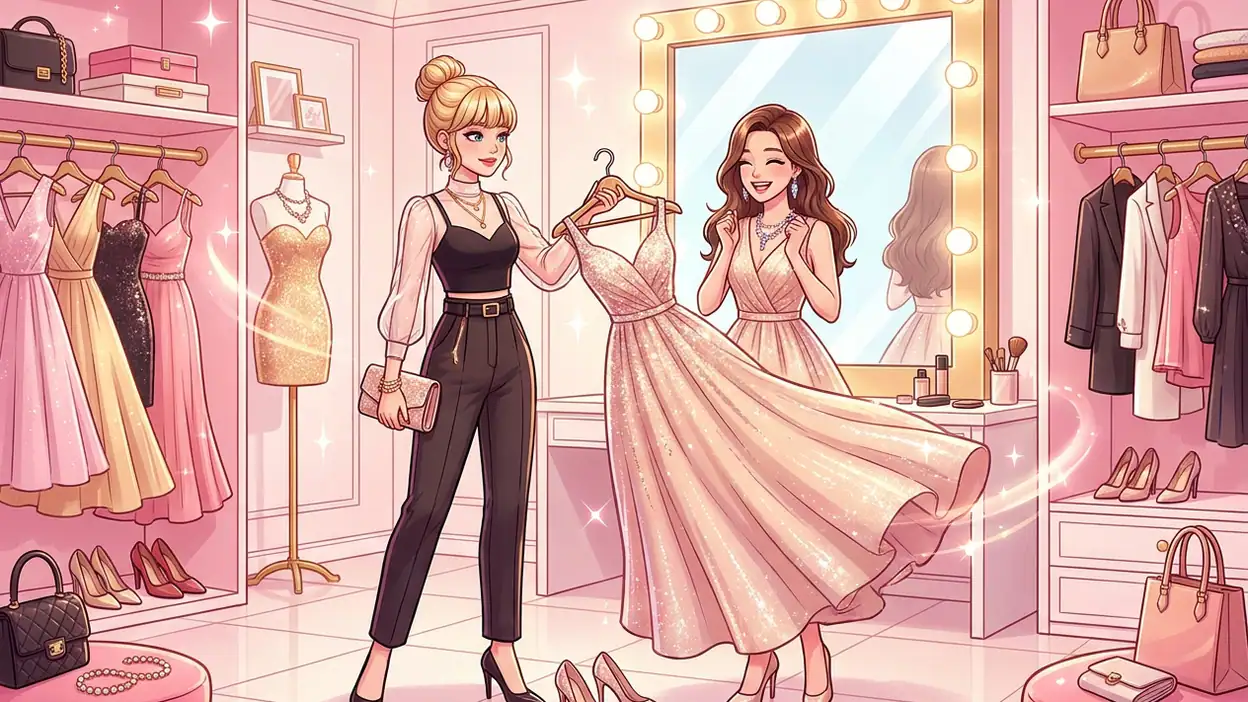
The fashion fantasy is easy to read at a glance: clients, outfits, accessories, and the promise that a smart choice can change the whole impression. What makes the setup feel bigger is its framing of styling as work. A client is not just a mannequin waiting for a dress. Their request gives the clothes a purpose, and that purpose turns the selection screen into a small editorial problem: what belongs together, what suits the occasion, and what will feel polished rather than merely expensive?
This is a useful distinction. Games built around dress-up can become digital closets, rewarding accumulation more than judgment. Super Stylist gives its clothes a job. The player is asked to interpret a brief and produce an answer, so the pleasure comes partly from the final look and partly from the reasoning that led there. Even a modest choice of shoes or accessories can feel consequential when it changes whether an outfit reads as playful, formal, or confidently put together.
The game’s presentation helps sell that little drama. Fashion is treated as a visible result, not a spreadsheet of stats: the reward is seeing a complete look come together and imagining how it will land with the client. That makes the act of styling satisfyingly legible. You can tell when you have built something coherent, and you can recognize when a piece is there because it fits the brief rather than because it was the rarest thing in your inventory.
There is a role-playing structure here, but it is not the kind built around combat or elaborate character builds. Your role is the stylist, and your progression is measured through the work you take on, the clothes you can use, and the reputation implied by handling more demanding requests. That smaller scale suits the premise. The game does not need to pretend every outfit saves the world; it only needs each client to make the next decision feel worth making.
That is also why the loop can be so sticky. A request creates a clear target. Browsing the wardrobe turns that target into a sequence of choices. Completing the look provides a compact payoff, then another client offers a fresh prompt. The rhythm is well suited to short sessions: one makeover can feel like a finished task, while a run of clients creates the pleasant sense of a busy day at work.
The catch is that a clear loop can become a repetitive one. If successive briefs ask for similar looks, the task risks shrinking into selection rather than interpretation. The game’s strongest moments depend on the feeling that a particular client needs a particular answer. When that distinction fades, the wardrobe may still look appealing, but the work loses some of its spark.
Attention to the game makes sense because it sits at an appealing crossroads: fashion fantasy, collectible progression, and quick mobile play. It presents styling as both creative and achievable. You do not need deep knowledge of fashion to understand the brief, but you can still take pride in making a look feel intentional. That combination gives the game a wider invitation than a simulation aimed only at serious fashion fans.
The most revealing detail is how much of the fun comes from reading the brief, not owning the biggest wardrobe. A rare item can be exciting, but it does not automatically make an outfit right. A good stylist notices the tone of the request and makes the available pieces work together. That keeps the central fantasy from becoming purely about shopping, at least when the game gives you enough room to make meaningful choices.
It also gives the game a more interesting relationship with progress. New clothes can expand your options, but they are most satisfying when they solve a problem you could not previously solve. If rewards simply add more inventory without changing how you approach a client, collecting starts to feel like its own chore. The strongest progression is therefore not a larger closet for its own sake; it is a closet that lets you answer briefs with more range.
That is where the real user tension lives. The game invites experimentation, then places that creativity inside a progression system. Some players will enjoy steadily building a wardrobe and treating each unlock as a new tool. Others may feel that the outfit they want to make is too far away, or that a session has stalled before the next satisfying reveal. Mobile games often balance generosity against monetization, and here that balance matters because waiting can interrupt the very momentum the makeover loop depends on.
It is worth being clear about the trade-off: the styling itself is the draw, but not every stretch between styling moments is equally engaging. If you want a deep fashion simulator with meticulous garment construction, this is a lighter proposition. If you expect a role-playing game with a large narrative campaign, its client-by-client structure may feel thin. Its appeal rests on small, repeated acts of creative judgment, and those acts need enough variety to stay fresh.
Comparisons with Avakin Life - 3D Virtual World clarify the difference. Avakin Life leans toward inhabiting a social space and shaping an avatar’s broader life; Super Stylist concentrates on the job of styling. Shadow Fight 3 - RPG fighting and MARVEL Future Fight make the contrast even sharper: their combat systems turn progression into preparation for battles. Hero Wars: Alliance builds its appeal around team composition and fighting. Super Stylist trades those larger systems for a narrower question: does this look answer this client?
That smaller question is not a weakness by itself. In fact, the contrast shows what the game can do well. It delivers a clear creative task without asking players to learn a complicated combat system, navigate a sprawling world, or keep track of a large cast of heroes. Its scale is part of its convenience. The question is whether the fashion briefs and rewards can keep changing enough to make that convenience feel like focus rather than thinness.
What feels genuinely new is not a radical reinvention of mobile dress-up. It is the way the game treats styling as service. A client’s need gives the outfit a reason to exist, and the player’s taste becomes the tool for meeting that need. That shift makes the makeover feel less like dressing a doll and more like solving a visual puzzle with an audience in mind. It is a modest idea, but a coherent one.
That coherence matters beyond the game’s immediate fashion fantasy. Many mobile games turn every action into a race for bigger numbers. Super Stylist finds another kind of reward in presentation: the pleasure of seeing choices click into a finished look. It may still use familiar progression pressures, but its best loop asks players to notice details, not just accumulate power. For a genre crowded with upgrades, that change of emphasis gives the game its own identity.
Whether it holds that identity over time depends on how much the game continues to challenge the player’s eye. A stronger brief can make an old wardrobe feel new; a repetitive one can make a large wardrobe feel like clutter. The most valuable content is not simply another item to own, but another reason to reconsider what a client needs and how the pieces can answer it.
So the story here is less about a makeover than about the judgment behind one. Super Stylist makes its best case when it turns a few clothing choices into a readable, satisfying decision, then lets the finished look speak for itself. Its weaker stretches remind you that free-to-play pacing can put friction between the player and the fun. Still, the central idea holds: the most impressive thing in this fashion game is not the closet. It is the moment you understand what the client is asking for, and make the outfit feel inevitable.