

Temple Run
- Reviews
- 4.2
- Version
- 1.30.2
- Installs
- 500,000,000+

Screenshots
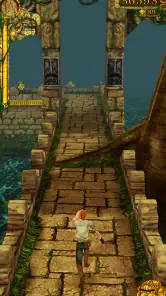
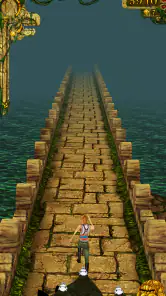
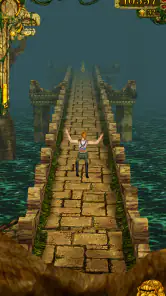
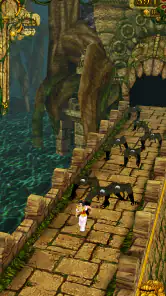
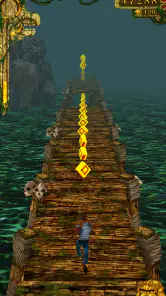
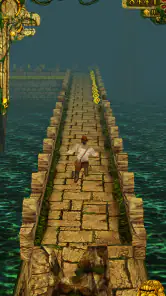
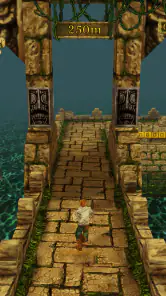
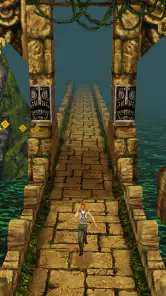
 Analysis by Frivlyz
When I decide whether to keep an arcade game on my phone, I look for a short path from opening it to playing, controls that feel responsive, and enough tension to make a spare minute enjoyable. Temple Run still meets those tests: a swipe can send me into a run quickly, but staying alive asks for attention rather than mindless tapping. That balance is why I still reach for it when I want a quick challenge rather than a longer game session.
It is also worth being clear about what kind of challenge it offers. This is an arcade chase built around reacting to a changing route, not a story-led adventure or a leisurely exploration game. The appeal is the pressure of making the next move correctly, then seeing whether I can last a little longer than before. If that sounds satisfying, its straightforward format is a strength; if you want a plot, deep character development, or a calm pace, it may feel thin.
A good fit for small pockets of time
I find the game especially useful in those everyday gaps when I have a few minutes but do not want to start something that demands a long commitment. A wait for a takeaway order, a short break between tasks, or a quiet moment before heading out can be enough for a run. The objective is immediately understandable, so I do not need to re-learn a complicated setup each time I return.
Our Stories on Temple Run
Temple Run: How an Endless Runner Became a Gaming Icon
NewsWSOP Poker: Texas Holdem Game Shines as This Week's Top Pick
NewsHow Woodoku Thrives with Android and iOS Updates
NewsDraw Climber: Redefining Arcade Gaming with Creative Mechanics
NewsDancing Road Turns Short Breaks Into a Test of Rhythm and Timing
NewsSuper Stylist Makes Every Outfit a Test of Taste and Patience
NewsThat convenience comes with a practical caveat: the controls need your attention. Swiping to jump, slide, or turn and tilting to steer are simple actions, but the game gets less forgiving as the pace rises. I would not choose it while walking, crossing a street, or doing anything else that needs my eyes and hands. A short game is still a game that rewards focus, and it is better enjoyed while sitting somewhere safe.
What to watch for during a run
My most useful habit is to read the route a little ahead instead of reacting only when an obstacle is already close. That small shift helps me prepare for a turn after a jump or a slide, where a rushed swipe can send a run off course. I also try to keep my tilting deliberate: overcorrecting for a coin can be more costly than missing a few coins and keeping a clean line.
Coins make each run serve two purposes. They contribute to a score-focused attempt, but they also help fund upgrades, so a run that ends early can still make progress. I do not treat every coin trail as an order to follow it. When the route is awkward, survival is usually the better choice; the short-term reward is not worth losing a promising run. That is a small but useful trade-off for anyone tempted to chase every collectible.
How it differs from other arcade runners
Compared with puzzle games or slower arcade titles, this one puts reflexes and route-reading at the centre. Compared with runners that build their appeal around extensive customization, a narrative campaign, or a large collection of modes, its draw is the clean loop of running, avoiding danger, and trying again. That focus makes it easy to understand, but it also means the experience can become repetitive if you need constant new objectives or a strong sense of progression.
Gaming Stories You May Enjoy

Dominoes on Your Terms: Who Should Play and Who Should Pass

Pokémon GO Makes the Familiar World Feel New

Chess.com Turns Rematches Into Rivalries, but Community Has Its Costs

Archery Battle 3D Review: Sharp Aiming, Unclear Feedback

Should You Switch to Geometry Dash Meltdown? A Test of Timing and Patience

Fidget Toys Trading・Pop It 3D: What Happens When the Game Stumbles
For me, that simplicity is most valuable when I want a self-contained burst of play. If I am in the mood to make choices at a relaxed pace, a puzzle game is a better fit. If I want a long session with a developing story, I would look for a different kind of game. Temple Run is at its best when I want to test quick reactions and personal consistency, not when I expect it to replace every kind of mobile entertainment.
Who should install it—and who might pass
The game is free, rated for Everyone, and developed by Imangi Studios. Its average rating is 4.2 from around 5.3 million ratings, with about 339,000 reviews and over 500 million installs. Those figures reflect its broad reach, but popularity alone does not make it the right match for every player. I would recommend it to someone who enjoys quick reflex challenges, score chasing, and a familiar pick-up-and-play format.
I would be more cautious about recommending it to someone who dislikes repeated attempts or finds touch controls frustrating. The central activity remains a run followed by another run, so the enjoyment depends on liking that loop. The game is free to start, while optional in-app purchases range from $0.99 to $19.99 per item. I would begin without spending and see whether collecting coins and improving through play is satisfying enough; anyone who prefers a clearly bounded, one-time purchase should weigh that approach against their usual buying habits.
Endless Running at Its Finest
Temple Run really set the bar for the endless runner genre. The premise is simple: you’ve stolen a cursed idol from a temple, and now you must run for your life. The game’s intuitive swipe and tilt controls make it easy to jump, slide, and turn as you navigate through the treacherous terrain. It's a game that’s easy to pick up but hard to master, which is exactly what makes it so addictive.
The Thrill of the Chase
What keeps me coming back to Temple Run is the sheer thrill of the chase. Every session is a new adventure, with randomly generated paths that keep you on your toes. The game’s speed gradually increases, and the tension builds as you try to beat your high score. It’s the kind of heart-pounding excitement that makes you want to play "just one more run."
Power-Ups and Upgrades
One of the things I love about Temple Run is the variety of power-ups and upgrades available. From coin magnets to shields, these power-ups add a strategic layer to the gameplay. Collecting coins during your run allows you to purchase upgrades that enhance your abilities, making your character even more formidable. It’s a great way to keep players engaged and motivated to improve.
Graphics and Sound
While Temple Run isn’t the flashiest game on the market, its graphics hold up surprisingly well. The lush jungle environment, combined with the eerie sounds of the temple and the menacing growls of the demon monkeys, creates an immersive experience. The visuals are crisp, and the animations are smooth, ensuring that the game runs flawlessly on both Android and iOS devices.
Why It’s a Must-Play
In a world where mobile games come and go, Temple Run remains a staple for a reason. It’s the perfect combination of simplicity, challenge, and excitement. Whether you’re a seasoned gamer or someone looking for a fun way to pass the time, this game has something for everyone. Plus, it’s free to play, so there’s really no excuse not to give it a try.
All in all, Temple Run is a timeless classic that continues to provide endless hours of entertainment. If you haven’t played it yet, you’re missing out on one of the best mobile gaming experiences out there. So, grab your phone, channel your inner adventurer, and see how far you can run!
A few practical expectations before you begin
The current version is 1.30.2, and Android players need version 5.1 or later. It originally arrived on March 26, 2012, yet its age is part of the appeal: the basic loop does not ask you to learn a modern stack of menus before playing. I would still treat it as a classic rather than assume every part feels new. The older, direct design is easy to approach, but players accustomed to frequent new systems may find the core routine familiar quickly.
One question I would ask before installing is whether I need a connection for every session. I would not plan around a particular offline experience without checking how the game behaves on my device and in my intended setting. If I expect to play during a commute or somewhere with unreliable service, I would test it in advance rather than discover a limitation when I have already settled in. That simple check matters more than it does for someone who mostly plays at home.
Another useful expectation is that a strong run can end because of one missed gesture, not because the game has gradually become unfair in a way I can solve with a complicated build. Improvement mostly comes from learning to recognize the visual cues and making cleaner inputs. If a turn keeps catching me out, I focus on the timing and the approach to it on the next attempt instead of trying to compensate by steering wildly. That makes retries feel like practice rather than pure luck.
Getting more from the simple loop
I suggest separating a score run from a coin-gathering run in your own mind. When I am chasing a personal best, I prioritize safe movement and let risky coin lines go. When I am more interested in collecting, I accept that my run may end sooner and use it to work toward upgrades. The game does not need a complicated plan, but choosing one purpose before starting helps keep a tempting detour from derailing the session.
Power-ups also work best when I think of them as support for a run, not a guarantee that I can ignore the route. A shield or coin magnet can make a particular stretch more forgiving or productive, but attention still matters. I try to notice what is active and avoid treating a brief advantage as permission to stop reading the path. This is a small adjustment, yet it keeps the tools from turning into a distraction of their own.
There is a learning curve in the tilt control that can be easy to underestimate. Holding the phone at a comfortable angle and moving it in small, controlled increments is more reliable for me than making a large sudden lean. If the device is resting awkwardly in one hand or I am trying to play while multitasking, my steering becomes less precise. For a more comfortable session, I use both hands when I can and keep the screen unobstructed.
Where the trade-offs become noticeable
The escalating speed is what gives a run its bite, but it is also the reason I would not call this a relaxing game. A player who wants to unwind without having to watch the screen closely may prefer a slower arcade game or a puzzle with time to think. Here, a tiny lapse can end a run, and repeating that cycle is either the hook or the frustration, depending on your temperament.
The game’s familiar structure also has a limit. Randomly generated routes change the immediate sequence, but they do not turn the experience into a different genre or provide a story arc. If you are hoping every session will introduce a new objective, the basic chase may not hold your interest for long. I see it as a focused reflex test that is easy to revisit, not a deep campaign meant to occupy every evening.
There is also a difference between being free to begin and having no spending decisions at all. Optional purchases are available, so I would keep an eye on purchase prompts and make sure any spending is intentional, especially if a child is using the device. The Everyone age rating makes it broadly suitable in content terms, but it does not remove the need for a parent to set sensible boundaries around in-app buying and screen time.
How much commitment does it ask for?
The main commitment is attention, not a long block of time. That makes the game convenient for short breaks, but it is not ideal if you need to pause at unpredictable moments: an active run depends on responding to the next obstacle. I find it better to start when I can give the screen a few uninterrupted minutes, then stop between attempts rather than trying to manage a run alongside a conversation or another task.
Switching away is easy because the basic idea is familiar to anyone who has played a runner: avoid hazards, follow the route, and try to last. Switching back after time away is similarly low-friction; I do not need to rebuild a complicated strategy before I can enjoy a run. The trade-off is that players who value persistent story progress or elaborate long-term planning may find little reason to make it their main game.
For Android and iOS players comparing endless runners, I would choose based on the feel of the controls and the kind of variety I want, not on a general claim that one runner is best for everyone. Temple Run’s swipe-and-tilt movement and temple chase give it a distinct, hands-on rhythm. Another runner may suit you better if its visual style, progression, or extra modes matter more to you; those preferences are a better guide than simply picking the most familiar name.
My recommendation
Imangi Studios’ arcade game remains an easy recommendation for someone who wants a free, quick-to-understand test of reflexes and is happy to replay runs in pursuit of a better result. Its 4.2 average and broad audience are useful context, but my reason to recommend it is more practical: I can start playing without a long setup, and the controls give each attempt a clear skill to work on. The version available now carries the simple identity that has kept the game recognizable for years.
I would skip it if repeated failure quickly annoys you, if you want a story-rich adventure, or if touch-and-tilt steering is not comfortable on your phone. For everyone else, it is worth trying as a compact arcade game rather than expecting it to be an all-purpose mobile experience. I would install it, play a few runs without buying anything, and decide from the feel of the controls whether the chase is the kind of short challenge I want to return to.
Temple Run Pros and Cons
Pros
- Engaging and endless gameplay.
- Intuitive swipe controls.
- Vibrant and detailed graphics.
- Regular updates and new challenges.
- Free to download and play.
Cons
- Repetitive after long sessions.
- In-app purchases can be pricey.
- Requires constant internet connection.
- Ads can be intrusive.
- Limited character customization.
This Game in Other Languages
Frequently Asked Questions
What is the main objective of Temple Run?
Temple Run is an exhilarating endless runner game where the main objective is to escape from demonic monkeys chasing you after you steal a cursed idol from an ancient temple. Players must navigate through a maze of cliffs, forests, and ziplines, collecting coins and power-ups, while avoiding obstacles and making sharp turns to stay alive.
Is Temple Run free to play, and are there in-app purchases?
Yes, Temple Run is free to download and play on both Android and iOS platforms. However, the game offers in-app purchases that allow players to buy coins and power-ups. These purchases can enhance the gameplay experience by unlocking new characters, abilities, and upgrades, although they are optional and not necessary to enjoy the game.
What are the system requirements for Temple Run?
Temple Run is compatible with most modern smartphones and tablets. For Android users, the game typically requires Android 4.1 or higher, while iOS users need iOS 9.0 or later. It's always recommended to have a device with updated software and sufficient storage space to ensure smooth gameplay and optimal performance.
Can Temple Run be played offline?
Yes, Temple Run can be played offline, which makes it an excellent choice for playing during travel or in areas with limited internet connectivity. However, some features such as in-app purchases or leaderboards may require an internet connection to function fully. Offline play does not impact the core gameplay experience.
Are there any age restrictions for playing Temple Run?
Temple Run is rated for players aged 9 and above. The game contains mild fantasy violence as players are pursued by creatures and must avoid various traps. It's suitable for children, but parents are encouraged to monitor gameplay to ensure it aligns with their comfort level regarding game content and screen time.


