

Bubble Shooter Rainbow
- Reviews
- 4.7
- Version
- 2.92.1
- Installs
- 100,000,000+

Screenshots
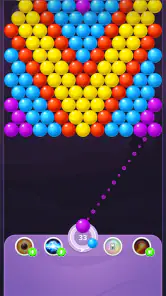
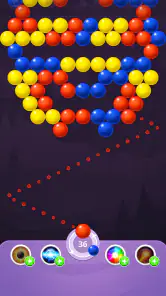
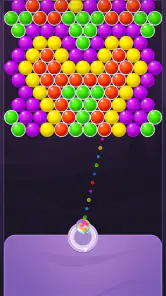
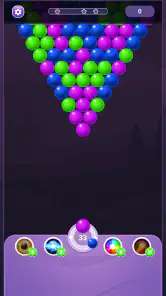
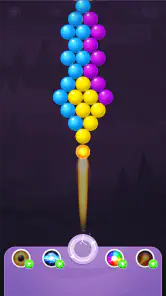

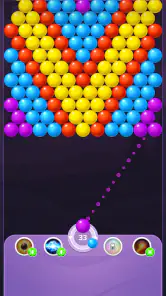
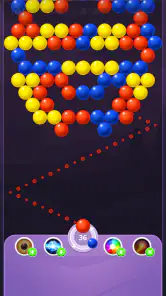
 Analysis by Frivlyz
I often reach for a simple puzzle game when I have a few spare minutes, and a shared tablet can make that kind of game an easy choice for different people in the same household. Bubble Shooter Rainbow suits that casual role: its familiar color-matching idea is quick to understand, while aiming still gives me a reason to think before I shoot. It is less suited to anyone looking for a long story, a competitive team game, or a deep collection of systems to master.
Playing in a Shared Household
On a shared device, the biggest practical benefit is that the basic play is easy to explain. One person can hand the device over after a level, and the next player can understand the central task without needing a lengthy introduction. I would treat it as a take-turns game rather than assume that everyone’s progress or preferences are kept separate. That makes it a good fit for casual play in the same room, but not an ideal choice if each person needs a clearly separate game space.
A realistic use is a short wait while dinner is finishing or a quiet spell on a weekend afternoon. I can play a level, pause, and let someone else try the next one. To keep that pleasant, I’d agree on a simple turn-taking rule before opening the game, especially if one player tends to spend longer planning shots. The puzzle works well as a shared activity when everyone is happy to take turns, but it does not replace a game designed around cooperation or head-to-head play.
What to Consider Before Sharing the Device
The straightforward start is convenient, but it also means I would set expectations outside the game. If the device belongs to more than one person, decide who is responsible for any purchases and whether children may use it without supervision. The game is free to download and offers in-app purchases, with items listed from $0.99 to $99.99 each. That range makes a quick conversation about spending more useful than assuming that a free download means every option inside is free.
I’d also avoid treating a shared device as a private notebook of individual progress. If several people take turns, they may affect the same play experience, so a household that cares about distinct personal records should consider whether a game with separate profiles is a better fit. This is a practical boundary, not a reason to avoid the game altogether: for informal turns, keeping expectations simple is usually enough.
Taking Turns Without Turning It Into a Contest
Bubble puzzles invite people to compare shots, but the most enjoyable shared approach is often to talk through one move rather than race. Before firing, a player can point out a color group or a route toward a useful cluster. That gives younger or less experienced players a chance to learn the aiming logic without having every move taken over for them. I find that kind of light coaching works better than judging a turn only by how many bubbles it clears.
There is a trade-off: a puzzle that feels relaxing alone can become frustrating if another player keeps suggesting what to do. I’d let the person holding the device make the final call, and offer advice only when asked. The game’s pace makes this easy to manage; it does not require a group to coordinate a shared real-time plan. If your household wants everyone to contribute simultaneously, a cooperative puzzle or party game will serve that purpose better.
Gaming Stories You May Enjoy

Dancing Road Turns Short Breaks Into a Test of Rhythm and Timing

Super Stylist Makes Every Outfit a Test of Taste and Patience

Dominoes on Your Terms: Who Should Play and Who Should Pass

Pokémon GO Makes the Familiar World Feel New

Chess.com Turns Rematches Into Rivalries, but Community Has Its Costs

Archery Battle 3D Review: Sharp Aiming, Unclear Feedback
Age, Trust, and Everyday Fit
The game is rated for Everyone, and its color-matching premise is approachable for a broad range of ages. In my view, that makes it a reasonable option for a family device when an adult is comfortable with the purchase choices and the way turns are shared. The age rating is helpful context, but it does not remove the need for ordinary supervision around spending or device use. I would explain that optional purchases cost real money and agree on a rule before handing over the tablet.
For a child who enjoys careful aiming and immediate visual feedback, the puzzle can be more appealing than an abstract logic grid. For someone who gets upset when a shot does not go as planned, though, the limited space on a puzzle board can make a mistake feel more consequential. I’d encourage taking a moment to line up a shot and treat a failed attempt as part of figuring out the board, rather than expecting every level to be cleared immediately.
How It Sits Among Puzzle Games
Compared with a word puzzle or a number-placement game, this is more tactile: I aim at a visible cluster and see the result straight away. Compared with a match-three game, the central decision is about trajectory and where a bubble will land, not swapping pieces across a grid. Those differences give it a distinct, easy-to-read rhythm. If you want a quiet puzzle that rewards looking ahead without asking you to learn a complicated rule set, that is a strength.
The flip side is that this style has a narrower range of decisions than a larger strategy or story-based puzzle. Players who want character development, elaborate explanations, or a fresh mechanic in every session may find the repeated aim-and-match loop too familiar. I’d choose it for short, low-pressure sessions, and choose a more varied puzzle game when I want a longer challenge with changing types of problems.
That familiar rhythm also makes it useful as a small break rather than a game I plan my day around. A level can give me a clear stopping point, which is handy when I have only a little time. I would not assume every session will feel equally effortless, though: as the boards become more demanding, a casual round can turn into a few attempts at finding a better angle. If I’m already tired or impatient, I’m better off stopping than pushing through just to finish.
First Impressions and Setup
When I first downloaded Bubble Shooter Rainbow, I was immediately struck by its bright and cheerful interface. The setup is super straightforward—no complicated instructions or tedious sign-ups. You just dive right in, which is perfect if you're like me and want to get straight to the fun part.
The game loads quickly, and before you know it, you’re presented with a cascade of colorful bubbles. The aesthetic is both charming and inviting, with a simple yet effective design that keeps things visually engaging without overwhelming you.
Gameplay Mechanics
Now, onto the gameplay—this is where the game really shines. The mechanics are delightfully simple: aim, shoot, and pop. You match bubbles of the same color to clear them from the board, and the goal is to clear all the bubbles with as few shots as possible. It’s a classic concept, but the execution here is spot on.
The controls are intuitive, with easy swipe and tap functions to direct your bubble cannon. What I love is how the game gradually introduces more challenging levels. It starts off easy, which is great for getting the hang of things, but soon enough, you’re strategizing your moves like a pro.
One useful habit is to pause before each shot and look beyond the nearest match. A bubble that clears a small group may be less helpful than a shot that opens a route toward a larger section. When a direct line is blocked, I try to think about whether a banked angle can reach the target instead of repeatedly firing at the same obstacle. That little change in approach makes the aiming feel more deliberate and can prevent wasted moves.
Levels and Challenges
There’s a satisfying amount of levels to keep you entertained. Each level presents a new puzzle, and the difficulty ramps up at just the right pace. I found myself getting pleasantly absorbed, always wanting to tackle "just one more level" before putting the game down.
The game also features special bubbles and power-ups that add an extra layer of strategy. These include bombs to clear sections and rainbow bubbles that match with any color, which can really save the day in those trickier stages.
I’d save a special bubble for a point where it changes the shape of the board, rather than use it simply because it is available. A bomb can be most useful when a concentrated section is blocking a route, while a flexible-color bubble is valuable when the color I need is awkwardly placed. The exact best moment depends on the board, but thinking of these tools as ways to solve a particular obstacle makes them more useful than treating them as automatic shortcuts.
When I get stuck, I find it helps to reassess the board instead of repeating the same shot with only a slightly different aim. Look at which clusters are attached to other bubbles and whether clearing one connection could remove more than the immediate match. That is a more reliable way to learn from a failed attempt than simply spending a power-up to get past the problem. It also keeps the puzzle satisfying for players who would rather solve a level than rush through it.
Visuals and Sound
The developers have done a fantastic job with the visual elements. The colors are bright and cheerful, which adds to the overall enjoyment. The animations are smooth, and there’s a satisfying little pop sound that accompanies each successful shot, which I found oddly satisfying.
The background music is a gentle, upbeat tune that doesn’t distract from the gameplay but rather complements it. It’s the kind of game where you can easily lose track of time, just chilling and popping bubbles.
Because the screen is built around brightly colored bubbles, I would choose a comfortable brightness and a quiet setting if I’m playing for a while. The cheerful palette makes matches easy to follow for me, but anyone who finds busy colors tiring may prefer shorter sessions. Sound is part of the pleasant feedback, yet the puzzle itself is visual, so I can still enjoy the basic play when I want a quieter moment.
Monetization and Ads
Okay, let’s talk about something everyone wonders—ads and in-app purchases. The game is free to download, which is awesome. There are ads, but they’re not too intrusive. You can choose to watch ads for extra lives or power-ups, which is a fair trade-off, in my opinion.
If you’re really into the game and want to support the developers, there are in-app purchases available that can enhance your gameplay. But honestly, you can still have a ton of fun without spending a dime.
For a shared device, I’d make purchase expectations clear before anyone starts playing. Optional offers can be tempting when a player is close to finishing a difficult board, so it is sensible to agree that purchases need permission rather than relying on a child to decide in the moment. If you prefer games with no advertising or purchase prompts at all, this may not be the right pick; a paid puzzle with a simpler purchase model could be more comfortable, even if it costs money upfront.
Who I’d Recommend It To
Blackout Lab’s puzzle is a good match for people who like quick visual challenges, familiar rules, and the satisfaction of planning a shot. It can work for a solo player taking brief breaks, or for household members who are content to pass one device around and take turns. Its broad age rating and easy-to-grasp objective make it approachable, while the later puzzles give patient players a reason to think more carefully.
I’d steer away from it if you need a strong multiplayer focus, separate household profiles, a story that carries you from level to level, or a puzzle format that changes constantly. I would also skip it if ads and optional purchases are a deal-breaker for you. Those are not flaws for every player, but they are important preferences to check before making it a regular game on a shared screen.
Version and Overall Verdict
The game is free, has an average rating of 4.7 from around 728,000 ratings, and has passed 100 million installs. It was released on March 6, 2020, and its current version is 2.92.1. It is a puzzle game from Blackout Lab, rated Everyone, with a minimum operating-system requirement of 7.1. Those details make it easy to see why it has reached a wide audience, though popularity alone is not a reason to expect it to suit every household.
My household verdict is that this is a cheerful, low-effort puzzle to keep in mind for spare moments, particularly when people are willing to take turns and keep purchase decisions with an adult. Its best quality is the clear link between aim and result: I can try a thoughtful shot, see what changed, and adjust my next move. Its main limitation is the same simplicity that makes it accessible; if I want richer variety or shared goals, I’ll choose another kind of game.
Final Thoughts
Overall, I’d say the game is a delightful little puzzle that’s perfect for anyone looking to relax and unwind. It’s easy to pick up and play, with enough depth to keep you coming back for more. Whether you’re a casual gamer or someone who loves a good puzzle, this game is worth checking out.
If you’re ready to try a colorful aiming puzzle, I’d recommend giving it a shot. It is a free game for a broad audience, but I’d keep the household rules around turns and optional spending simple from the start. Happy popping!
Bubble Shooter Rainbow Pros and Cons
Pros
- Simple and addictive gameplay.
- Bright and colorful graphics.
- Easy to learn controls.
- Suitable for all age groups.
- Offline play available.
Cons
- Limited levels can be repetitive.
- Ads can interrupt gameplay.
- No multiplayer mode available.
- In-app purchases can be expensive.
- Lacks advanced features for pros.
This Game in Other Languages
Frequently Asked Questions
What is Bubble Shooter Rainbow and how does it work?
Bubble Shooter Rainbow is a colorful and engaging puzzle game where players aim to clear a board by shooting colored bubbles to form matching groups of three or more. The objective is to clear all the bubbles, progressing through increasingly challenging levels. The game offers power-ups and special bubbles to enhance gameplay, keeping it exciting and addictive.
Is Bubble Shooter Rainbow free to download and play?
Yes, Bubble Shooter Rainbow is free to download and play on both Android and iOS devices. While the game provides a rich experience without any cost, it does offer optional in-app purchases. Players can buy items like extra lives or power-ups to advance more quickly, but these purchases are not necessary to enjoy the game.
What features does Bubble Shooter Rainbow offer to enhance gameplay?
Bubble Shooter Rainbow offers a variety of features to enrich the gaming experience. These include vibrant graphics, multiple levels of increasing difficulty, and special bubbles with unique abilities. Players can also collect coins to unlock additional content and enjoy daily challenges and events that offer rewards. The game is designed to be both fun and challenging, appealing to all ages.
Can Bubble Shooter Rainbow be played offline?
Yes, Bubble Shooter Rainbow can be played offline, which makes it a perfect choice for those who want to enjoy the game without needing a constant internet connection. However, certain features like daily challenges or events may require an internet connection to access updated content and rankings.
Are there any ads in Bubble Shooter Rainbow?
Bubble Shooter Rainbow includes ads, which help support the free version of the game. These ads appear at intervals and can be removed through an in-app purchase if players prefer an uninterrupted experience. The ads are generally non-intrusive, allowing players to enjoy the game without significant disruptions.


