

Clash Royale
- Reviews
- 4.3
- Version
- 100455021
- Installs
- 500,000,000+

Screenshots
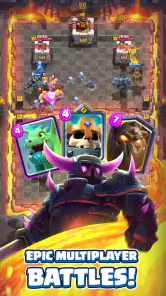
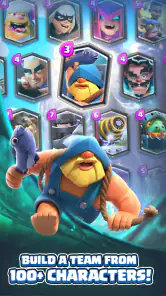
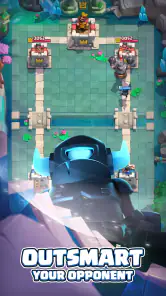
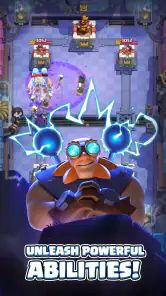
 Analysis by Frivlyz
Hey there, fellow gamers! If you’re on the hunt for a game that mixes strategy, excitement, and a bit of chaos, then let me introduce you to Clash Royale. This game is like a thrilling rollercoaster ride that keeps you on the edge of your seat. Let’s dive into what makes this game a must-try.
The first move sets the tone
When I open a match, the first decision is rarely as simple as sending out the strongest card I have. A card committed too early can leave me short of an answer when the opponent pushes down the other lane. I try to read what they are willing to spend, then decide whether to defend cheaply, build a counterattack, or wait for a clearer opening. That small pause is a big part of the appeal: the game asks me to make a choice before I know exactly what the other player will do.
That makes this a better fit for people who enjoy making quick decisions under pressure than for anyone looking for a slow, hands-off strategy game. I can play a match in a short break, but I still need enough attention to track the cards already used and the threat they might represent when they come around again. If I’m distracted or trying to play while doing something that demands focus, I make careless deployments and usually notice the mistake immediately.
Our Stories on Clash Royale
How Clash Royale Became a Mobile Gaming Phenomenon
NewsCrafting Winning Teams in RAID: Shadow Legends
NewsWhy Clash of Clans Remains a Strategic Powerhouse
NewsMastering Strategy in Lords Mobile: Kingdom Wars
NewsDancing Road Turns Short Breaks Into a Test of Rhythm and Timing
NewsSuper Stylist Makes Every Outfit a Test of Taste and Patience
NewsThe Perfect Blend of Strategy and Fun
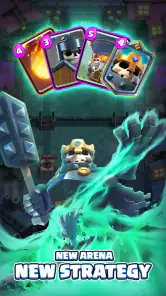
From the creators of Clash of Clans, Clash Royale is a real-time multiplayer game starring your favorite Clash characters. It’s a combination of tower defense, collectible card games, and online multiplayer battle arenas. You start by building your deck of cards, each representing a different character or spell, and then face off opponents in quick, intense battles.
Gameplay That Keeps You Hooked
The gameplay is straightforward yet challenging. You have a deck of eight cards, and each card is a unit you can deploy in battle. The objective? Destroy your opponent’s towers while defending your own. The game is all about strategy – knowing when to attack, when to defend, and how to manage your elixir, the resource used to play cards. It’s about outsmarting your opponent, predicting their moves, and sometimes, just going with your gut.
What I love about Clash Royale is how every match feels different. The combination of cards you use and the unpredictable strategies of your opponents make each battle unique. Plus, the matches are short, usually lasting around three minutes, which makes it perfect for a quick gaming session when you’re on the go.
Why the feedback arrives so quickly
A useful way to understand the rhythm is to separate a match into action and response. I place a card, see how the opponent answers, and learn whether my timing or lane choice helped. When I overspend, the next opposing push makes the cost obvious; when I defend with a sensible answer, I may have a surviving unit to turn into pressure. The result is immediate enough that a loss can teach me something specific rather than feeling like an abstract score screen.
Gaming Stories You May Enjoy

Dominoes on Your Terms: Who Should Play and Who Should Pass

Pokémon GO Makes the Familiar World Feel New

Chess.com Turns Rematches Into Rivalries, but Community Has Its Costs

Archery Battle 3D Review: Sharp Aiming, Unclear Feedback
Should You Switch to Geometry Dash Meltdown? A Test of Timing and Patience

Fidget Toys Trading・Pop It 3D: What Happens When the Game Stumbles
For a practical habit, I recommend asking one question after each match: what was the first decision that put me on the back foot? It might be spending too much elixir, defending with the wrong card, or pushing when my opponent still had a counter available. Changing one decision at a time is more useful than replacing the whole deck after every defeat. This keeps the learning process manageable and helps me tell the difference between a deck problem and a timing mistake.
There is a trade-off to that fast feedback. Because each match is short and competitive, a run of losses can feel more personal than it should. I try not to treat one bad result as proof that a deck is useless. Opponent choices, my own attention, and the cards available in the moment all affect the outcome. If I’m frustrated, stopping after a match is often wiser than immediately queueing again just to recover a win.
Making a deck work beyond its best card
Collecting cards is enjoyable, but I get more reliable results by thinking about what the deck can answer rather than building it around a single favorite. A strong attack plan still needs ways to respond when the opponent attacks, and a hand full of expensive options can leave me unable to react in time. I also try to learn the job of each card in my deck: which one starts pressure, which one protects a tower, and which one helps me recover after a failed push.
When I’m testing a new combination, I change only a card or two at a time. If I rebuild everything after one disappointing match, I can’t tell which choice improved the deck and which one made it less dependable. I also pay attention to the cards I keep wishing I had in hand. That repeated frustration is a clearer reason to adjust the deck than simply copying an opponent’s successful-looking lineup.
The collection and upgrades add a longer-term reward, but they also create a tension for players who prefer a completely even playing field from the start. The game is free, with in-app purchases ranging from about twenty-nine cents to ninety-nine dollars and ninety-nine cents per item. I’d treat purchases as optional spending, not a shortcut that guarantees better decisions or satisfying matches. Before paying, I’d consider whether I enjoy the moment-to-moment battles enough on their own and set a personal limit, especially if card progress is becoming the main reason I keep playing.
Clans, Cards, and Competitions
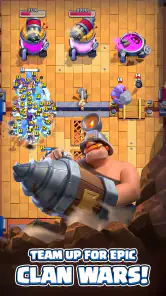
Joining a clan is a big part of the game. It’s not just about battling; it’s about being part of a community. You can share cards with your clanmates, participate in Clan Wars, and climb the ranks together. This social aspect adds a whole new layer of enjoyment and competition.
Clans suit players who like having a reason to return beyond their own match record. Sharing cards and taking part in group competition can make progress feel social, while a supportive group can be a useful place to discuss choices and learn how others approach battles. But the social layer is not essential to enjoying the core matches. If I want a more solitary experience, I can focus on choosing a deck and playing without making clan participation the center of my routine.
A realistic everyday use is a quick session during a lunch break: I play a match or two, then stop rather than letting “one more” turn a short pause into a longer detour. At home, I might spend more time thinking through a deck or chatting with clanmates. Those are different ways to use the same game, and the short match format works best when I decide in advance whether I have time for one battle or a longer stretch.
Rewards, resets, and the next session
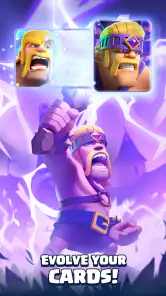
Collecting cards is another addictive element. As you progress, you unlock new cards and upgrade your existing ones, keeping you engaged as you strive to perfect your deck. The thrill of getting a legendary card is something every player looks forward to.
The reward loop works because a match gives me both an immediate outcome and a reason to reconsider my next move. A win can feel like confirmation that a plan held together; a loss can point to a gap I want to fix. Progress through collecting and improving cards gives that short-term result a longer arc, but it doesn’t remove the need to learn how the cards interact in battle. The most satisfying reward for me is often recognizing a mistake and handling the same kind of pressure better the next time.
That reset is also why another session can be tempting. Once a match ends, the next one offers a fresh opponent and a new set of decisions, while my deck remains something I can keep refining. I find it healthier to set a stopping point before I start, since a quick battle can easily become several when I’m chasing a better result. If I’m playing mainly because I feel I must recover a loss or keep up with upgrades, I’m no longer getting the same enjoyment from the strategy itself.
How it compares, and who should choose it
Compared with slower strategy games, Clash Royale puts more weight on quick reactions and compact decisions than on long planning sessions. Compared with collectible card games where the main focus is building a hand and taking turns, its real-time tower pressure makes timing and deployment feel central. That gives it a distinctive mix, but it also means it is not the best choice for someone who wants to pause frequently, carefully calculate every move, or play without an opponent actively responding.
I’d recommend it to people who like competitive strategy in short bursts, enjoy refining a small deck, and don’t mind learning through losses. It can also work for friends or clanmates who want a shared topic to discuss between sessions. I’d suggest looking elsewhere if you want a story-led game, a relaxed puzzle without direct pressure, or a strategy experience where progress depends less on collecting and upgrading cards. The age rating is Everyone 10+, which is useful context for families deciding whether the game suits a younger player.
Supercell developed the game, which was released on March 1, 2016. Its current version is 100455021, and it requires Android 7.0 or later. The game is free to start, and its broad reach—over 500 million installs, with an average rating of 4.3 from around 39 million ratings—suggests that many players have found the quick competitive format appealing. I would still judge it by whether its pace and progression suit me rather than by popularity alone.
Visually Appealing and Constantly Evolving
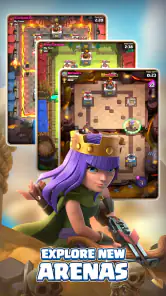
Visually, Clash Royale is stunning. The characters are beautifully designed, and the arenas are vibrant and full of life. The developers at Supercell are always updating the game, adding new cards, arenas, and features, which keeps the game fresh and exciting.
For me, the visuals make a busy match easier to follow, but the important information is still the action: where pressure is building, which answer I have available, and whether I can afford to spend elixir on a counterattack. I get more out of a match when I focus on those choices instead of reacting only to the most dramatic moment on screen. This is also why I wouldn’t describe it as a casual game just because the battles are short; the presentation is approachable, while the decisions can demand practice.
Overall, Clash Royale is a game that’s easy to pick up but hard to master. It’s perfect for both casual gamers looking for some fun and hardcore strategists who love a challenge. Whether you’re a fan of strategy games or just looking for something new to try, give Clash Royale a shot. Trust me, once you start, it’s hard to put down!
My verdict on the loop
The lasting appeal is the compact cycle: I make a move, see its consequences, earn progress or a lesson, then decide whether I want to reset and try another match. That loop is compelling when I’m curious about improving, and tiring when I’m only chasing a streak. My advice is to start with a deck you understand, change it gradually, and stop when the decisions stop feeling fun. If that balance sounds appealing, this is an easy strategy game to keep within reach; if you need slow, low-pressure play, another kind of game will probably suit you better.
Clash Royale Pros and Cons
Pros
- Engaging real-time strategy battles.
- Frequent updates with new content.
- Global tournaments and events.
- Unique card-based gameplay.
- Strong community and social features.
Cons
- In-app purchases can be expensive.
- May require strong internet connection.
- Steep learning curve for beginners.
- Can be time-consuming to progress.
- Occasional balance issues with cards.
This Game in Other Languages
Frequently Asked Questions
What is Clash Royale and how does it differ from Clash of Clans?
Clash Royale is a real-time multiplayer game where players collect and upgrade cards featuring Clash of Clans troops, spells, and defenses. Unlike Clash of Clans, which focuses on base-building and resource management, Clash Royale offers fast-paced, strategic battles where players aim to destroy opponent towers while defending their own. It combines elements of collectible card games, tower defense, and multiplayer online battle arena (MOBA) gameplay.
How do you earn and upgrade cards in Clash Royale?
In Clash Royale, players earn cards by opening chests, which are obtained by winning battles or purchasing from the in-game shop. These cards are used to build a versatile deck. To upgrade cards, players collect multiple copies of the same card type, which allows them to increase the card's level, enhancing its power and effectiveness in battles. Strategic deck-building is crucial for success.
Can I play Clash Royale for free, or are there in-app purchases?
Clash Royale is free to download and play. However, it includes in-app purchases that allow players to buy gems and gold, which can be used to open chests faster, purchase cards, or upgrade cards more quickly. While in-app purchases can accelerate progress, they are not mandatory, and players can enjoy the game without spending money by earning rewards through regular gameplay.
What are the different game modes available in Clash Royale?
Clash Royale offers various game modes to keep players engaged. Besides the standard 1v1 battles, there are 2v2 battles where you can team up with friends or random players. Special event modes, such as Draft or Sudden Death, provide unique challenges and rewards. Additionally, players can participate in tournaments and leagues to test their skills against others worldwide.
How does matchmaking work in Clash Royale, and is it fair?
Matchmaking in Clash Royale is primarily based on player trophies, which reflect a player's skill level. The game pairs players with similar trophy counts to ensure balanced and competitive matches. As players improve and win battles, they gain trophies and face more challenging opponents. While matchmaking aims for fairness, new players may occasionally encounter more experienced opponents due to trophy fluctuations.


