

WWII Defense: RTS Army TD game
- Reviews
- 4.7
- Version
- 0.9.4
- Installs
- 1,000,000+

Screenshots
 Analysis by Frivlyz
I enjoy strategy games most when they ask me to make a choice before the pressure arrives, then show me clearly whether that choice worked. WWII Defense: RTS Army TD is built around that appeal: I command troops, shape a defensive position, and respond to attacks in a World War II setting. It is a mobile strategy game from Azur Interactive Games Limited, and its blend of real-time decisions and tower-defense framing gives each mission a more hands-on feel than a game that is only about placing defenses and waiting.
What the first move asks of you
The first useful question is not simply where to put a defense, but what kind of threat I expect it to handle. The game combines troop commands with defensive building, so I have to think about the battlefield as a set of connected choices rather than a row of static upgrades. A position that seems sensible at the start can become less convincing once enemy pressure shifts, which makes it worth watching the action instead of treating the opening setup as a solved puzzle.
That distinction is important if you are choosing between this and a traditional tower-defense game. In a more conventional entry, the pleasure often comes from arranging a fixed route and optimizing placement. Here, the RTS element makes the player feel more directly involved in the fight. I would recommend it to someone who likes adjusting a plan while a battle is underway, but not to a player who wants a hands-off defense game that can be left to run while they focus elsewhere.
Tactical Warfare at Your Fingertips
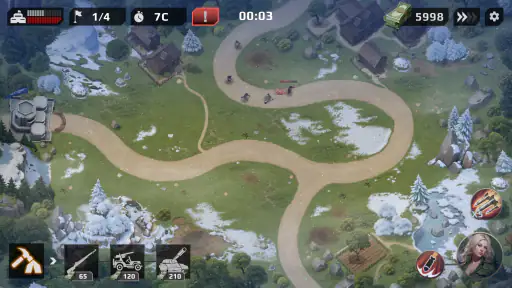
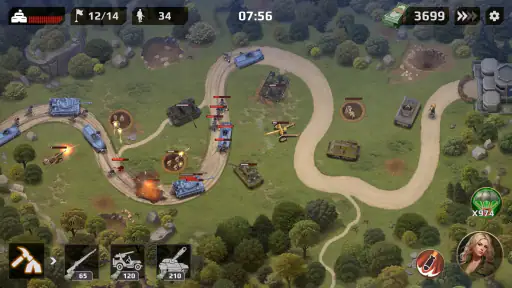
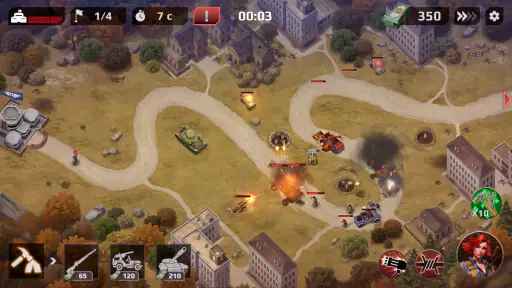
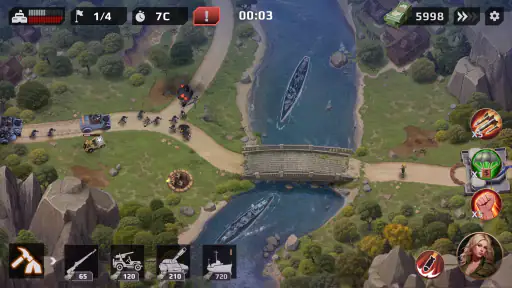
As soon as you launch the game, you’re thrown into the heart of World War II. The graphics are quite impressive for a mobile game, with detailed terrains and realistic unit designs that make you feel like a true commander on the battlefield. What I love most is the game’s ability to combine real-time strategy with tower defense elements, creating a gameplay experience that’s both challenging and rewarding.
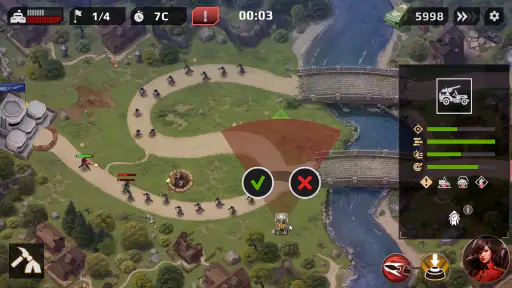
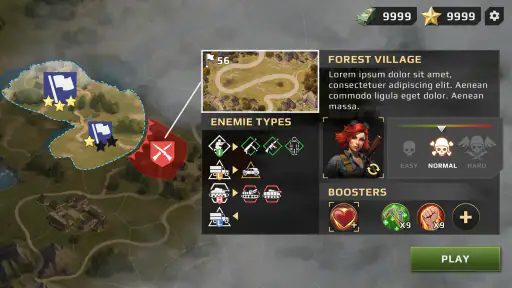
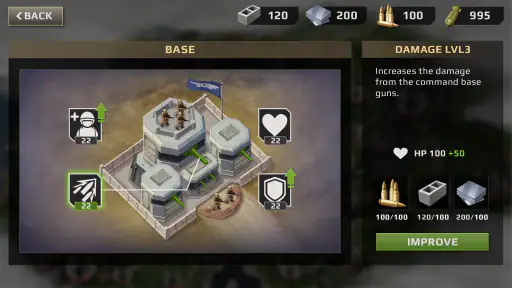
You get to build and upgrade your defenses, strategically placing turrets and units to fend off waves of enemy attacks. The variety of units is pretty cool too, ranging from infantry and tanks to artillery. Each unit has its own strengths and weaknesses, so planning your strategy is key. The game does a great job of gradually increasing the difficulty, keeping you on your toes as you progress through different missions.
Reading the battlefield instead of repeating a setup
My practical advice is to treat a failed attempt as information. If a defense is overwhelmed, I would first reconsider whether the layout suits the attack rather than immediately spending resources on every possible upgrade. Since the game asks you to build and improve defenses while handling different unit roles, comparing what held and what gave way can make the next attempt more deliberate. That small habit turns a loss into a useful test instead of a reason to tap through the same plan again.
The unit mix also gives the strategy a useful trade-off: choosing a familiar answer for every problem can leave another part of the line exposed. Infantry, tanks, and artillery are not interchangeable, so I would pay attention to what each mission is asking me to counter and avoid assuming that a strong unit is automatically the right one everywhere. That kind of consideration is the most satisfying part for players who enjoy thinking in roles and counters, though it can feel like friction if you mainly want quick, uncomplicated action.
Gaming Stories You May Enjoy

Dancing Road Turns Short Breaks Into a Test of Rhythm and Timing

Super Stylist Makes Every Outfit a Test of Taste and Patience

Dominoes on Your Terms: Who Should Play and Who Should Pass

Pokémon GO Makes the Familiar World Feel New

Chess.com Turns Rematches Into Rivalries, but Community Has Its Costs

Archery Battle 3D Review: Sharp Aiming, Unclear Feedback
Historical Missions and Campaigns
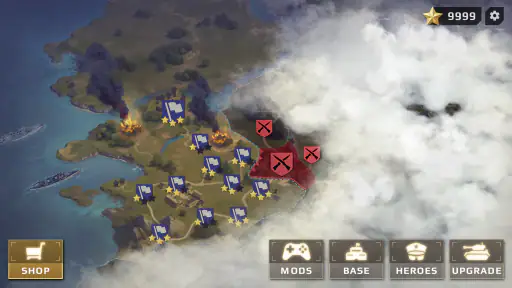
One of the standout features of WWII Defense: RTS Army TD is its historical campaigns. You’ll find yourself participating in some of the most critical battles of WWII, each mission meticulously designed to reflect the historical significance of the event. The attention to detail is commendable, and it’s clear that the developers put a lot of thought into making each mission engaging and authentic.
What’s more, the game incorporates a storyline that adds depth to the missions. As you advance, you’ll unlock new chapters, each contributing to a larger narrative that keeps you hooked. It’s not just about defending your base; it’s about being a part of history and changing its course with your strategic prowess.
Why the campaign changes the rhythm
Campaign progression gives the battles a reason to connect. Instead of choosing a match solely for the immediate challenge, I can follow a sequence of missions and have the next chapter to work toward. That makes the game a better fit for players who like a sense of direction in their strategy games, especially when they want their wins to feel like progress rather than isolated scores.
I would still separate historical atmosphere from historical study. The setting and campaigns give the battles context, but I would approach this as a strategy game first, not as a substitute for a detailed account of the war. If your main goal is learning military history, a dedicated history resource will serve you better; if you want a game that puts a World War II backdrop around defensive decisions, the campaign framing is more relevant.
How a short play session can work
For an ordinary day, I can see this fitting into a break when I have enough attention to follow a battle but not enough time to settle into a long, sprawling strategy campaign. I would start a mission when I can keep an eye on the action, make the key defensive choices, and then stop once I have a clear result or a useful lesson for another attempt. It is less suited to playing while distracted: troop commands and changing pressure are the point, so splitting attention can make the tactical side feel more demanding than relaxing.
A handy way to keep sessions purposeful is to choose one thing to learn from each run: whether a placement held, whether a unit choice matched the threat, or whether an upgrade would solve the problem you actually encountered. That gives a retry a concrete purpose. If you simply repeat a mission without changing your reasoning, the loop can become frustrating; if you use the feedback to revise one decision at a time, the next attempt has a clearer hook.
Progress, spending, and the trade-off
The game is free to download, which makes it easy to try before deciding whether its mix of tactical commands and defense building suits you. Optional in-app purchases range from $3.99 to $79.99 per item, so I would set a spending limit before browsing them, especially if repeated attempts make you tempted to pay for faster progress. I prefer to treat purchases as optional and judge the game by whether the ordinary play loop is enjoyable on its own.
That price range is also a reason to be deliberate rather than impulsive. Before buying anything, I would ask whether I am stuck because I have not adjusted my approach or because I simply want to skip a challenge. For a strategy game, working out why a defense failed is part of the reward; paying to rush past every bottleneck could remove the very decision-making that makes the battles engaging. Younger players should also keep the Teen content rating in mind, and families may want to agree on purchase rules in advance.
Who will enjoy it—and who may prefer another game
I think this is a good match for someone who likes battlefield planning but wants more direct involvement than a standard tower-defense layout provides. The combination of troops, defensive structures, and campaign progression offers several things to consider during a mission, while the World War II theme gives those choices a distinct setting. It also suits players who enjoy learning through retries, since a changed plan can make a return to a difficult encounter feel purposeful.
By contrast, I would steer away from it if you want a purely casual game that asks for almost no attention, or if you prefer a broad, open-ended strategy experience where managing a large empire is the main attraction. Compared with that kind of alternative, this game keeps the focus closer to individual defensive battles. Compared with a simpler tower-defense title, it expects more active tactical involvement. Which side of that divide sounds appealing is a better guide than the theme alone.
Practical details before you install
Azur Interactive Games Limited developed the game, which is rated 4.7 on average from around 55,000 ratings and has over one million installs. It is free, rated Teen, and the current version is 0.9.4; it requires Android 8.0 or later. Those details make it straightforward to check basic compatibility and suitability before downloading, particularly if you are installing it on a shared family device.
One question I would ask before starting is whether I am in the mood to pay attention to a battle rather than merely fill a few idle minutes. Another is whether I prefer a campaign goal or an endless stream of disconnected rounds: the historical missions and chapters give this game a progression path, while the tactical decisions supply the moment-to-moment challenge. If both sound appealing, it is a reasonable free game to test without committing to a purchase.
Engaging Multiplayer Mode
If you’re someone who thrives on competition, the multiplayer mode is where the action really heats up. You can challenge players from around the world, testing your strategies against real opponents. There’s something incredibly satisfying about outsmarting another player and claiming victory. Plus, the multiplayer battles are a great way to earn rewards and climb the leaderboards.
The community aspect of the game is also worth mentioning. You can join alliances, participate in global events, and collaborate with other players to achieve common goals. It adds a layer of social interaction that enhances the overall gaming experience.
When competition helps—and when it does not
Multiplayer gives the strategic side a different kind of test: a human opponent can make a familiar plan feel less predictable than a mission against scripted pressure. I would turn to it when I want to compare my decisions with another player rather than simply improve against a campaign challenge. The social and competitive elements can also be a reason to return after finishing a mission, particularly for players who enjoy shared goals and a visible sense of rivalry.
On the other hand, a competitive mode is not automatically the best place to learn the basics. If I am still working out how to use the different unit roles or how to respond when a defense is pressured, I would first build confidence in the campaign. Then multiplayer becomes a test of a plan I understand, rather than a confusing first stop. Players who dislike competition or prefer entirely solo games may get less from this part of the experience, even if the campaign still appeals.
Does the loop make me want another round?
The core cycle has a clear shape: I make a defensive plan, watch the battle expose its strengths and gaps, take the result as feedback, and decide whether to refine the setup or move on. Rewards and progression give that result some weight, while another attempt offers a chance to apply what I learned. When the game asks me to change a decision rather than simply repeat a tap sequence, that loop is satisfying; when I cannot see what to adjust, retries risk feeling like a chore.
That is why I see the game’s best audience as players who enjoy tactical iteration. It is not only the spectacle of a World War II battle that keeps me interested, but the small judgment calls about where to commit defenses and which unit role fits the situation. The trade-off is that a player looking for a low-effort diversion may find those decisions demanding, and anyone who dislikes retrying a tough encounter may prefer a more forgiving strategy game.
My verdict on the battlefield loop
So, if you’re a fan of strategy games and have a penchant for history, WWII Defense: RTS Army TD might just be the game you’ve been looking for. With its engaging gameplay, historical accuracy, and competitive multiplayer mode, it offers a well-rounded experience that’s sure to keep you entertained for hours on end. Go ahead, give it a try, and let me know what you think!
My recommendation comes with one practical condition: install it when you want to make tactical choices, not when you need a game that plays itself. I like the way troop commands and tower-defense planning meet in a World War II setting, and the campaign and multiplayer options give different reasons to return. The free entry point makes sampling it easy, but its best sessions depend on patience, attention, and a willingness to revise a plan after a rough result. If that sounds like your kind of strategy loop, it is worth a try; if not, a simpler defense game may be a better fit.
WWII Defense: RTS Army TD game Pros and Cons
Pros
- Engaging strategic gameplay.
- High-quality graphics and sound.
- Variety of units and upgrades.
- Challenging levels and missions.
- Regular updates with new content.
Cons
- In-app purchases can be pricey.
- Requires stable internet connection.
- Occasional bugs and glitches.
- Steep learning curve for beginners.
- Can be time-consuming.
Frequently Asked Questions
What is WWII Defense: RTS Army TD game about?
WWII Defense: RTS Army TD is a real-time strategy tower defense game set during World War II. Players are tasked with strategically placing defensive units to fend off waves of enemy attacks. The game combines elements of strategy and tactical planning, providing a historical backdrop with authentic WWII units and scenarios. It's ideal for fans of strategy games who enjoy historical settings.
What platforms is WWII Defense: RTS Army TD available on?
WWII Defense: RTS Army TD is available for both Android and iOS devices. Players can download the game from the Google Play Store for Android devices and the Apple App Store for iOS devices. It is optimized for mobile gameplay, ensuring a smooth and engaging user experience across different devices.
Is WWII Defense: RTS Army TD free to play?
Yes, WWII Defense: RTS Army TD is free to download and play. However, the game may offer in-app purchases which can enhance gameplay by providing additional resources, units, or features. These purchases are optional, and players can enjoy the core game experience without spending any money. It's a balanced model that caters to both free-to-play users and those who wish to enhance their gaming experience.
What are some tips for beginners in WWII Defense: RTS Army TD?
For beginners, it's essential to plan your defense layout strategically. Start by placing a mix of unit types to handle various enemy waves. Pay attention to enemy patterns and upgrade your units as needed. Utilize resources wisely and focus on building a balanced defense. Experiment with different strategies to find what works best for each level. Practicing these tips can significantly improve your gameplay experience.
Does WWII Defense: RTS Army TD require an internet connection to play?
WWII Defense: RTS Army TD can be played offline, allowing players to enjoy the game without an active internet connection. However, some features, such as in-app purchases or certain updates, may require an internet connection. This offline capability makes it convenient for users who may not always have internet access but still wish to enjoy the game.


