

Wordscapes
- Reviews
- 4.4
- Version
- 2.31.0
- Installs
- 100,000,000+

Screenshots
 Analysis by Frivlyz
I tend to reach for a word puzzle when I want something more engaging than scrolling but less demanding than a game that needs my full attention. Wordscapes fits that in-between mood: its central task is to connect letters into words that fill a small crossword-style grid. It is easy to understand quickly, yet a board can still make me pause and test a few possibilities before the right answer clicks. The result is a calm, repeatable activity rather than a story-driven game or a high-pressure contest.
What the purchase details mean in practice
Wordscapes is a free word game from PeopleFun, and it is rated for Everyone. That makes it easy to try without paying upfront, while optional in-app purchases range from $0.99 to $99.99 per item. I would treat those purchases as a choice, not a requirement for deciding whether the core letter-and-grid puzzle suits you. The game has a 4.4 average from around 1.3 million ratings, and more than 100 million installs, so it has clearly found a large audience; those figures tell me it is widely played, though they do not guarantee that every player will enjoy its pace.
The practical question is whether the free experience gives you enough room to find out. For me, it does: the basic puzzle loop is understandable without spending, and hints are presented as an aid when a board stalls. If you prefer to avoid optional spending altogether, it is sensible to leave purchase decisions until you know how often you play and whether you are comfortable using the game’s in-game resources. I would also check purchase prompts carefully, especially if a child will be playing on a device where purchases are available.
Our Stories on Wordscapes
Discover the Tranquil Allure of Wordscapes
NewsWhy Word Cookies! ® Is the Ultimate Quick Brain Workout
NewsPiano Music Go-EDM: Elevating Mobile Gaming with New Updates
NewsHangman: Nostalgia Meets Modern Mobile Gaming
NewsHow Plants vs. Zombies™ Heroes Redefines Mobile Strategy Gaming
NewsDancing Road Turns Short Breaks Into a Test of Rhythm and Timing
NewsDiscovering the World of Words
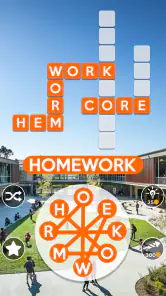
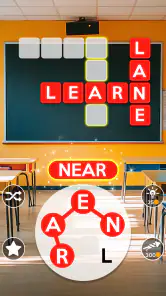
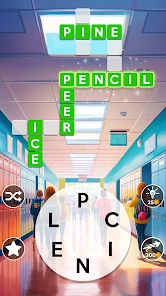
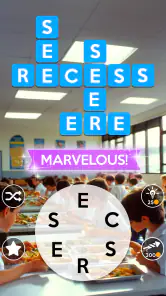
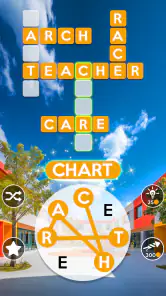
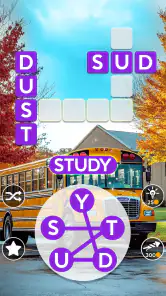
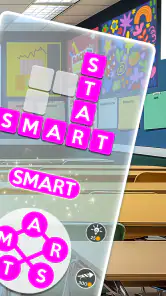
When I first downloaded Wordscapes, I was immediately drawn in by its sleek and visually pleasing interface. The game kicks off with a simple tutorial that effortlessly guides you through its mechanics. You’re presented with a circle of letters and a crossword-style board that you need to fill in using those letters. Sounds simple, right? Well, don’t be fooled! As you progress, the puzzles become more complex, challenging your vocabulary and problem-solving skills in delightful ways.
Progress without turning every session into a race
The familiar board-and-letter format makes it easy to fit a level into a spare moment, but progress depends on how readily you spot words, not on tapping quickly. That is a useful distinction if you dislike reflex tests. When I hit a snag, I get more value from rearranging my approach than from repeatedly guessing at random: try the shortest open spaces first, then look again at the remaining letters and the crossings they can create. A letter already fixed in the grid can narrow the possibilities, so treating the board as a set of linked clues is often more effective than hunting for one long word.
A realistic use is a short break while waiting for an appointment or winding down at home. I can solve a few entries, pause when I need to, and return to the same kind of task without having to remember a complicated plot. The trade-off is that the simple loop can feel repetitive if you want each session to introduce a different mechanic or a changing objective. It works best for people who enjoy incremental word-finding, not for players who need a strong sense of narrative progression.
Wordscapes runs at version 2.31.0, and its minimum operating-system requirement is 7.0. The game was released on June 14, 2017, and remains a straightforward choice for someone seeking a familiar word-puzzle format rather than a new genre experiment. I would still check that the device meets the stated minimum before installing, particularly if it is an older phone or tablet.
Gaming Stories You May Enjoy

Super Stylist Makes Every Outfit a Test of Taste and Patience

Dominoes on Your Terms: Who Should Play and Who Should Pass

Pokémon GO Makes the Familiar World Feel New

Chess.com Turns Rematches Into Rivalries, but Community Has Its Costs

Archery Battle 3D Review: Sharp Aiming, Unclear Feedback

Should You Switch to Geometry Dash Meltdown? A Test of Timing and Patience
How its puzzles compare with other word games
Compared with a standard crossword, Wordscapes gives me a compact set of letters to work from, so I spend less time searching for a clue and more time testing combinations against the grid. Compared with a word-search, the challenge is not simply scanning a field for a visible sequence; I have to build the answers from the available letters and use the crossing spaces to check my choices. That makes it a good middle ground for someone who likes vocabulary puzzles but wants less reading than a clue-heavy crossword.
It is not the best alternative for every word-game fan. If you enjoy precise definitions, cryptic clues, or learning through explanations, a crossword or a dedicated vocabulary activity may offer more depth. If you prefer competition built around speed, this slower board-solving rhythm may feel too gentle. I see Wordscapes as the pick for relaxed pattern-spotting, especially when I want a puzzle I can approach in brief, low-pressure sessions.
The Gameplay Experience
What I love about Wordscapes is its seamless blend of relaxation and challenge. Each level is set against a backdrop of stunning natural landscapes that change as you progress. It’s like taking a mini-vacation every time you play. The soothing background music complements the visuals perfectly, creating a calming atmosphere that helps you focus on the task at hand.
The game is divided into levels that form packs, and each pack is named after a type of landscape, like "Forest" or "Mountain". With over 6,000 puzzles to solve, you’ll never run out of words to discover. Plus, there’s a sense of satisfaction that comes from finding those hidden words, especially when you’re stuck on a particularly tricky level.
The scenery gives the steady puzzle format a bit of visual variety, but it does not change the basic decision-making from board to board. I find that helpful when I want consistency; someone who needs dramatic shifts in play may see the repeating structure as a limitation. A useful personal rule is to stop at a natural pause instead of pushing through a cluster of difficult boards. That keeps the game in the role of a break rather than turning a relaxing pastime into a chore.
Hints, resources, and fair play
Hints can help when a word refuses to come to mind, but I would save them for a genuine dead end. First, check whether the open spaces share letters with answers you have already placed; then try making a small list of possible words from the circle rather than spending a hint immediately. This approach keeps the puzzle satisfying and gives you a chance to notice patterns you might otherwise miss. The trade-off is straightforward: hints reduce frustration, but relying on them too quickly can take away the part of the game that makes a solution feel earned.
The game also offers daily challenges, which add a reason to return and a competitive element for people who like comparing their progress with others. I would not choose it specifically as a test of equal competitive conditions, though. The confirmed purchase range tells me optional items can be bought, but it does not establish what those items do or how they affect competition. I would not assume that spending gives an advantage, nor claim that every competitive result is unaffected by purchases. If fairness in a contest is your main concern, focus on the puzzle experience you can judge directly and avoid treating a leaderboard as a pure measure of word skill.
That distinction matters because the game can be enjoyed without making competition the point. For a casual player, daily challenges are an extra activity; for someone who takes rankings seriously, any uncertainty about the role of purchases may be a reason to choose a head-to-head word game with clearly explained rules instead. In my view, the safest expectation is a primarily personal puzzle routine with an optional social or competitive layer, not a guaranteed tournament environment.
What I would check before settling in
The game is free to download, but the listed optional purchases span a wide price range, so I would be deliberate around purchase screens and device settings if a child is playing. The Everyone age rating makes the game broadly approachable; it is still worth supervising spending choices on a shared device. I also would not infer a subscription, an ad policy, or a particular purchase benefit from the price range alone. Those details are not established by the facts available here, so I would check the current in-app wording before making a decision that depends on them.
For a first session, I would play several boards without using a hint unless I am truly stuck. That gives a fair sense of the base rhythm: whether the letter circle feels satisfying, whether the grid is readable on the device, and whether the gentle presentation helps me relax or feels too slow. If the answer is “too slow,” a timed word game is probably a better fit. If the appeal is having a small puzzle ready whenever I have a few spare minutes, this format makes more sense.
Keeping You Hooked
One of the features that keeps players coming back to Wordscapes is its daily challenges. These challenges offer additional puzzles that are available for a limited time, giving you the chance to earn extra coins and compete with players worldwide. It’s a great way to test your skills and see how you measure up against other word enthusiasts.
And let’s not forget about the in-game hints. These are your lifeline when you’re completely stumped. You can use coins to buy hints that reveal letters or words, helping you move past those frustrating moments when you just can’t seem to see the solution.
Daily challenges suit a routine-based player: I can make them part of a quiet morning or a brief evening wind-down, rather than treating every session as a long commitment. The limited-time nature also creates a small nudge to return, which is enjoyable if I like a regular puzzle habit and unnecessary pressure if I do not. I would keep the challenge optional and let the ordinary boards carry the experience when I want to play on my own schedule.
One useful way to manage hints is to decide beforehand what counts as “stuck.” For example, I might try the obvious short entries, then revisit each crossing before spending a coin. That gives the hint a clear job: helping me past a genuine block instead of replacing the solving process. If you are playing mainly to relax, there is no need to turn every board into a test of efficiency; if you are trying to improve your word-spotting, pausing to inspect the letter pattern can be more rewarding than immediately revealing an answer.
Who will enjoy it, and who may want another game
I would recommend Wordscapes to someone who enjoys anagrams, likes filling a visible grid, and wants a low-friction game that can be picked up in short sessions. It can also suit a household where people take turns suggesting words, because the letter circle gives everyone the same compact problem to consider. The Everyone rating supports its broad accessibility, though a younger player may still benefit from an adult nearby when optional purchases are available.
I would steer a player elsewhere if they want rich explanations for unfamiliar words, a campaign with characters and plot, or a clearly defined competitive format where every condition is spelled out. It is also not ideal if repeating a core puzzle mechanic quickly loses its charm for you. Those are not failures of the game so much as a mismatch with what it is built to do: keep one approachable word-solving loop ready whenever you feel like playing.
Final Thoughts
Overall, Wordscapes is a brilliant game for word lovers and puzzle enthusiasts alike. It’s perfect for anyone looking to unwind after a long day or for those moments when you just need a quick mental break. The game’s addictive nature, combined with its beautiful graphics and calming music, make it a must-have on your mobile device.
If you haven’t already, give Wordscapes a try. It’s more than just a game; it’s a delightful escape into a world of words and wonder. Happy puzzling!
My trust verdict is positive for the core puzzle, with a sensible boundary around spending and competition. I like that the basic activity is easy to judge for myself: combine letters, use the grid, and decide whether the pace suits me. I would not make assumptions about purchase effects or the exact shape of competitive fairness beyond what is clear in the game itself. For a free-to-try, familiar word puzzle, that is enough to make it worth sampling; for someone who needs fully transparent tournament rules or deeper clue-based learning, another option may be a better match.
Wordscapes Pros and Cons
Pros
- Relaxing and visually appealing gameplay.
- Expands vocabulary and spelling skills.
- Daily challenges keep things fresh.
- Offline play available
- no internet needed.
- Simple controls
- easy for all ages.
Cons
- Contains ads that can disrupt flow.
- In-app purchases can be pricey.
- Some levels can be repetitive.
- Requires frequent updates for new content.
- Hints can be costly without purchases.
This Game in Other Languages
Frequently Asked Questions
What is Wordscapes and how does it work?
Wordscapes is a captivating word puzzle game that combines the elements of a crossword puzzle with word search gameplay. Players are presented with a circle of letters and must form words to fill in the crossword-style puzzle grid. The game progresses through various levels, each increasing in complexity, providing a challenging yet rewarding experience for word enthusiasts.
Is Wordscapes free to play, and are there any in-app purchases?
Wordscapes is free to download and play on both Android and iOS platforms. However, the game does offer in-app purchases that allow players to buy coins or hints to help solve more challenging puzzles. While purchasing is optional, these features can enhance the gaming experience by providing additional support when needed.
Do I need an internet connection to play Wordscapes?
No, Wordscapes does not require an internet connection to play. This means you can enjoy solving puzzles offline, making it a perfect game for travel or situations where you might not have internet access. However, certain features, like purchasing additional hints or syncing progress across devices, may require connectivity.
How does Wordscapes help improve vocabulary and cognitive skills?
Playing Wordscapes can significantly enhance vocabulary and cognitive skills. The game challenges players to form words from a set of letters, improving word recognition and spelling abilities. Additionally, it stimulates the brain by requiring strategic thinking and problem-solving, contributing to better memory and cognitive function over time.
What should I do if I get stuck on a level in Wordscapes?
If you find yourself stuck on a level in Wordscapes, there are several strategies you can employ. First, try rearranging the letters to see if new words emerge. You can also use the hints feature, which provides clues to help you progress. Additionally, taking a break and returning with a fresh perspective can often make difficult puzzles easier to solve.


