

Wordful: Word Connect Game
- Reviews
- 4.5
- Version
- 8.3.11
- Installs
- 500,000+

Screenshots
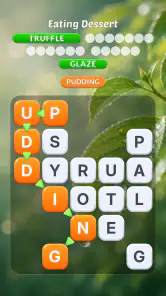
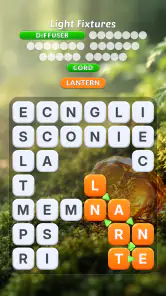
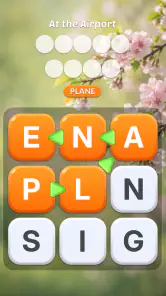
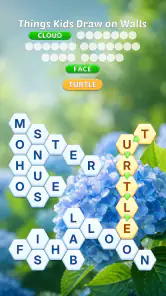
 Analysis by Frivlyz
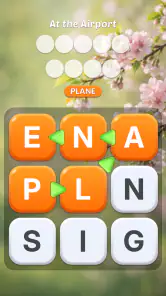
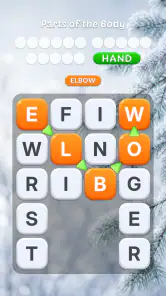
I went into Wordful: Word Connect Game expecting a light word puzzle, and that is exactly where it fits best: a calm, easy-to-start game for filling a few spare minutes while still making your brain work. Its central idea is simple. You connect letters by moving in different directions, looking for valid words rather than racing through a crowded interface. The result feels closer to a quiet mental exercise than a competitive arcade game.
That simplicity is also the main reason I can see myself recommending it. You do not need a long explanation before playing, and the nature-themed presentation gives each short session a relaxed mood. At the same time, it is not completely effortless. Finding the obvious words is satisfying at first, but later boards ask you to look beyond the first answer that comes to mind. The game’s appeal comes from that small shift between comfort and concentration.
It is a free word game from AERO ISLE INC, rated for Everyone, and it has built a sizable audience with more than half a million installs. Its average rating sits at about 4.5 from roughly 20 thousand ratings, which matches my impression that the basic concept is easy for a broad range of players to enjoy. I would not describe it as a deep vocabulary course, but I do think it works well as a gentle daily puzzle habit.
How the first goals turn a simple word grid into a routine
I find the first goals work best as a low-pressure invitation rather than a checklist: one completed board is enough to learn the rhythm and decide whether this kind of searching suits you. In a shared household, that makes it easy for someone else to pick up the phone and try a round, while the next section looks at how to keep that casual start from becoming an expectation for everyone.
The opening minutes are clear without being overwhelming
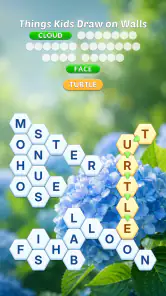
The strongest part of the early experience is how quickly the objective becomes understandable. You see a field of letters, trace words through it, and gradually clear the puzzle. The ability to move in eight directions gives the board more character than a basic left-to-right word search. A word may run sideways, vertically, diagonally, or in the opposite direction, so I found myself scanning the whole arrangement instead of reading it like a line of text.
That eight-direction movement is more important than it sounds. It creates an immediate learning goal: first, I had to stop looking only for familiar horizontal patterns; then I started checking diagonals and reverse paths before deciding that a board was difficult. This makes the first puzzles feel like a tutorial without requiring a separate lesson. The game teaches its rule through repeated use.
The early goals are modest, which suits the tone. I never felt pushed to master a complicated system before enjoying a round. The satisfaction comes from spotting a word, tracing it correctly, and seeing the board move closer to completion. For a new player, that feedback is enough to establish a rhythm. You can play carefully, or make quick guesses when you are in a hurry.
Gaming Stories You May Enjoy

Dancing Road Turns Short Breaks Into a Test of Rhythm and Timing

Super Stylist Makes Every Outfit a Test of Taste and Patience

Dominoes on Your Terms: Who Should Play and Who Should Pass

Pokémon GO Makes the Familiar World Feel New

Chess.com Turns Rematches Into Rivalries, but Community Has Its Costs

Archery Battle 3D Review: Sharp Aiming, Unclear Feedback
Why the nature setting helps the first session
The serene nature presentation is not just decoration in my experience. It changes how I approach mistakes. In a louder or more competitive word game, a missed answer can feel like a failure. Here, the surroundings encourage patience. I am more likely to pause, inspect the letters again, and try a different route instead of abandoning the puzzle.
This makes the game particularly suitable for a short break after work, a quiet morning, or a moment when I want something more engaging than scrolling. A realistic use case is a bus ride: I can open it, solve part of a board, put the phone away, and return later without needing to remember a complicated storyline or a chain of actions. The game’s low-pressure identity supports that kind of interrupted play.
However, players who want dramatic presentation may find the calm style too restrained. There is no reason to choose this over a fast word battle if your main goal is competition, speed, or social interaction. The opening establishes a peaceful puzzle routine, not a high-energy challenge.
The first useful habit: scan by direction, not by word
One practical technique made a noticeable difference for me. Instead of searching for a specific word immediately, I scan the board in directional passes. I check horizontal lines, then vertical lines, then diagonals, and finally reverse paths. This prevents the common mistake of staring at the whole grid and waiting for a word to appear magically.
I also learned to pay attention to unusual starting letters. A less common letter can make a word easier to locate because there are fewer possible paths from it. When I became stuck, I stopped hunting only for long, familiar words and examined short combinations around the letters that had not yet been used. That approach is more reliable than repeatedly tracing the same attractive pattern.
These small habits are where the game offers more value than its short description suggests. It does not merely test whether I know words; it tests visual scanning, directional awareness, and the ability to change search strategies when the obvious route fails.
Progress signals, difficulty, and the pace of unlocking motivation
I’d judge progress here by whether your searching gets more deliberate, not by how quickly you move through puzzles. That distinction is useful when several people share a device: a player can enjoy improving their own approach without needing to match another person’s pace. The next section considers how that modest, self-directed motivation holds up once the initial novelty wears off.
Completion itself is the clearest progress signal
The most dependable sign of progress is simply finishing boards that once felt awkward. I began by looking for the easiest visible words, but gradually became more comfortable reserving attention for the letters that remained. That shift matters because word-search games can otherwise become repetitive. The board is not only asking whether I can recognize vocabulary; it is asking whether I can manage incomplete information.
The game’s progress feels personal rather than statistical. I notice that I hesitate less before checking diagonal routes, and I recover more quickly after finding several words that do not help. Those are useful signals because they show improvement in solving behavior, even when the basic action has not changed.
For some players, that may not be enough. If you need detailed performance records, competitive rankings, or a strong sense of character development, this is probably not the right type of progression. Its motivation comes from solving the next puzzle and staying in the flow, rather than collecting a large set of external achievements.
The difficulty curve works through attention more than complexity
What I appreciate about the challenge is that it does not need elaborate rules to become more demanding. The same core action can feel easy when several words are visible and surprisingly stubborn when the remaining letters are arranged in less obvious directions. Difficulty comes from how well I inspect the board, how flexible my vocabulary is, and whether I can avoid locking onto one imagined answer.
That creates a gentle curve. Early play rewards recognition. Later play rewards discipline. I have to search systematically, consider words I would not normally choose first, and accept that a promising path may lead nowhere. The game remains approachable because I am still doing the same thing, but my method has to improve.
There is a trade-off here. Players who enjoy learning a fixed set of advanced mechanics may find the progression narrow. The challenge is about word discovery and board reading, not about combining abilities or building a strategy around several interacting systems. I see that as a strength for casual play and a limitation for anyone seeking a more layered puzzle design.
How to handle a stubborn board without turning it into work
When I get stuck, I avoid staring at the center of the grid for too long. I move my attention to the edges and corners, where directional patterns can be easier to separate visually. I also look for clusters of vowels and consonants, because they often reveal likely word shapes even before I know the full answer.
Another useful approach is to stop trying to solve the entire board at once. I focus on one small region, trace every plausible direction from it, and then move to another region. This reduces mental clutter. If I keep cycling through the same few letters, I take a brief pause rather than making random movements. The relaxed pacing means I lose little by stepping away for a moment.
That is one of the game’s quiet strengths: it allows concentration without demanding urgency. If you prefer timed rounds, countdowns, or a constant sense of danger, the same quality may feel like a weakness. For me, it makes the game easier to return to when I want a puzzle rather than a test of reflexes.
Retention pressure and the question of long-term appeal
A relaxed puzzle can become a pleasant household habit, but repetition is still repetition; I’d let each person decide when the game has earned another session rather than treating daily play as a goal. That helps keep a shared device from turning a quiet pastime into a source of pressure. The following section brings the question back to practical fit and who is most likely to enjoy it over time.
Why I kept returning after the novelty faded
The game sustains interest through a simple loop: open a board, search in multiple directions, complete it, and repeat when I want another mental break. That loop is not revolutionary, but it is dependable. The short-session structure makes it easy to fit into ordinary routines, and the peaceful setting reduces the friction of starting another round.
The strongest retention factor is the desire to finish an unfinished puzzle. Once I have found most of the words, leaving the board incomplete feels slightly uncomfortable. That encourages another attempt later, especially when I believe the answer is hidden in a direction I have overlooked. The game benefits from this gentle unfinished-business feeling without needing to become aggressive about it.
Still, the long-term appeal depends heavily on how much you enjoy word searching itself. If you need a story, changing rules, or a strong social layer to maintain interest, the core loop may eventually feel too familiar. I would recommend it as a regular casual game, not as the only game on a phone for someone who quickly tires of repeated puzzle formats.
Free access and where the purchase pressure matters
Wordful is free to start, which makes it easy to try without committing money. There are in-app purchases ranging from under a dollar to amounts approaching one hundred dollars per item. That range is worth noticing before settling into a long-term habit. I would approach the purchase options carefully and decide in advance whether I am comfortable spending anything beyond the free experience.
For me, the sensible way to use a game like this is to treat optional spending as convenience rather than a requirement for enjoyment. I would not install it expecting to buy my way through difficult moments. The better test is whether the basic word-search loop is satisfying on its own. If it is, the game has already earned its place as a casual distraction; if it is not, purchases are unlikely to fix the underlying mismatch.
Parents may also appreciate that the age rating is Everyone, but I would still explain to younger players that free games can present purchase choices. The calm presentation makes the game feel harmless, yet purchase awareness is useful whenever a child is using a device with payment access.
Who should choose this over a typical word alternative?
I would choose this game over a crossword when I want a more visual and less language-heavy activity. Crosswords often depend on clues, general knowledge, and precise spelling from memory. Here, the challenge is locating words in a letter arrangement. That makes it more accessible when I want to exercise attention without solving a clue-based puzzle.
I would choose it over a competitive word battle when I want to play alone and set my own pace. There is no need to wait for another player or feel embarrassed about taking too long. On the other hand, a competitive alternative is better if motivation comes from opponents, leaderboards, or rapid decisions.
Compared with a traditional word-search book, the digital version is more convenient for carrying around and easier to use in short gaps during the day. A printed puzzle may be preferable for someone who wants a screen-free activity, the ability to mark pages physically, or a more tactile experience. The choice depends less on which format is objectively better and more on whether you value portability and immediate access.
Practical fit, device expectations, and my final recommendation
For a family or housemates, I’d treat this as an easy-to-pass-around word game, not as a shared account or coordination tool: agree on whose turn it is and keep purchase decisions with the device owner. Its broad age rating is reassuring, while ordinary supervision around spending still makes sense for children. I close by weighing that household practicality against the kinds of players who would be happier with another puzzle style.
What kind of player will get the most from it?
I think the best audience is anyone who likes word puzzles but does not always want a demanding commitment. It works for casual players, people building a small daily brain-training habit, and families looking for an Everyone-rated game that is easy to explain. It can also suit experienced word-game fans who enjoy changing their search method rather than memorizing a complicated rule set.
I would be more cautious recommending it to players who want an educational vocabulary program. Solving words can encourage recognition and attention, but the game’s main purpose is entertainment. It is also not my first choice for people who need a strong sense of narrative progression, multiplayer competition, or a large variety of puzzle types.
The technical entry point is reasonably broad. The current version is 8.3.11, and the listed minimum Android requirement is version 7.0. That makes it relevant to people using older compatible Android devices, although I would still keep the operating system updated where possible for general device security and reliability.
Small habits that make each session more rewarding
I get more from the game when I set a modest goal before opening it. Instead of deciding to play indefinitely, I aim to complete one board or spend a few quiet minutes scanning carefully. That keeps the experience refreshing and prevents the repeated loop from becoming background noise.
I also recommend treating difficult boards as visual exercises rather than vocabulary exams. If I cannot find a word, I first change direction, then change location, and only afterward question whether I am searching for the wrong word. This order saves time and makes the challenge feel fairer.
Finally, I would avoid rushing through easy words just to reach the end. The most enjoyable part for me is noticing how the remaining letters change the way I search. Completing a board quickly is satisfying, but learning to read the grid more intelligently is the longer-lasting reward.
My verdict on the progression and pacing
Wordful succeeds because its goals are immediate, its progress is easy to feel, and its difficulty grows through attention rather than unnecessary complexity. The eight-direction word paths give the familiar word-search format enough depth to remain engaging, while the serene nature setting supports relaxed, interrupted sessions. I found the pacing especially suitable for moments when I wanted to focus without feeling hurried.
Its limitations are equally clear. The core activity stays narrow, so players seeking stories, competition, or elaborate unlock structures may outgrow it. The broad in-app purchase range also means I would pay attention to spending choices rather than assuming every part of the experience is equally free. Those points do not ruin the game, but they affect who should install it.
Overall, I would recommend it to a friend who wants a peaceful word game with enough directional variety to reward careful scanning. It is not a replacement for every kind of puzzle, and it will not satisfy someone looking for constant novelty. But as a free, approachable way to turn a few spare minutes into focused play, it has a clear identity and a progression rhythm that feels natural rather than forced.
Wordful: Word Connect Game Pros and Cons
Pros
- Simple interface makes it easy to start playing immediately.
- Short levels are convenient for quick breaks or casual sessions.
- Word puzzles can help improve spelling and vocabulary recognition.
- Progressive difficulty keeps the gameplay engaging over time.
- Offline play may be useful when traveling or without reliable internet.
Cons
- Some levels may feel repetitive after extended play sessions.
- Hints can reduce the challenge for players seeking tougher puzzles.
- The game may include frequent ads between levels.
- Limited word variety can make advanced stages feel predictable.
- Extra hints or ad removal may require in-app purchases.
Frequently Asked Questions
What is Wordful: Word Connect Game?
Wordful: Word Connect Game is a casual word puzzle app built around connecting letters to form words. Its gameplay is easy to understand, making it suitable for quick sessions or longer play periods. As you progress, puzzles generally become more challenging, encouraging you to expand your vocabulary, recognize word patterns, and use hints strategically when a level becomes difficult.
How do you play Wordful: Word Connect Game?
To play, you typically swipe across or connect available letters to create valid words that fit the puzzle. Some answers are clearly visible, while others require experimenting with different combinations or finding bonus words. The controls are simple and responsive, so the main challenge comes from solving the word layouts rather than learning complicated mechanics. Hints may help when you run out of ideas.
Is Wordful: Word Connect Game free to download?
Wordful: Word Connect Game can generally be downloaded without an upfront purchase, although the available version may include advertising, optional in-app purchases, or both. These purchases may provide hints, remove advertisements, or unlock other conveniences. Before downloading, check the current Google Play or App Store listing for the latest pricing, supported devices, age rating, and details about optional payments.
Can Wordful: Word Connect Game be played offline?
Many word puzzle levels may be playable without a continuous internet connection, which makes Wordful convenient for travel, commuting, or moments when mobile data is unavailable. However, certain features can still require internet access, including advertisements, purchases, cloud synchronization, updates, or online events. It is best to launch the game once while connected and test offline access on your device.
Is Wordful: Word Connect Game suitable for all ages?
Wordful is generally appropriate for players who enjoy vocabulary games and relaxed brain-training challenges, including older children, teenagers, and adults. The difficulty can vary, so younger players may need help with advanced words or later puzzles. Parents should also review the store rating, advertising content, and in-app purchase settings, particularly if children will use the app independently.


