

Word Tower: Relaxing Word Game
- Reviews
- 4.7
- Version
- 1.12.0
- Installs
- 1,000,000+

Screenshots


 Analysis by Frivlyz
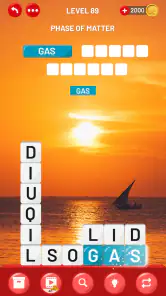
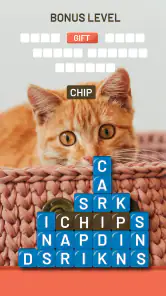
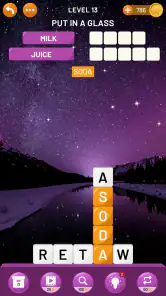
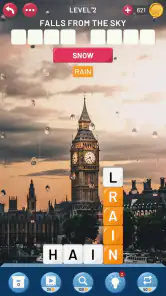
I tend to reach for a word puzzle when I want a short break that feels more engaging than scrolling, but I don’t want the pressure of a timed contest. Word Tower: Relaxing Word Game suits that mood: its central task is to make words from letters arranged in a stack and clear the puzzle. I find that simple premise easy to return to, especially when I have a few quiet minutes and want to focus on one small problem rather than commit to a long game.
What the current game is like
Word Tower is a free word game from Unico Studio, and its store summary points to the same basic appeal I notice in play: hidden words, stacked letters, and word-search-style puzzles. Its audience rating is Everyone, while its average is 4.7 from around 31,000 ratings; more than a million installs suggest that this compact format has found a broad audience. Those figures are useful context, but they don’t tell you whether its particular puzzle rhythm will suit you. For me, the strongest reason to try it is the directness of the task, not a promise that it will replace every other word game on your phone.
The available version is 1.12.0, and the game first appeared on December 31, 2019. That gives the title a longer history than a new release, but I wouldn’t treat a version number or release date by itself as proof of a particular change or improvement. What matters to someone opening it now is that the central activity remains easy to understand: inspect the stack, look for useful letter combinations, and solve the board. It is a focused design, rather than a word-game collection whose appeal depends on switching between lots of unrelated modes.
Gameplay and Features
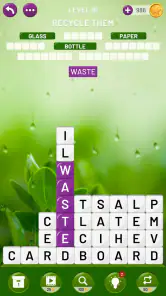
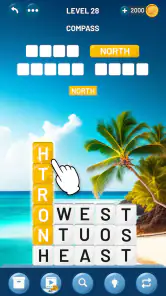
The premise of Word Tower: Relaxing Word Game is simple yet captivating. You are tasked with building words from a stack of letters to clear the board. The real charm lies in how the game gradually ramps up the difficulty. It starts off easy, which is perfect for getting the hang of the mechanics. But don’t let that fool you—the later levels will have you scratching your head and tapping into your inner wordsmith.
That stack changes how I approach a puzzle compared with a conventional word search. In a typical grid, I scan rows and diagonals for a word that is already visible. Here, I pay attention to how the available letters sit together and consider which word is worth finding first. A useful habit is to scan for short, familiar combinations before chasing a long possibility: clearing an accessible word can make the remaining arrangement easier to read. If I stare at one tempting pattern for too long, I’m more likely to miss a simpler answer elsewhere in the stack, so a brief reset of my attention can be more productive than guessing repeatedly.
Why the format works for short breaks
One of the standout features of this game is its calming aesthetic. The developers have crafted an experience designed to soothe. From the gentle background music to the pleasing color palette, every element works in harmony to create a zen-like atmosphere. It's like a mini-vacation for your mind, which is something I think we all could use every now and then.
The relaxed presentation makes a difference when I want a game that is mentally active without feeling like a test. I can play a puzzle while waiting for a kettle to boil or during a quiet pause between errands, then put the phone down when the interruption ends. That doesn’t mean every board is effortless: a peaceful look can sit alongside a genuinely awkward word problem. I’d recommend it to people who enjoy patient pattern-spotting, but not to someone who wants the urgency of a countdown, head-to-head play, or a score chase to keep every session intense.
Gaming Stories You May Enjoy

Dancing Road Turns Short Breaks Into a Test of Rhythm and Timing

Super Stylist Makes Every Outfit a Test of Taste and Patience

Dominoes on Your Terms: Who Should Play and Who Should Pass

Pokémon GO Makes the Familiar World Feel New

Chess.com Turns Rematches Into Rivalries, but Community Has Its Costs

Archery Battle 3D Review: Sharp Aiming, Unclear Feedback
For a more useful everyday routine, I’d treat each board as a small concentration exercise rather than trying to race through a run of puzzles. First look over the stack as a whole, then test a few likely words, and pause if the remaining letters stop making sense. That approach keeps the game’s calm tone intact and reduces the temptation to tap at random. It is also a good way to notice whether the challenge comes from unfamiliar vocabulary or simply from overlooking a pattern: those are different problems, and a moment away from the screen can help with the second.
Who should choose it—and who may prefer another word game
What makes this game a must-have on your device is its accessibility. Whether you have a quick five minutes in between tasks or want to dive into a longer session, Word Tower accommodates your schedule. Plus, it’s available on both Android and iOS, so you can enjoy it no matter what device you prefer.
I’d put it near the top of the list for someone who likes word searches but wants the letters to feel more like a changing puzzle than a static grid. It also makes sense for casual players who want a single, readable objective instead of a large menu of game types. If you usually enjoy crossword clues, though, this may feel too focused on recognizing and forming words from visible letters; crosswords offer more clue-solving and general-knowledge variety. If you prefer competitive word games, a multiplayer title will be a better fit, because this one’s appeal is its own quiet solving rather than a contest with another person.
It can also work for a shared moment, with two people suggesting possible words from the same stack, though I see it primarily as a solo game. In that situation, taking turns explaining why a letter pattern might form a word is more enjoyable than letting one person tap through every answer. For a family choosing a game, the Everyone age rating is reassuring context, but the actual enjoyment still depends on reading ability and vocabulary. I would choose it for a calm, cooperative break, not as a substitute for a word game built around explicit team or classroom features.
Progress, value, and the practical trade-offs
Another aspect worth mentioning is the game’s ability to track your progress. You can see how your vocabulary expands over time, which is not only satisfying but also incredibly motivating. It’s a fun way to measure improvement, and who doesn’t love a little positive reinforcement?
For me, the more dependable way to judge progress is to notice how my solving habits change: do I scan the stack more systematically, spot common letter combinations sooner, or recover faster after getting stuck? Those small improvements can make a word puzzle satisfying even when I’m not chasing a formal milestone. I’d be careful about treating any game’s progress display as a complete measure of vocabulary, though. Recognizing a word in a puzzle is not the same as being able to use it naturally, and the value here is mainly the practice of noticing and assembling words.
The game is free to download, but it also offers in-app purchases, with listed items ranging from $0.99 to $109.99. That range is worth knowing before you start, especially if you prefer to avoid spending inside games or are setting limits on a shared device. I would begin by playing without buying anything and decide whether the normal puzzle loop is enjoyable on its own. The existence of optional purchases doesn’t tell me how often a particular player will encounter a prompt, so I wouldn’t assume either that spending is necessary or that every session will be entirely free of purchase decisions.
That is one reason this is not automatically the best choice for everyone. If you want a fully predictable, one-time-cost game, check the purchase details in the app before committing to a spending habit; if you want no in-app purchase choices at all, a paid word puzzle with a clearly stated upfront price may feel more comfortable. Conversely, if you simply want to try a low-commitment word game, a free download gives you room to see whether the stacked-letter format clicks before you decide anything further.
What the version history can—and cannot—tell you
The current version is 1.12.0, following the game’s original release on December 31, 2019. That establishes a basic timeline, but it doesn’t identify which features changed between releases, so I wouldn’t infer a specific redesign, new puzzle mode, or performance improvement from the version number alone. For existing players, the practical question is whether the present puzzle loop still fits their routine; for a new player, it is whether the simple stack-based word search is appealing enough to keep returning to.
On Android, the stated minimum operating-system requirement is version 6.0. That is useful when checking an older device, but compatibility can depend on the device and the current app-store availability, so I’d verify the install option on the phone you plan to use. The game’s presence on both Android and iOS makes it broadly accessible across the two platforms, yet I wouldn’t assume that progress transfers between them or that the experience is identical in every device-specific detail. If keeping a long-term record matters to you, check your own app and account setup rather than relying on an assumption.
For current players, a practical way to evaluate an update is to notice the things that affect an ordinary session: whether puzzles remain comfortable to read, whether the difficulty feels fair, and whether the game still works well for the length of break you have. I would watch for those concrete changes instead of expecting a version number to signal a particular feature. For newcomers, the same principle applies: judge the game by a few puzzles and its basic feel, not by guesses about what might arrive later.
When I would pass
I’d skip this one if the main pleasure you get from word games comes from writing your own clues, building long chains of vocabulary, or competing against a clock. Its central idea is deliberately narrow, and the same stack-and-solve loop may feel repetitive if you want a steady stream of different mechanics. The gentle look is another matter of taste: players who prefer bold effects, rapid feedback, or a high-energy soundtrack may find its calmer approach less engaging rather than relaxing.
I’d also be cautious about choosing it as a language-learning tool. Solving words can prompt curiosity and encourage attention to spelling, but the game’s core purpose is puzzle-solving, not structured lessons. If you are learning a language and need definitions, pronunciation, or guided practice, a dedicated learning app is the better match. Word Tower is more rewarding when you already recognize enough vocabulary to enjoy searching for it in the stack, even if a challenging board occasionally introduces a word you haven’t considered before.
Final Thoughts
All in all, Word Tower: Relaxing Word Game is a fantastic addition to any word game enthusiast’s collection. It provides a perfect balance of challenge and relaxation, wrapped up in a beautifully designed package. Whether you’re a seasoned pro or a casual player, this game has something for everyone.
So, if you’re on the hunt for a new game to add to your rotation, give Word Tower a try. It’s free to download, so there’s no risk—just the reward of discovering a new favorite pastime. Happy word hunting!
Word Tower: Relaxing Word Game Pros and Cons
Pros
- Engaging word puzzles keep players entertained.
- Visually appealing graphics enhance the experience.
- Relaxing background music complements gameplay.
- Simple interface makes navigation easy.
- Offers daily challenges for continuous engagement.
Cons
- In-app ads can interrupt the gaming experience.
- Limited free levels may require purchases.
- Occasional bugs affect game performance.
- Requires internet connection for some features.
- Gameplay can become repetitive over time.
Frequently Asked Questions
What is Word Tower: Relaxing Word Game about?
Word Tower: Relaxing Word Game is a word puzzle game that challenges players to form words from a set of letters. The game is designed to be a relaxing experience, with soothing graphics and background music. It helps improve vocabulary and cognitive skills, making it both entertaining and educational.
On which platforms is Word Tower: Relaxing Word Game available?
Word Tower: Relaxing Word Game is available for download on both Android and iOS platforms. You can find it on the Google Play Store for Android devices and the Apple App Store for iOS devices. The game is optimized for both smartphones and tablets, ensuring a smooth gaming experience.
Is Word Tower: Relaxing Word Game free to play?
Yes, Word Tower: Relaxing Word Game is free to download and play. However, it may include in-app purchases for additional features, such as hints or ad-free gameplay. Players can enjoy the core game without spending money, but these optional purchases can enhance the gaming experience.
Does Word Tower: Relaxing Word Game require an internet connection?
No, Word Tower: Relaxing Word Game does not require a constant internet connection. You can enjoy the game offline, making it perfect for playing during commutes or in areas with limited connectivity. However, some features, like in-app purchases and updates, may require internet access.
How can I improve my skills in Word Tower: Relaxing Word Game?
Improving your skills in Word Tower involves regular practice and expanding your vocabulary. Try to challenge yourself by forming longer words and using different letter combinations. The game also provides hints to help you when you're stuck, but relying on them less can improve your problem-solving skills.


