

Word Search Block Puzzle Game
- Reviews
- 4.7
- Version
- 1.25.1
- Installs
- 10,000,000+

Screenshots

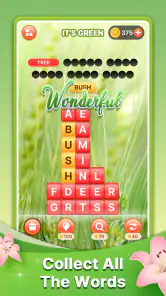
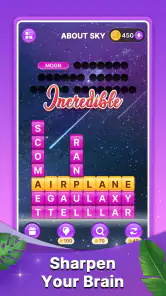

 Analysis by Frivlyz
I find word games work best in a household when they are easy to pick up, easy to put down, and don’t demand that everyone play at the same pace. Word Search Block Puzzle Game fits that kind of shared-device routine: one person can tackle a few words while waiting for dinner, then pass the phone along without turning a quick puzzle into a family project. Its basic appeal is the familiar pleasure of spotting words in a letter grid, with a changing board that asks you to think about what your finds will leave behind.
A quick puzzle that can suit a shared phone
For a realistic everyday use, imagine a parent keeping the phone nearby during a short wait while a child or another adult takes a turn. The puzzle is self-contained enough for people to play separately, so nobody needs to agree on a long session or keep track of a shared storyline. I’d treat it as a casual pass-the-device game, not as a cooperative challenge: the fun comes from each person finding words and seeing how the board changes, rather than coordinating a joint solution.
That distinction matters if you are choosing something for a household. A game built around short individual turns is more convenient when family members have different attention spans, but it may not create much conversation beyond comparing what each person spotted. If you want a game where people solve clues together or take turns contributing to one answer, a conventional cooperative word game may be a better fit. Here, the puzzle itself is the activity; shared use is simply an easy way to take turns.
Keep expectations and play boundaries simple
I would set a basic expectation before handing over a shared device: this is a casual word puzzle, and each person should leave the phone ready for the next player. That is useful because a game session can feel private even on a family phone. Avoid assuming that separate turns mean separate progress or separate accounts; the safest approach is to let each household member play without relying on the game to manage who used the device.
There is also a practical trade-off in shared play. A player who changes the selected difficulty or visual setup could leave the next person with a different experience, so it helps to agree on whether the phone is being used with one consistent setup or whether everyone can make their own choices. I would not hand over a device with the expectation that the game itself provides family profiles, parental controls, or turn tracking. Instead, keep those boundaries at the device and household level, and use the game for the simple puzzle activity it presents.
For anyone wondering whether it needs a connection, the original review describes an offline mode, which makes it a handy option for places where you would rather not depend on internet access. That can be useful on a commute or during a wait, though I would still distinguish offline play from any online features a player might expect: the core appeal is solving the letter board, not competing with other people. If connectivity is a concern, try the game in the setting where you plan to use it and see whether the parts you care about are available there.
Choosing a comfortable age context
The game is rated for Everyone, so it is presented as suitable for a broad audience. That makes it easier to consider for mixed-age households than a game aimed at mature players, but an age rating is not a substitute for deciding how a child uses a shared phone. I’d still supervise younger players according to your usual device rules, particularly if the phone is also used for purchases or other apps.
Gaming Stories You May Enjoy

Dancing Road Turns Short Breaks Into a Test of Rhythm and Timing

Super Stylist Makes Every Outfit a Test of Taste and Patience

Dominoes on Your Terms: Who Should Play and Who Should Pass

Pokémon GO Makes the Familiar World Feel New

Chess.com Turns Rematches Into Rivalries, but Community Has Its Costs

Archery Battle 3D Review: Sharp Aiming, Unclear Feedback
The game is free to download, while in-app purchases are listed at prices from $0.99 to $28.99 per item. For a shared device, I would check the purchase settings on the phone before giving it to a child, rather than assuming that a free download means every part of the experience is cost-free. This is a general household precaution, not a reason to avoid the game: adults can simply decide whether purchases are allowed and keep that rule consistent across players.
As a word game, it is most appealing when players enjoy searching a grid and adjusting to letters shifting after words are found. It is less suited to someone who wants a quiet, fixed puzzle with no evolving board, or to a household looking for a structured multiplayer mode. A crossword or a word quiz may be a better match for players who prefer clues and a clear answer; a standard word search may suit someone who wants the grid to stay static. The block-puzzle element gives this game a different rhythm, but it also means that careful scanning and adapting are part of the fun.
A Blend of Two Worlds
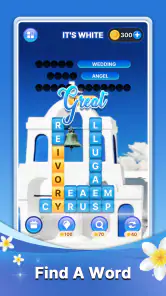
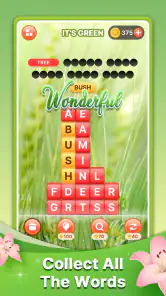
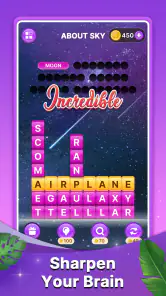
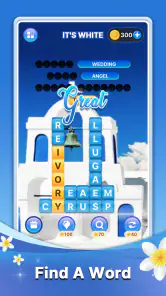
Imagine the classic word search game meeting a block puzzle challenge. That's exactly what the Word Search Block Puzzle Game is all about. The game kicks off with a grid filled with scrambled letters and your mission is simple: find and swipe the hidden words to clear levels. But here's the twist – as you find words, new letters fall into place, creating a fresh puzzle every time.
Gameplay That Keeps You Hooked
The gameplay mechanics are straightforward yet incredibly engaging. You start with a set of letters, and your goal is to swipe through them to form words. The more words you find, the more points you score. It's a race against time and your own wit. As you progress, the levels become more challenging, testing your vocabulary and strategic thinking. Trust me, once you start, it's hard to put it down.
Features That Stand Out
What makes this game truly special are its features. The app offers multiple themes and difficulty levels, catering to beginners and seasoned players alike. You can choose from a variety of backgrounds and letter styles to customize your gaming experience. Plus, there's an offline mode, so you can play anytime, anywhere without needing an internet connection.
One of the standout features is the daily challenge mode, which keeps the game feeling fresh. Each day, you get a new puzzle to solve, and completing it earns you rewards. It's a great way to keep your brain sharp and your word skills on point.
Why You Should Dive In
If you're looking for a game that offers endless fun and keeps your mind sharp, the Word Search Block Puzzle Game is a perfect choice. It's not just about finding words; it's about strategizing and thinking ahead. The combination of word search and block puzzle elements makes it a unique experience that's both challenging and rewarding.
So, if you're ready to test your vocabulary and puzzle-solving skills, give this game a try. Whether you're on a coffee break or winding down after a long day, it's a fantastic way to relax and have some fun. Happy puzzling!
What to expect before you install
The practical choice is straightforward: this is a free word game from Panda Word Puzzle, with a 4.7 average from around 1.8 million ratings and over 10 million installs. Those figures suggest it has found a broad audience, but popularity does not guarantee that its particular board style will suit you. I’d use the first few sessions to decide whether the falling-letter change feels satisfying or makes the search less relaxing than a traditional grid.
The game was released on November 26, 2021, and its current version is 1.25.1. It requires Android 7.0 or later. If you’re choosing it for an older household phone, checking the operating-system requirement first can save time; on a compatible device, the short-turn puzzle format is a reasonable way to fill small gaps in the day. The store short description is simply “Word Search,” but the shifting letters are an important distinction from a static search puzzle.
Small tactics that make each turn smoother
When the board changes after you find a word, I find it helpful not to rush immediately into another swipe. Pause for a moment and scan the newly arranged letters afresh instead of continuing to follow the path of a word that has disappeared. This is especially useful when passing the device between people: a new player can look at the current board rather than trying to reconstruct what the previous person was doing.
Another good habit is to treat difficulty as a comfort setting, not a measure of skill. A beginner can take time to learn how the grid behaves, while a more experienced word-game player may prefer a tougher level. On a shared phone, keeping the setting stable makes turns easier to compare; changing it is better when the players have clearly different preferences. Themes and letter styles can also help make the board more comfortable to look at, so it is worth trying a few options rather than assuming the default presentation is best for everyone.
The daily challenge gives the game a natural stopping point for someone who likes a small routine. I’d use it as an occasional prompt—perhaps one puzzle during a break—rather than turning it into a household obligation. Rewards can make a challenge feel motivating, but they do not need to become the reason everyone plays. If a player would rather relax without a daily target, the ordinary puzzle flow is the better way to use the game.
Who will enjoy it, and who may prefer another puzzle
I’d recommend giving it a try if you like word searches but want the board to change as you clear words, or if you need a game that can be played in brief, independent turns. It can work for a solo coffee break, a quiet pause between errands, or a shared phone that moves among people who each want a short activity. The free download lowers the barrier to trying it, while the purchase range is worth bearing in mind if several people use the same device.
I would skip it if you strongly prefer a fixed grid, dislike adapting your search after each find, or want a game centered on head-to-head competition or collaborative solving. A classic word search keeps the visual field stable, while crosswords and clue-based word games reward a different kind of reasoning. This one sits between those familiar options: you search for words, but the board’s movement adds a planning element. That blend is its clearest strength and its most likely source of friction.
My household verdict
As a shared-device choice, I see this as an easygoing word puzzle rather than a family-management tool or a true multiplayer game. Its Everyone rating, offline mode, adjustable presentation, and short-turn nature make it convenient to consider for a range of players, provided the household handles device access and purchases in its usual way. I would not expect separate profiles or automatic turn coordination; a simple verbal handoff is enough for casual use.
Overall, I’d keep it in mind for people who enjoy spotting words and don’t mind the grid changing beneath them. It gives a familiar search puzzle a more reactive feel without asking players to learn a complicated routine. If the evolving board clicks for you, it can make small waits more enjoyable; if you want stillness, clues, or shared strategy, another word-game format will probably feel more natural. That is the decision I’d make before installing: choose it for the shifting-grid search, not merely because you want any word game.
Word Search Block Puzzle Game Pros and Cons
Pros
- Highly addictive and engaging gameplay.
- Improves vocabulary and cognitive skills.
- Multiple difficulty levels available.
- Offline play mode supported.
- User-friendly and intuitive interface.
Cons
- Limited themes and customization options.
- Ads can be intrusive at times.
- Requires frequent updates for new features.
- May drain battery quickly during long sessions.
- In-app purchases for premium features.
Frequently Asked Questions
What is Word Search Block Puzzle Game and how does it work?
Word Search Block Puzzle Game is a dynamic and engaging puzzle game available for both Android and iOS devices. The game combines elements of traditional word searches with block puzzles, challenging players to find words hidden within a grid of letters. As players progress, the puzzles become increasingly complex, requiring strategic thinking and a keen eye for detail. The game is designed to be both entertaining and educational, enhancing vocabulary and cognitive skills.
Is Word Search Block Puzzle Game suitable for all age groups?
Yes, Word Search Block Puzzle Game is designed to be enjoyed by players of all ages. Its intuitive interface and varying levels of difficulty make it accessible to children, teenagers, and adults alike. The game offers educational benefits by helping younger players improve their vocabulary and problem-solving skills, while providing a relaxing and mentally stimulating experience for older players.
Does Word Search Block Puzzle Game require an internet connection?
No, Word Search Block Puzzle Game can be played offline, making it a perfect companion for travel or situations where internet access is limited. However, certain features, such as leaderboard updates or in-app purchases, may require an internet connection. Players can enjoy the core gameplay without needing to be connected to the internet.
Are there any in-app purchases in Word Search Block Puzzle Game?
Yes, while Word Search Block Puzzle Game is free to download and play, it offers in-app purchases. These purchases typically include additional levels, hints, or ad-free experiences. While in-app purchases can enhance gameplay, they are optional, and players can still enjoy the game fully without making any purchases. It's important for parents to be aware of in-app purchases if children are playing.
How does Word Search Block Puzzle Game enhance learning and cognitive skills?
Word Search Block Puzzle Game is designed to be both fun and educational. By challenging players to find words within a grid, the game enhances vocabulary and spelling skills. Additionally, the block puzzle element requires players to use strategic thinking and problem-solving skills, which can improve cognitive abilities. This combination of word search and puzzle gameplay provides a comprehensive mental workout.


