

Word Chain
- Reviews
- 4.8
- Version
- 1.3.0
- Installs
- 500,000+

Screenshots
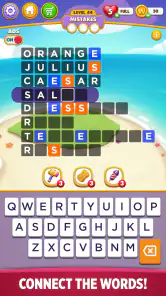
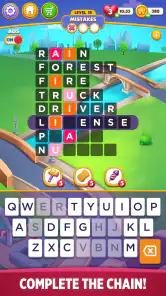
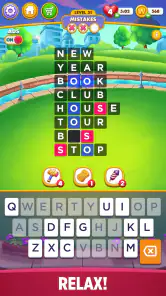
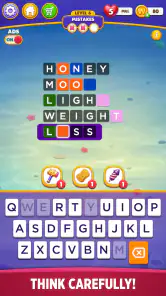
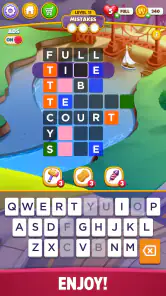
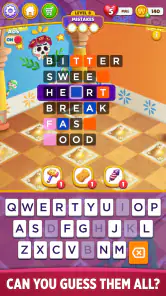
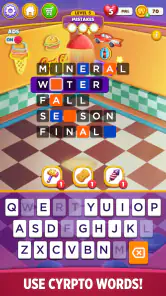
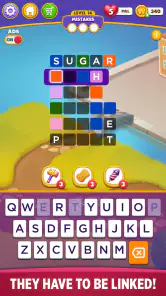
 Analysis by Frivlyz
Word Chain works best for me as a small, focused word challenge: I open it, settle on a word, and try to keep the chain moving without overthinking every choice. The idea is easy to grasp, but the pressure of finding a fitting next word can turn a spare moment into a surprisingly absorbing brain exercise. If you enjoy language puzzles but do not want a long story or a complicated ruleset, this is an approachable place to start.
What to expect from the word challenge
This is a free word game from Tribom Games, listed for everyone and built around linking words. Its appeal is the quick mental shift from spotting the last letter of one word to searching for a new word that begins with it. That simple constraint makes familiar vocabulary feel different: a word you know well may suddenly be hard to retrieve when you are trying to keep a chain alive.
The game has an average rating of 4.8 from around 11,000 ratings, and it has passed 500,000 installs. Those figures suggest that the basic word-chain idea has found an audience, though they cannot tell you whether its pace or style will suit you personally. I would approach it as a casual vocabulary game, rather than a full language course or a deep competitive word puzzle.
From installing to your first chain
When I first downloaded Word Chain, I was curious and a little skeptical. How can a game about words keep me hooked? But boy, was I in for a surprise! The app is sleek, with a user-friendly interface that welcomes you right in. No complicated menus or confusing options, just a straightforward play button that gets you into the action immediately.
For a first session, I would start with the basic idea rather than trying to play brilliantly: read the word on screen, identify its final letter, and think of a valid word that starts with that letter. Getting one answer in is a useful first success. After that, take a breath and scan for a second possibility instead of repeating the first word that comes to mind. The game becomes more satisfying when you treat each turn as a small retrieval puzzle, not a test of how many obscure words you can memorise.
A realistic way to fit it into the day is to play while waiting for a kettle, sitting through a short break, or letting a journey pass. I find that brief sessions are a better match than setting aside a long stretch: the core loop is clear quickly, and a pause between attempts gives your mind room to reset. If you are sharing the game with a child or a less confident reader, keeping the first turns relaxed can make the activity feel like playful word practice rather than a spelling exam.
How to make the chain work for you
I’d use the chain as a way to spot where my recall gets stuck, not just as a score to chase. When a particular ending slows me down, I try switching from the first obvious answer to a different kind of word—such as an object, place, or action—and see whether that opens up more options. That small mental reset keeps a difficult turn from becoming a dead end and makes the next round feel more purposeful.
Gaming Stories You May Enjoy

Dancing Road Turns Short Breaks Into a Test of Rhythm and Timing

Super Stylist Makes Every Outfit a Test of Taste and Patience

Dominoes on Your Terms: Who Should Play and Who Should Pass

Pokémon GO Makes the Familiar World Feel New

Chess.com Turns Rematches Into Rivalries, but Community Has Its Costs

Archery Battle 3D Review: Sharp Aiming, Unclear Feedback
Gameplay, pace, and the multiplayer question
The premise of Word Chain is simple yet engaging. You start with a word, and the challenge is to think of another word that begins with the last letter of the previous word. Sounds easy, right? But it’s not as simple as it seems when the clock is ticking, and you're racing against time to keep the chain going. What I love about this game is the adrenaline rush you get as you scramble to think of words, all while trying to outdo your previous high score.
One of the standout features is the multiplayer mode. You can challenge your friends or even strangers to a word duel. It's a fantastic way to test your skills against others and see who has the superior vocabulary. There's also a solo mode for those who prefer to play at their own pace without the pressure of competition.
If you are wondering whether to begin alone or with someone else, I would start solo and use a duel later as a change of pace. Solo play gives you room to build confidence and notice which letter endings slow you down; multiplayer makes the same basic task more social and competitive. The trade-off is that a head-to-head round can be less comfortable if you want to pause and think carefully. I would choose the mode based on mood, not assume that one is always the better way to play.
Compared with a crossword, this asks less about crossing clues and more about quick recall. Compared with a word-search puzzle, it is less about scanning a grid and more about producing a word from memory. That makes it a handy option when you want an active language prompt rather than a puzzle that depends on a board or a long clue. If you prefer careful, untimed solving, a crossword or a slower word game may suit you better.
Hints, vocabulary, and useful habits
If you're someone who enjoys learning new words, Word Chain is perfect for you. The game subtly expands your vocabulary as you play. Whenever you get stuck, it provides hints that not only help you out but also teach you new words. It's like a fun, interactive dictionary that keeps your brain active.
A useful habit is to notice the kind of word that rescued a difficult turn, then try to remember it for later rather than leaning on a hint every time. That turns a prompt into a small learning moment. I would also avoid treating a hint as proof that you have learned a word; if it is unfamiliar, say it aloud or connect it to a phrase you already know. This is a practical way to make the vocabulary aspect stick beyond the current round.
There is a limit to what this kind of practice can do. Recalling a word under pressure can sharpen access to vocabulary you already know, but it is not a substitute for reading, spelling instruction, or a structured course. If your aim is to study definitions systematically or practise a specific language skill, a dedicated learning tool is likely a better fit. Word Chain is more convincing as a light, repeatable exercise than as a complete study plan.
Difficulty, choices, and a few caveats
Another thing I appreciate is the app's customization options. You can choose different themes and difficulty levels, making the game adaptable for both beginners and seasoned wordsmiths. Plus, the app frequently updates with new challenges and words, ensuring it never gets stale.
For a newcomer, choosing an easier difficulty is a sensible way to learn the rhythm before trying to improve a score. A more experienced player may prefer a higher challenge, but difficulty alone does not guarantee that every round will feel fresh: the core action remains making a word from the previous word’s last letter. Themes can change the look, while the chain itself is what determines whether the game holds your attention. I would use customization to make the experience comfortable, not expect it to transform the rules.
The game is free to download, with optional in-app purchases ranging from $1.99 to $99.99 per item. I would keep that distinction in mind before spending: try the basic play first and decide whether you want anything extra only after you understand what you use regularly. The current version is 1.3.0, and it was released on February 9, 2025. It requires Android 8.1 or later. Those practical details make it easier to judge whether it belongs on your device, but they do not change the central question: do you enjoy finding words quickly?
It is also worth being honest about who may not click with it. If you dislike time pressure, would rather explore a large world, or need a game built around detailed lessons, this is probably not the one I would pick. A chain can feel repetitive once the simple rule stops being novel, especially if what you want is a changing set of puzzle mechanics. On the other hand, for someone who likes short rounds and enjoys testing everyday vocabulary, that repetition is part of the appeal: it lets you focus on getting quicker and more flexible.
Why You’ll Love It
If you're someone who enjoys learning new words, Word Chain is perfect for you. The game subtly expands your vocabulary as you play. Whenever you get stuck, it provides hints that not only help you out but also teach you new words. It's like a fun, interactive dictionary that keeps your brain active.
Another thing I appreciate is the app's customization options. You can choose different themes and difficulty levels, making the game adaptable for both beginners and seasoned wordsmiths. Plus, the app frequently updates with new challenges and words, ensuring it never gets stale.
Those details make it appealing as an easy shared activity: a parent and child can take turns suggesting words, or a group of friends can turn a quiet wait into an informal vocabulary contest. I would keep the tone playful and agree on whether unusual or unfamiliar words count before starting, so the conversation stays fun instead of becoming an argument about rules. The same flexibility makes it useful for a solo break when you want something more engaging than scrolling, but not demanding enough to take over your evening.
One practical question is whether the game suits a young player. Its age classification is Everyone, and the word-based format is easy to understand, but I would still choose a comfortable difficulty and play together at first if the child is new to this sort of challenge. Another is whether it is worth installing if you already enjoy word games: I think it is, if quick recall and the changing letter constraint are what you like. If your favourite part of word games is solving clues or building words from a rack of letters, a crossword or a letter-tile game may offer more variety.
A sensible next step
In conclusion, Word Chain is more than just a game; it's a delightful blend of education and entertainment. It’s an app that can be enjoyed by all age groups, whether you're looking to kill time or improve your language skills. So, if you haven't tried it yet, I'd say give it a shot. You might just find yourself pleasantly surprised, as I was.
My recommendation is to give it a short first session and judge it by the feel of the chain, not by whether you immediately set a personal best. Start with a comfortable difficulty, get used to moving from the final letter to a new opening letter, and use a hint when it genuinely helps you learn rather than simply to rush onward. If that little cycle feels satisfying, the solo mode offers an easy way to return, while a duel can add a social edge when you want it. If it feels like the same thought repeated too often, there is no need to force it; a slower clue puzzle or a more structured vocabulary app will probably serve you better.
Word Chain Pros and Cons
Pros
- Engaging word puzzles
- Improves vocabulary skills
- User-friendly interface
- Challenging levels
- Offline play available
Cons
- Ads can be intrusive
- Limited free hints
- Occasional app crashes
- Repetitive gameplay
- In-app purchases needed
Frequently Asked Questions
What is Word Chain and how do you play it?
Word Chain is an engaging word puzzle game available on both Android and iOS platforms. The objective of the game is to create chains of words by connecting letters in the correct order. Players can enjoy different levels of difficulty, making it suitable for both beginners and advanced players. The game also features a competitive mode where users can challenge friends or other players online.
Is Word Chain free to download and play?
Yes, Word Chain is free to download and play. It offers in-app purchases that allow players to enhance their gaming experience by unlocking additional features, such as special hints, new themes, or removing ads. However, these purchases are optional, and players can fully enjoy the game without spending any money.
Does Word Chain require an internet connection?
Word Chain can be played both online and offline. While an internet connection is required for features like multiplayer challenges and leaderboard updates, the core gameplay is accessible without it. This makes Word Chain a great option for those looking to enjoy a fun word puzzle game during commutes or in areas with limited internet access.
What age group is Word Chain suitable for?
Word Chain is designed to be family-friendly and is suitable for players of all ages. The game’s simple mechanics and varying levels of difficulty make it an excellent educational tool for children to improve their vocabulary and spelling skills. Additionally, adults can enjoy the challenging puzzles and competitive aspects of the game.
Can I play Word Chain with friends?
Yes, Word Chain includes a multiplayer feature that allows you to play with friends. You can invite them to join your game or compete against them in real-time challenges. The game also offers leaderboards where you can track your progress and compare your scores with friends and other players worldwide.


