

Woodoku - Wood Block Puzzle
- Reviews
- 4.2
- Version
- 4.00.00
- Installs
- 100,000,000+

Screenshots


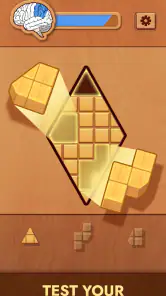


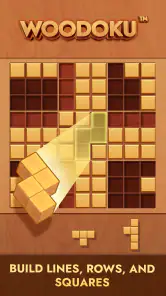

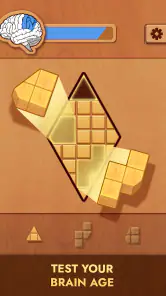
 Analysis by Frivlyz
When I want a puzzle I can start quickly without learning a long set of rules, Woodoku - Wood Block Puzzle is an easy one to reach for. Its wooden pieces and familiar grid make the idea clear almost immediately, but choosing where each shape belongs takes more thought than the calm look suggests. I find it works best as a small, focused break: a few moves can occupy a short wait, while a promising board can tempt me to keep going.
How quickly the puzzle gets going
The basic loop has very little setup: look at the available shapes, choose a space, and try to clear a line or square. That makes the game feel approachable when I only have a minute, and the 9-by-9 board gives me enough room to consider options without turning every move into a long calculation. The drag-and-place style also suits a phone screen better than a puzzle that asks me to type or navigate several menus before playing.
Speed here is more about decision-making than reflexes. I don’t have to react to falling pieces, so I can pause over a placement and scan the board. That is a real advantage when I’m playing in a queue or between tasks. It also means the game won’t satisfy someone looking for quick action, precise timing, or the rising pressure of a traditional falling-block game. Its tension comes from the board gradually losing useful space, not from a countdown or frantic input.
Our Stories on Woodoku - Wood Block Puzzle
How Woodoku Thrives with Android and iOS Updates
NewsDancing Road Turns Short Breaks Into a Test of Rhythm and Timing
NewsSuper Stylist Makes Every Outfit a Test of Taste and Patience
NewsDominoes on Your Terms: Who Should Play and Who Should Pass
NewsPokémon GO Makes the Familiar World Feel New
NewsChess.com Turns Rematches Into Rivalries, but Community Has Its Costs
NewsWhat happens when I play for longer
A short session is easy to fit into the day, but longer play changes the feel. I start noticing how much a single awkward shape can narrow my choices, and I’m more likely to think several placements ahead. Clearing one row can open room for a later piece; clearing a square may be more valuable if it prevents the board from becoming fragmented. I try not to focus only on the move that clears something now. Keeping a broad, usable area is often the better trade-off.
One practical habit is to check all the offered shapes before placing any of them. A piece that looks convenient on its own may be the only one that fits a particular corner, so using it too early can leave a difficult shape stranded. I also avoid filling the center casually: a scattered layout can make later placements awkward even when individual lines remain open. These are small planning choices, but they make the puzzle feel less like random placement and more like managing space.
That planning can be satisfying, though the no-undo nature of a move is a genuine source of friction. If I’m distracted, it is easy to place a piece quickly and then notice a better arrangement a moment later. I recommend slowing down before a placement whenever the board is crowded. The game is forgiving in pace, but not in the sense that every choice can be taken back.
How it fits into an everyday routine
I can picture playing a round while waiting for a coffee, sitting on a train, or taking a quiet break at home. Since the game can be played offline, it is also useful when a connection is unreliable. A good approach is to treat it as a self-contained puzzle rather than something that needs a long, uninterrupted session: make a few careful moves, put the phone away if needed, and return when you have time to concentrate again.
Gaming Stories You May Enjoy

Archery Battle 3D Review: Sharp Aiming, Unclear Feedback

Should You Switch to Geometry Dash Meltdown? A Test of Timing and Patience

Fidget Toys Trading・Pop It 3D: What Happens When the Game Stumbles

NBA LIVE Mobile Makes the Season the Main Event

Sonic Forces: PvP Battle Race - Speed and Strategy Combined

Unlocking the Secrets of Piano Game: Classic Music Song
It suits people who enjoy spatial reasoning and a gentle pace, including players who like Sudoku but want to work with shapes instead of numbers. Compared with a conventional block-stacking game, it gives me more time to inspect the board and less pressure to react. Compared with number-based Sudoku, it feels more visual and immediate, though it does not offer the same kind of deduction from fixed clues. If I want a deeply structured logic puzzle or a timed arcade challenge, I’d choose something else; if I want a relaxed placement puzzle, this is a better fit.
What’s the Buzz About?
So, what's the deal with Woodoku? Picture this: You’re staring at a 9x9 grid, much like the one you’d find in Sudoku, but instead of numbers, you’re dealing with wooden blocks. The goal is simple yet delightfully challenging: fill rows, columns, or squares to clear them from the board. The twist? Once you place a block, there’s no going back. That’s right, every move counts, and every decision could be the difference between a high score or starting from scratch.
The Gameplay Experience
Diving into Woodoku, I was pleasantly surprised by its clean and minimalist design. The wood-themed aesthetic is not just visually appealing; it also brings a sense of calm and relaxation. The game is easy to pick up, but don’t let its simplicity fool you. As you progress, the puzzles become increasingly tricky, demanding a mix of strategy and foresight. It’s the kind of game that makes you go, “Just one more round!” and before you know it, hours have passed.
One of the things I truly appreciate about Woodoku is its accessibility. Whether you’re a puzzle veteran or a complete newbie, the game offers a challenge level perfect for you. Plus, it doesn’t hurt that you can play it offline. Perfect for those long commutes or when you’re stuck without Wi-Fi.
Why You'll Love It
Aside from the addictive gameplay, Woodoku is a fantastic way to give your brain a workout. It’s like going to the gym, but for your mind. The game encourages you to think critically and plan ahead. Plus, there’s something incredibly satisfying about watching the blocks disappear after a well-planned move.
Another highlight? The game is ad-supported but not in an intrusive way. You won’t find yourself bombarded with ads every few seconds, which is a relief. Of course, if you prefer an ad-free experience, there’s an option to remove them with a small purchase.
Practical details before you install
Woodoku is a free puzzle game from Tripledot Studios Limited, with optional in-app purchases ranging from under a dollar to just under a hundred dollars per item. That wide span is worth noticing: I’d check the purchase screen carefully before confirming anything, especially if a child uses the device. The game is rated for Everyone, but that age rating does not mean every purchase choice is automatically suitable for every household.
It has a 4.2 average from around 453,000 ratings, and has been installed over 100 million times. Those figures suggest that the simple block-placement format has broad appeal, but they don’t tell me whether a particular player will enjoy its slower, space-management style. I’d use them as context, not as a substitute for deciding whether this kind of puzzle is your taste.
The current version is 4.00.00, and the listed minimum Android requirement is 5.1. If you use an older phone, checking the system version before trying to install it is a sensible first step. On a device that meets the requirement, I’d expect the uncomplicated board and controls to be a lighter kind of task than a visually elaborate action game, though actual smoothness can vary with the phone and what else is running. I wouldn’t promise identical performance on every device.
Stability, interruptions, and sensible expectations
Because the game is built around a static grid and deliberate moves, it does not ask for split-second reactions. That makes an interruption less stressful than in a timed arcade round: I can stop thinking for a moment and then look over the board again. Still, a pause in play is not the same as a guaranteed saved state after every interruption. If I’m in the middle of a valuable run, I avoid force-closing the app or restarting the phone until I’m ready to leave the game.
For longer sessions, I’d pay attention to the ordinary signs of a phone under strain—unusual warmth, sluggish touch response, or other apps competing for resources—rather than assuming the puzzle itself will behave identically everywhere. The restrained presentation gives me no reason to expect a demanding visual workload, but it also isn’t proof of a specific battery, memory, or speed result. If the phone is already struggling, closing unused apps and keeping the operating system reasonably current are sensible general steps before judging the game.
There is another trade-off in how the game occupies attention. Its unhurried pace makes it easy to pick up, but it can also make a “quick round” stretch longer than intended because the next placement is always tempting. I find it helps to decide in advance whether I’m playing for a short break or settling in for a longer session. That small boundary is more useful than expecting the puzzle to provide a natural stopping point.
Who will get the most from it
I’d recommend it to someone who likes arranging shapes, thinking ahead, and seeing a board open up after a smart clear. It can be a pleasant alternative to scrolling through short videos during a spare moment, especially if you want an activity that asks for attention without demanding a fast response. It may also suit a shared household: the rules are simple enough to explain, while the best placement can still prompt a bit of discussion.
I’d be less enthusiastic about recommending it to a player who needs a clear story, a campaign with a strong sense of progression, competitive multiplayer, or a strict logic problem with one provable solution. The pleasure here is repeated spatial decision-making, not narrative discovery or head-to-head play. Someone who gets annoyed when a small mistake cannot be reversed may also find the permanent placement rule more irritating than compelling.
For a realistic commute, I’d open it only when I can give the board a little attention, make a few moves, and then stop at a natural pause. Offline play helps when reception drops, but I still wouldn’t treat an active round as immune to every app interruption or device issue. If a session matters to me, I keep the phone charged enough for the trip and avoid swiping the game away casually. That’s a modest precaution, not a claim that recovery is guaranteed.
How I’d decide whether to keep it
My advice is to judge the first sessions by whether you enjoy protecting open space, not simply by how often you clear a line. If you find yourself scanning the shapes before placing them and learning from a crowded board, the game is probably clicking. If you mainly want to tap quickly and watch constant effects, its measured rhythm may feel too quiet. The basic appeal is specific: visual planning, limited room, and the satisfaction of making a placement that solves more than one problem.
Tripledot Studios Limited is the developer, and the game’s popularity is easy to understand: its rules are quick to grasp, while the board gives each move consequences. The free entry point makes it straightforward to try, but I’d keep optional purchases in mind and use device purchase controls if that matters in your household. I would not spend money just to discover whether the core puzzle suits me; I’d first see whether its unhurried, no-undo decisions are enjoyable.
Why You'll Love It
Aside from the addictive gameplay, Woodoku is a fantastic way to give your brain a workout. It’s like going to the gym, but for your mind. The game encourages you to think critically and plan ahead. Plus, there’s something incredibly satisfying about watching the blocks disappear after a well-planned move.
Another highlight? The game is ad-supported but not in an intrusive way. You won’t find yourself bombarded with ads every few seconds, which is a relief. Of course, if you prefer an ad-free experience, there’s an option to remove them with a small purchase.
Final Thoughts
All in all, Woodoku - Wood Block Puzzle is a gem in the world of mobile gaming. It’s perfect for those moments when you need to unwind yet still want to keep your brain engaged. Whether you’re a puzzle enthusiast or just looking for something new to try, I highly recommend giving it a go. It’s a delightful mix of fun, challenge, and relaxation all wrapped into one neat little package. So, what are you waiting for? Grab your phone and start placing those blocks!
Woodoku - Wood Block Puzzle Pros and Cons
Pros
- Engaging puzzle gameplay.
- Relaxing visual design.
- No time limits.
- Offline play available.
- Regular updates.
Cons
- Contains ads.
- Limited free hints.
- No multiplayer mode.
- Can become repetitive.
- Occasional bugs.
This Game in Other Languages
Frequently Asked Questions
What is Woodoku and how does it work?
Woodoku is a captivating puzzle game that combines elements of wood block puzzles and Sudoku. Players are tasked with placing wooden blocks on a 9x9 grid. The objective is to clear lines and squares by forming complete rows, columns, or boxes, similar to Sudoku. The game is easy to learn but challenging to master, offering endless hours of strategic gameplay.
Is Woodoku free to download and play?
Yes, Woodoku is free to download and play. However, like many free-to-play games, it offers in-app purchases. These purchases can enhance the gaming experience by providing additional features or removing ads. Players can enjoy the game without spending money, but options are available for those who wish to support the developers or enhance their experience.
What platforms is Woodoku available on?
Woodoku is available on both Android and iOS platforms. Users can download it from the Google Play Store for Android devices or the Apple App Store for iOS devices. This availability ensures that a wide audience can enjoy the game, making it accessible to most smartphone or tablet users.
Are there any age restrictions for playing Woodoku?
Woodoku is suitable for players of all ages, making it a family-friendly game. The simple yet challenging gameplay can appeal to both younger players and adults. However, parents should be aware of in-app purchases and ensure that children do not make unauthorized purchases while playing the game.
Does Woodoku require an internet connection to play?
No, Woodoku does not require an internet connection to play. This offline capability allows players to enjoy the game anytime and anywhere, without worrying about data usage or connectivity issues. However, certain features, like updates or in-app purchases, may require an internet connection.


