

Woodber - Classic Number Game
- Reviews
- 4.6
- Version
- 2.7.7
- Installs
- 10,000,000+

Screenshots
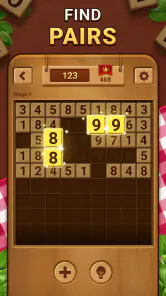
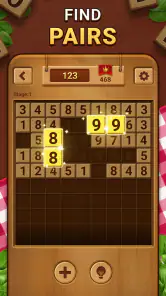
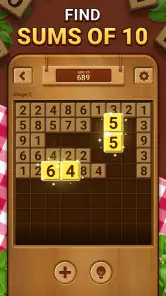
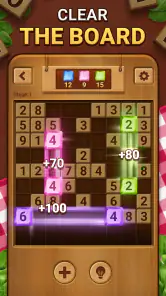



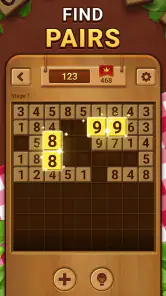
 Analysis by Frivlyz
I judge a puzzle game not only by whether it can hold my attention, but also by how comfortably I can read and use it in the situations where I actually have spare time. Woodber - Classic Number Game has a calm, wood-toned presentation and number-focused play, which gives it a quieter feel than many flashy mobile games. That simplicity is appealing, though it does not automatically make every part of the experience easy for every player. I find it most promising for someone who enjoys patient logic puzzles and wants a small, focused challenge rather than a fast, noisy game.
Reading the board and finding your way
The visual style is a clear part of the game’s identity: the wooden look feels familiar, while the interface keeps attention on the puzzle rather than surrounding decoration. For me, that helps when I want to concentrate on number relationships without a busy screen competing for attention. The tutorial is useful for newcomers, too; a brief introduction to the rules can make a number puzzle less intimidating than having to guess what the game expects.
Still, a restrained design is not the same as a fully adjustable one. Anyone who often enlarges text or needs strong contrast should check how the board looks on their own device before settling in for a long session. Small symbols and close visual distinctions can be tiring when you are playing on a compact screen, even when the general layout feels clean. I would try a short round first, then decide whether the number tiles remain comfortable to scan without leaning closer or repeatedly checking them.
Touch, pace, and sensory comfort
The controls are based on moving tiles, so the central interaction is easy to understand: select or slide a number into place and think about what should come next. I like that direct connection between a decision and a visible move. The original review describes the controls as responsive, but any touch puzzle can still be less comfortable for someone whose hands shake, who has limited precision, or who finds repeated tapping tiring. A useful personal test is whether you can make a move deliberately without needing to rush or correct frequent accidental touches.
The gentle visual theme and background music can make play feel restful, but sound is a personal preference rather than a universal advantage. If music distracts you, you may prefer to play in a quiet setting or adjust your device’s sound controls. Likewise, a game that feels soothing to one person may still demand sustained visual attention from another. I would not choose it as a hands-free or eyes-free activity: its number-based decisions depend on seeing the board and interacting with it.
Where it fits into an ordinary day
This is the sort of game I would open while waiting for an appointment, taking a quiet break, or winding down at home. The original review notes that it can be played without an internet connection, which is particularly handy when a connection is unreliable or unavailable. If I had a few minutes before boarding a train, I would use that time for a puzzle; if I needed to keep watching announcements or respond quickly to someone, I would put it away instead. Focus matters more than speed here, and divided attention can make a logic task feel needlessly frustrating.
It also suits players who enjoy returning to a familiar kind of number challenge without needing a large game world to explore. The board and its rules give a session a clear purpose, while the growing challenge described in the original review offers a reason to keep practicing. By contrast, someone who mainly wants a story, social competition, or constant action may find the experience too solitary and measured. For a more tactile, shared puzzle session, a physical puzzle book or board game may be a better fit; for quick arithmetic drills, a dedicated math game would be more focused.
Gaming Stories You May Enjoy

Dancing Road Turns Short Breaks Into a Test of Rhythm and Timing

Super Stylist Makes Every Outfit a Test of Taste and Patience

Dominoes on Your Terms: Who Should Play and Who Should Pass

Pokémon GO Makes the Familiar World Feel New

Chess.com Turns Rematches Into Rivalries, but Community Has Its Costs

Archery Battle 3D Review: Sharp Aiming, Unclear Feedback
How to get more from each session
I find that number puzzles are more satisfying when I resist the urge to move tiles just to see what happens. Before touching the board, I take a moment to identify the next useful move and the pieces it might displace. That small pause can reduce backtracking and makes the challenge feel like planning rather than frantic tapping. If I get stuck, I look for a simple way to restore order before trying a more ambitious sequence. This approach is especially helpful when a puzzle becomes harder, because a move that looks convenient can create extra work later.
There is also a practical way to decide whether the game’s pace suits you: try it when you are alert, then again during a short, low-pressure break. If you enjoy thinking several moves ahead, its gradual challenge may be rewarding. If you want something that can be played almost unconsciously while multitasking, it may not be the right choice. The need to follow number positions is part of the appeal, but it also means the game is not ideal when your attention is already stretched thin.
The Gameplay Experience
Diving into Woodber is like stepping into a world where numbers rule, but not in a scary math-class way. The game is all about arranging numbers in the correct sequence, akin to those old-school sliding puzzles. What I love about it is how it starts off gentle, easing you into its core mechanics, but don’t be fooled! As you progress, it becomes more challenging, requiring strategic thinking and quick reflexes. It's a perfect blend of fun and mental exercise, keeping you on your toes.
Visuals and Soundtrack
The first thing that strikes you about Woodber is its clean, wooden-themed design, which gives off a nostalgic vibe. The interface is straightforward, ensuring that you’re not distracted by unnecessary frills. The soothing background music complements the gameplay perfectly, creating a relaxing yet engaging environment. It’s one of those games where you can lose track of time, just because the atmosphere pulls you in so effortlessly.
User Interface and Controls
One of the standout features of Woodber is its intuitive user interface. The controls are responsive, making it easy to slide tiles around without a hitch. Even if you’re new to number games, Woodber ensures you’re not left scratching your head. The game includes a handy tutorial for beginners, which is a thoughtful addition for those who might be dipping their toes into this genre for the first time.
Who should choose it, and who might not
As a board-style mobile game from LIHUHU PTE. LTD., this is best suited to people who like arranging numbers, spotting patterns, and making a few considered moves at a time. It is free to start, carries an Everyone age rating, and has in-app purchases priced from $1.99 to $9.99 per item. I would treat those purchases as optional spending rather than a reason to try the game: the useful question is whether the basic puzzle loop holds your interest before you consider paying for anything.
Its reach is substantial, with over 10 million installs, around 230,000 ratings, and a 4.6 average. Those figures suggest that many players have found it worth trying, but they cannot tell me whether its particular style will suit you. The game was released on October 7, 2022, and version 2.7.7 requires Android 7.0 or later. I would check that requirement before downloading on an older Android device. It is also available as a free game, so trying a short session is a low-commitment way to see whether the board is comfortable and the challenge feels enjoyable.
Compared with a standard sliding-tile puzzle, the number focus gives each move a more deliberate logic flavour; compared with broad casual puzzle collections, the experience is narrower and more centered on this particular kind of number arrangement. That focus is a strength if you want to settle into one puzzle style, but a limitation if you prefer a rotating selection of different mechanics. I would choose a general puzzle bundle for variety, a paper puzzle for a screen-free break, and this game when I specifically want interactive number planning.
Practical limits and an inclusive verdict
For me, the main trade-off is that its calm presentation can make the game feel accessible at first glance, while the actual play still relies on sustained visual attention and accurate touch. A tutorial helps explain what to do, but it does not remove those demands. Players who need larger controls, spoken guidance, or a hands-free option may find that a different kind of puzzle works better. Similarly, if number patterns are uncomfortable or if repeated screen focus brings on fatigue, there is no need to push through simply because the game is described as relaxing.
I would recommend giving it a try if you enjoy a tidy board, gradual difficulty, and the satisfaction of putting numbers in order. Start with a brief session, use the tutorial to understand the basic interaction, and notice whether the tiles are easy to distinguish on your device. If the board feels clear and the planning is fun, it can make an appealing small break; if the pace, touch demands, or visual effort do not suit you, a larger-format paper puzzle or a less visually demanding pastime is a sensible alternative. That is the most honest way I can put it: approachable in spirit, focused in design, and best for players whose eyes and hands are comfortable with a screen-based number puzzle.
Why You’ll Love It
If you’re into games that challenge your brain and keep you entertained, then Woodber is a must-try. It’s perfect for those moments when you need a quick mental workout or simply want to unwind with a satisfying game. The best part is that it doesn’t require an internet connection, so you can play it anywhere, anytime. Whether you’re on a long commute or just chilling at home, Woodber has got you covered.
In conclusion, Woodber - Classic Number Game is a delightful addition to any puzzle lover’s collection. It’s a game that combines nostalgia with modern-day gaming, offering a unique experience that’s both challenging and rewarding. So why not give it a spin and see if you can master the numbers?
Woodber - Classic Number Game Pros and Cons
Pros
- Addictive gameplay keeps you engaged.
- Simple yet challenging puzzle mechanics.
- Offline mode available for uninterrupted play.
- Visually appealing with a classic design.
- Intuitive controls for easy navigation.
Cons
- Limited levels may reduce long-term interest.
- Ads can be frequent and intrusive.
- No multiplayer option for competitive play.
- Lacks innovative features to stand out.
- Occasional bugs affect game performance.
This Game in Other Languages
Frequently Asked Questions
What is Woodber - Classic Number Game?
Woodber - Classic Number Game is a nostalgic puzzle game that brings back the classic number tile sliding experience. The objective is to arrange the numbered tiles in sequential order by sliding them into the empty space. The game is designed for puzzle enthusiasts who enjoy challenging their logical thinking and problem-solving skills.
How does the gameplay of Woodber work?
In Woodber, players are presented with a grid of numbered tiles and one empty space. The goal is to slide the tiles around the grid to achieve a specific order, usually numerical. This requires strategic thinking and planning as players must anticipate the movement of tiles and utilize the empty space effectively to solve the puzzle.
Is Woodber - Classic Number Game available for both Android and iOS?
Yes, Woodber - Classic Number Game is available for download on both Android and iOS platforms. Users can find it in the Google Play Store for Android devices and the Apple App Store for iOS devices. This ensures that a wide range of mobile users can enjoy the classic puzzle experience on their preferred devices.
Are there any in-app purchases or ads in Woodber?
Woodber - Classic Number Game is free to download and play, but it may contain ads to support the developers. Additionally, there might be optional in-app purchases available for users who wish to enhance their gaming experience, such as purchasing hints or removing ads, providing a more seamless and enjoyable gameplay.
What are some key features of Woodber - Classic Number Game?
Woodber offers several engaging features, including multiple difficulty levels, a user-friendly interface, and an option to track your performance over time. Players can enjoy a simple yet challenging gameplay, making it suitable for all ages. The game also provides a classic design with wooden tiles, adding a touch of nostalgia to the overall experience.


