

Who is? Brain Teaser & Riddles
- Reviews
- 4.7
- Version
- 1.13.5
- Installs
- 50,000,000+

Screenshots
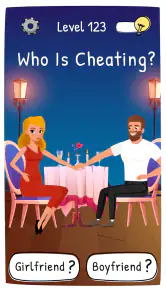
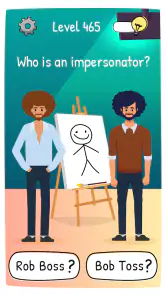
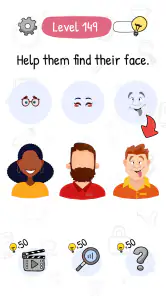
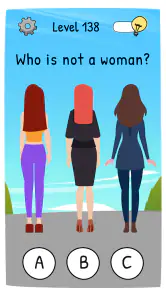

 Analysis by Frivlyz
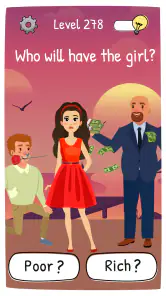
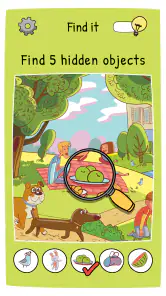
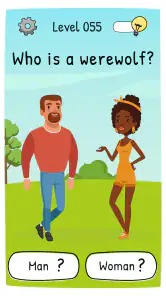
I find Who is? Brain Teaser & Riddles works best as a small mental detour: a quick way to trade passive scrolling for a puzzle that asks you to look carefully and question your first assumption. It is a trivia game from Unico Studio, built around illustrated situations, riddles, and mystery-style questions. Rather than demanding a long commitment, it gives me a compact challenge I can pick up when I have a few spare minutes.
How the puzzles invite you to think
The appeal is less about memorizing facts and more about noticing what a scene is asking. A level may present a short setup and invite me to work out what happened or who is being dishonest. That makes the game a different kind of break from a conventional quiz, where success usually depends on recalling dates, definitions, or general-knowledge answers. Here, I need to inspect the prompt, consider the details, and sometimes abandon the most obvious interpretation.
That format suits people who enjoy discussing a puzzle as much as solving it. I can imagine handing the phone to a friend and asking what they notice, then comparing our interpretations before choosing an answer. It also works for a solo pause between tasks: one scenario gives me a defined problem to focus on, without asking me to plan a lengthy play session.
Our Stories on Who is? Brain Teaser & Riddles
The Allure of Who is? Brain Teaser & Riddles: A Game of Curiosity
NewsWhy Trivia Crack: Fun Quiz Games Captivates Players Worldwide
NewsHow Trivia Crack 2 Dominates the Mobile Trivia Scene
NewsHow Brain Test 2: Tricky Stories Redefines Trivia Gaming
NewsDancing Road Turns Short Breaks Into a Test of Rhythm and Timing
NewsSuper Stylist Makes Every Outfit a Test of Taste and Patience
NewsReading a scene instead of rushing to answer
The useful habit is to treat each illustration and question as a small piece of evidence. Before tapping, I look for details that seem oddly emphasized or out of place, then reread the wording to check whether it is asking for a literal answer or a lateral-thinking one. This simple pause can make the experience more satisfying than guessing quickly and relying on luck. When I get stuck, I try changing the question I am asking myself rather than repeating the same theory.
The puzzles vary in style, moving between riddles, logic problems, and situations framed as mysteries. That variety helps keep a run from feeling like a single repeated exercise, although it also means that a strategy that worked on one level may not work on the next. I like that shift: it rewards flexibility, not just pattern recognition.
Readability, navigation, and a practical pace
The interface is straightforward enough that the puzzle remains the focus. In my experience, the basic flow is easy to understand, which matters in a game where the question itself can already be deliberately tricky. The short, self-contained scenarios are also helpful when I do not want to keep track of a complicated story or several objectives at once.
Still, “easy to navigate” is not the same as “equally easy for everyone to read.” Illustrated clues and short prompts can be accessible to someone who prefers compact tasks, but players who need larger text, stronger visual separation, or more time to inspect a busy image may find some scenes harder to parse. I would take a moment to view each level at a comfortable pace rather than treating quick answers as the point of the game.
Gaming Stories You May Enjoy

Dominoes on Your Terms: Who Should Play and Who Should Pass

Pokémon GO Makes the Familiar World Feel New

Chess.com Turns Rematches Into Rivalries, but Community Has Its Costs

Archery Battle 3D Review: Sharp Aiming, Unclear Feedback
Should You Switch to Geometry Dash Meltdown? A Test of Timing and Patience

Fidget Toys Trading・Pop It 3D: What Happens When the Game Stumbles
Hints, patience, and the cost of a nudge
The hint system can help when I have considered a puzzle from several angles and still cannot see the intended clue. I see it as a way to get unstuck, not as a substitute for looking closely: using a hint too quickly can take away the pleasure of reaching the answer myself. A good approach is to reread the wording, inspect the scene once more, and only then ask for help.
That choice also makes the game easier to share with someone who has a different level of puzzle experience. One person can offer a clue rather than immediately giving away the answer, keeping the discussion going. If you prefer puzzles with a clear explanation after every solution, or want a structured lesson in logic, this style may feel more playful than instructional.
Who will enjoy it—and who may prefer another kind of game
I would recommend it to casual puzzle fans, people who like visual riddles, and anyone who enjoys testing an idea with a friend during a quiet moment. It is also a reasonable choice for families looking for light brain teasers, while keeping in mind that its content rating is Everyone 10+. The humor and illustrated scenarios make the tone less formal than a serious logic workbook, which is part of its charm.
On the other hand, I would steer someone toward a traditional trivia app if they specifically want to build general knowledge or compete over factual recall. A dedicated logic-puzzle game may be a better fit for players who want a consistent puzzle type and a more methodical progression. And if visual details are difficult to distinguish on a phone, or if frequent tapping is uncomfortable, the scene-based format may create friction even when the question itself is manageable.
Using it in ordinary moments
A realistic use is a short wait at a café or a few minutes before a meeting. I can open a puzzle, give it my attention, and stop once that small break is over rather than needing to remember a complex game state. To get more from that moment, I would first solve independently, then invite someone nearby to explain what they noticed. The comparison is useful because these puzzles often depend on perspective: another person may spot a clue I overlooked, even when we both understand the wording.
For a calmer session, I would avoid playing while walking, riding through a crowded commute, or trying to listen closely to someone else. The central task is visual inspection, so divided attention can turn a fair challenge into an irritating guessing game. If I have only a few seconds, I would rather wait until I can actually look at the scene than tap randomly and lose the satisfaction of figuring it out.
What to expect before installing
The game is free to download and includes in-app purchases priced from $1.99 to $14.99 per item. That means I can try the basic experience without paying upfront, while optional purchases may matter to someone who wants to use paid extras. I would check the purchase prompts carefully and decide for myself whether any offered item is worth it; the core reason to try the game is the puzzle format, not a promise that every player needs to buy something.
It was released on September 9, 2020, and the current version is 1.13.5. It requires Android 7.0 or later. Its 4.7 average comes from around 1.8 million ratings, with about 25,000 written reviews, and it has passed 50 million installs. Those figures suggest that it has found a large audience, but they cannot tell me whether its visual style or puzzle logic will suit a particular person. I would use them as context, then judge the game by a few levels of my own.
Motor and sensory considerations
Because the main activity is examining a scene and responding to a prompt, this is not the kind of game that asks me to master a complicated control scheme. That can make it approachable for players who dislike games built around rapid combinations of inputs. Even so, interacting on a touchscreen still involves tapping, and the puzzle may depend on visual details. Anyone who finds small targets, repeated touch, or busy illustrations tiring should take that into account and play at a pace that feels comfortable.
The light tone may help make a wrong answer feel less intimidating than a high-pressure quiz, but it does not remove every barrier. A riddle can hinge on a subtle distinction in wording, while a mystery scene can require careful visual attention. If either reading or image inspection is tiring, taking breaks and asking another person to talk through the clue can make the experience more comfortable. I would not assume that a playful presentation automatically makes every level easy to access.
How it compares with familiar alternatives
Compared with standard trivia games, this one asks me to reason from a small situation rather than retrieve a fact. Compared with a book of riddles, it puts the question alongside an illustration and lets me interact with the challenge on a phone. Those differences are useful if I want a more visual, conversational puzzle, but they are not automatically advantages for everyone. A paper puzzle may be easier to read at a preferred size, while a quiz focused on facts may feel more rewarding to someone who wants to learn and test specific knowledge.
Its biggest trade-off is that the answer can depend on spotting the intended detail or reading a scenario in the expected way. If my interpretation differs from the puzzle’s, the level may feel less like a test of reasoning and more like a search for the creator’s intended clue. I find it helps to ask, “What detail would make this question make sense?” rather than assuming that the most realistic explanation must be right.
Engaging Gameplay
First off, the gameplay is what really hooks you. Who is? Brain Teaser & Riddles is crafted in such a way that each level presents a new scenario, challenging you to think outside the box. You might find yourself solving riddles or figuring out who the culprit is in a mystery. The scenarios are intriguing and keep you guessing, making it hard to put your phone down. Plus, the satisfaction of solving a tricky puzzle is immensely rewarding.
Unique and Diverse Puzzles
The app boasts a wide variety of puzzles, ensuring that things never get monotonous. From logical puzzles to lateral-thinking challenges, it caters to a broad range of interests. One moment you might be solving a classic riddle, and the next, you’re unraveling a complex brain teaser. This diversity not only keeps the gameplay fresh but also helps in honing different cognitive skills.
Moreover, the puzzles are designed with a touch of humor. This adds a light-hearted element to the game, making it suitable for players of all ages. Whether you’re a kid or an adult, the quirky illustrations and witty scenarios will surely bring a smile to your face.
User-Friendly Interface
One thing I absolutely love about this app is how user-friendly it is. The interface is clean and intuitive, ensuring that you can focus on solving puzzles rather than fumbling with controls. Navigation is smooth, and the app runs without any hiccups, which is crucial for maintaining that immersive experience.
Another cool aspect is the hint system. If you ever find yourself stuck on a particularly tough riddle, you can use hints to nudge you in the right direction. However, the hints aren’t too revealing, preserving the challenge and ensuring you still have that “aha!” moment when you finally crack the puzzle.
Final Thoughts
All in all, Who is? Brain Teaser & Riddles is a fantastic app for anyone looking to engage their brain in a fun and entertaining way. It’s perfect for those short breaks during the day, or even a long session if you’re really in the mood for some mental gymnastics. The combination of challenging puzzles, a user-friendly interface, and a touch of humor makes it a must-try.
If you’re up for the challenge, you can download the app on both Android and iOS platforms. So, why not give it a shot? Who knows, you might just find yourself hooked!
Who is? Brain Teaser & Riddles Pros and Cons
Pros
- Engaging puzzles and riddles.
- Enhances critical thinking skills.
- User-friendly interface design.
- Regular updates with new content.
- Suitable for all age groups.
Cons
- Contains in-app purchases.
- Ads can be intrusive at times.
- Requires internet for full features.
- Limited hints available.
- Some puzzles can be repetitive.
Frequently Asked Questions
What is 'Who is? Brain Teaser & Riddles' about?
'Who is? Brain Teaser & Riddles' is a puzzle game designed to challenge your cognitive abilities through a series of intriguing brain teasers and riddles. The game presents a variety of scenarios where you need to use logical reasoning and creative thinking to solve problems. It's perfect for users looking to enhance their problem-solving skills in a fun and engaging way.
How many levels are available in the game?
The game features a wide array of levels, each with a unique challenge to keep players engaged. There are over 200 levels available, with each level offering a different puzzle or riddle that requires keen observation and critical thinking to solve. As you progress, the difficulty increases, providing a fulfilling challenge for all ages.
Do I need an internet connection to play the game?
No, 'Who is? Brain Teaser & Riddles' can be played offline. This feature allows you to enjoy the game anytime and anywhere without the need for a constant internet connection. However, certain features such as updates and leaderboards may require internet access to function properly.
Is 'Who is? Brain Teaser & Riddles' suitable for all ages?
Yes, the game is designed to be family-friendly and is suitable for players of all ages. It offers a range of puzzles that can be enjoyed by both children and adults, making it a great choice for family game nights or individual play. The content is age-appropriate, ensuring a safe and enjoyable experience for everyone.
Are there in-app purchases in 'Who is? Brain Teaser & Riddles'?
Yes, the game includes in-app purchases. While the basic version is free to download and play, players have the option to purchase additional hints or skip levels if they find certain puzzles challenging. These purchases are entirely optional and are designed to enhance the gaming experience without being intrusive.


