

Where Logic?
- Reviews
- 4.1
- Version
- 4.7.0
- Installs
- 5,000,000+

Screenshots


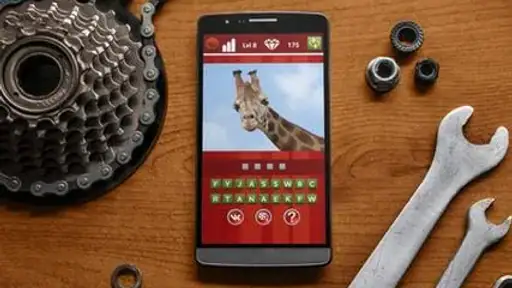





 Analysis by Frivlyz
I tend to reach for a logic game when I have a few spare minutes and want something more engaging than scrolling. Where Logic? is built around that kind of quick mental challenge: it asks me to reason through a problem rather than rely on specialist knowledge. That makes it approachable, though it is worth knowing that “logic” can mean different things to different players. If you want a structured course or a sprawling puzzle adventure, this is not necessarily the same experience.
A puzzle game that rewards a slower look
The basic appeal is easy to understand: a challenge appears, I work out what it is asking, and I test a line of reasoning. The store’s brief description points toward logic over trivia knowledge, which is a useful distinction. I would not choose it expecting a conventional quiz packed with facts about history, sport, or pop culture. Its draw is the act of figuring things out.
That difference also affects how I approach a session. With a standard trivia game, I might answer quickly from memory and move on. Here, the more satisfying habit is to pause, inspect the information in front of me, and rule out possibilities. When an answer does not come immediately, that is not necessarily a sign that I lack the right knowledge; it may simply mean I have not yet seen the pattern.
What the challenge feels like
The game is listed in the trivia category, but I would describe its appeal as closer to bite-sized brainteasers than a broad knowledge test. That makes it an option for people who enjoy deduction but do not want every round to depend on facts they have memorized. It can also suit a mixed group: one person may be quick with wordplay, while another is better at spotting a sequence or relationship.
I would keep expectations measured about the exact puzzle mix. The experience is presented as a collection of logical challenges, but players should judge it by whether they enjoy solving the puzzles they encounter, not by assuming it will cover every kind of number, word, or spatial exercise. The most useful test is simple: do you like working through a question even when the answer is not obvious at first glance?
That is also why the game can be enjoyable in short bursts. I can start with the intention of solving one problem during a break, then decide whether I have the patience for another. Unlike a long story game, it does not require me to remember a plot or settle in for a lengthy chapter. Still, a tricky puzzle can take longer than expected, so it is not always a perfect fit for a moment when I need to stop instantly.
Speed, focus, and everyday use
For a logic game, perceived speed is not only about how quickly the app opens; it is also about how quickly I can understand the task and get into a useful rhythm. This kind of play works best when the interface stays out of the way and lets me concentrate. I found the minimalist presentation and straightforward navigation helpful for that reason. I would not confuse a clean screen with a guarantee that every puzzle will feel easy, though: the thinking is the point, and some questions naturally take longer.
Gaming Stories You May Enjoy

Dancing Road Turns Short Breaks Into a Test of Rhythm and Timing

Super Stylist Makes Every Outfit a Test of Taste and Patience

Dominoes on Your Terms: Who Should Play and Who Should Pass

Pokémon GO Makes the Familiar World Feel New

Chess.com Turns Rematches Into Rivalries, but Community Has Its Costs

Archery Battle 3D Review: Sharp Aiming, Unclear Feedback
A realistic use case is a short wait at a café or a quiet few minutes before an appointment. I can open the game, give one puzzle my attention, and put the phone away when it is time to move on. For a more deliberate session, I would choose a relaxed moment at home, where I can sit with a difficult problem instead of rushing through it. That small change in setting matters: trying to solve a puzzle while distracted can make a fair challenge feel irritating.
My practical tip is to read the prompt once for the overall task, then again for the exact wording before committing to an answer. In logic puzzles, a missed condition can be more important than a lack of cleverness. If I get stuck, I try to explain the rule I think is operating in plain language, then check whether it accounts for every clue. The available hints can help when I have reached a dead end, but I would use one after making a genuine attempt; otherwise, I lose the satisfaction of finding the connection myself.
There is a trade-off here. Hints reduce the frustration of being blocked, but leaning on them too quickly can turn an exercise in reasoning into a sequence of prompts. I get more from the game when I treat a hint as a nudge to reconsider my approach rather than a substitute for thinking. If I am tired or impatient, I may prefer a simpler casual game instead of forcing myself through a puzzle that is no longer enjoyable.
How it compares with familiar alternatives
Compared with a conventional trivia quiz, this game is a better fit when I want to reason from a problem rather than recall a fact. Someone who loves competing over general knowledge may find a standard quiz more immediately rewarding. Someone who enjoys Sudoku, riddles, or deduction-style challenges may be more comfortable here, although the game should not be treated as a promise of a full Sudoku collection or a particular puzzle format.
It also differs from a large, themed puzzle adventure. Those games often emphasize a story, a setting, or a chain of connected stages. The appeal here is more direct: face a logic challenge and work it out. That can make it easier to dip into, but players who want character development, elaborate worlds, or a sense of long-term progression may prefer a different kind of game.
For a family or a couple of friends, it can be fun to discuss a puzzle aloud, especially when people notice different clues. I would not assume that every challenge is equally suited to group play; some are more enjoyable when one person can think without interruptions. A good way to share it is to let everyone suggest a possibility, then explain why a clue supports or rules it out instead of simply calling out guesses.
Reliability and the shape of a session
I like that the game’s core activity does not demand a complicated setup: the point is to get to a puzzle and think. That simplicity makes it a plausible choice for a regular mental break. At the same time, I would not judge its value by how many rounds I can race through. The experience depends on the quality of the individual challenge and on whether the difficulty feels satisfying rather than arbitrary.
When a puzzle seems impossible, I try a small recovery routine: reread the instructions, list what is certain, and separate that from what I am only assuming. Then I test one possibility at a time. This is useful beyond the game because it prevents me from repeating the same guess with no new reasoning. If the hint still does not make the puzzle enjoyable, taking a break is a sensible choice; returning with fresh attention can be better than tapping through in frustration.
I would also avoid treating a single difficult round as a verdict on the whole app. Logic games can vary in how naturally their rules click with a particular player. If I consistently dislike the style of reasoning, though, that is meaningful feedback: another puzzle app with clearer instructions, a different format, or a gentler learning curve may suit me better.
Who is likely to enjoy it—and who may not
I see the strongest fit for people who enjoy brainteasers, want a break from fact-based quizzes, or like testing a theory against clues. It may also work for students or adults looking for a casual way to practise careful reasoning, provided they treat it as entertainment rather than a formal learning course. The game is free, developed by Canopy Solutions, and has an average rating of 4.1 from around 131,000 ratings, with over 5 million installs. Those figures suggest it has found a broad audience, though popularity alone cannot tell me whether its particular puzzle style will click for you.
The game carries a Teen content rating, so I would check that age guidance when choosing it for a younger player. It was released on January 16, 2016, and its current version is 4.7.0. On Android, the listed minimum operating-system requirement is version 5.0. I would check that a device meets the requirement before trying to install it, especially if it is an older phone or tablet.
It is less suitable for someone who wants a fast reflex challenge, a competitive multiplayer match, or a quiz that mainly tests general knowledge. It may also frustrate players who need every puzzle to explain its reasoning clearly or who prefer a guided progression from very easy to very hard. If you are choosing between this and a conventional quiz, ask yourself whether you would rather recall an answer or work one out; that is the clearest way to decide.
Device expectations and a sensible verdict
I would expect a straightforward puzzle game to be less demanding than a graphically elaborate action title, but I would not use that general expectation as a promise about performance on every device. The stated Android minimum is version 5.0, which gives older compatible devices a chance to run it, but actual responsiveness can still depend on the phone, its available resources, and what else is running. If it feels sluggish, closing unused apps and restarting the game are sensible first steps before deciding that the puzzle experience itself is the problem.
For reliable use, I would install it on a device that has enough free space and keep the operating system in a healthy state. I would also avoid beginning a demanding puzzle when the phone is nearly out of power or when I know I will be interrupted. Those are ordinary mobile habits, but they matter more in a game where concentration is part of the enjoyment: interruptions can make me forget the reasoning I have already tried.
My verdict is that Where Logic? makes most sense as a low-pressure way to spend a spare moment thinking through a challenge. Its appeal is not that it replaces a full trivia library or a deep puzzle campaign; it offers a more focused alternative for people who like logic. The rating and install figures show that many players have tried it, but I would make the decision based on your taste for deduction, not on numbers alone.
If you're anything like me, you probably enjoy a good puzzle that tickles your brain and keeps you engaged for hours. That's where Where Logic? comes in, a mobile app designed to challenge your logical thinking and problem-solving skills.
A brain-boosting experience
When I first downloaded Where Logic?, I was curious about what sets it apart from other puzzle apps. The app doesn’t just present puzzles; it offers a variety of challenges that are both fun and mentally stimulating. Imagine a mix of Sudoku, crosswords, and those tricky riddles that make you scratch your head. That's the kind of experience you’re in for!
Features that stand out
One of the features I absolutely love is the app's user-friendly interface. Right from the get-go, it was easy to navigate, and the minimalist design really helps you focus on solving the puzzles rather than getting lost in the interface. Plus, the hints are super handy for those times when you're stuck but don't want to give up completely.
Another standout feature is the variety of puzzles available. Whether you're into numbers, words, or spatial reasoning, there’s something for everyone. And trust me, the satisfaction that comes from cracking a particularly tough puzzle is unparalleled.
Why it may be worth a try
If you’re looking for an app that does more than just kill time, Where Logic? is definitely worth checking out. It’s not just about having fun; it’s about exercising your brain and maybe even learning a new thing or two along the way. Plus, it's suitable for a wide range of players, so whether you're a student trying to sharpen your skills or an adult looking to keep your mind active, this app may have something for you.
So, if you’re ready to challenge yourself and dive into a world of logical puzzles, download it and let the brain games begin. It's a great way to have fun while keeping your mind sharp and agile. Give it a try, and you might just find yourself hooked!
Where Logic? Pros and Cons
Pros
- Engaging puzzles enhance critical thinking.
- User-friendly interface for seamless navigation.
- Variety of levels keeps gameplay exciting.
- Regular updates add new challenges.
- Works offline
- perfect for travel.
Cons
- Occasional ads can disrupt gameplay.
- Limited hints may frustrate beginners.
- Some levels feel repetitively similar.
- In-app purchases can be pricey.
- Requires frequent updates for bug fixes.
Frequently Asked Questions
What is the main functionality of Where Logic?
Where Logic? is a mobile application designed to enhance logical thinking and problem-solving skills through various engaging puzzles and challenges. The app offers a wide range of games that test users' reasoning abilities, providing a fun yet educational way to improve mental agility. Ideal for both adults and children, it encourages users to think critically and strategically.
Is Where Logic? suitable for all age groups?
Yes, Where Logic? is designed to cater to a wide audience, including both children and adults. The app features different levels of difficulty, ensuring that users of all ages can enjoy and benefit from the games. Parents can rest assured that the content is educational and appropriate for young users, while adults will find the challenges sufficiently stimulating.
Does Where Logic? require an internet connection to function?
Where Logic? offers both online and offline modes. While an internet connection is required to access certain features, such as leaderboard updates and social sharing, most of the puzzles and games can be enjoyed offline. This makes it convenient for users to play anywhere, anytime, without worrying about connectivity issues.
Are there any in-app purchases or ads in Where Logic?
Where Logic? follows a freemium model, offering a free version with ads and optional in-app purchases. Users can choose to remove ads by purchasing the premium version. Additionally, certain advanced levels or features may require a one-time purchase, allowing users to tailor their experience according to their preferences and budget.
How does Where Logic? help improve cognitive skills?
Where Logic? is designed to enhance cognitive skills by presenting users with various types of logical puzzles and challenges. By regularly engaging with these games, users can improve their problem-solving abilities, memory, and concentration. The app also tracks progress, allowing users to see improvements over time and stay motivated to continue their cognitive development.


