

Where is cat?
- Reviews
- 4.7
- Version
- 3.6
- Installs
- 5,000+

Screenshots
 Analysis by Frivlyz
When I want a puzzle that asks for attention rather than speed, I’m drawn to games built around one clear task: look carefully, notice what does not fit, and work out where to tap. That is the appeal of Where is cat?, a puzzle game from Bart Bonte centered on spotting a cat tucked into illustrated scenes. Its idea is easy to understand, but the pleasure comes from slowing down enough to search with intention. I find that makes it a better fit for a quiet break than for someone looking for a demanding, fast-moving challenge.
Finding the cat is the whole point
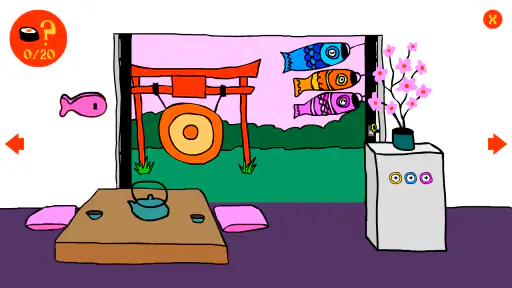
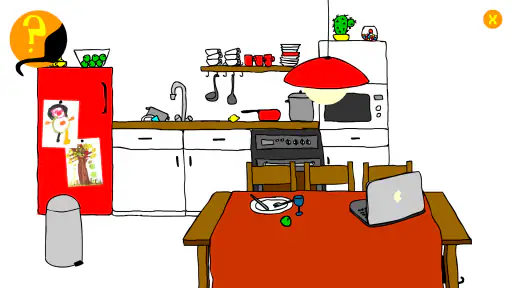
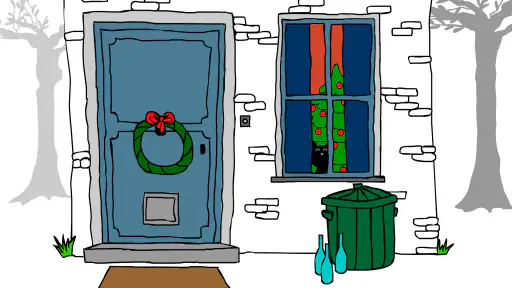
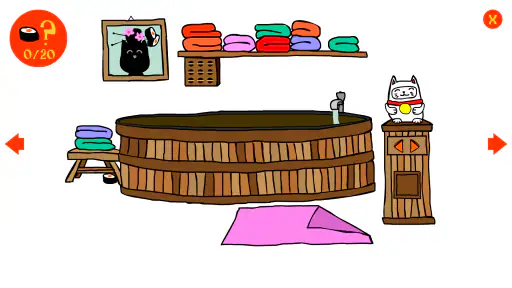
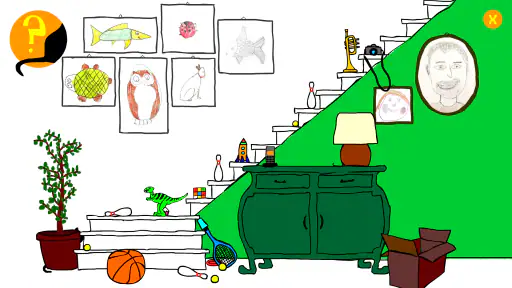
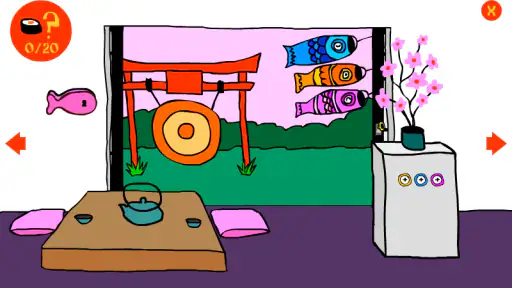
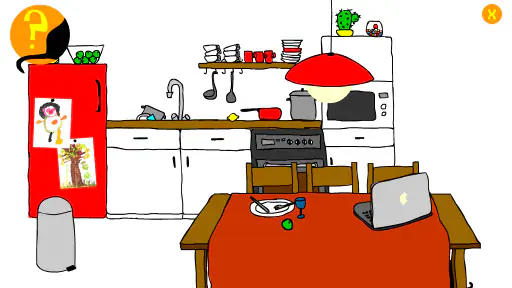
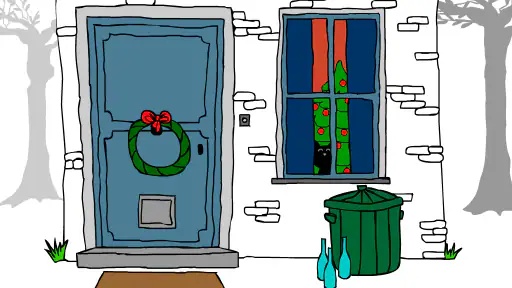
Where is cat? is a game that revolves around a simple yet addictive premise: you need to find the elusive cat hiding in various scenes. Sounds easy, right? But don’t be fooled! The game offers a variety of levels, each with its own quirky and vibrant backdrop, making the search a fun challenge. It’s a bit like playing hide and seek, but with a digital feline friend.
The graphics are adorably crafted, with each scene being a colorful tapestry where our furry friend can be hiding behind a pile of books, inside a cupboard, or even peeking from a rooftop. The developers have done a fantastic job in keeping the visuals engaging and fresh, which is crucial for a game that relies heavily on visual cues.
What matters most in this kind of puzzle is not simply how much detail a picture contains, but whether the details invite a useful search. I try to scan a scene in sections rather than tapping randomly: first the edges, then places where objects overlap, then any shape or color that seems slightly out of place. That small change in approach makes the hunt feel more like solving a visual puzzle and less like poking at a screen until something happens. It is a practical way to stay patient when the cat is not immediately obvious.
How the search feels in practice
What really sets this game apart is its intuitive interface. You simply tap around the screen to find the cat, and the responsive controls make it easy for players of all ages to jump right in. As you progress, the levels gradually increase in complexity, introducing more interactive elements and clever hiding spots that really test your observation skills.
One feature I particularly enjoyed is the hint system. If you’re ever stuck and can’t find the cat, a little nudge in the right direction is all it takes to get back on track. It’s a thoughtful addition that ensures the game remains enjoyable without becoming frustrating.
For me, the best way to use a hint is as a reset for my attention, not as the first move. I give a scene a deliberate pass, checking the crowded areas and the spots where the artwork creates natural hiding places. If I still cannot see the cat, a nudge can help me notice what kind of area deserves another look. That keeps the puzzle satisfying: I still do the observing, but I do not have to turn a short game break into a long search after my eyes have started skipping over the same details.
Gaming Stories You May Enjoy

Dancing Road Turns Short Breaks Into a Test of Rhythm and Timing

Super Stylist Makes Every Outfit a Test of Taste and Patience

Dominoes on Your Terms: Who Should Play and Who Should Pass

Pokémon GO Makes the Familiar World Feel New

Chess.com Turns Rematches Into Rivalries, but Community Has Its Costs

Archery Battle 3D Review: Sharp Aiming, Unclear Feedback
This approach also makes the game easy to share in an ordinary setting. If I am sitting with a friend or a child, we can look at the same scene and call out different places to inspect, without needing a complicated explanation or a long tutorial. One person may notice an odd corner while another spots a shape that blends into the background. It is a low-pressure way to turn a solo visual puzzle into a brief shared activity, though the core pleasure remains the search itself rather than competition.
A small puzzle for spare moments
A realistic use for this game is a short pause between tasks: waiting for someone, taking a breather after work, or winding down before bed. The search gives my attention one contained job, which is more satisfying than opening a feed and scrolling without a purpose. Because the objective is immediately clear, I can pick it up without needing to remember a story or reconstruct a complicated plan from a previous session. That convenience is a meaningful strength for a casual puzzle.
It is also a useful choice when I want a game that does not depend on quick reactions. The challenge is visual attention, so I can take my time and examine the scene at my own pace. That makes it approachable for someone who enjoys picture puzzles but does not want a timer or action-game pressure. The trade-off is that a player who wants a deep strategy system, a long narrative, or a steady stream of new mechanics may find the central task too narrow. A focused idea is the charm here, but it also sets a firm boundary around the experience.
Compared with the usual alternatives in the puzzle category, this is closer to a compact hidden-object activity than to a logic grid, word game, or physics puzzle. Those other styles ask you to calculate, remember clues, build a chain of deductions, or manipulate objects. Here, the primary skill is looking carefully. I would choose it when I want a relaxed visual challenge; I would choose a logic game instead when I want to reason through several steps or feel that I am building toward a larger solution. Neither is universally better—the right choice depends on whether I want observation or sustained problem-solving.
Who will enjoy this gentle challenge
Whether you’re a kid or just a kid at heart, Where is cat? offers a light-hearted escape from reality. It’s a great way to unwind and give your brain a little exercise at the same time. Plus, the game’s gentle learning curve makes it accessible, ensuring that everyone can join in on the fun.
The age rating is Everyone, and that suits the straightforward, family-friendly premise. I can see it working especially well for players who enjoy cats, illustrations, and small moments of discovery, as well as for someone who wants to introduce a younger player to a puzzle that can be understood at a glance. It can also suit adults who like a calm game but do not want to commit to a long session. The rating does not mean every player will find it equally engaging, though: someone who dislikes searching pictures or prefers a strong sense of progression may be better served by another kind of puzzle.
It helps to decide what you want from a paid game before buying it. The price is $1.99, so I would treat it as a small, focused purchase rather than an all-purpose game meant to occupy every spare hour. Its value rests on whether repeating the basic pleasure of looking for the cat sounds appealing to you. If you enjoy that loop, the simple premise can be a welcome change from games built around constant rewards or complicated menus. If you need broad variety to stay interested, the modest scope is a real consideration, not something to ignore.
The game has an average rating of 4.7 from 262 ratings, and it has 5K+ installs. Those figures give a prospective player a little context, but they are not a substitute for matching the game to your own taste. I would focus less on popularity and more on the question it raises: do you like studying a picture until a concealed detail comes into view? If yes, its central activity makes sense. If that kind of visual search feels tedious, a high average rating is unlikely to change your experience.
Practical details and honest trade-offs
The game was released on Dec 10, 2015, and its current version is 3.6. It requires Android 5.0 or later. Those details are useful when deciding whether an older device can run it, while the Everyone rating helps clarify the broad audience it is intended for. I would still check that the device and platform I plan to use are compatible before purchasing, rather than assuming every phone or tablet will support it.
The app doesn’t bombard you with ads or push in-app purchases aggressively, which is a refreshing change in today’s mobile gaming landscape. It’s clear that the creators wanted to focus on delivering a quality experience rather than just monetizing the app.
There is a balance to that simplicity. A calm search avoids the clutter and pressure that can come with some free-to-play puzzle games, but it cannot satisfy a player who wants a broad catalogue of puzzle formats in one app. Nor is this the right pick when the main goal is multiplayer competition, a complex campaign, or a puzzle that requires careful planning over many moves. I see the narrow focus as a strength for short, gentle sessions and a limitation for anyone expecting a more expansive game.
One small practical tip is to resist tapping every plausible hiding place immediately. A quick scan can make the scene feel busy, and repeated taps may not help you understand why a spot is worth checking. Instead, pause and compare the objects around a suspicious area: edges, overlaps, and unexpected shapes are often more useful clues than staring at the center of the picture. If that does not work, use the hint and then take a fresh look. This turns the hint into a way to recover your focus, rather than a shortcut that removes the search from the puzzle.
Another useful expectation is to think of each play session as a handful of self-contained moments, not as a reason to keep playing indefinitely. That makes the game easier to fit into a break and gives the simple search room to stay pleasant. It is particularly suited to someone who wants to put the phone down as soon as a small task is complete. On the other hand, if I am looking for a game to carry me through a long commute with evolving systems or a persistent objective, I would reach for something with more layers.
In conclusion, if you’re on the hunt for a game that’s both relaxing and mentally stimulating, look no further than Where is cat?. It’s a delightful journey that promises laughter, fun, and perhaps a little frustration — but in the best way possible. So go ahead, download it, and see if you can spot the cat!
My recommendation is simple: choose it for the pleasure of careful looking, especially if you want a friendly puzzle that can fit around the rest of your day. Skip it if you need constant novelty, intricate logic, or a competitive goal to keep you invested. For the right player, the appeal is not that every moment is demanding; it is that a small, clear challenge can make a spare minute feel purposeful. That is a modest promise, but one this particular cat-search game understands well.
Where is cat? Pros and Cons
Pros
- Entertaining puzzles for all ages
- Colorful and engaging graphics
- Simple and intuitive interface
- Suitable for short play sessions
- Boosts observation skills
Cons
- Limited replay value after completion
- Ads can be intrusive at times
- In-app purchases required for hints
- Some levels may feel repetitive
- No offline mode available
Frequently Asked Questions
What is the main objective of Where is Cat?
In 'Where is Cat?', the main objective is to locate the hidden cat within various levels of beautifully illustrated scenes. Players must carefully search through intricate backgrounds and use their observation skills to spot the elusive feline, making it a fun and engaging game for all ages. Each level presents a unique challenge, ensuring players remain entertained as they progress.
Is 'Where is Cat?' suitable for all age groups?
Yes, 'Where is Cat?' is designed to be a family-friendly game suitable for all age groups. The intuitive gameplay and charming graphics appeal to both children and adults. While the game is easy to understand, the varying difficulty levels keep it challenging enough for older players, making it an enjoyable experience for everyone.
Does 'Where is Cat?' require an internet connection to play?
No, 'Where is Cat?' does not require an internet connection to play. Once downloaded, players can enjoy the game offline, making it a perfect option for entertainment during travel or in areas with limited connectivity. This feature ensures uninterrupted gameplay and allows users to access the game anytime, anywhere.
Are there any in-app purchases in 'Where is Cat?'
Yes, 'Where is Cat?' includes in-app purchases that players can opt for to enhance their gaming experience. These may include additional levels, hints, or other features that can assist in progressing through more challenging sections of the game. However, the core game is fully playable without any purchases, allowing users to enjoy it without spending extra money.
What platforms is 'Where is Cat?' available on?
'Where is Cat?' is available on both Android and iOS platforms, making it accessible to a wide range of smartphone users. The game can be easily downloaded from the Google Play Store for Android devices and the Apple App Store for iOS devices. This cross-platform availability ensures that more players can enjoy the game regardless of their device preference.


