

Wavelength
- Reviews
- 4.8
- Version
- 1.4.7
- Installs
- 500,000+

Screenshots
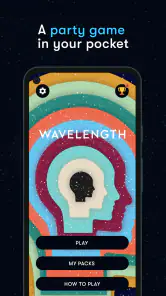
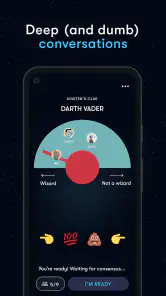
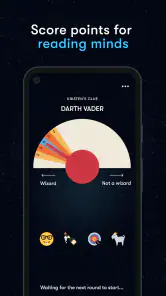
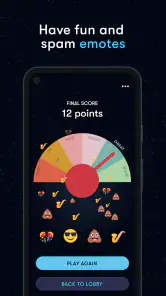
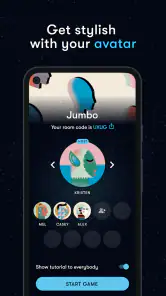
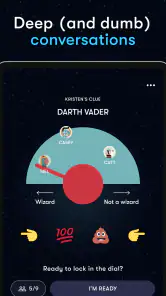
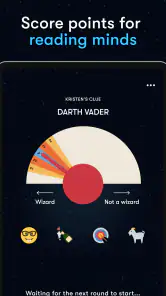
 Analysis by Frivlyz
I tend to judge a party word game less by how quickly I can open it and more by whether a group can get laughing before anyone reaches for another activity. Wavelength is built around that social moment: players try to read one another’s thinking, so the fun comes from the gap between what a clue seems to mean and how the other person interprets it. It is a word game from CMYK Games, and its central appeal is easiest to understand when you have people nearby who enjoy explaining their choices as much as making them.
Quick to pick up, best with the right group
The idea is approachable enough for a casual get-together, but the game is more rewarding when people are willing to talk through their reasoning. I would bring it out at a small dinner or during a relaxed evening with friends, especially when the group has mixed tastes and needs an activity that does not demand a long learning session. A useful first move is to agree that clues should be explained after each guess: that turns a quick choice into the conversation that gives the game its personality.
It is not the best fit for every gathering. If the group wants a quiet solo puzzle, a fast competitive word challenge, or a game that works without discussion, I would choose something else. Wavelength depends on shared context and interpretation; players who barely know one another may need a few rounds before their clues start to feel meaningful. That is not a flaw so much as the trade-off behind a game focused on reading people rather than simply finding the right word.
How the pace holds up during a real evening
For a practical test, imagine friends arriving at different times before dinner. Rather than asking everyone to learn a complicated ruleset, I would use a round as a low-pressure icebreaker, then let the group decide whether to keep playing. The format suits that stop-and-start setting better than a game that demands a long uninterrupted session. It also gives quieter players a natural way to contribute: a short clue can invite them to explain how they see a scale or idea without asking them to carry the whole conversation.
The main pacing risk is not a technical one; it is the people around the game. A group that debates every clue at length can make turns drag, while a group that rushes through without reacting may miss the best part. I find it helps to keep explanations focused: ask what made a clue feel closer to one side, rather than reopening every decision as a full argument. That small social habit can keep energy up without changing the game itself.
Word-game alternatives and useful trade-offs
Compared with word searches, anagrams, or solo vocabulary puzzles, this is a distinctly social choice. Those alternatives reward individual pattern spotting and can be played in short, quiet bursts. Wavelength instead asks players to calibrate their interpretation against other people’s, so it works better when a group is present and willing to speak up. If you want a word game for a commute or a few minutes alone, a conventional puzzle is likely the more practical option; if you want a reason for friends to compare how they think, this has the stronger case.
It also differs from trivia. Trivia tends to reward remembered facts, while this game is more about judgment and communication. That makes it easier to include people with different levels of specialist knowledge, but it does not guarantee that everyone will enjoy the same pace or style of humor. When introducing it to a mixed group, I would frame it as a conversation game rather than a test of who is cleverest. That expectation helps avoid turning a playful disagreement into a contest over who is objectively right.
Gaming Stories You May Enjoy

Dancing Road Turns Short Breaks Into a Test of Rhythm and Timing

Super Stylist Makes Every Outfit a Test of Taste and Patience

Dominoes on Your Terms: Who Should Play and Who Should Pass

Pokémon GO Makes the Familiar World Feel New

Chess.com Turns Rematches Into Rivalries, but Community Has Its Costs

Archery Battle 3D Review: Sharp Aiming, Unclear Feedback
What makes a session work better
One non-obvious tip is to pay attention to the group’s shared references. A clue that depends on a niche in-joke can be brilliant among close friends and confusing to newcomers, so broad, familiar comparisons are a safer opening. Once everyone has a feel for how the group interprets clues, more personal references can add warmth. This is a simple way to include new players without flattening the humor that longtime friends enjoy.
Another useful approach is to vary who explains their thinking. If the same confident player dominates every discussion, the group may start treating that person’s interpretation as the default. Inviting different people to say why a clue seemed obvious to them reveals how varied the group’s assumptions are—and gives quieter participants a clearer opening. I would also avoid trying to optimize every decision. The memorable moments often come from a reasonable clue landing in an unexpected place, not from everyone searching for a perfect answer.
Getting Started with Wavelength
First things first, downloading Wavelength is a breeze. It’s available on both Android and iOS, so no one’s left out. Once you’ve got it installed, setting it up is as simple as pie. You just need to create an account, and you’re ready to dive into the world of seamless communication.
The Interface: Simple Yet Powerful
The interface of Wavelength is super intuitive. You won’t find yourself clicking around aimlessly trying to figure out where things are. Everything is laid out neatly, and the design is sleek and modern. It’s like Wavelength knows exactly what you need and serves it up on a silver platter.
Features That Make the Difference
One of the features I absolutely adore is the ability to create channels. This is perfect for organizing your chats by topic or group, making it easier to keep track of conversations. You can also share files effortlessly, which is fantastic for work or just sharing memes with friends.
Another cool feature? Voice messaging. Sometimes typing just doesn’t cut it, and you need to express yourself with a voice note. Wavelength makes this super easy and fun to use. Plus, it supports a variety of emojis and GIFs, bringing a bit of personality and humor to your chats.
Security and Privacy
In this day and age, security is a big concern, and Wavelength doesn’t disappoint. It offers end-to-end encryption, ensuring your conversations are safe and private. It’s always nice to know that your personal chats aren’t fodder for prying eyes.
The Wavelength Community
Joining a community on Wavelength is like stepping into a vibrant town square. There’s a plethora of public channels where you can join discussions on various topics, from tech to lifestyle. It’s a fantastic way to meet like-minded individuals and expand your horizons.
Cost, audience, and practical expectations
The game is free to download and is rated for Everyone, which makes it easy to consider for a family gathering as well as a friends’ night. There are optional in-app purchases, with items ranging from $0.99 to $9.99, so I would treat the free version as the sensible starting point and decide whether any extras matter to your group only after you have played. Its 4.8 average from around 16,000 ratings and more than 500,000 installs suggest that it has found a substantial audience, though popularity alone cannot predict whether your particular group will click with its style.
It was released on February 9, 2022, and version 1.4.7 is the current version. Android users need version 6.0 or later. Those details make it easier to check basic compatibility before planning a get-together, but I would still install it ahead of time rather than wait until everyone is gathered. A quick check on the device you intend to use avoids turning the first few minutes of a social evening into troubleshooting.
Reliability and device expectations
I would not judge this game by demanding graphics or heavy processing; its appeal is the group interaction and word-based thinking. That makes it a reasonable candidate for a casual session on a compatible phone, but it would be careless to promise identical speed or battery use on every device. Older hardware, a crowded device, or an unstable connection can affect the general experience of using an app, so my practical advice is simple: open it before guests arrive and make sure the session is ready to go.
For a shared evening, it is also worth deciding in advance who will handle the phone and how the group will take turns. That removes a small but common source of friction: people leaning over one screen, missing an instruction, or interrupting a clue to ask what happens next. If your group would rather avoid passing a device around, or needs a game that can be played entirely offline, a physical word game may be a more comfortable choice. The best option depends on the room, not just the app.
Who should choose it—and who may not
I would recommend this to people who like social deduction in its lightest, most conversational form: families, friend groups, and hosts looking for an activity that can make an ordinary pause feel lively. It is especially useful when the group enjoys explaining why a particular clue makes sense to them. It is less suited to anyone seeking a solitary word workout, a tightly timed competition, or a game whose appeal depends on deep strategy. Those players may be happier with a crossword-style puzzle, a word-building challenge, or a more structured party game.
One question people often have is whether they need to be an expert with words. I do not think so: the interesting part is making a clue understandable to the people playing, not showing off an expansive vocabulary. Another is whether it works for strangers. It can, but I would start with accessible clues and allow a little time for players to learn one another’s reference points. If the group is very large or conversation is already difficult to hear, split into smaller clusters rather than expecting one discussion to work smoothly for everyone.
In conclusion, Wavelength is more than just a messaging app; it’s a community hub. Whether you’re using it to stay in touch with family, organize work projects, or just have a bit of fun, it’s got something for everyone. It’s user-friendly, packed with features, and designed with security in mind. So, if you haven’t given it a whirl yet, what are you waiting for? Dive into the world of Wavelength and experience communication like never before!
My actual verdict is narrower and more useful: as a word game, it is worth trying when you have a willing group and want conversation to be part of the activity. Its strongest moments come from seeing how differently people interpret the same clue; its weakest sessions are the ones where nobody wants to explain a choice or the group expects a conventional puzzle. I would install it before a gathering, begin with broad references, and let the group’s reaction decide whether to keep going. If that sounds like the kind of shared fun you want, it is a sensible free starting point; if you need a solo distraction, choose a game designed for one.
Wavelength Pros and Cons
Pros
- User-friendly interface for easy navigation.
- High-quality audio and video streaming.
- Seamless integration with social media.
- Wide range of content categories.
- Regular updates with new features.
Cons
- Requires stable internet connection.
- Frequent ads disrupt user experience.
- Limited offline functionality.
- Higher battery consumption.
- Subscription needed for premium content.
Frequently Asked Questions
What platforms is Wavelength available on?
Wavelength is a versatile app available on both Android and iOS platforms. Users can download it from the Google Play Store for Android devices and the Apple App Store for iOS devices. This cross-platform availability ensures that a wide range of users can enjoy its features regardless of their device preference.
Is Wavelength free to use, or does it require a subscription?
Wavelength offers a freemium model, allowing users to access basic features at no cost. However, for advanced functionalities and an ad-free experience, users can opt for a premium subscription. The subscription comes with various plans to suit different user needs, ensuring flexibility and affordability.
What are the primary features of Wavelength?
Wavelength is packed with features that cater to both casual and professional users. It includes real-time audio streaming, high-quality sound filters, and customizable user interfaces. Additionally, it supports seamless integration with other apps, making it a comprehensive tool for audio enthusiasts looking to enhance their listening experience.
How user-friendly is the Wavelength app for beginners?
Wavelength is designed with user-friendliness in mind, featuring an intuitive interface that is easy to navigate. Beginners will appreciate the step-by-step tutorials and comprehensive help section, which make it simple to get started. The app’s design caters to both novice and experienced users, ensuring a smooth experience for everyone.
Does Wavelength offer customer support for troubleshooting issues?
Yes, Wavelength provides robust customer support to assist users with any issues they may encounter. Users can access a dedicated support section within the app, which includes FAQs, troubleshooting guides, and the option to contact support directly via email or chat. This ensures that users can quickly resolve any problems they experience.


