

Wasteland Life: Survival Idle
- Reviews
- 3.9
- Version
- 2.3.2
- Installs
- 5,000,000+

Screenshots



 Analysis by Frivlyz
I usually think of a survival game as something that demands a long, uninterrupted session, so I approached Wasteland Life: Survival Idle with a different question: could it fit into the little gaps in a shared household day? Its mix of survival role-playing and idle play makes that a reasonable fit. I can check in, make a few choices around a settlement, then put the phone down without treating every pause as a setback. That does not make it a deep substitute for a hands-on survival adventure, but it does give the game a useful place between errands, commutes, or a quiet evening at home.
A quick check-in can suit a shared routine
For a household passing one phone or tablet around, the appealing part is that play can be brief and easy to explain: look at the settlement, see what needs attention, and decide what to work on next. I would treat that as informal turn-taking rather than assume the game has separate family profiles or a shared progression system. If several people use the same device, agree whose save or session is being used before tapping around; a casual game can still become frustrating if one person changes another person’s plans.
A realistic routine might be checking in after breakfast, leaving the game alone during school or work, then returning in the evening to spend accumulated resources and make a small improvement. That rhythm suits the idle premise better than repeatedly opening the app every few minutes. I also find it helps to choose one practical goal for a short session—such as improving the base or gathering what is needed for a tool—rather than tapping without a plan. The game’s appeal is in seeing a modest bit of progress, not in turning every spare moment into a task.
Set expectations before handing over the device
The game is free to download, but it includes in-app purchases priced from $0.99 to $99.99 per item. That range is worth discussing before a child or another family member plays on a device used for purchases. I would check the device’s purchase settings and make the household rule clear, rather than relying on the game itself to enforce a boundary. The presence of optional purchases also means “free” should not be read as “nothing to consider” when deciding whether it belongs on a shared device.
There is another boundary to keep in mind: idle progress can make it tempting to treat the game like something that must be checked constantly. I would avoid building that habit into a child’s routine. A couple of deliberate visits can be more satisfying than interrupting homework, meals, or conversation to see whether anything has changed. The game works best as a low-pressure pastime, and the household gets more from it when the phone remains a shared tool rather than a permanent wasteland dashboard.
Taking turns without losing the thread
When more than one person is interested, coordination can be simple: decide together whether the next session is for building, crafting, or setting out to explore. That gives each person a way to contribute without pretending that the game is a cooperative project with dedicated roles. If one player enjoys planning upgrades and another prefers the adventure side, taking turns with a clear intention can make the shared session feel more considerate. It also reduces the chance that someone spends resources on a choice the next player wanted to make.
For solo play, the same approach helps. Before closing the game, I would leave myself a clear next step instead of trying to do everything in one sitting. That small habit makes a later check-in feel purposeful and keeps the settlement from becoming a jumble of half-started decisions. It is a useful trade-off of the idle format: the game can fit around real life, but the player still needs to decide how much attention and spending they want to give it.
Gaming Stories You May Enjoy

Dancing Road Turns Short Breaks Into a Test of Rhythm and Timing

Super Stylist Makes Every Outfit a Test of Taste and Patience

Dominoes on Your Terms: Who Should Play and Who Should Pass

Pokémon GO Makes the Familiar World Feel New

Chess.com Turns Rematches Into Rivalries, but Community Has Its Costs

Archery Battle 3D Review: Sharp Aiming, Unclear Feedback
Age, trust, and who will enjoy it
Its Everyone 10+ age rating gives parents a starting point, not a replacement for knowing the child. I would consider whether they enjoy resource gathering, incremental upgrades, and a wasteland setting before handing over the device. Someone looking for a fast-paced action game, a strongly story-led role-playing adventure, or a realistic survival simulator may find this lighter approach underwhelming. The game’s survival theme is best understood as a stylized mobile activity, not as a detailed lesson in real-world preparedness.
SayGames Ltd developed the game, which sits in the role-playing category while leaning on building and idle progression. Its 3.9 average from around 57,000 ratings suggests a mixed but substantial audience response; I would use that as context, not as a promise that its pacing will suit everyone. The player count is also reflected in more than five million installs, while about 4,100 written reviews offer another place to look for recent player impressions. For a household, the more useful question is whether the person playing likes checking progress and making small upgrades, rather than whether the game has broad popularity.
Getting Started: Your First Steps in the Wasteland
When I first launched Wasteland Life: Survival Idle, I was immediately drawn into its stark, yet captivating world. The game kicks off by thrusting you into a barren wasteland, where your primary goal is to survive against all odds. You’re given some basic supplies, and from there, it’s up to you to scavenge for resources, build your shelter, and fend off the dangers lurking in this hostile environment.
Building and Crafting: Your Key to Survival
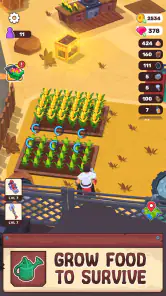
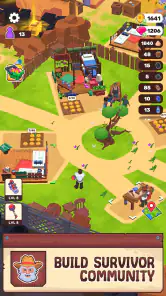
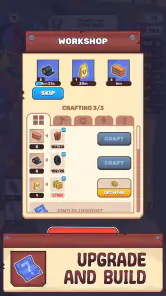
One of the aspects I truly enjoyed is the building and crafting system. You gather resources like wood, stone, and metal scattered across the landscape. These are essential for constructing your base and crafting tools. The interface is pretty user-friendly, which makes it easy to get hooked on upgrading your home base. I found myself spending hours just optimizing and expanding my little haven amidst the chaos.
That base-building loop is a good reason to pause and look at what each improvement is doing for your next stretch of play. I would avoid spending every gathered resource as soon as it appears; keeping a little flexibility can make it easier to respond when a new crafting or construction need comes up. This is not a complicated strategy layer, but a bit of prioritizing gives the routine more shape. If you enjoy watching a settlement take form, the gradual change is more rewarding than simply racing through each available action.
The Thrill of Exploration
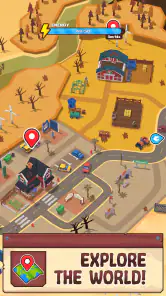
Exploration is another exciting facet of the game. Venturing into the unknown, you’ll stumble upon hidden treasures, encounter wild creatures, and maybe even make a few allies. Each expedition felt like a mini-adventure of its own, filled with risks and rewards. The game does a fantastic job of keeping the suspense alive, making each journey a unique experience.
I would think of an expedition as a change of pace from tending the base, rather than as a guaranteed route to a particular reward. That distinction matters if you prefer predictable progress: exploration adds variety, but the appeal is partly in accepting uncertainty. A useful way to balance the two is to build or craft when you want a calmer session, then head out when you want the game to feel more adventurous. Players who dislike detours or surprises may prefer a more direct builder, while those who like a little uncertainty get a reason to leave the shelter.
Idle Mechanics: Play at Your Own Pace
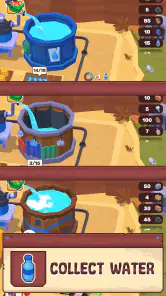
What sets Wasteland Life apart is its idle gameplay mechanics. Even when you’re not actively playing, your character continues to gather resources, which is a massive plus for those of us who don’t have hours to spare every day. It’s like having a little post-apocalyptic worker bee doing your bidding while you’re away. This feature allows you to enjoy the game at your own pace without feeling pressured to constantly stay online.
In practice, I would treat idle progress as a helpful buffer, not a reason to expect every goal to complete itself. The satisfying part is choosing what to do with the resources when I return. This makes it easier to fit the game into a lunch break or a short wait, but it may feel thin to someone who wants every minute to involve active decisions. Compared with more demanding survival role-playing games, this one favors convenience and steady settlement growth over constant control and a long sequence of tactical choices.
Graphics and Sound: Immersive and Atmospheric
The graphics are surprisingly detailed for a mobile idle game, creating an immersive atmosphere that pulls you deeper into the experience. The sound design complements the visuals perfectly, with ambient noises that make the wasteland come alive. Whether it’s the rustling of leaves or the distant growl of a creature, every sound adds to the tension and excitement.
The atmosphere helps the quieter stretches feel like part of a place rather than a bare resource screen. Still, presentation is a supporting strength, not a reason on its own to choose the game. If you mainly want a complex survival simulation, detailed character control, or a role-playing story with extensive dialogue, I would look elsewhere. Here, the environmental mood works alongside short loops of gathering, crafting, building, and exploring; it does not turn the game into a different kind of adventure.
What to expect before installing
The game is free, with optional in-app purchases ranging from $0.99 to $99.99 per item, so I would decide in advance whether spending is off the table or something to consider only after playing. Its current version is 2.3.2 and it requires Android 8.0 or later. It was released on November 21, 2023. Those details make it easier to check whether the game suits a device and a household’s spending preferences, while the core question remains personal: do you like returning to a settlement and nudging it forward?
For an everyday player, the strongest use case is a few relaxed check-ins rather than a marathon session. Someone who enjoys incremental construction, resource choices, and occasional exploration will likely find a comfortable routine here. Someone who wants competitive multiplayer, a demanding combat challenge, or a tightly scripted role-playing campaign should choose a different game in the category. That is not a flaw so much as a clear distinction in what this experience asks from its player.
A household-friendly verdict, with sensible limits
So, is Wasteland Life: Survival Idle worth your time? If you’re into survival games with a blend of idle mechanics, I’d say absolutely! It’s a game that doesn’t force you to choose between your busy life and your gaming passion. It’s all about finding that sweet spot of survival, adventure, and relaxation. So gear up, brave the wasteland, and see how long you can last in this thrilling journey!
My recommendation is strongest for someone who wants a low-pressure game to revisit alone or share informally with people at home, provided everyone understands how the device and purchases are being handled. I would skip it if I wanted a highly involved survival challenge or if the household needs separate accounts and clear individual progression. For the right player, though, the settlement gives short visits a purpose, and the idle structure makes it easier to stop when real life calls. That balance is the game’s most practical strength—and the reason I would keep it as an occasional shared pastime rather than a game that needs to occupy the whole evening.
Wasteland Life: Survival Idle Pros and Cons
Pros
- Engaging survival mechanics.
- Intuitive user interface.
- Rich storyline and quests.
- Offline play available.
- Diverse crafting options.
Cons
- In-app purchases necessary.
- Frequent ads interrupt gameplay.
- Battery consumption is high.
- Limited character customization.
- Occasional bugs and glitches.
This Game in Other Languages
Frequently Asked Questions
What is the main objective of Wasteland Life: Survival Idle?
Wasteland Life: Survival Idle is a post-apocalyptic survival game where players must manage resources, build shelters, and fend off threats in a harsh wasteland environment. The main objective is to survive as long as possible by gathering resources, crafting weapons, and upgrading your shelter to withstand the various challenges that the wasteland presents.
Is Wasteland Life: Survival Idle free to play?
Yes, Wasteland Life: Survival Idle is free to download and play. However, it includes in-app purchases that allow players to buy resources, upgrades, and other items to enhance their gameplay experience. These purchases are optional, and players can progress through the game without spending real money, although it may take longer.
What platforms is Wasteland Life: Survival Idle available on?
Wasteland Life: Survival Idle is available on both Android and iOS platforms. Players can download the game from the Google Play Store for Android devices and the Apple App Store for iOS devices. The game is optimized for mobile play, ensuring a smooth experience on smartphones and tablets.
Does Wasteland Life: Survival Idle require an internet connection to play?
Wasteland Life: Survival Idle can be played offline, which means players do not need a constant internet connection to enjoy the game. However, certain features, such as in-app purchases and social interactions, may require an internet connection to function properly. It’s ideal for players who want to play on-the-go without relying on Wi-Fi or mobile data.
Are there any age restrictions for playing Wasteland Life: Survival Idle?
Wasteland Life: Survival Idle is recommended for players aged 12 and up due to its post-apocalyptic themes and mild violence. The game content is designed to be engaging yet suitable for teenagers, though parents should use discretion based on their child’s maturity level. The game complies with app store guidelines for age-appropriate content.


