

Vigor Mahjong
- Reviews
- 4.8
- Version
- 2.7
- Installs
- 50,000+

Screenshots
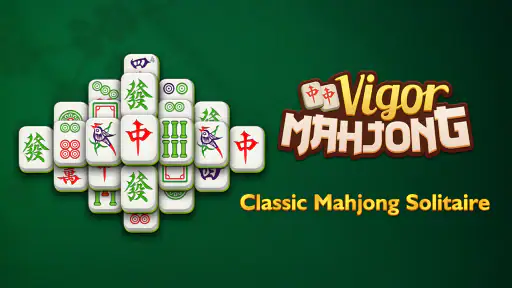
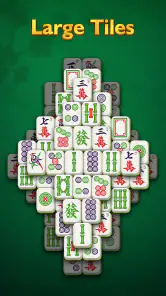
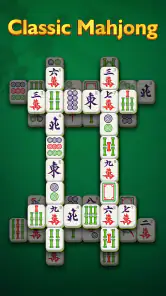
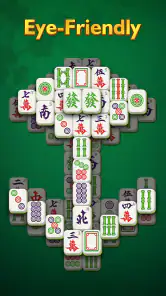
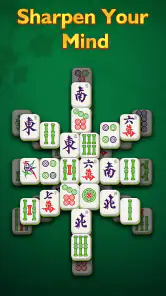
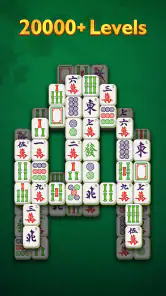
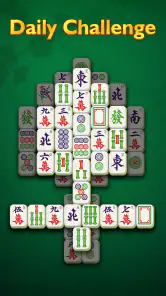
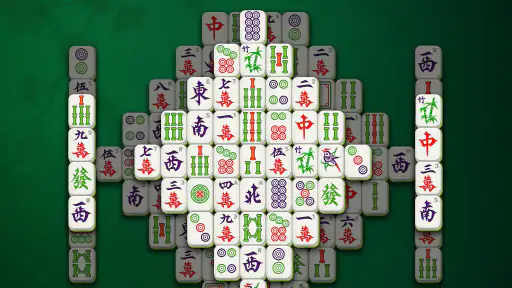
 Analysis by Frivlyz
My first practical impression of Vigor Mahjong is that it suits people who want a quiet tile puzzle they can pick up without planning a long session. Mahjong solitaire is built around matching exposed pairs and clearing a layout, so the appeal is immediate: look for a legal match, check what it may uncover, and decide whether to remove it now or leave it available. That small choice gives a simple board more thought than a quick glance suggests.
Small goals that make a session feel worthwhile
The best early goal is not to clear boards as fast as possible. I get more from slowing down enough to scan the whole layout before making a match. A pair that looks obvious may be less useful than another pair that frees a tile beneath it or opens a blocked row. Treating each move as a chance to reveal options makes the game feel more like a planning puzzle than a speed test.
That approach also helps if you are new to this style of game. You do not need to know traditional four-player Mahjong to understand tile matching, though familiarity with the tiles can make recognition quicker. I would begin by identifying pairs that open up more of the board, then use the newly exposed tiles to reassess rather than following one side of the layout automatically. The useful habit is to keep asking, “What will this move let me see next?”
For a short break, I would set a modest target: make a few considered matches, or try to finish one board if the available time allows. It is an easy format to return to because the central action stays consistent, but a board can demand more attention than expected when several matches compete for priority. If you are interrupted, the important question is whether the game keeps your place; I would not assume that it does, so it is sensible to start a session when you can spare enough uninterrupted time to finish comfortably.
Progress signals and the rhythm of play
Mahjong solitaire does not usually provide the same kind of progress as a story game. The satisfying signal is often visible on the board itself: fewer tiles remain, blocked areas open up, and the set of possible matches changes. I find that immediate feedback more useful than a bar filling in the background because it tells me whether a decision has actually made the puzzle easier.
In the wider mobile board-game category, this is a more solitary, visual kind of concentration than a turn-based strategy game, and it asks for less rules learning than a full Mahjong match. Compared with basic matching puzzles, the layered board adds a planning element: a move can reduce the available choices if I remove the wrong pair too soon. That trade-off is the main source of interest, not a complicated control scheme.
How much challenge should you expect?
The challenge comes from the arrangement and the order in which useful pairs become available, rather than from reacting quickly. I would not judge a board only by how many matches I can spot at first. Looking for pairs that uncover covered tiles, or that open a narrow section of the layout, is often a better way to preserve options. When I get stuck, I review the remaining exposed pairs instead of tapping more quickly; speed cannot fix a board that needs a different sequence.
Gaming Stories You May Enjoy

Dancing Road Turns Short Breaks Into a Test of Rhythm and Timing

Super Stylist Makes Every Outfit a Test of Taste and Patience

Dominoes on Your Terms: Who Should Play and Who Should Pass

Pokémon GO Makes the Familiar World Feel New

Chess.com Turns Rematches Into Rivalries, but Community Has Its Costs

Archery Battle 3D Review: Sharp Aiming, Unclear Feedback
That makes the game a reasonable fit for someone who likes gentle mental work, but it may feel repetitive to a player who wants changing rules, direct competition, or a steadily escalating strategic system. A classic chess or checkers app offers more opponent-focused decisions, while a conventional match-three game tends to emphasize cascades and rapid visual feedback. This one sits between those experiences: slower than an arcade puzzle, but more spatially tactical than simple pair matching.
Who will enjoy it, and who may prefer another game
I would recommend this style to anyone who enjoys clearing a board at their own pace, especially during a quiet moment at home or while waiting for an appointment. A realistic routine might be to open a puzzle after lunch, scan the layout, and play until the next obligation calls. It works best when the goal is a calm reset rather than a high-energy distraction. If you want multiplayer rivalry, a deep campaign, or a new mechanic every few minutes, another board game will likely hold your attention better.
One useful habit is to avoid making every available match as soon as you see it. Before clearing a pair, check whether either tile is helping keep another part of the board accessible. This is a small, practical way to protect future choices, especially when the remaining layout becomes sparse. It also gives a natural stopping point: if you have to rush, pause before starting another board rather than beginning a puzzle you cannot give a little attention.
Rediscovering Mahjong Bliss
First off, let's talk about how this app reintroduces the joys of Mahjong. The graphics are nothing short of stunning. With vibrant tile designs and smooth, responsive gameplay, it feels like you're playing a real-life set right on your screen. The game offers a variety of themes that keep things visually exciting, making every session feel fresh.
More Than Just a Game
What really sets Vigor Mahjong apart is its engaging gameplay mechanics. The app doesn't just offer the basic tile-matching game; it includes several modes that cater to different skill levels and preferences. Whether you're a newbie looking to learn the ropes or a seasoned player seeking a challenge, Vigor Mahjong has something for you.
One of my favorite features is the daily challenges. These are not only fun but also offer a sense of achievement as you unlock new levels and themes. Plus, the leaderboard keeps you motivated to play better and climb up the ranks.
Social and Interactive
In today's digital age, the social aspect of gaming can't be ignored, and Vigor Mahjong nails it. You can connect with friends or make new ones from around the world. The chat feature allows for real-time interaction, which adds a whole new layer of fun to the game. It's more than just about winning; it's about the shared experience.
Another cool feature is the tournament mode. Competing in tournaments not only tests your skills but also helps you earn bragging rights among your peers. The thrill of competing against real people adds an adrenaline rush that's hard to find in single-player modes.
Final Thoughts
So, is Vigor Mahjong worth your time? Absolutely! With its stunning visuals, varied gameplay modes, and engaging social features, this app offers a comprehensive gaming experience. It's a fantastic way to unwind, challenge your mind, and connect with others. Whether you're killing time on a commute or just relaxing at home, Vigor Mahjong provides endless entertainment.
In a market saturated with gaming apps, Vigor Mahjong stands out as a refreshing take on a classic game. So go ahead, give it a whirl, and I promise you won't be disappointed. Happy matching!
A grounded look at the game’s place on your phone
There is one important distinction to keep in mind: the confirmed identity of this title is a board game focused on tile matching and Mahjong solitaire. That is the experience I would use to decide whether it belongs on your device. The older impressions in the sections above describe social play, tournaments, leaderboards, themed unlocks, multiple modes, and daily challenges, but those are not details I would rely on without seeing them in the version I actually install. For a buying decision, I would focus on the core promise: matching tiles in a familiar solitaire format.
That keeps expectations practical. It is free, developed by CanaryDroid, and carries an Everyone age rating, so it is positioned as an accessible casual game rather than a paid, specialist Mahjong simulator. Its average rating is 4.8 from around ten thousand ratings, with about 455 written reviews, and it has passed 50,000 installs. Those figures suggest that many players have tried it, but popularity alone cannot tell me whether its particular board layouts or visual style will suit you.
What to check during your first session
Before settling into a long run, I would spend a few minutes checking how clearly the tile faces can be distinguished on your screen. In a matching puzzle, legibility is part of the challenge: if similar symbols are hard to tell apart, a thoughtful decision can become a squinting exercise. I would also pay attention to whether tapping a tile gives clear feedback and whether the board makes blocked and playable pieces easy to identify. Those details matter more to comfortable play than flashy presentation.
If you are deciding whether to keep it, try one session in the conditions where you expect to use it: on a small phone during a break, or on a larger screen at home. The same board can feel relaxed on a spacious display and cramped when you are holding a phone one-handed. I would not treat a quick test as a measure of puzzle difficulty; instead, use it to judge whether the tiles, touch response, and pace feel comfortable enough for repeated short visits.
Another sensible check is how the game behaves when you leave it. Mobile interruptions are common, but it is better to learn from a brief test than to assume a board will remain exactly as you left it. Start a puzzle when you have a little breathing room, then see whether switching away and returning fits your routine. If you mainly play in fragmented moments, reliable resuming matters more than an elaborate progression system.
Unlocks, motivation, and the cost of keeping up
The original appeal of goals and unlocks is easy to understand: a visible reward can make one more board feel worthwhile. I would treat any such progression as a bonus rather than the reason to install the game. The strongest reason to return to Mahjong solitaire is that the board itself gives you a fresh sequence to read. If a reward is tied to frequent check-ins or makes you feel obliged to play when you would rather stop, that pressure can weaken the relaxing quality of the puzzle.
For the same reason, I would distinguish a pleasant nudge from a demand on your time. A challenge can help a player choose what to do next, but a casual board game should still be enjoyable when you ignore goals and simply play at your own pace. If you prefer games with a clearly plotted campaign and substantial changes in mechanics, this format may not provide enough variety. If you prefer self-directed progress, the act of clearing layouts can be satisfying without needing a larger narrative.
There is also a trade-off between visual novelty and puzzle readability. Themes can make repeated boards feel less plain, yet the most decorative presentation is not necessarily the easiest to scan. I would choose whichever look lets me distinguish the symbols quickly, even if another option seems more striking. In a tile game, clarity is not a minor accessibility preference; it directly affects how much attention the puzzle asks of you.
Who should install it, and what to expect
Vigor Mahjong is a sensible choice for someone looking for a free, casual board game built around a recognizable matching routine. It is aimed at Everyone, and version 2.7 runs on Android 5.0 or later, which makes the minimum system requirement clear for Android users. It was released on June 7, 2024. Those details help with basic compatibility, though they do not change the central question: do you enjoy scanning a layered board and planning which pair to remove first?
I would skip it if what you really want is the full traditional Mahjong experience with opponents, turn-taking, and a richer ruleset. Mahjong solitaire borrows the visual language of Mahjong tiles but plays as a single-player matching puzzle, so the two experiences are not interchangeable. I would also look elsewhere if your preferred board game depends on tactical play against another person; chess, checkers, or a conventional online board game is a better fit for that kind of decision-making.
My practical verdict is that the game’s progression should support the puzzle, not be expected to transform it. If you enjoy the steady satisfaction of exposing tiles and reducing a layout, give it a short trial and judge it by the comfort of the board and the quality of your decisions. If you need strong competitive stakes or dramatic shifts in play, the calm, repeatable rhythm is more likely to feel limited than compelling. That makes it best for small pockets of focused downtime, rather than as a replacement for every kind of board game.
Vigor Mahjong Pros and Cons
Pros
- Engaging gameplay keeps players hooked
- Beautiful graphics enhance user experience
- Multiple difficulty levels for all skill levels
- Daily challenges for continuous engagement
- Offline mode available for on-the-go play
Cons
- Contains ads that can be intrusive
- Limited free hints available
- In-app purchases can be expensive
- Requires regular updates for new features
- Initial learning curve for beginners
Frequently Asked Questions
What is Vigor Mahjong and how does it differ from traditional Mahjong?
Vigor Mahjong is a modern take on the classic Mahjong game, available for both Android and iOS. Unlike traditional Mahjong, which is typically played with tiles and requires a physical setup, Vigor Mahjong offers a digital experience with enhanced graphics, sound effects, and various game modes. It allows players to enjoy the game solo or compete online, making it accessible and exciting for both new and seasoned players.
What are the key features of Vigor Mahjong?
Vigor Mahjong boasts several key features that enhance the gaming experience. These include multiple game modes such as solo play, online multiplayer, and time-limited challenges. The app also includes customizable tile sets and backgrounds, daily quests, and leaderboards. Additionally, the game offers tutorials for beginners, ensuring a smooth learning curve for those new to Mahjong.
Is Vigor Mahjong free to play, and are there any in-app purchases?
Vigor Mahjong is free to download and play, offering a wide range of features at no cost. However, it includes in-app purchases that allow players to enhance their experience further. These purchases may include additional tile sets, power-ups, or ad-free gameplay. While optional, these purchases can provide a more personalized and uninterrupted gaming experience.
How does Vigor Mahjong ensure fair play in its multiplayer mode?
Vigor Mahjong incorporates advanced algorithms to ensure fair play in its online multiplayer mode. The game employs a random shuffle system for the tiles, similar to traditional Mahjong, to ensure that no player has an unfair advantage. Additionally, the app has a robust reporting system for players to flag any suspicious behavior, thus maintaining a fair and friendly gaming environment.
What kind of support does Vigor Mahjong offer to its players?
Vigor Mahjong provides comprehensive support to its players through various channels. The app includes an in-depth FAQ section and a customer service portal within the app, where users can submit queries or report issues. Additionally, the game has an active community forum and social media presence, where players can find tips, share experiences, and seek help from fellow Mahjong enthusiasts.


