

Vector Classic
- Reviews
- 4.6
- Version
- 1.4.2
- Installs
- 1,000,000+

Screenshots


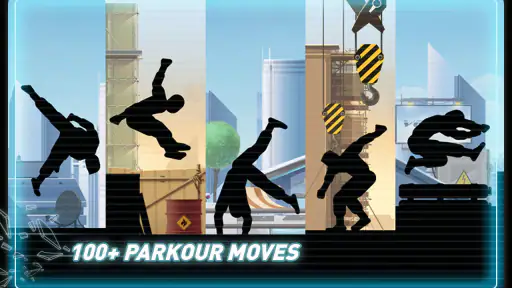
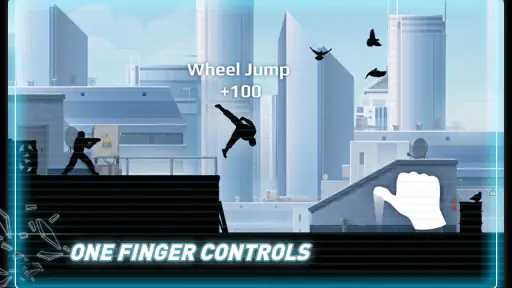



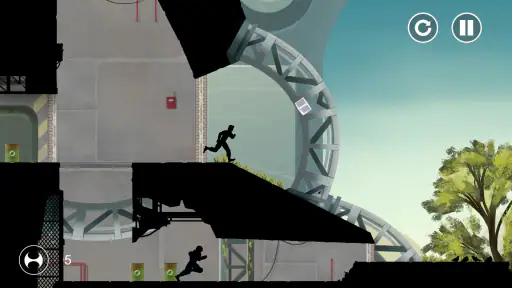
 Analysis by Frivlyz
I tend to enjoy mobile games that make one clear promise and then build a satisfying challenge around it. Vector Classic does that through parkour: you guide a runner across rooftops and obstacles while a pursuer keeps the pressure on. It is an arcade game from NEKKI, and its appeal is less about collecting a long list of systems than about reading the route and choosing the right move at the right moment.
The Thrill of the Chase
The chase is the game’s defining capability, and it changes how I approach each stretch of the course. This is not simply a matter of keeping a character moving forward. I have to notice what is coming, judge whether a jump or slide fits, and react before hesitation costs me momentum. The pursuit gives those small decisions urgency: a movement that might feel optional in a slower platform game becomes part of staying ahead.
That focus also makes the game easy to understand at a glance. The runner’s silhouette and the obstacles ahead give me the information I need to plan a move, while the animation helps communicate the action. I do not have to learn a complicated set of commands before the central idea clicks. The challenge comes from using a small set of actions accurately, not from memorizing an elaborate control scheme.
Imagine this: you’re a free runner in a dystopian world where freedom is just a dream. That’s the essence of Vector Classic. The game kicks off with an intriguing storyline where you, the protagonist, are breaking free from a totalitarian regime. As you dash across rooftops and vault over obstacles, the game keeps you on your toes with its fluid animations and realistic parkour moves.
The controls are a breeze to learn. You swipe up to jump, down to slide, and swipe longer for bigger leaps. It’s a classic case of "easy to learn, hard to master". The game challenges you with intricate levels that require precision and timing. Trust me, nailing that perfect jump gives a satisfaction like no other!
How the Chase Feels in Practice
In ordinary play, I get the best results when I treat a level as a sequence to read rather than a reflex test to brute-force. I look ahead far enough to distinguish an obstacle that calls for a quick slide from one that needs a longer jump, then commit to the input instead of swiping at the last instant. That habit is especially useful when the screen is moving quickly: reacting to the next visible shape is more reliable than trying to recover after a mistake.
A practical tip is to use retries as information. If I keep failing at the same point, I try to identify whether the problem is timing, the length of the swipe, or the choice of move, instead of repeating the same gesture faster. The controls are simple enough that this kind of small adjustment is easy to test. It turns a frustrating section into a specific skill to practise, though players who want forgiving, hands-off progress may still find repeated precision demands tiring.
Gaming Stories You May Enjoy

Dancing Road Turns Short Breaks Into a Test of Rhythm and Timing

Super Stylist Makes Every Outfit a Test of Taste and Patience

Dominoes on Your Terms: Who Should Play and Who Should Pass

Pokémon GO Makes the Familiar World Feel New

Chess.com Turns Rematches Into Rivalries, but Community Has Its Costs

Archery Battle 3D Review: Sharp Aiming, Unclear Feedback
The chase also makes short play sessions feel purposeful. I can start a run, concentrate on a single sequence, and come away with a clear sense of what I did better or where I need another attempt. That suits a brief break better than a game that expects me to manage several menus, upgrade systems, or long stretches of dialogue before reaching the action. The trade-off is that the intensity asks for attention: this is not the kind of game I would choose while distracted or trying to play one-handed without looking.
Graphics and Sound
The graphics are surprisingly crisp for a mobile game, with a minimalist design that complements the fast-paced action. The animations are smooth, which is crucial for a game that relies so heavily on motion. The sound effects add a layer of immersion, making you feel every jump and slide. The background music is subtle but effective, keeping you engaged without being distracting.
That visual restraint has a practical benefit: I can focus on the runner’s movement and the shape of the next obstacle instead of sorting through busy scenery. It supports the central chase rather than competing with it. If you prefer colourful worlds packed with background detail, this pared-back presentation may feel plain; I see it as a deliberate fit for a game where a fraction of a second can matter.
Challenges and Levels
One of the game’s standout features is its level design. Each level is a new puzzle, with different routes and strategies to explore. The difficulty ramps up as you progress, but it never feels unfair. Instead, it pushes you to improve and master your parkour skills. The game also offers a variety of achievements and collectibles, which adds replay value and encourages exploration.
For me, the useful way to approach those routes is to separate finishing a level from improving a run. First, I concentrate on getting through the sequence reliably. Once I know where the awkward transitions are, I can revisit the level with more attention to route choices, collectibles, or a cleaner execution. That keeps the challenge manageable and gives replaying a purpose beyond simply hoping for a better result.
There is a trade-off here: a level that rewards careful timing can be satisfying to learn, but it can also make progress feel stop-start if I only want a quick, effortless diversion. The game is better for someone who enjoys repeating a short section to get the movement right than for someone who expects every attempt to push the story forward. If precision platforming is the part you usually dislike, the chase may not compensate for that friction.
If you’re competitive, you’ll love the leaderboard feature. It lets you see how you stack up against players worldwide. It’s a nice touch that adds a sense of community and competition among players.
I would treat the leaderboard as an optional reason to replay, not as a requirement for enjoying the core game. If comparing results motivates you, it gives each run a clear target; if it does not, the level challenges and movement are still the main draw. The same goes for collectibles and achievements: they make exploration more rewarding, but you do not need to chase every extra to understand why the parkour works.
Who Should Give It a Run
A realistic time to play is during a short wait when I have enough focus to watch the screen but not enough time to settle into a long session. I can make an attempt, learn one tricky transition, and stop without needing to keep track of a sprawling story or a team of characters. It is also a good fit for players who like testing their timing and improving through repetition, especially if they enjoy arcade games where the controls are quick to grasp but execution takes practice.
Compared with many arcade alternatives built around endless movement or constant score chasing, Vector Classic puts more emphasis on navigating designed obstacle courses and reading a parkour route. That makes it feel more like a series of compact movement puzzles than a game where the only aim is to survive for as long as possible. If you want open-ended exploration, a deep character-building system, or relaxed play with little penalty for mistiming, another kind of mobile game will suit you better.
The game has an average rating of 4.6 from around 67,000 ratings, and it has passed one million installs. Those figures suggest that it has found a sizeable audience, but I would still judge it by whether precise swipe-based running is your kind of fun. It is rated Everyone 10+, a sensible age marker to check when choosing a game for a younger player, and its straightforward premise is easy to follow even when the timing takes practice.
Practical Details and Lasting Appeal
Vector Classic costs $0.99, with in-app purchases ranging from $0.99 to $4.99 per item. I would decide whether that arrangement suits you before settling in: the game is not a free download, and optional purchases can add to the overall spend. If you prefer to avoid in-app spending, keep that in mind and treat the purchase price as the starting point rather than assuming every extra is included.
It was released on April 26, 2013, and its current version is 1.4.2, with Android 5.0 as the minimum operating system requirement. That makes compatibility worth checking before downloading, particularly on an older device. It is a long-running arcade title rather than a new release, so I would approach it for its focused parkour action, not because I expect the format or presentation to resemble the latest mobile games.
Final Thoughts
In a world full of complex mobile games, Vector Classic stands out with its simplicity and elegance. It’s a thrilling experience that combines skill and strategy, wrapped in a visually appealing package. Whether you’re a casual gamer or a hardcore parkour enthusiast, this game offers something for everyone.
So, if you’re in the mood for a game that’s both challenging and rewarding, give Vector Classic a try. It’s a fantastic way to kill time and test your reflexes. Happy running!
Vector Classic Pros and Cons
Pros
- Smooth and intuitive controls enhance gameplay.
- Diverse and challenging levels keep users engaged.
- Minimalistic graphics appeal to a wide audience.
- Offline mode available for uninterrupted play.
- Regular updates with new content and features.
Cons
- Limited character customizations available.
- In-app purchases can be costly over time.
- Repetitive background music may annoy some players.
- Occasional lag on older devices.
- No multiplayer mode for competitive play.
This Game in Other Languages
Frequently Asked Questions
What is Vector Classic and what makes it unique?
Vector Classic is an engaging arcade-style game inspired by the urban sport of parkour. It stands out due to its captivating silhouette visuals and fluid animations, allowing players to perform acrobatics and overcome obstacles in a dynamic cityscape. The game is praised for its intuitive controls and immersive gameplay, providing a thrilling experience for both casual and hardcore gamers.
How does the control system in Vector Classic work?
Vector Classic offers a simple yet effective control system that allows players to perform parkour moves effortlessly. Players can swipe their fingers across the screen to jump, slide, or sprint, making it easy to navigate through various challenges. This intuitive control scheme is designed to enhance the user experience, ensuring smooth and responsive gameplay that keeps players engaged.
Does Vector Classic require an internet connection to play?
Vector Classic is designed to be enjoyed both online and offline. Players can indulge in the game without an internet connection, making it ideal for those who wish to play while on the go or in areas with limited connectivity. However, some features, such as leaderboard access and updates, may require an internet connection to function properly.
What are the system requirements for installing Vector Classic?
To install Vector Classic, users need a device running at least Android 4.1 or iOS 9.0. The game is optimized for both smartphones and tablets, ensuring a seamless experience across different devices. It requires a moderate amount of storage space, so users should ensure they have sufficient free memory on their device before downloading.
Are there any in-app purchases or ads in Vector Classic?
Vector Classic does include in-app purchases, offering players the option to buy additional content or enhancements to enrich their gaming experience. Additionally, the game may display ads at certain points. While these elements are integrated to support the developers, they are designed not to disrupt the overall enjoyment of the game.


