

Unscrew Nuts Sort: Pin Puzzle
- Reviews
- 4.7
- Version
- 1.1.1
- Installs
- 10,000,000+

Screenshots


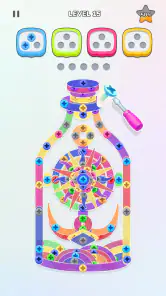
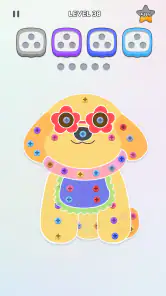
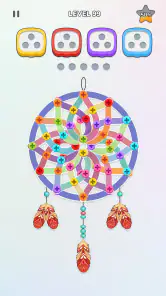
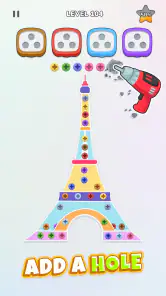
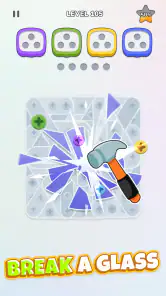
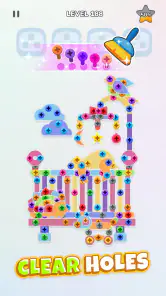
 Analysis by Frivlyz
I’m always wary of puzzle games that look effortless in screenshots but become frustrating once I start playing. Unscrew Nuts Sort: Pin Puzzle caught my attention because its central idea is easy to grasp: move pins and sort nuts through a sequence of choices. In practice, the appeal is less about speed than about pausing to work out what each move will leave available next. That makes it a natural fit for a shared phone, where someone can take a turn, pass it over, and let the next person tackle the same board.
A small game that suits shared moments
At home, I can imagine opening it while waiting for dinner or during a quiet stretch on the sofa, then letting another person try a level when I get stuck. The puzzle is visible and easy to explain, so it can invite conversation without requiring everyone to follow a long story or learn a complicated control scheme. One person can suggest a move; another can test it. That informal back-and-forth is a better reason to share it than expecting the game to provide a dedicated multiplayer mode.
There is a useful difference between taking turns and sharing progress, though. A puzzle can be passed around casually, but a shared device may also mean shared settings, purchases, or saved activity. I would treat the game as something to play together on one screen only when everyone is comfortable with that arrangement, rather than assuming it has separate profiles or household controls. If different people want independent progress, using their own devices is the cleaner boundary.
Where it fits in a family routine
The short-session style makes it easy to fit a single puzzle into a break without turning the game into the main event. For a parent, that can mean trying a board alongside a child and stopping at a natural point, rather than handing over a device with the expectation of an extended session. For siblings or housemates, it works as a low-effort challenge: agree on one move at a time, or let each person solve a board independently and compare approaches.
I would not make it a test of who is quickest. The satisfying part is thinking through the sequence, and rushing can make a careful puzzle feel like a reflex contest. A practical approach is to let the player explain what they think a move will accomplish before tapping. That slows the interaction just enough to make it collaborative and can help younger players learn to consider consequences without turning a casual game into a lesson.
That shared use has limits. If someone is waiting for a turn, a level that needs extra thought can stall the group, and advice from several people can become more distracting than helpful. I find it works best when the person holding the phone gets the final say, while others offer suggestions only when invited. It is a small social rule, but it keeps a simple puzzle from becoming an argument over whose move was right.
How the puzzle feels in everyday play
At first, I was drawn in by the straightforward premise of the game. I mean, who doesn’t love a good puzzle? The game’s aim is to unscrew nuts and sort them in a specific order, using pins to guide them. It sounds easy, right? But, trust me, it's a lot trickier than it seems. The graphics are crisp, and the interface is intuitive, making it accessible for players of all ages.
Gaming Stories You May Enjoy

Dancing Road Turns Short Breaks Into a Test of Rhythm and Timing

Super Stylist Makes Every Outfit a Test of Taste and Patience

Dominoes on Your Terms: Who Should Play and Who Should Pass

Pokémon GO Makes the Familiar World Feel New

Chess.com Turns Rematches Into Rivalries, but Community Has Its Costs

Archery Battle 3D Review: Sharp Aiming, Unclear Feedback
Gameplay and mechanics
The game starts off simple enough, easing you into the mechanics of unscrewing and sorting. However, as you progress, the challenges ramp up, requiring more thought and strategic planning. It’s like solving a Rubik’s cube, where every move needs to be calculated to avoid getting stuck.
What I love about the game is its ability to engage players with its progressively challenging levels. Each level feels like a mini-brain exercise, testing your patience and problem-solving skills. The developers have done a fantastic job at maintaining a balance between challenge and fun.
Making choices without rushing
A helpful habit in this kind of pin puzzle is to look beyond the piece you want to move. Before committing, I’d scan for the space or sequence that will be affected next: a move that seems to clear the board can also leave an awkward arrangement behind. Thinking one step ahead is useful, but I would not try to plan every move from the outset. When the puzzle changes after a move, it is often more practical to reassess the new layout than cling to a plan that no longer fits.
If I reach a point where I am unsure, I pause rather than tapping repeatedly. That gives me a chance to check whether I have overlooked a straightforward ordering choice. It also makes the game easier to share: a second player can inspect the same state and offer a fresh perspective. The trade-off is that players who prefer constant action may find this measured pace too quiet. The challenge here is deliberate decision-making, not quick reactions.
What to expect from a quick session
One of the standout features of this game is its ability to keep you hooked without overwhelming you. The levels are short, making it perfect for quick sessions during a commute or a coffee break. Plus, the satisfaction of completing a particularly tough level is immensely rewarding.
That short-session strength comes with a practical caveat: a puzzle can take longer when I stop to reason through a difficult arrangement, so I would not start one when I need to put my phone away immediately. On a commute, it is best suited to a stretch when you can keep your attention on the screen, rather than a moment when you need to watch for a stop or handle something else. At home, it is easier to pause and return when the timing is more comfortable.
Compared with a crossword or a word puzzle, this game asks me to reason about physical arrangement and the consequences of moving pieces, rather than search for vocabulary. Compared with a match-style puzzle, it feels less like reacting to a changing field and more like managing a sequence. Those alternatives may be a better choice if I want language practice, rapid rounds, or a more varied set of puzzle types. I would choose this one when I specifically want a visual sorting challenge and a calm pace.
Design, comfort, and friction
Another highlight is the game’s design. The aesthetics are pleasing, with a minimalist approach that keeps the focus on the puzzle-solving aspect. The sound effects are subtle yet effective in enhancing the gaming experience. You know a game is well-made when even the sound of unscrewing a nut feels satisfying!
The focused presentation helps me read the puzzle without much visual clutter, but it also means the experience depends heavily on enjoying this one central activity. If I am in the mood for changing scenery, a story, or a broader mix of mechanics, I would pick another game instead. The same goes for anyone who dislikes trial and error: a board that asks for patient reconsideration can feel stubborn rather than relaxing if I want every move to work immediately.
On a shared phone, I would also make a simple habit of checking who is holding the device before starting a purchase or changing anything outside the puzzle itself. The game is free to play, while optional in-app purchases range from $0.99 to $49.99 per item. That spread makes it sensible to keep purchase decisions with the device owner and to avoid treating a casual hand-off as permission to buy something. I would not assume that a shared device automatically gives each player separate account boundaries.
Age, trust, and choosing the right player
The game is rated Everyone, and its puzzle premise is easy to introduce to a broad age range. Still, an age rating is not a substitute for a household’s own rules about screen time, spending, or who may use a particular device. I would be comfortable inviting a child to solve a board with me, while keeping purchase decisions and device settings under an adult’s control. That is a sensible arrangement for any free game with optional purchases, without needing to assume the title offers parental controls.
For younger players, the best fit is likely someone who can enjoy trying a move, noticing its effect, and adjusting their plan. If a child becomes upset whenever a puzzle does not resolve quickly, I would play together or choose a gentler activity. For adults, it can be a compact way to give the mind something specific to work on between tasks. For a group, it is better as an occasional shared challenge than as a game everyone must play at the same pace.
There are also reasonable questions about whether it suits a person who wants completely independent, uninterrupted play. The answer depends on how they use their device: the puzzle itself is straightforward to pick up, but a shared phone can bring interruptions and competing turns. Someone who values private progress should use a personal device rather than expecting a household hand-off to preserve separate histories. Someone who wants a collaborative conversation around one board may find that same hand-off enjoyable.
Who should download it, and who should pass
I would recommend giving it a try if you enjoy visual logic puzzles, like working through a problem at your own pace, or want a compact activity that can be shared informally. It can suit a coffee break, a quiet moment at home, or a casual turn-taking challenge with someone nearby. The game has a 4.7 average from around 182,000 ratings, and it has passed 10 million installs, which suggests that its simple premise has found a broad audience. Those figures are context, not a promise that every player will enjoy its particular style.
I would skip it if my main priority were a narrative campaign, a variety of puzzle formats, fast competitive play, or a game designed around separate household accounts. It is also not the best choice when I need an activity that can be played without looking at the screen, since the challenge depends on inspecting the arrangement and choosing moves. Players who find sorting puzzles repetitive may prefer a collection of different logic games instead.
Pleasure City is the developer, and the game is free, with optional purchases available. It was released on November 11, 2024, and version 1.1.1 requires Android 5.0 or later. Those basics make it straightforward to judge whether it can run on an Android device, while iOS players should check the relevant store page for their device’s compatibility. I would install it for the puzzle itself, not on the assumption that a particular update or purchase is necessary to enjoy a short session.
The household verdict
If you’re looking for a game that combines strategy, fun, and a touch of brain-teasing, Unscrew Nuts Sort: Pin Puzzle might just be your next favorite. It’s a game that doesn’t require a huge time investment but offers plenty of replay value. Whether you’re a casual gamer or a puzzle enthusiast, this game has something to offer. So, give it a whirl and see if you can master the art of unscrewing nuts!
My own household recommendation is more specific: keep it as an easygoing option for a shared break, but let each person decide whether they want a turn rather than making it a group obligation. Its strongest quality is the small, concrete problem on screen; its main limitation is that the same focused mechanic may not hold everyone’s interest. If that trade-off sounds right, it is an approachable free puzzle to try. If you want lots of different activities or clear separation between players on one device, another kind of game will suit you better.
Unscrew Nuts Sort: Pin Puzzle Pros and Cons
Pros
- Engaging and challenging puzzle gameplay.
- Simple controls for easy navigation.
- Visually appealing graphics and design.
- Offers a variety of levels to enjoy.
- Free to play with optional in-game purchases.
Cons
- Contains ads that can be intrusive.
- Limited hints can make some levels hard.
- May require in-app purchases to progress.
- Some levels can be repetitive.
- Occasional bugs may affect gameplay.
Frequently Asked Questions
What is Unscrew Nuts Sort: Pin Puzzle?
Unscrew Nuts Sort: Pin Puzzle is a challenging mobile puzzle game that requires players to strategically remove pins and unscrew nuts to sort objects and solve puzzles. The game is designed to test your problem-solving skills and offers a variety of levels with increasing difficulty, making it a great choice for those who enjoy brain teasers.
How do I play Unscrew Nuts Sort: Pin Puzzle?
To play Unscrew Nuts Sort: Pin Puzzle, you must tap on the pins to remove them in the correct order and unscrew the nuts, allowing objects to fall and interact with each other. The objective is to sort and organize all items correctly to solve each level. It's a game that requires strategic thinking and patience.
Is Unscrew Nuts Sort: Pin Puzzle free to download and play?
Yes, Unscrew Nuts Sort: Pin Puzzle is free to download and play on both Android and iOS platforms. However, the game may offer in-app purchases for players who want to enhance their gameplay experience with additional features or to remove ads. Check the app store for specific pricing details.
What are the system requirements for Unscrew Nuts Sort: Pin Puzzle?
Unscrew Nuts Sort: Pin Puzzle requires Android version 5.0 and up or iOS 10.0 or later. The game is optimized to run smoothly on most devices, but having a device with updated software and sufficient storage space will ensure the best performance. Always check for the latest updates for an improved experience.
Does Unscrew Nuts Sort: Pin Puzzle have any accessibility features?
Unscrew Nuts Sort: Pin Puzzle is designed to be accessible to a wide range of players. The game features simple touch controls and an intuitive interface that accommodates different play styles. While it doesn't have specific accessibility settings, its straightforward design allows most users to enjoy the game comfortably.


