

Unravel Master: Tangle Puzzle
- Reviews
- 4.8
- Version
- 1.9.9
- Installs
- 5,000,000+

Screenshots


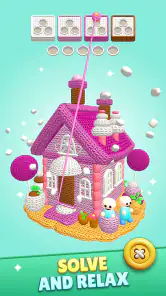

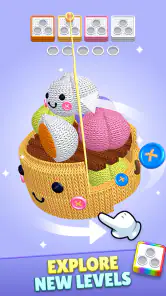
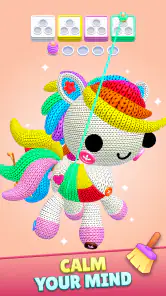
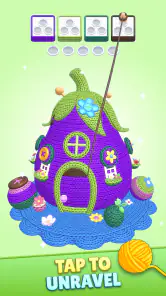
 Analysis by Frivlyz
I approach Unravel Master: Tangle Puzzle as a small, focused puzzle to pick up when I have a little attention to spare, rather than as a game that needs a long session or a complicated plan. Its appeal is in looking at a knot of threads, working out which move will open the next path, and seeing the board become easier to read. That simple loop makes it approachable, but it still asks for patience when a promising move turns out to block another strand.
It is a casual game from Supersonic Studios LTD, and that description fits the way I use it: a quick mental detour during a quiet moment, not a sprawling game to manage alongside a dozen systems. It is free to download, with in-app purchases ranging from $0.99 to $99.99 per item, so I would treat optional spending as a personal choice rather than part of the basic puzzle-solving routine. The game is rated Teen, and it runs on Android 7.0 or later.
A simple routine for reading each tangle
My best results come from pausing before I touch the screen. I first trace each visible strand with my eyes and look for crossings or endpoints that seem to constrain several other threads. Then I consider what a move would free, rather than choosing the string that looks easiest to pull. That short scan is useful because an apparently obvious choice can leave the remaining layout harder to reason about.
When I get stuck, I try changing one thing at a time. I make a deliberate move, check how the tangle has changed, and use that new view to decide what to do next. This is more informative than tapping through a run of guesses, especially when several threads overlap visually. It also makes a mistaken move easier to learn from instead of turning the level into a blur of half-remembered attempts.
Settings and comfort matter more than speed
I would check the game’s available settings before settling into a longer session, especially if I plan to play in a waiting room or before bed. The screen and sound choices that suit one person may not suit another, and a calm puzzle is less relaxing if I have to keep adjusting the device around it. I make sure the display is comfortable to look at and that any audio is appropriate for where I am; I do not assume a puzzle needs sound to be enjoyable.
Touch accuracy matters, too. On a smaller phone screen, I take an extra moment to aim at the strand I mean to move instead of making a fast swipe across a busy knot. If I am tired or holding the phone awkwardly, that little pause can prevent an accidental selection and save me from blaming the puzzle for my own rushed input. A larger screen can make the strands easier to follow, but the trade-off is that it is less convenient to carry around for a quick break.
Faster solving without turning it into guesswork
A useful habit is to identify the most restrictive-looking crossing first, then see whether moving one of its threads reduces several conflicts at once. I also try to keep track of what I have already tested: if a move leaves the remaining tangle no clearer, I avoid repeating it just because it is familiar. This lightweight mental record is enough for short puzzles and does not require a formal note-taking system.
Gaming Stories You May Enjoy

Dancing Road Turns Short Breaks Into a Test of Rhythm and Timing

Super Stylist Makes Every Outfit a Test of Taste and Patience

Dominoes on Your Terms: Who Should Play and Who Should Pass

Pokémon GO Makes the Familiar World Feel New

Chess.com Turns Rematches Into Rivalries, but Community Has Its Costs

Archery Battle 3D Review: Sharp Aiming, Unclear Feedback
I do not race the board unless I have a clear reason to. Moving quickly can feel efficient, but a few seconds spent checking the path of a thread are often better than undoing a sequence of poorly considered choices. If a level is not clicking, I take a short break and return with fresh eyes; on a visual puzzle, that reset can reveal an overlap I had been staring past. These are simple habits, but they make the game feel more deliberate and less like random trial and error.
Where the puzzle’s limits show
The same focused design that makes this an easy game to dip into also narrows its appeal. If I want a story, a character to develop, or a large range of modes to master, I would look elsewhere. Here, the main pleasure is solving the tangle in front of me. Repetition can become noticeable if I play for a long stretch, and people who dislike spatial puzzles may find the central challenge more fiddly than soothing.
I also separate what I can judge from the basic experience from what I would want to check on my own device. Touch feel and visual comfort can vary with screen size and personal preference, so I would try a few puzzles before deciding whether it suits my hands and eyes. The current version is 1.9.9, and the game has a 4.8 average from around 38 thousand ratings, with more than five million installs. Those figures suggest broad interest, but they cannot tell me whether its particular style of untangling will hold my attention.
Getting Tangled: Why Unravel Master Hooks You
First off, the concept of Unravel Master: Tangle Puzzle is beautifully simple: untangle a messy web of strings. Sounds easy, right? But don’t be fooled! As you progress, the puzzles get increasingly complex, and soon enough, you’ll find yourself in a delightful knot of challenges.
The game kicks off with a gentle learning curve, easing you into the mechanics. You start by unraveling a few simple tangles, and just when you think you’ve got the hang of it, the game throws in a twist—literally. Each level introduces new obstacles, like locked strings and timed challenges, keeping you on your toes.
Visuals and Interface: A Feast for the Eyes
One of the first things you’ll notice is the vibrant and clean design. The app’s interface is intuitive, making it easy to dive right in. The colors are bright and inviting, with each string rendered in a way that makes it visually appealing and easy to distinguish. The background music is soothing, providing a perfect backdrop to the game’s intricate puzzles.
The developers have done a fantastic job ensuring that the game is accessible. Whether you’re playing on a tablet or a smartphone, the touch controls are responsive and accurate, allowing for smooth gameplay without any frustrating glitches.
Gameplay: More Than Just a Puzzle
What really sets Unravel Master apart is its ability to keep things fresh. Each level feels like a new adventure. The introduction of additional elements like rotating platforms and color-coded strings adds layers of complexity that require both strategy and patience.
The game rewards creative thinking. There’s often more than one way to solve a puzzle, and the freedom to experiment with different approaches is what keeps you coming back for more. Plus, the satisfaction of seeing a chaotic tangle transform into a neat line is oddly gratifying.
Time-Killer or Brain-Teaser?
Whether you have five minutes to spare or an hour to kill, Unravel Master fits the bill. It’s perfect for a quick break during your day or a longer session when you’re in the mood to challenge yourself. The levels are short enough to complete in a few minutes but tricky enough to make you think.
I found myself reaching for the app whenever I needed to clear my head. It’s like a mental palate cleanser, offering a satisfying blend of relaxation and stimulation.
Endgame: Is Unravel Master Worth It?
In a sea of mobile games, Unravel Master: Tangle Puzzle stands out for its simplicity and depth. It’s a game that doesn’t demand much of your time but offers plenty of rewards. The free version provides a generous amount of content, and if you’re hooked like I was, the premium levels are worth every penny.
To wrap it up, if you’re on the hunt for a game that’s both challenging and relaxing, give Unravel Master a whirl. It’s a delightful puzzle game that’s sure to keep your fingers—and mind—busy.
How it fits into an ordinary day
I can see this working well in the small gaps that are awkward for a book or a longer game: waiting for a coffee, sitting on a train, or taking a brief pause between chores. A practical routine is to open one puzzle, give it a focused attempt, and stop when attention starts to drift. That keeps the experience pleasant and avoids turning a handful of knots into a frustrating session simply because I feel obliged to finish more.
For example, if I have a few minutes before an appointment, I can use the first part of that time to inspect the crossing pattern and make a careful move, then put the phone away when I am called. The appeal is that the puzzle asks me to concentrate on a visible problem rather than track a story or remember a long chain of objectives. It is less suited to moments when I need to stay alert to conversation or announcements, since a tricky arrangement can draw my attention more than I expect.
Who will enjoy it, and who may prefer something else
I would recommend it to someone who likes spatial reasoning, tidy visual feedback, and puzzles that can be approached one decision at a time. It is especially appealing if you enjoy spotting how one movement changes the rest of a layout. Players who prefer word puzzles may find the strings harder to parse than clues on a page, while anyone seeking action, character progression, or a strong narrative will probably get more from a different kind of game.
Compared with the usual casual alternatives, this is more about examining a compact arrangement than matching pieces, answering trivia, or reacting quickly to repeated prompts. That gives it a more thoughtful feel than a simple reflex diversion, but it also means the fun depends on whether untangling visual paths appeals to you. If I want a puzzle that can be solved through language or broad pattern matching, I would choose another title; if I want to focus on crossings and order, this is the more fitting pick.
Small habits that make a real difference
I find it helpful to change my viewing angle before changing my strategy. Rather than tapping immediately, I follow one thread from end to end, then inspect the crossings around it; repeating that scan with a second strand often exposes which paths are truly blocked. This is not a secret technique or a guaranteed solution, just a way to make the visual information easier to process when the board starts to feel crowded.
Another useful trade-off is knowing when not to optimize. If a move is legal and clearly opens the layout, I take it rather than spending too long searching for a perfect sequence. On the other hand, when several strands depend on the same crossing, I slow down and test the most constraining choice first. The distinction helps me keep easy puzzles brisk while giving the more demanding ones the attention they need.
I also treat a wrong turn as information. If the tangle becomes less readable, I stop making further speculative moves and reassess from the current arrangement instead of trying to remember every earlier possibility. That approach is less mentally taxing than replaying the whole sequence in my head, and it is useful whenever a puzzle has enough overlapping lines to make visual memory unreliable.
What to expect before installing
The game is free to start, but optional purchases are available at a wide range of prices, so I would decide in advance whether I am comfortable spending anything and avoid treating a purchase as necessary just to enjoy the basic idea. Its Teen age rating is also worth checking if you are choosing a game for a younger player. A rating is a useful starting point, though parents should still make their own decision about what is appropriate for their household.
It is a sensible choice when you want a self-contained visual challenge and do not mind solving by trial, observation, and patience. It is not my first pick for a group activity, a game that rewards rapid reactions, or a title I expect to keep me occupied through a long evening without repetition. I would try it in short sessions first, see whether the tactile act of separating the strands feels satisfying on my phone, and only then decide how regularly to return.
A measured verdict on mastering the knots
My overall recommendation is simple: give it a chance if a clean, focused tangle puzzle sounds enjoyable, but do not expect its narrow premise to suit every mood. Its strongest quality is that it gives a small problem enough visual complexity to reward a careful look without asking me to learn an elaborate set of rules. Its main limitation is the same focus: once I want variety beyond untangling, I need another game.
For me, the best way to enjoy it is to play with a calm pace, use deliberate scans rather than frantic taps, and stop when the puzzle stops feeling refreshing. That makes it a useful casual option for short breaks and a modest brain-teaser for people who like spatial challenges. If those are the moments you want a game to fill, I would happily recommend giving it a try.
Unravel Master: Tangle Puzzle Pros and Cons
Pros
- Engaging puzzles that challenge the mind.
- Visually appealing graphics enhance gameplay.
- Smooth and intuitive controls.
- Regular updates with new levels.
- Offline play available.
Cons
- Ads can be intrusive for some users.
- Limited hints without in-app purchases.
- Repetitive music may annoy over time.
- Some puzzles can be too easy.
- Occasional app crashes reported.
Frequently Asked Questions
What is Unravel Master: Tangle Puzzle?
Unravel Master: Tangle Puzzle is an engaging puzzle game designed to test your problem-solving skills. Players are tasked with untangling complex knots and strings within a set time limit. The game offers a variety of levels, each increasing in difficulty, providing a satisfying challenge for puzzle enthusiasts.
Is Unravel Master: Tangle Puzzle free to play?
Yes, Unravel Master: Tangle Puzzle is free to download and play. However, it offers in-app purchases for players who wish to enhance their gameplay experience with additional hints or unlock premium levels. These purchases are optional and not necessary to enjoy the game.
Does Unravel Master: Tangle Puzzle require an internet connection?
Unravel Master: Tangle Puzzle can be played offline, allowing you to enjoy the game without an internet connection. However, certain features like leaderboard updates, in-app purchases, and syncing game progress might require a connection. Playing offline won't hinder your ability to progress through the levels.
What are the system requirements for Unravel Master: Tangle Puzzle?
The game is compatible with most modern Android and iOS devices. For the best experience, it is recommended to have at least Android 5.0 or iOS 10.0. Ensure you have sufficient storage space and that your device is updated to the latest software version for optimal performance.
Are there any accessibility features in Unravel Master: Tangle Puzzle?
Unravel Master: Tangle Puzzle includes several accessibility options to accommodate a wide range of players. These features may include adjustable difficulty levels, colorblind modes, and customizable controls. The game aims to be inclusive, ensuring enjoyable gameplay for everyone.


