

Unpacking
- Reviews
- 4.1
- Version
- 1.02
- Installs
- 10,000+

Screenshots

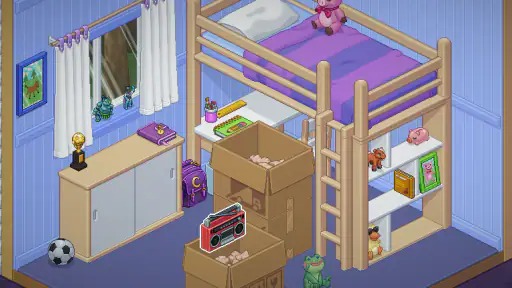
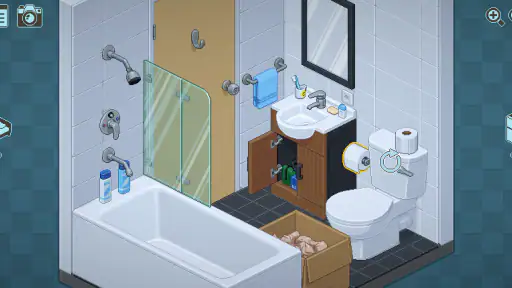
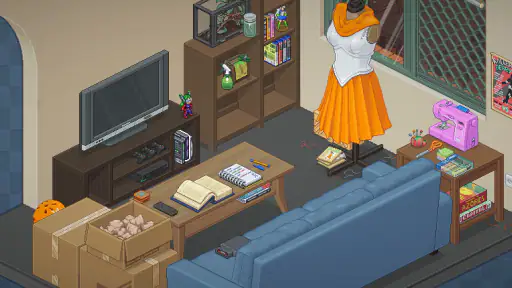
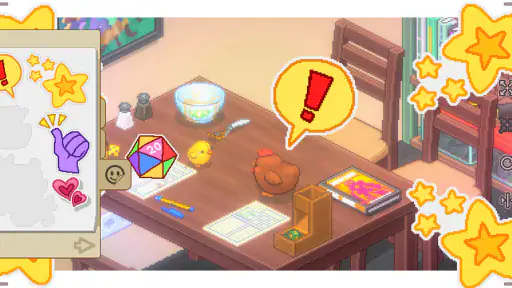

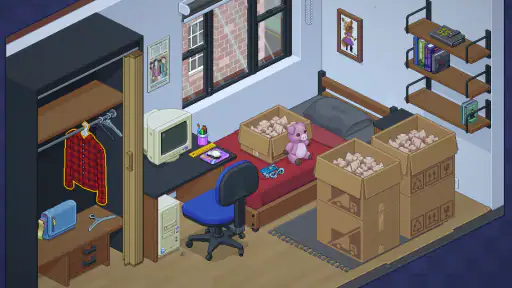
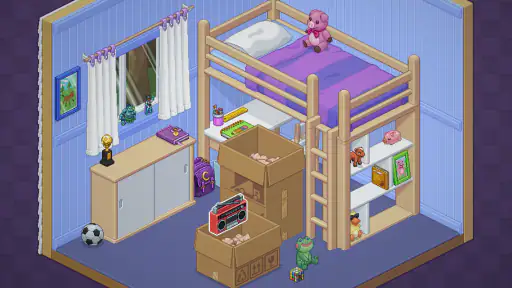
 Analysis by Frivlyz
I find that the main surprise in Unpacking is how much a small placement decision can change the feel of a room. This is a quiet puzzle game from Humble Games, but it isn’t only about making shelves look tidy: the belongings you unpack gradually suggest who lives there and what is changing in their life. I’d recommend it to someone who wants a thoughtful game to dip into at their own pace, rather than a challenge built around speed or competition.
Where players can get stuck
The basic interaction is easy to understand, yet deciding what counts as a sensible place for an object can take more thought than the gentle presentation suggests. A room may look finished to me while one or two items still feel awkwardly placed. When that happens, I try changing the layout rather than repeatedly dropping the same object in the same spot; a different arrangement can make the room read more clearly as a lived-in space.
That small uncertainty is part of the appeal, but it may frustrate anyone who expects a puzzle to announce the correct answer immediately. I wouldn’t approach every room as a rigid checklist or assume that the first arrangement I try is the only reasonable one. If you enjoy noticing details and revising a layout, the process feels rewarding. If you mainly want rapid feedback and a clearly stated objective at every step, this may feel slower than you’d like.
Getting comfortable with a session
I’d treat this as a game for a settled moment, even if that moment is brief. It suits an evening when I want something gentle after work, or a quiet pause when I’m not in the mood to track scores, timers, or a complicated plot. The puzzle format gives me a concrete task, while the understated storytelling leaves room to form my own impressions instead of asking me to follow long conversations.
On Android, the listed minimum operating-system requirement is version 6.0, and the current version is 1.02. It costs $9.99, so I’d think about whether a calm, room-by-room organizing game is the sort of experience I’ll actually make time for before buying. Its age rating is Everyone. The game has a 4.1 average from 449 ratings, with 97 written reviews and over 10K installs; those figures offer a little context, but they can’t tell you whether its unhurried pace will suit your own taste.
Making progress without turning it into a chore
My practical approach is to work through a room in passes: first get the larger belongings out of the way, then revisit the smaller objects once I can see how the space is taking shape. That keeps me from trying to solve every placement in isolation. I also pause to look at the whole room when I feel stuck; the story is conveyed visually, so taking in the setting can be as satisfying as finishing the arrangement.
If an interaction feels off, I’d first check that I’m using the game’s normal touch controls carefully and that I haven’t mistaken a fiddly placement for a technical problem. A steady tap-and-drag approach is more useful than rushing through a room. If the game itself seems unresponsive, closing and reopening it and checking that the device meets the operating-system requirement are sensible general steps. I wouldn’t assume that every awkward moment means something has gone wrong; sometimes the puzzle is simply asking for another look.
Gaming Stories You May Enjoy

Dancing Road Turns Short Breaks Into a Test of Rhythm and Timing

Super Stylist Makes Every Outfit a Test of Taste and Patience

Dominoes on Your Terms: Who Should Play and Who Should Pass

Pokémon GO Makes the Familiar World Feel New

Chess.com Turns Rematches Into Rivalries, but Community Has Its Costs

Archery Battle 3D Review: Sharp Aiming, Unclear Feedback
The Art of Unpacking
So, what's all the fuss about this game? Well, Unpacking is essentially a puzzle game that revolves around the simple yet satisfying act of unpacking boxes and organizing a living space. Sounds mundane? Trust me, it's anything but! The game draws you in with its charming pixel art style and an incredibly soothing soundtrack that plays gently in the background as you work your way through different rooms.
Engaging Gameplay
Now, you might wonder how a game about unpacking could possibly be engaging. The magic lies in its simplicity. As you progress through the game, you're not just organizing items; you're uncovering a narrative. Each item you unpack tells a story about the character whose life you're piecing together. It's like stepping into someone's shoes and getting a glimpse into their personal journey.
The mechanics are straightforward: drag and drop items from the boxes into their rightful places. Sounds easy, right? But there's a pleasant challenge in figuring out where each item belongs. It's oddly satisfying to find the perfect spot for each possession, whether it's a favorite book on a shelf or a toothbrush in the bathroom.
A Relaxing Escape
One of the standout features of Unpacking is its ability to provide a genuine escape from reality. There's no rush, no pressure, just you and a series of rooms waiting to be transformed. It's the perfect game to wind down with after a long day. The attention to detail is remarkable, with every object meticulously designed to evoke a sense of nostalgia and familiarity.
For those who appreciate a good story, this game delivers in a subtle, yet profound way. There's no dialogue or text to read; instead, the narrative unfolds through the items you interact with. It's a testament to the power of visual storytelling, where every piece of furniture, every knick-knack, has its own tale to tell.
Who it suits, and where another game may fit better
I’d choose this over a conventional logic puzzle when I want a softer kind of problem-solving: there’s no emphasis on racing a clock or chasing a score, and the pleasure comes from making a space feel coherent. Compared with a match-and-clear puzzle, it asks for patience and visual judgement rather than quick pattern recognition. Compared with a home-design game, its appeal is less about decorating for a perfect look and more about reading the details of a person’s life through ordinary belongings.
That distinction matters. If you want an open-ended interior-design sandbox, a game centered on unlimited decorating may be a better match. If you want a demanding brainteaser with one sharply defined solution, a traditional logic game will probably satisfy you more. I’d also skip this if organizing itself feels like a chore, since the central activity is deliberately close to sorting and arranging rather than escaping into action.
A useful way to play when time is short
For a realistic after-work session, I’d settle in with enough time to finish a small stretch without feeling obliged to rush. I might place the obvious objects first, then take a short break before deciding where the less familiar pieces belong. Returning with fresh eyes can make a cluttered corner easier to read, and it lets the room’s visual story land instead of turning each item into a tiny test. This is also a good fit for someone who enjoys quiet play alongside a cup of tea or while winding down before bed, provided they are comfortable focusing on the screen.
A less obvious benefit of arranging in passes is that it gives me a way to separate practical fit from storytelling. I can first ask whether an object belongs in the room at all, then consider what its location says about the person living there. That second look is where the game becomes more than tidying: a familiar possession placed among unfamiliar surroundings can make me rethink the scene. I try not to over-interpret every object, though; noticing patterns is enjoyable, but the game’s quiet style leaves some meaning for me to supply.
Small trade-offs that shape the experience
The same restraint that makes the game restful also limits what it can offer. There’s little reason to expect the constant novelty of a large action game, and the gentle pace won’t suit everyone who likes puzzles. The challenge depends on paying attention to spatial relationships and visual clues; if I’m tired enough that I don’t want to inspect a room, the activity can feel more like a task than a treat. I find it works best when I choose it because I want a calm, tactile puzzle, not because I expect a fast burst of excitement.
Its storytelling also asks me to meet it halfway. Players who want explicit explanations, dialogue, or a strongly guided plot may find the indirect approach too quiet. On the other hand, if you like building an interpretation from objects and room details, that restraint is a real strength. I’d avoid treating the story as a mystery with a single answer; the pleasure is in noticing how belongings and spaces suggest a life, not in being handed a summary.
When a device or a moment is the real obstacle
If a session feels uncomfortable, I’d distinguish between a game issue and a setup issue before drawing conclusions. A device that does not meet the minimum OS requirement is an obvious place to check, while a brief touch-control misstep can simply come from trying to move an object too quickly. I’d make sure the game is fully open, try a deliberate interaction again, and restart it if it has stopped responding. These are ordinary first checks, not a promise that they resolve every possible device problem.
Sometimes the obstacle is neither the game nor the phone: it’s the setting. A noisy commute, interruptions, or a very short break can make a slow, observant puzzle harder to enjoy. In that situation I’d save it for a quieter stretch rather than judging it by a distracted session. Likewise, if I’m looking for a game that can be played without much attention, this isn’t my first pick; the small details are the point, and they’re easy to miss when I’m multitasking.
What I’d want to know before buying
The main question is whether the price makes sense for the kind of play you want. At $9.99, I’d see it as a considered purchase for a focused, gentle puzzle experience, not an impulse choice for someone who only wants a few seconds of distraction. The rating and install figures give a rough sense that other players have found it, but I’d put more weight on whether you enjoy environmental storytelling and careful arranging. The Everyone age rating makes its intended audience broad, while the unhurried style remains a matter of personal taste.
If you’re wondering whether you need to be a puzzle expert, I don’t think so: patience and a willingness to experiment matter more than advanced logic. If you’re asking whether it is a good fit for every spare moment, I’d say no; it rewards attention, so a calmer session is better. And if you’re deciding between this and a more conventional puzzle, choose this for mood, atmosphere, and inference, but choose the other game when you want brisk rules, clear scoring, or a more forceful challenge.
Final Thoughts
In a world dominated by fast-paced, action-packed games, Unpacking offers a refreshing change of pace. It's a gentle reminder that sometimes, the simplest pleasures are the most rewarding. Whether you're a fan of puzzle games or simply looking for a new way to relax, this game is sure to capture your heart.
So, if you're ready to embark on a journey of discovery and tranquility, grab your virtual moving boxes and dive into the world of Unpacking. Trust me, it's an experience you won't want to miss!
Unpacking Pros and Cons
Pros
- Engaging and calming gameplay.
- Beautifully detailed graphics.
- Unique concept and storytelling.
- No time limits or pressure.
- Suitable for all ages.
Cons
- Limited replayability once finished.
- No multiplayer options available.
- Some may find it too slow-paced.
- Lack of in-game guidance.
- Requires significant storage space.
Frequently Asked Questions
What is the main objective of Unpacking?
Unpacking is a zen puzzle game where the primary objective is to unpack boxes and organize items in a new home. As players progress through the levels, they delve into the life of the unseen character behind the items, piecing together a narrative through the belongings. It combines a soothing gameplay experience with a unique storytelling approach, making it an engaging and reflective journey.
On which platforms is Unpacking available?
Unpacking is available on multiple platforms, catering to a wide audience. Players can enjoy the game on PC, Nintendo Switch, and Xbox. Additionally, mobile users can experience the game on both Android and iOS devices, making it accessible for gamers who prefer playing on the go. This cross-platform availability ensures that Unpacking reaches a diverse group of players.
Does Unpacking have any multiplayer mode or online features?
Unpacking is designed as a single-player experience and does not include a multiplayer mode or online features. The game focuses on providing a personal and introspective journey through its narrative-driven gameplay. Players immerse themselves in the calming process of unpacking and organizing, without the distractions of multiplayer elements, allowing for a meditative and thoughtful experience.
What age group is Unpacking suitable for?
Unpacking is a family-friendly game suitable for a wide range of age groups. It is particularly appealing to players who enjoy narrative-driven and puzzle games. The game does not contain any explicit content, making it appropriate for younger audiences as well. Its calming and educational nature can also be beneficial for children, teaching them about organization and storytelling.
Are there any in-app purchases or advertisements in Unpacking?
Unpacking does not include any in-app purchases or advertisements. Once purchased, players can enjoy the full game without encountering additional costs or interruptions. This approach ensures a seamless and immersive experience, allowing players to fully engage with the storyline and gameplay without being disrupted by ads or the need to make further purchases.


