

Undersea Solitaire Tripeaks
- Reviews
- 4.6
- Version
- 1.42.8
- Installs
- 1,000,000+
Screenshots

 Analysis by Frivlyz
I enjoy card games that are easy to start but still give me a reason to think about the next move. Undersea Solitaire Tripeaks takes that familiar balance and places it in an underwater adventure, combining a TriPeaks-style solitaire game with a world built around sea exploration. After spending time with it, I see it as a good choice for players who want short, relaxing sessions with a little more atmosphere than a traditional solitaire deck can provide.
The important question is not whether it is a card game. That part is obvious. The better question is whether you want a straightforward solitaire loop wrapped in progression and presentation, or whether you would rather play a purer, quieter version of solitaire. My experience is that this game sits between those two choices. It is more inviting than a plain card app, but it also asks for more attention than a completely passive time-killer.
What to consider before downloading
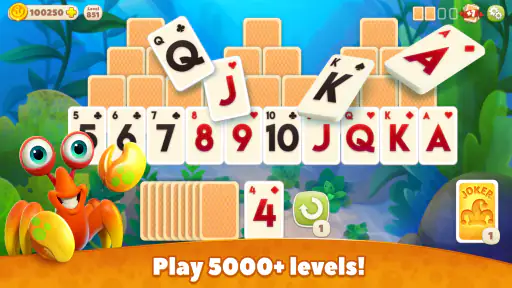
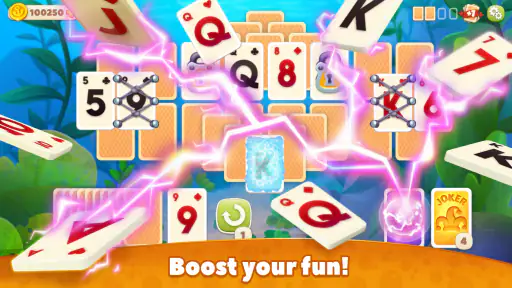
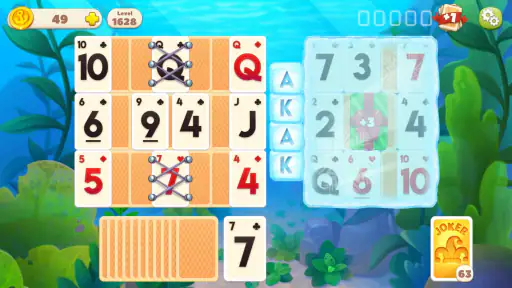
The basic format is familiar: you clear cards from a TriPeaks layout by selecting cards that follow the available sequence. That rule is simple enough to understand almost immediately, yet it leaves room for planning. A move can open a useful card, preserve a possible run, or leave you with fewer good options later. I like that the game does not require a long tutorial before becoming playable.
That simplicity makes it suitable for small gaps in the day. I can imagine playing a few hands while waiting for an appointment, taking a short break from work, or winding down before bed. It does not demand the continuous concentration of a strategy game, but it is not entirely mindless either. The best sessions are the ones where I slow down just enough to inspect the layout instead of tapping the first legal card I see.
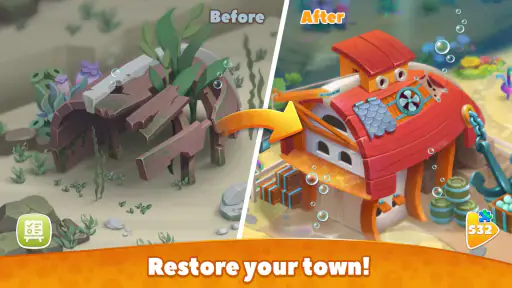
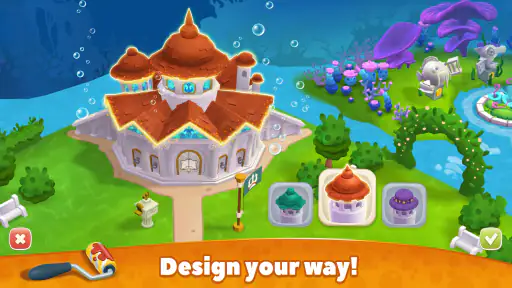
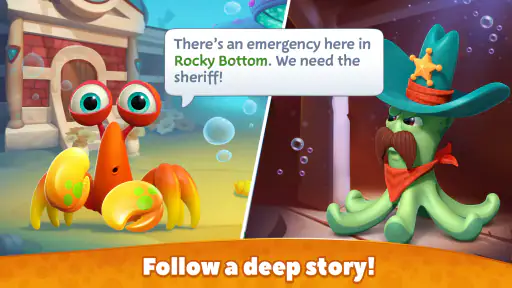
The underwater setting is more than a label attached to a deck. It gives the game a sense of movement and purpose, which helps when a standard solitaire app would begin to feel repetitive. The progression is also important to the decision. If you enjoy seeing a game world develop around repeated card rounds, this approach is more appealing than an app that presents isolated hands with no broader context.
On the other hand, players who want only classic solitaire rules may find the adventure framing unnecessary. The card challenge remains the center of the experience, so the setting will not transform it into a deep exploration game. I would choose it for atmosphere and ongoing motivation, not because I expect the underwater theme to replace the card mechanics.
The game is free to download and play, with optional purchases ranging from $0.99 to $99.99 per item. That makes the initial decision easy, but it is still worth remembering that a free entry point does not automatically mean a completely frictionless experience. Anyone who dislikes in-app purchases should approach it with a clear personal limit and avoid treating optional progress help as part of the core challenge.
Gaming Stories You May Enjoy

Dancing Road Turns Short Breaks Into a Test of Rhythm and Timing

Super Stylist Makes Every Outfit a Test of Taste and Patience

Dominoes on Your Terms: Who Should Play and Who Should Pass

Pokémon GO Makes the Familiar World Feel New

Chess.com Turns Rematches Into Rivalries, but Community Has Its Costs

Archery Battle 3D Review: Sharp Aiming, Unclear Feedback
It is listed for Everyone, so its general presentation is accessible to a broad audience. The Android release requires version 6.0 or later, which covers many older devices while still leaving the practical question of how comfortably the game runs on a particular phone or tablet. I would check available storage and device performance before installing on an especially old handset, not because the game is unusually demanding, but because card games are most enjoyable when taps and transitions feel dependable.
How the TriPeaks loop rewards attention
TriPeaks solitaire is at its best when you treat every visible card as part of a short chain rather than as a single isolated choice. If the current card lets you remove several cards in succession, the tempting move is to continue immediately. I found it more useful to pause whenever multiple paths are available and ask which removal exposes the most useful section of the layout.
A practical habit is to scan the uncovered cards before committing to a long run. Sometimes the obvious next card is valuable because it opens a hidden option; sometimes it is better to preserve that card and use another route first. This is the kind of small decision that gives the game more staying power than a simple tap-to-clear design.
I also recommend resisting the urge to restart every time a hand begins awkwardly. Part of the appeal is learning how to manage imperfect layouts. Restarting can make the game feel like a search for a perfect deal instead of a test of judgment. When I accept that a round may require a careful recovery, the card play feels more satisfying and the underwater journey has a stronger sense of continuity.
Another useful approach is to separate speed from success. Fast tapping may feel efficient, but it can cause you to miss a better sequence or spend a helpful option too early. I prefer to play quickly only when the next choices are obvious. In more complicated layouts, a slower rhythm is not a sign that the game is dragging; it is where the decision-making actually happens.
Why the setting matters more than it first appears
The sea-themed presentation gives repeated hands a reason to feel connected. That matters because solitaire can otherwise become a collection of identical moments: deal, clear, finish, repeat. Here, the surrounding adventure makes me more willing to continue after a difficult round, especially when I want a gentle game rather than a competitive one.
Still, the theme will not be equally valuable to everyone. If you normally disable visual decoration and care only about card readability, a conventional solitaire app may be the better fit. This game is aimed at players who enjoy a little context around their puzzles. The underwater identity is part of the appeal, not merely a background image to ignore.
I would also describe the mood as more playful than intense. It works well when I want something lighter than a battle-focused card game. The trade-off is that players looking for dramatic competition, deck construction, or a large strategic system may quickly reach the limits of what this format offers. Its strength is approachable repetition, not complexity for its own sake.
Where it stands against familiar alternatives
Compared with a traditional solitaire app, this game offers a stronger sense of progression and place. A basic alternative may be preferable when you want clean rules, minimal distractions, and immediate access to a specific solitaire variant. I would choose that kind of app for a quiet focus session or for practicing the card pattern without any surrounding adventure.
Compared with collectible card games, the difference is even clearer. Those games usually ask you to build a collection, learn card interactions, and think about long-term deck decisions. Undersea Solitaire Tripeaks is much easier to enter because the main skill is reading the current layout and managing sequences. It is a better match for someone who wants a self-contained puzzle than for someone who wants a competitive card hobby.
It also differs from casino-style solitaire products. If you prefer the feeling of wagering, leaderboards, or a strongly competitive atmosphere, this is probably not the direction I would recommend. The appeal here is the combination of solitaire decisions and an underwater journey, not the pressure of betting or direct rivalry.
There is a useful middle ground between those alternatives. The game has enough presentation to encourage continued play, while the familiar rules keep it approachable. That makes it especially suitable for people who have tried ordinary solitaire but found it too bare, and for casual players who find deeper card games too demanding.
When the game wins, and when another choice fits better
In my view, the game wins when three things matter at once: short sessions, recognizable card rules, and a reason to keep moving from one round to the next. The underwater adventure supplies the extra layer without requiring me to learn a complicated card system. I can begin with almost no preparation, play at my own pace, and stop without feeling that I have abandoned a long competitive match.
It is also a good option for households where different people have different levels of gaming experience. Someone who already knows solitaire can begin making decisions immediately, while a newer player can learn by watching the available sequence. Because the age rating is Everyone, it is presented as a broadly accessible game, although individual preferences about optional purchases and repeated play still matter.
A realistic everyday use case would be a commute with several short pauses rather than one uninterrupted gaming session. I might play a hand while waiting for a train, put the phone away when the platform changes, and return to another round later. That stop-and-start pattern suits the format better than a game that punishes interruptions or expects a long commitment.
It can also work as a low-pressure evening activity. I would not call it a guaranteed sleep aid, since card decisions can become surprisingly absorbing when a promising run is available, but it is less demanding than a fast action game. Lowering the phone’s brightness and playing without chasing every possible bonus would make it more comfortable for that use.
Where does it lose? The repeated structure can become predictable for players who need constant novelty. Once the pleasure of the underwater setting settles into the background, the quality of the card layouts and the satisfaction of making good sequences carry most of the experience. If you already know that you tire quickly of solitaire, the theme may delay that feeling rather than remove it.
I would also skip it if your main goal is a completely distraction-free card utility. A plain solitaire app is likely to feel cleaner and more direct. Likewise, if you want multiplayer competition or a deep collection system, a dedicated competitive card game will offer more meaningful long-term choices. Choosing this game makes sense when the calm puzzle loop is the priority and the adventure layer is welcome.
Handling optional spending without weakening the challenge
The free price makes it easy to try the core style before deciding whether it belongs on your phone. My advice is to play naturally for a while before considering any purchase. That gives you a better sense of whether you enjoy solving the layouts or whether you are mainly reacting to moments of frustration.
The listed purchase range is wide, from $0.99 to $99.99 per item, so I would treat spending as a boundary-setting issue rather than a requirement. A small optional purchase may feel harmless in isolation, but repeated convenience spending can change the way a relaxing game feels. I prefer to decide in advance whether I am playing for the puzzle itself or paying to reduce obstacles.
There is also a gameplay trade-off. If a difficult round encourages you to think more carefully, bypassing every uncomfortable moment can remove part of the satisfaction. On the other hand, someone using the game mainly as a casual break may value convenience more than perfect challenge. Neither approach is automatically wrong; the important point is to match spending to your reason for playing.
For parents or shared devices, I would review purchase controls before handing the phone to another player. The Everyone rating describes the broad content level, but it does not remove the need for sensible account settings. That small preparation can keep a casual card game from becoming an unpleasant billing surprise.
What the current release tells me about choosing it
The game was released on April 1, 2020, and the current version is 1.42.8. Those details suggest a product with an established place rather than a brand-new experiment. I would still judge it by how well the present version feels on my device, but the version information is useful when troubleshooting or checking whether an older installation needs updating.
Its developer is Plarium Global Ltd, a name associated here with a game that blends a casual card format and a more presented adventure structure. That combination explains why the app feels different from a bare card utility. It is designed to make the surrounding journey part of the reason to return, even though the actual moment-to-moment decisions remain rooted in solitaire.
The store presence is substantial, with more than one million installs, an average rating of 4.6, around forty-six thousand ratings, and roughly six thousand one hundred written reviews. I read those figures as signs of broad interest rather than a guarantee that every player will enjoy the same rhythm. A popular casual game can still be the wrong fit for someone who wants competitive depth or a minimal interface.
One practical point is that the game’s appeal depends on the relationship between presentation and repetition. If the card layout is what keeps you engaged, the adventure setting is a welcome bonus. If the setting is what attracts you, be prepared for the card loop to remain the main activity. Understanding that balance before installing is the best way to avoid disappointment.
Small habits that make rounds more enjoyable
I recommend treating the first few rounds as practice in observation rather than as a race to finish. Look across the peaks, notice which cards are already available, and think about what each removal might uncover. This makes the game more interesting and reduces the feeling that success depends only on luck.
When a sequence becomes available, I try to consider the card that will be left exposed after the run ends. That final position often matters more than the first tap. Keeping a mental note of likely follow-up cards helps me avoid using a useful option simply because it is available right now.
For longer sessions, I would take a short pause after a frustrating hand instead of immediately chasing a better result. The game is casual, but repeated retries can turn a relaxing activity into a tense one. Returning with a clear head makes the next layout easier to read and keeps the underwater theme feeling pleasant rather than associated with failure.
Finally, I would use the game differently depending on my mood. When I want to unwind, I focus on steady play and accept that not every round will be perfect. When I want a sharper puzzle, I slow down and examine the order of removals. That flexibility is one of the strongest reasons I would keep it installed.
My recommendation
I recommend Undersea Solitaire Tripeaks to anyone who wants a familiar card puzzle with more personality than a standard solitaire screen. It is especially well suited to casual players, fans of TriPeaks rules, and people who enjoy returning to a light adventure over many short sessions. The free entry point makes trying it straightforward, while the underwater setting gives the repeated hands a clearer sense of purpose.
I would not recommend it as a replacement for a deep strategy card game, a competitive multiplayer title, or a completely stripped-down solitaire tool. Those alternatives serve different needs and may be better if you want deck construction, direct rivalry, or absolute simplicity. This game succeeds by occupying the comfortable space between a puzzle and a themed casual journey.
My clear verdict is to try it if atmosphere helps you stay interested in solitaire, but skip it if you already know that repeated card layouts quickly lose your attention. In my experience, the strongest reason to play is not any single round. It is the way a familiar rule set becomes more inviting when connected to an underwater adventure, provided you keep optional spending under control and play for the decisions rather than rushing toward the next reward.
Undersea Solitaire Tripeaks Pros and Cons
Pros
- Relaxing underwater theme with colorful visuals and soothing sound effects.
- Simple tap controls make it easy to play on phones and tablets.
- Hundreds of levels provide plenty of content for casual players.
- Helpful boosters can make difficult card layouts more manageable.
- Playable in short sessions
- making it suitable for quick breaks.
Cons
- Progress can become repetitive after playing many similar levels.
- Some boosters and extra moves may require in-app purchases.
- Difficulty spikes can make later stages feel frustrating.
- Ads may interrupt gameplay
- especially between completed levels.
- An internet connection may be needed for certain features or rewards.
Frequently Asked Questions
What is Undersea Solitaire Tripeaks?
Undersea Solitaire Tripeaks is a casual solitaire card game that combines the classic TriPeaks rules with an underwater theme. You clear cards from the board by selecting cards one rank higher or lower than the card in your discard pile. The game generally includes colorful ocean scenery, level-based progression, objectives, boosters, and relaxing gameplay suitable for short sessions.
How do you play Undersea Solitaire Tripeaks?
Each round presents several overlapping rows of cards that must be removed from the table. You can play a face-up card when its value is immediately above or below the current discard card, regardless of suit. If no useful move is available, draw from the stock pile. The goal is usually to clear the required cards while managing limited draws and creating longer streaks.
Is Undersea Solitaire Tripeaks free to download and play?
Undersea Solitaire Tripeaks is typically available as a free download, allowing players to begin without paying upfront. However, free-to-play features may include optional in-app purchases for coins, boosters, extra lives, or additional assistance. Depending on the version and device, advertisements may also appear between rounds or when claiming certain rewards.
Does Undersea Solitaire Tripeaks require an internet connection?
An internet connection may be needed for the initial download, account synchronization, advertisements, events, purchases, and some reward features. Basic solitaire levels may work during temporary offline periods, but offline availability can vary by version and platform. If you plan to play without Wi-Fi or mobile data, it is best to test the game after installation.
Is Undersea Solitaire Tripeaks suitable for children?
Undersea Solitaire Tripeaks is generally easy to understand and does not require complex controls, making it accessible to many casual players. Nevertheless, parents should review the store rating, advertising content, privacy information, and available in-app purchases before allowing children to play. If the game supports purchases, parental controls should be enabled to prevent accidental transactions.


