

Two Cats - Dancing Music Games
- Reviews
- 4.8
- Version
- 0.1.8
- Installs
- 5,000,000+

Screenshots
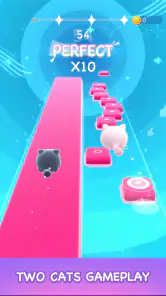
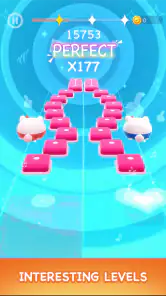
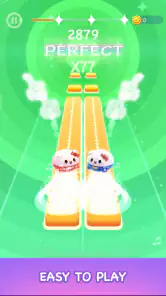

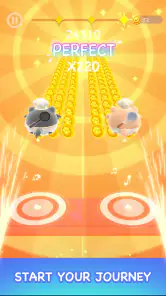
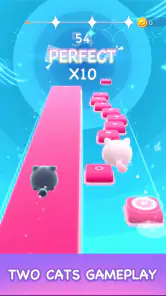
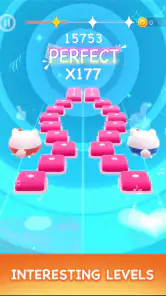
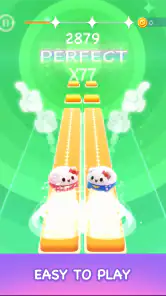
 Analysis by Frivlyz
I reach for this game when I want a quick rhythm challenge rather than a long session with menus, stories, or complicated rules. Two Cats - Dancing Music Games puts two animated cats at the center of its music gameplay, asking me to keep their movements in time with the beat. That small, clear idea is its main appeal: I can understand what I am trying to do quickly, then decide whether I want to keep chasing a better run.
It is a free music game from Cobby Labs, rated for Everyone, and it runs on Android 5.1 or later. The game has an average rating of 4.8 from around 10,000 ratings, with over five million installs. Those figures suggest that the cute, approachable presentation has found a broad audience, but the important question for me is whether its rhythm challenge suits the way you like to play.
A simple starting routine that makes each run easier
My best first step is to treat the opening moments as a timing check, not a race for a high score. I watch the beat, get comfortable with the tap rhythm, and avoid trying to anticipate every note before I know how the current track feels. With two cats moving together, hurried taps can turn an otherwise manageable pattern into a string of mistakes. A steady hand is more useful than frantic tapping.
That makes the game easy to fit into small gaps in the day. I can play a short session while waiting for a drink or taking a break, then put it down without needing to remember a complicated objective. It is especially suited to someone who enjoys musical timing but does not want to learn a large set of controls before the fun begins.
There is also a practical way to make a session more useful: focus on one track or pattern at a time instead of switching as soon as a run goes badly. Repeating the same challenge gives me a clearer sense of whether I mistimed a beat or simply tapped too early. That habit turns a quick retry into practice rather than guesswork, and it is one of the simplest ways to make progress feel earned.
Getting Into the Rhythm
Right from the start, Two Cats - Dancing Music Games invites you into a world where music is the heart of the gameplay. As soon as you fire up the app, you're greeted with vibrant colors and a catchy tune that sets the tone for what’s to come. The premise is simple yet addictive: you control two cute cats that dance to the rhythm, and your task is to keep them in sync with the music. It’s a game that tests your reflexes and rhythm skills. Trust me, once you start, it's hard to put down!
Gameplay and Controls
The controls are intuitive, making it easy for anyone to pick up and play. You tap on the screen to make the cats dance, and the challenge is to hit the notes at the right time. The game offers a variety of music tracks, each with its own difficulty level. As you progress, the beats get faster and more complex, which keeps things interesting and challenging. It's a fantastic way to improve your hand-eye coordination while having a blast.
Gaming Stories You May Enjoy

Dancing Road Turns Short Breaks Into a Test of Rhythm and Timing

Super Stylist Makes Every Outfit a Test of Taste and Patience

Dominoes on Your Terms: Who Should Play and Who Should Pass

Pokémon GO Makes the Familiar World Feel New

Chess.com Turns Rematches Into Rivalries, but Community Has Its Costs

Archery Battle 3D Review: Sharp Aiming, Unclear Feedback
One of the highlights is the assortment of songs available. From pop hits to classical tunes, there's something for everyone. Plus, the graphics are adorable, with the cats’ dance moves perfectly synchronized to the beat. It’s almost impossible not to smile while playing.
Settings and habits worth checking
Before settling into a longer run, I take a moment to make sure I can see the play area clearly and hold the phone comfortably. That sounds basic, but rhythm games punish small distractions: glare, an awkward grip, or a thumb covering part of the action can throw off timing. I also turn down competing audio when I want to follow the music closely. The beat is not background decoration here; it is the cue I use to decide when to tap.
I would not assume that a setting exists just because another rhythm game offers it. Instead, I use the controls and options the game actually presents, then adjust my own setup around them. If a track feels too fast, a short pause and a fresh attempt are more helpful than tapping harder. If I am playing in a noisy place, I choose a moment when I can pay attention rather than treating the game as something to play blindly.
Faster patterns without frantic tapping
As the beat gets more demanding, I try to listen for the repeating pulse instead of reacting to each movement as a surprise. The cats’ animation can be charming, but watching every detail may distract from the timing. I keep my eyes on the action that tells me when to tap and let the music establish a regular count. That makes the challenge feel less like chasing the screen and more like keeping a simple rhythm.
A useful habit is to notice where a run first goes wrong. If I miss near the beginning, I reset my attention and focus on the next beat rather than letting one mistake trigger a string of rushed inputs. If I repeatedly stumble at a faster passage, I take that as a sign to slow down mentally, not to press faster. This small change helps distinguish a genuine timing problem from nerves or impatience.
The quick-session format also works well as a low-pressure way to share a phone with a friend or family member. Since the basic idea is easy to explain, someone can try a run without a long tutorial. For a friendly challenge, I would compare attempts on the same track or difficulty rather than treating separate runs as a perfect contest; rhythm and familiarity can make one attempt feel very different from another.
Who will enjoy it—and who may want another rhythm game
I think this is a good fit for players who like cute characters, short music challenges, and controls they can grasp quickly. It can also suit someone who wants a light game to pick up between other tasks, or a casual way to introduce a younger player to tap-based rhythm play. The Everyone age rating matches that approachable presentation, though an adult should still use their own judgement about what is suitable for a particular child and how much screen time makes sense.
It is less compelling for someone looking for deep music-game systems, detailed practice tools, or a serious instrument-like challenge. Players who prefer building playlists around their own music, competing in a complex online scene, or studying precise performance feedback may be better served by a rhythm title built around those priorities. This game’s appeal is its direct, playful setup, not a promise of specialist training.
Compared with rhythm games that emphasize elaborate note charts or a large catalogue of modes, the two-cat concept gives this one a softer, more character-led feel. Compared with simple tap games that barely connect actions to music, its beat-focused play gives each input a clearer purpose. The trade-off is that a player who wants endless mechanical variety may find the central loop familiar after a while. I would choose it for approachable rhythm fun, not as a replacement for every other music game.
Limits that matter during longer play
The same simplicity that makes the game easy to pick up can become a limitation if I play for a long stretch. Repeating the core rhythm challenge may lose its novelty once I have had enough of the songs and cat animations. Difficulty changes can keep a familiar idea engaging, but they do not automatically make the game feel like a different kind of experience. I get the most from it in short bursts, with a clear reason to try again.
There is also a difference between finding a track enjoyable and finding its timing comfortable. A song I like may still be harder to follow when the beat becomes quicker or more complex. When that happens, I do not treat a missed run as proof that I lack rhythm; I try again when I can concentrate and pay attention to the pulse. If a player expects every favorite tune to be easy, this distinction is worth knowing before frustration sets in.
The game is free, which lowers the barrier to trying it, but I would still judge it by whether the repeated play suits me rather than by the download cost. It was released on November 16, 2023, and version 0.1.8 is the version identified here. I would keep expectations grounded: those details do not change the central question of whether tapping along with dancing cats is a loop I will want to revisit.
Why You’ll Love It
What makes this game stand out is its accessibility. Whether you’re a seasoned gamer or someone just looking to kill some time, Two Cats - Dancing Music Games caters to all. The app is lightweight and runs smoothly on most devices, so you don’t have to worry about it hogging your phone’s resources.
Another great feature is the ability to compete with friends. You can challenge your buddies to beat your high score, adding a layer of competition that’s sure to keep you and your friends engaged. And let’s not forget the regular updates that bring new songs and features, ensuring the game stays fresh and exciting.
Everyday play and a sensible stopping point
Picture a short wait between errands: I have a few minutes, want something more engaging than scrolling, and do not want to commit to a long campaign. This is where the game makes sense. I start a track, pay attention to the beat, and use a retry to see whether I can hold the timing more consistently. When I notice that I am tapping without listening, I stop for a moment instead of turning a casual break into a frustrating grind.
For a shared challenge, I would make the comparison fair and simple: use the same song and difficulty, explain the tap idea, and let each person have a few attempts. That keeps the competition friendly and puts the focus on learning the rhythm rather than arguing over who had the easier run. It is a small but practical way to make the game social without needing a complicated setup.
For experienced players, the most useful “shortcut” is not a hidden trick but a repeatable routine: settle into a comfortable grip, listen for the pulse, keep attention on the timing cue, and retry with one adjustment in mind. That routine helps me avoid random tapping and makes each attempt more informative. It also gives me a natural stopping point: when I am no longer listening closely, I am unlikely to improve by forcing another run.
Mastery verdict: cute, focused, and best in short sessions
For me, the appeal is the contrast between the friendly cat presentation and the concentration needed to stay on beat. That makes it an easy recommendation for casual players who enjoy music games but do not want a steep learning curve. Cobby Labs has built the experience around a memorable visual idea, and the accessible tapping makes it straightforward to share with someone who is new to rhythm games.
I would skip it if my priority were extensive customisation, a deep competitive structure, or a music practice tool with detailed coaching. I would also avoid expecting the novelty of the cats alone to carry every long session; the rhythm has to be satisfying for me to keep returning. The game is at its best when I treat it as a cheerful, focused break and give each attempt my attention.
Final Thoughts
In a world where mobile games are a dime a dozen, Two Cats - Dancing Music Games manages to carve out its niche with its unique blend of music and fun. It's a perfect escape for those moments when you need a quick break from reality. So, if you're looking for a game that's both entertaining and challenging, give this one a try. Who knew that dancing cats could be so captivating?
Two Cats - Dancing Music Games Pros and Cons
Pros
- Engaging rhythm gameplay.
- Wide variety of music tracks.
- Cute cat animations.
- User-friendly interface.
- Frequent updates with new content.
Cons
- Ads can be intrusive.
- Limited free tracks available.
- In-app purchases are pricey.
- Occasional lag in gameplay.
- Not optimized for all devices.
Frequently Asked Questions
What is Two Cats - Dancing Music Games all about?
Two Cats - Dancing Music Games is an engaging rhythm-based game where players guide two adorable cats to dance in sync with the music. The game combines elements of music and action, providing an immersive and interactive experience where timing and precision are key. It’s perfect for music lovers and dance enthusiasts looking to enjoy a fun and challenging gameplay.
How do I play Two Cats - Dancing Music Games?
In Two Cats - Dancing Music Games, players must tap on the screen in time with the music to make the cats dance correctly. The game features various levels with increasing difficulty, requiring players to have quick reflexes and a good sense of rhythm. As you progress, new songs and challenges become available, keeping the gameplay fresh and exciting.
What devices are compatible with Two Cats - Dancing Music Games?
Two Cats - Dancing Music Games is available for both Android and iOS platforms. It is compatible with most modern smartphones and tablets that run on Android 5.0 and above or iOS 10.0 and later. Ensure your device has sufficient storage and meets the minimum system requirements for optimal performance.
Is Two Cats - Dancing Music Games free to play?
Yes, Two Cats - Dancing Music Games is free to download and play. However, it offers in-app purchases that allow players to unlock additional features, levels, and exclusive content. While these purchases can enhance your gaming experience, they are optional, and players can enjoy the core game without spending any money.
Are there any in-game advertisements in Two Cats - Dancing Music Games?
Two Cats - Dancing Music Games does include advertisements, which help support the developers and keep the game free to play. The ads are typically non-intrusive, but players can opt to remove them by making an in-app purchase. This option allows for an uninterrupted gaming experience for those who prefer playing without ads.


