

Transport Tycoon Empire: City
- Reviews
- 4.4
- Version
- 2.10.0
- Installs
- 10,000,000+

Screenshots
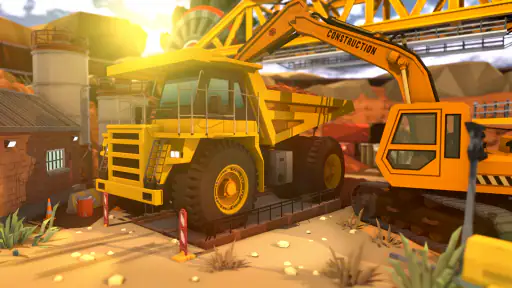
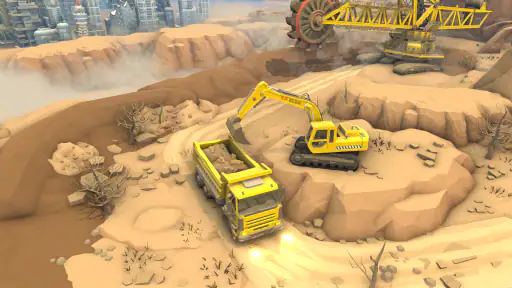
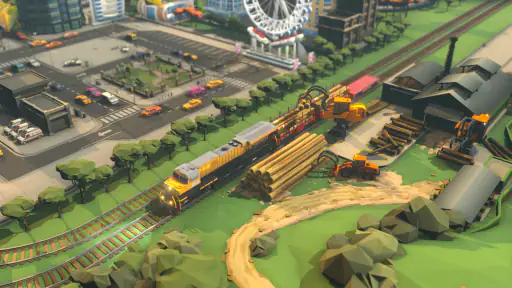
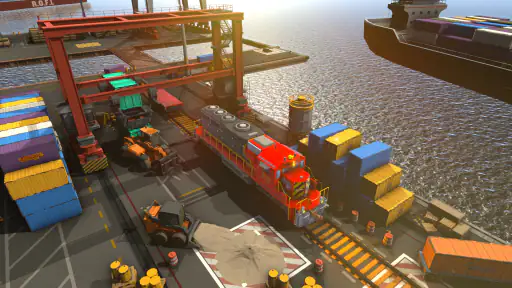
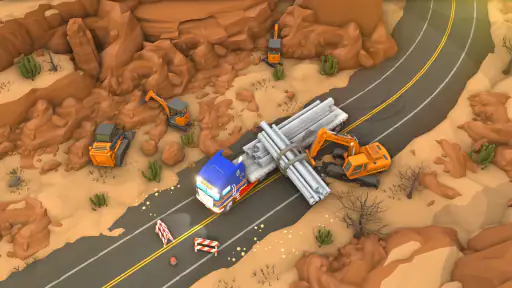
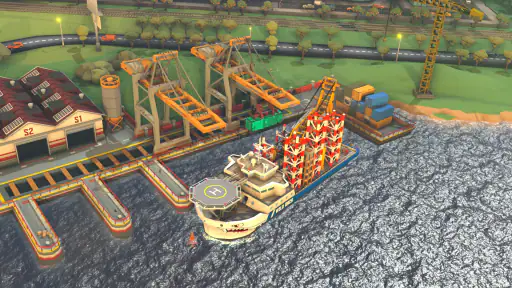
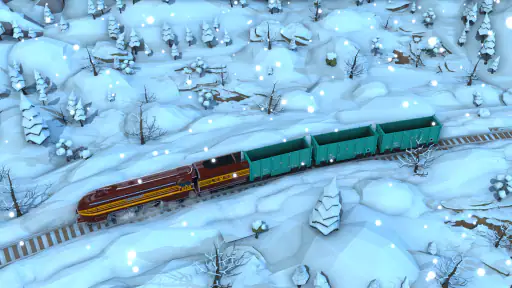
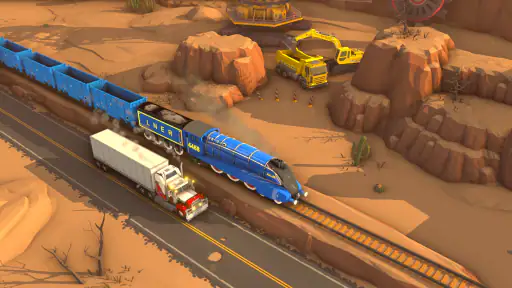
 Analysis by Frivlyz
Ever wondered what it feels like to run a sprawling transport network, connecting cities and managing resources? Well, look no further than Transport Tycoon Empire: City. This game takes you on a thrilling journey of strategy and management, giving you the reins to build your own transport empire. Let me walk you through my experience and why I think it's a must-try for strategy enthusiasts.
What Kind of Strategy Game Is It?
At its heart, this is a transport-building strategy game from Alda Games: you make decisions about routes, infrastructure, resources and growth rather than directly controlling a vehicle from moment to moment. That distinction matters. If you want a hands-on driving game, this is not the right fit; if you enjoy shaping a network and seeing the results of earlier choices, the premise is much more appealing.
The game is free to start and rated for Everyone, which makes it easy to try without treating it like a major purchase. Its average rating is 4.4 from around 193,000 ratings, and it has over 10 million installs. Those figures suggest broad interest, but they do not tell you whether its pace suits you. My practical advice is to judge it by whether planning routes and managing gradual expansion feels satisfying, not by popularity alone.
It is also worth knowing that optional in-app purchases range from $0.99 to $199.99 per item. I would approach those as a spending choice, not as a reason to buy immediately. A patient player can first see whether the basic loop holds their interest; anyone who dislikes games with purchasable extras should take that into account before getting invested.
Getting Started with the Empire
As soon as you dive into Transport Tycoon Empire: City, you're greeted with a tutorial that’s as engaging as it is informative. It eases you into the game mechanics, ensuring you're well-equipped to start building your empire. The game’s interface is intuitive, with vibrant graphics that make the gameplay visually appealing. I found myself instantly hooked, eager to expand my network and optimize my transport lines.
Building and Expanding
The core of the game revolves around constructing various transport links, from railways to airports. As you progress, new opportunities to expand present themselves, allowing you to connect more cities and unlock additional resources. It's incredibly satisfying to watch your network grow, knowing that your strategic decisions directly impact the game's outcome. I particularly enjoyed the challenge of optimizing routes to maximize efficiency and profits.
Choosing What to Build Next
The most useful way to think about expansion is as a series of trade-offs, not a race to make the map look busy. A new connection may open possibilities, but it also asks you to spend resources that could have gone toward strengthening what you already operate. I try to ask a simple question before committing: will this addition solve a current bottleneck, or am I adding it just because it is available?
Gaming Stories You May Enjoy

Dancing Road Turns Short Breaks Into a Test of Rhythm and Timing

Super Stylist Makes Every Outfit a Test of Taste and Patience

Dominoes on Your Terms: Who Should Play and Who Should Pass

Pokémon GO Makes the Familiar World Feel New

Chess.com Turns Rematches Into Rivalries, but Community Has Its Costs

Archery Battle 3D Review: Sharp Aiming, Unclear Feedback
That question helps prevent a common city-builder habit: expanding in every direction and then discovering that the network is harder to manage than it needs to be. A compact plan can be more satisfying than a sprawling one if it gives you a clearer sense of what each investment is meant to accomplish. When several opportunities appear, I would prioritize the one that supports a useful next step rather than chasing every option at once.
Transport games often invite players to compare routes by their apparent payoff, but the more interesting decision is the planning horizon. A choice that feels modest now may prepare the network for later growth, while an impressive-looking expansion can leave fewer resources for the next decision. I find it helps to keep a mental reserve rather than spending everything as soon as an upgrade or extension becomes possible.
Resource Management and Strategy
Resource management is another key aspect of the game. You need to balance your budget, invest in infrastructure, and ensure your transport lines are running smoothly. The game does an excellent job of challenging your strategic thinking without being overwhelming. I found myself constantly planning ahead, considering which investments would yield the best returns. The strategic depth of the game kept me engaged for hours on end.
Risk, Reward, and a Sensible Pace
For me, the risk in a management game is not only whether an investment pays off; it is also whether I can keep up with the decisions I have already made. Building faster can feel exciting, but a slower pace gives you room to understand what is working before you add more complexity. I would treat each expansion as a small test: make a change, see how it affects your plans, then decide what deserves attention next.
This is also why I would not recommend playing with the assumption that every delay needs to be solved by spending. The game has in-app purchases, and the price range reaches from low-cost items to a much more substantial purchase. If you are comfortable with optional spending, set a personal limit before you begin. If you prefer games with no purchase prompts or monetized shortcuts, you may be happier with a paid strategy title that has a more straightforward buying model.
A useful everyday approach is to open the game when you have a few minutes, make one deliberate planning decision, and leave the next expansion for another session. That keeps the experience from turning into an endless checklist. It also helps you notice whether the slow-build rhythm is enjoyable in itself, rather than feeling like a task you have to clear.
Adapting Instead of Expanding Blindly
A transport network is only satisfying when its separate parts support a coherent plan. If a route or investment does not seem to help your broader direction, pause before adding another layer. Reconsidering priorities is a strategy skill in its own right: sometimes the right response to a new opportunity is to hold back, protect resources, or improve the usefulness of the network you already have.
For a realistic routine, imagine checking in during a commute or while waiting for a meal. Rather than trying to rebuild your whole empire in one sitting, I would look at the next decision that matters, make it, and stop there. That approach suits a game built around planning better than hurried tapping, and it makes it easier to return later with a clear idea of what you wanted to do next.
Compared with puzzle strategy games, where each level often has a tightly defined solution, this offers a broader management focus: the appeal is in building and adjusting a transport operation over time. Compared with city builders that emphasize decorating streets or designing a town block by block, its identity leans toward connecting places and thinking about movement. If you want a short, self-contained challenge or fine-grained control over city layouts, those alternatives may be a better match.
The Social Element
One of the standout features is the social element. You can team up with friends or compete against them, adding a layer of fun and competition. The community aspect is well-integrated, allowing you to share strategies and tips with fellow tycoons. I loved being part of a group, exchanging ideas, and seeing how others approached their empire-building endeavors.
Who Will Enjoy It, and Who May Not
I would recommend this to people who like incremental planning, transport themes and the satisfaction of seeing a network take shape. It can also suit someone who wants a strategy game they can return to in short sessions, provided they enjoy making decisions over time rather than finishing a complete scenario in one go. Its current version is 2.10.0, and it supports devices running Android 7.1 or later.
I would be more cautious about recommending it to players who want constant action, a campaign with a clear endpoint, or a purely offline-feeling experience without social competition. The social side may be a draw if you enjoy comparing approaches with friends, but it is not the main reason to choose a transport tycoon game if you prefer solitary, tightly controlled puzzles. Likewise, anyone who finds waiting and gradual progress irritating may prefer a faster strategy game.
One practical question is whether you need to be an expert in logistics to enjoy it. I do not think so: the tutorial is designed to introduce the basic play, while the strategic interest comes from deciding how to grow and manage the network. The more useful question is whether you like learning through successive choices. If you do, the transport theme gives those decisions a clear context; if you want a complex simulation with detailed real-world logistics, this more approachable style may not go far enough.
Depth That Comes from Returning
The game’s lasting appeal depends on how much you enjoy revisiting a plan and finding the next useful move. I like that the central theme gives expansion a purpose: connections are not just decorative additions, they are part of an effort to make a transport empire work. Still, depth over time is not the same as endless novelty. If you need a new kind of challenge in every session, the repeating rhythm of building, managing and expanding may eventually feel familiar.
There are 3,700 reviews alongside the much larger rating total, another reminder that a broad audience does not guarantee a perfect fit for every player. I would use the first sessions to assess the pace and spending model, then decide whether the planning loop is something you genuinely want to return to. That is a better test than assuming that a popular strategy game must suit your personal taste.
For players who do stick with it, a small habit can make decisions clearer: before closing the game, remember the one goal you want to pursue next time. It might be improving a weak part of your plan or considering a particular expansion, rather than trying to remember every possible opportunity. That simple pause turns a casual check-in into a more intentional strategy session without making the game feel like homework.
In conclusion, Transport Tycoon Empire: City is a gem in the world of strategy games. Its engaging gameplay, strategic depth, and social elements make it a standout choice for anyone looking to immerse themselves in a world of transport and management. Whether you're a seasoned strategy gamer or a newcomer, this game offers a fulfilling and challenging experience that is sure to captivate you.
My Strategy Verdict
My recommendation comes with a clear caveat: try it if the idea of gradually shaping a transport network sounds more enjoyable than chasing quick wins. The strongest reason to choose it is the way infrastructure decisions give the strategy a concrete theme, while its social element can make planning feel shared rather than purely solitary. Its weaker fit is for players who want immediate action, a fixed ending, or no optional purchases at all.
Since the game is free to start and intended for an Everyone audience, it is accessible to a wide range of players, but accessibility does not mean every part of its pace will suit everyone. I would begin with a modest commitment, keep spending optional, and see whether planning the next connection is something you look forward to. If it is, the game has a comfortable niche; if not, a focused puzzle or a more direct city-building alternative will probably respect your time better.
Transport Tycoon Empire: City Pros and Cons
Pros
- Engaging gameplay with strategic challenges.
- Rich graphics enhancing user experience.
- Multiple transport modes to manage.
- Regular updates with new content.
- Interactive city-building elements.
Cons
- In-app purchases can be costly.
- Occasional bugs affect gameplay.
- Requires constant internet connection.
- High battery consumption.
- Complex for beginners without guidance.
Frequently Asked Questions
What is Transport Tycoon Empire: City all about?
Transport Tycoon Empire: City is a simulation game that allows players to build and manage their own transportation empire. From creating intricate networks of trains, trucks, and ships, to managing resources and optimizing routes, the game offers a rich experience. Players engage in city-building activities while ensuring efficient transport solutions to grow their empire.
What platforms is Transport Tycoon Empire: City available on?
Transport Tycoon Empire: City is available on both Android and iOS platforms. Users can download the game from the Google Play Store for Android devices or the Apple App Store for iOS devices. This ensures a wide range of compatibility with smartphones and tablets, allowing players to enjoy the game on their preferred devices.
Is there a multiplayer mode in Transport Tycoon Empire: City?
Yes, Transport Tycoon Empire: City features a multiplayer mode where players can collaborate or compete with friends. This mode enhances the gaming experience by allowing players to engage in joint projects or compete in challenges to see who can build the most successful transportation empire. Multiplayer interactions add a layer of excitement and community to the game.
Are there in-app purchases in Transport Tycoon Empire: City?
Transport Tycoon Empire: City does include in-app purchases that can enhance the gaming experience. Players have the option to buy in-game currency, resources, or special items to speed up progress or unlock exclusive content. While these purchases can be beneficial, they are entirely optional, and players can enjoy the full game without spending real money.
What age rating is Transport Tycoon Empire: City suitable for?
Transport Tycoon Empire: City is rated for players aged 12 and up. The game includes elements of strategic planning and resource management, which can be complex and require critical thinking. The content is designed to be family-friendly, but younger players may need guidance to fully understand and enjoy the game’s mechanics.


