

Transport Tycoon Empire 2
- Reviews
- 4.7
- Version
- 0.8.4
- Installs
- 50,000+

Screenshots
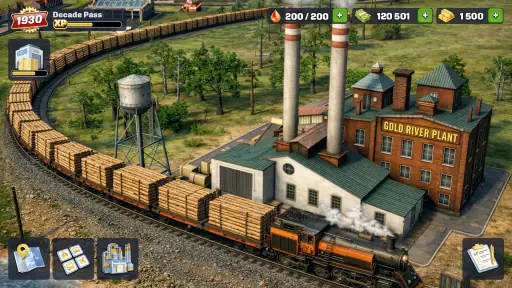
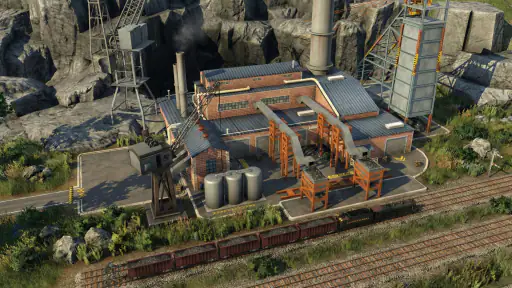
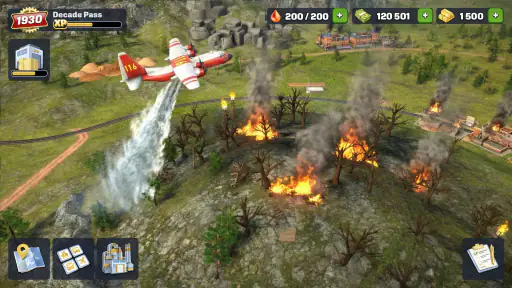
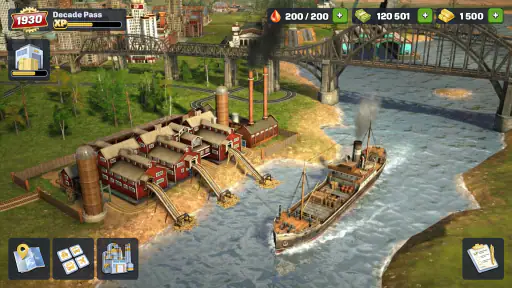
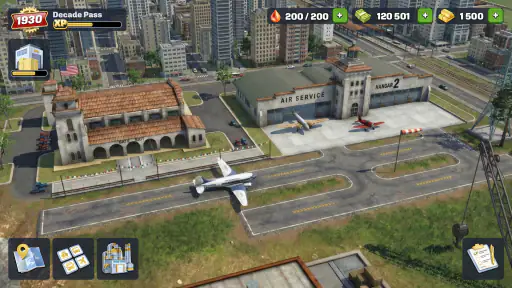
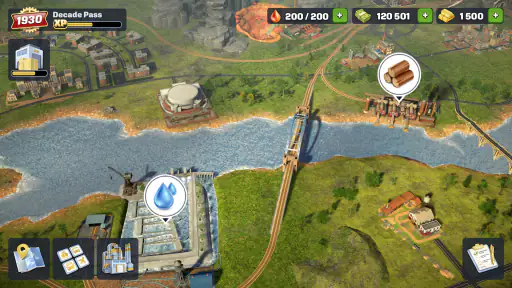
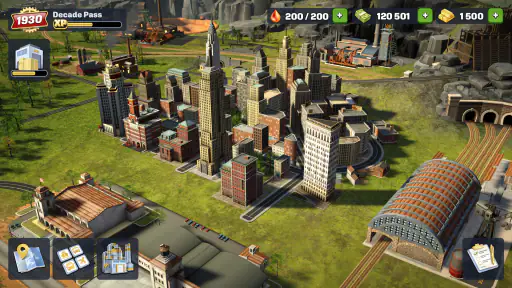
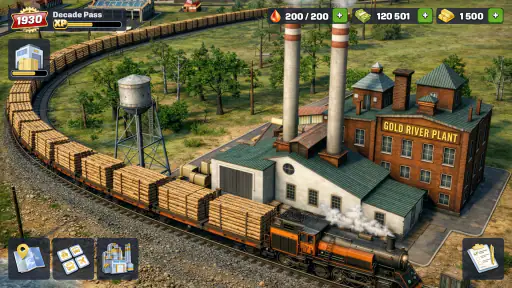
 Analysis by Frivlyz
I approached Transport Tycoon Empire 2 expecting a familiar transport-management game, but its appeal became clearer after I stopped treating each delivery as an isolated task. The enjoyable part is building a routine: choose useful routes, keep vehicles working, watch the flow of goods, and gradually turn a small operation into something that feels organized. It is a strategy game from Alda Games, available for free, and it puts logistics at the center rather than combat or fast reflexes.
The basic idea is easy to understand. You are trying to build a transport business across changing periods, making decisions about movement, supply, and expansion. The store summary describes that long-term ambition as building a transport empire through decades and mastering logistics, and that is a fair description of the experience. What matters is not simply owning more vehicles. It is learning which jobs deserve attention, which routes are worth maintaining, and when a seemingly profitable decision creates extra work later.
After spending time with it, I would recommend it most strongly to players who enjoy planning in short sessions. I can imagine opening it during a commute, checking what needs attention, making a few adjustments, and leaving with a clearer plan for the next visit. It is less suitable for someone looking for constant action, a deep competitive economy, or a game that explains every strategic consequence immediately.
How I settled into a reliable transport routine
I found that a dependable routine made each visit feel purposeful without turning the game into a chore. In this section, I focus on how I choose a manageable goal, check the network in a consistent order, and leave myself a clear next step. That practical rhythm also makes it easier to notice which parts of the interface deserve attention as the operation grows.
The first useful habit is observing before expanding
My first instinct in a transport game is usually to grow quickly, but that is not always the best opening here. A better baseline workflow is to look at the available work, identify the movement that creates the most practical benefit, and only then commit resources. That small pause prevents the common mistake of spreading attention across too many directions before the operation has a dependable rhythm.
I found it helpful to divide each session into three passes. First, I checked what was ready to collect or deliver. Second, I looked for vehicles or routes that were idle, inefficient, or waiting on a decision. Third, I considered the next expansion rather than spending everything immediately. This approach sounds simple, but it makes the game feel much less noisy. Instead of reacting to every prompt, I was following a repeatable checklist.
The most useful question is not “What can I unlock next?” but “What will reduce friction in my current network?” A new option is attractive, yet an improvement that keeps an existing route active can be more valuable in practice. That is one of the first lessons I took from the game: growth is satisfying, but consistency is what makes growth manageable.
Gaming Stories You May Enjoy

Dancing Road Turns Short Breaks Into a Test of Rhythm and Timing

Super Stylist Makes Every Outfit a Test of Taste and Patience

Dominoes on Your Terms: Who Should Play and Who Should Pass

Pokémon GO Makes the Familiar World Feel New

Chess.com Turns Rematches Into Rivalries, but Community Has Its Costs

Archery Battle 3D Review: Sharp Aiming, Unclear Feedback
A realistic everyday session
Imagine checking the game while having coffee before work. I would not try to redesign the entire transport empire in that moment. I would collect completed work, review anything waiting for a vehicle, and choose one meaningful action, such as assigning attention to a route that supports the next goal. If there is time later, I would return for a second pass instead of making several rushed decisions at once.
This works because the game does not demand that every visit become a long planning session. Its logistics theme fits short check-ins, but it still gives careful players something to think about. The trade-off is that progress can feel slower if you only play briefly and expect dramatic changes every time. I think the game is strongest when treated as a steady management project rather than a quick burst of rewards.
For new players, I suggest keeping the early network understandable. Avoid taking on every available objective simply because it is visible. When several tasks compete for the same vehicles or resources, the operation becomes harder to read, and it is easy to mistake activity for progress. A smaller group of dependable routes gives you a clearer picture of what is actually working.
Why route discipline matters more than constant activity
One non-obvious strength is how much easier the game becomes when I give each vehicle or route a clear purpose. If I keep changing assignments without a reason, I lose track of which decision produced a useful result. If I use a stable pattern, I can notice when a route is genuinely underperforming instead of blaming the whole network.
I also learned to separate urgent actions from profitable actions. An item that is ready now naturally attracts attention, but it may not be the best use of the next decision. Sometimes maintaining a route that supports several later steps is more valuable than chasing the most visible immediate reward. That distinction is useful for experienced players because it turns the game from a sequence of taps into a small scheduling problem.
Settings and presentation choices worth checking
Before settling into longer sessions, I recommend checking the available in-game settings and presentation options on your device. I would pay particular attention to sound, notification behavior, and anything that affects how much information is shown during play. These choices do not change the underlying strategy, but they can determine whether the game feels comfortable during a short visit or distracting when left open nearby.
I prefer a quieter setup when I am planning routes. Transport-management decisions benefit from concentration, and repeated sounds can make routine collection feel more urgent than it really is. On the other hand, audio can be useful when I am switching between the game and another task, because it gives the session a little more presence. The right choice depends on whether you play actively or check in briefly.
It is also worth considering notification habits before allowing the game to become part of your daily routine. I do not like every game competing for attention, especially one built around gradual management. A controlled notification setup makes it easier to return when I choose, rather than feeling pushed into opening the app at inconvenient moments. This is a small quality-of-life decision, but it has a direct effect on whether the game remains relaxing.
Because the minimum supported operating system is Android 7.1, the compatibility range is relatively approachable for people using older Android hardware. Even so, I would still check how the current version, 0.8.4, behaves on your particular phone or tablet before planning to make it a main game. Device age, available storage, and background behavior can affect comfort even when the operating-system requirement is met.
How I make faster decisions without rushing
The fastest players are not necessarily tapping more quickly. They are reducing the number of decisions they need to reconsider. My preferred pattern is to group similar actions together: review completed work, handle the routes that need attention, then make one expansion decision. Jumping randomly between unrelated tasks creates mental overhead and makes it harder to judge results.
Another useful habit is to decide what success means before starting a session. It might be completing a particular delivery chain, stabilizing a troublesome route, or preparing for a future upgrade. Without a goal, I tend to spend time on whatever is most visible. With a goal, the same session feels more efficient even if I make fewer changes.
I would also avoid spending premium currency or other valuable resources at the exact moment I feel impatient. Free-to-play strategy games are designed to make waiting feel like a decision, and this one is easier to enjoy when I distinguish a genuine bottleneck from a temporary inconvenience. If a purchase only saves a small amount of time but does not improve the network afterward, I usually prefer to wait.
That is especially relevant because optional purchases range from $0.99 to $199.99 per item. The broad range means the free entry point is not the whole spending story, so I would set a personal limit before playing seriously. I never consider a large purchase necessary simply because it exists, and I would advise new players to learn the basic workflow first. Understanding the network makes it easier to judge whether an offer solves a real problem or merely accelerates a moment of impatience.
Repeatable patterns that improve the mid-game
Once the basic operation feels stable, I start looking for repeatable patterns rather than isolated wins. One pattern is to maintain a dependable core while testing one change at a time. If I alter several routes, vehicles, and priorities together, I cannot tell which decision helped. A controlled experiment is slower emotionally, but much faster for learning.
A second pattern is to keep a mental distinction between transport capacity and management capacity. Even if the game allows another expansion, I may not have enough attention to supervise it properly. Every additional route creates more opportunities and more things to inspect. Experienced play is partly about knowing when the next addition will improve the system and when it will only make the screen busier.
A third pattern is to use quiet periods for planning. When nothing urgent needs attention, I can compare possible next steps without pressure. That is a better time to consider a new direction than when several tasks are already waiting. The result is a calmer network and fewer decisions made purely because they are immediately available.
I also found value in revisiting routes that seemed successful earlier. A route can remain familiar while its role changes as the wider operation develops. What was once a strong foundation may later become a constraint, especially if it consumes attention needed elsewhere. Reviewing old decisions is not wasted time; it is how a transport empire avoids becoming a collection of habits that no longer fit.
Where the game begins to test experienced players
The main limitation is that the game’s long-term appeal depends heavily on enjoying incremental management. If you need every session to introduce a dramatic new mechanic or a major visual event, the routine may feel repetitive. The same planning loop that makes the game approachable can also feel narrow when you have already learned your preferred habits.
There is another trade-off in the broad historical ambition. Moving through decades sounds expansive, but the enjoyment comes from managing the progression, not from treating each period as a completely separate game. Players expecting a highly detailed historical simulation with exhaustive economic modeling may find this experience lighter. I see it as an accessible strategy game with a transport theme, not a replacement for the most complex desktop tycoon simulations.
The free-to-play structure is also worth approaching carefully. The game costs nothing to start, which makes it easy to try, but the presence of purchases means patience remains part of the strategy. If you dislike timers, gradual progression, or any temptation to pay for convenience, this may not be the right transport game for you. A premium title with a single upfront price could be a better fit, even if it offers less flexibility for quick mobile sessions.
Likewise, players who want direct competition should look elsewhere. My enjoyment comes from optimizing my own network and choosing a pace that suits me. That is a strength for relaxed planners, but it may feel underwhelming if your ideal strategy game revolves around opponents, rankings, or constant pressure from other players.
Who should download it, and who should skip it
I would point this game toward someone who likes logistics, gradual improvement, and decisions that become more interesting after several sessions. It suits people who enjoy asking why a route works, what is blocking the next step, and how to make a growing system easier to supervise. It is also a reasonable choice for players who want a strategy game that can be checked in short visits rather than requiring a full evening.
I would be more cautious recommending it to anyone who wants immediate action, a story-led adventure, or a fully hands-off idle experience. Although the game supports a relaxed rhythm, the satisfying results come from paying attention to transport choices. If you do not enjoy reviewing routes and making trade-offs, the theme alone may not carry the experience.
The Everyone content rating makes it approachable for a broad audience, but that does not mean every player will enjoy its pace. Younger or casual players may appreciate the straightforward transport concept, while more experienced strategy fans may want to impose their own challenges, such as expanding only when the existing network is stable. I found that self-directed discipline adds depth without requiring invented rules or unnecessary complexity.
How it compares with other transport strategy choices
Compared with a traditional desktop tycoon game, this is easier to pick up for a short session and less intimidating at the start. A desktop alternative may offer more detailed maps, denser financial systems, and more freedom to customize every part of a company. I would choose that kind of game when I want a long, uninterrupted management session and deep control over the entire simulation.
Compared with a pure idle game, this asks more from me. I cannot simply wait for numbers to rise and call the operation successful; I need to decide where attention should go. That makes it more rewarding for a player who wants agency, but less convenient for someone seeking a completely passive experience.
Compared with fast mobile strategy games, its transport focus gives it a calmer identity. There is less appeal for someone who wants instant battles or rapid reactions, but more room for planning and reviewing consequences. In my view, that middle ground is the reason to try it: it is more involved than an idle app without demanding the intensity of a competitive strategy title.
My verdict after building better habits
The best way to enjoy Transport Tycoon Empire 2 is to treat it as a routine-building strategy game, not a race to unlock everything. Once I began reviewing the network in the same order each time, separating urgent work from useful work, and resisting purchases made from impatience, the experience became clearer and more satisfying. Those habits also made its limitations easier to accept.
A 4.7 average from around 3.5 thousand ratings suggests that the concept is connecting with the players who try it, while more than 50 thousand installs show that it has found a real mobile audience. I would read those figures as encouragement to try it, not as proof that it will suit everyone. The important question is whether you enjoy the slow satisfaction of improving a transport system one decision at a time.
For me, Alda Games has made a strategy game that works best in the space between idle convenience and detailed simulation. It is free to begin, rated for Everyone, and approachable enough for casual sessions, but it rewards players who create a deliberate workflow. I would recommend it to a friend who likes logistics and gradual progress, with one clear warning: keep an eye on your patience and spending, because the game is most enjoyable when your decisions—not impatience—control the pace.
Transport Tycoon Empire 2 Pros and Cons
Pros
- Deep logistics gameplay with roads
- railways
- ships
- and aircraft.
- Many vehicles and contracts provide plenty of long-term progression.
- City development adds purpose beyond simply expanding your transport network.
- Events and missions offer fresh objectives and useful rewards.
- Runs smoothly on most modern Android and iOS devices.
Cons
- Energy limits can interrupt longer play sessions.
- Upgrading vehicles and buildings may require considerable grinding.
- The interface can feel crowded for new players.
- Progression becomes slower without regular daily play.
- Some premium offers and timers may feel intrusive.
This Game in Other Languages
Frequently Asked Questions
What is Transport Tycoon Empire 2?
Transport Tycoon Empire 2 is a business and strategy game in which you build and manage a transportation company. You can establish routes, transport passengers and cargo, upgrade vehicles, complete contracts, and expand your network across different locations. The game combines city-building elements with tycoon management, so planning profitable routes and using resources carefully is essential for steady progress.
Is Transport Tycoon Empire 2 free to download and play?
Yes, Transport Tycoon Empire 2 can be downloaded and played for free, although it includes optional in-app purchases. Players can normally progress without spending money, but premium currency, special bundles, or time-saving items may accelerate construction and upgrades. If children use the device, it is worth enabling purchase restrictions because the game may offer paid items during regular gameplay.
Does the game require an internet connection?
An internet connection is generally recommended, and some features may require you to be online. Connectivity can be needed for account synchronization, events, advertisements, updates, rewards, and other live-service content. While certain management activities may appear available briefly without a connection, players should not assume that the complete game works offline or that progress will always synchronize without internet access.
What can players do in Transport Tycoon Empire 2?
Players can develop a transportation empire by purchasing and improving vehicles, connecting cities, delivering different types of goods, and completing contracts. Successful management involves choosing suitable transport for each job, expanding routes, upgrading infrastructure, and balancing income with operating costs. As the network grows, the game becomes more focused on long-term planning rather than simply completing individual deliveries.
Is Transport Tycoon Empire 2 suitable for children and casual players?
The game is suitable for players who enjoy relaxed strategy, business simulation, and gradual progression. Its basic objectives are easy to understand, but later expansion can require patience, resource management, and repeated planning. Parents should review the store age rating and remember that the game may contain advertisements, online features, and optional purchases. It is a better fit for children interested in management games than for players seeking fast action.


