

Township
- Reviews
- 4.8
- Version
- 27.0.1
- Installs
- 100,000,000+

Screenshots
 Analysis by Frivlyz
I came to Township expecting a gentle farming game, but its appeal is broader: it asks me to grow crops, develop a town, and decide how I want to spend my attention. That blend makes it easy to return to for a short check-in, while still giving me longer-term goals to work toward. As a casual game from Playrix, it suits players who enjoy watching a small settlement become a busier place rather than chasing a single finish line.
Readable goals, busy screens
The central loop is understandable: crops and goods feed town growth, and expanding the town gives me more to arrange and work toward. That clear connection helps the game feel approachable even when I have not played for a while. I can usually identify a practical next step instead of having to relearn a complicated strategy system.
The visual town is also part of the reward. Placing buildings and decorations gives me room to make the map feel personal, and rearranging things can be satisfying when I want a creative task rather than another timed objective. For a first session, I would focus on the basic production cycle and leave decorative perfection for later; trying to optimize every corner immediately can turn a relaxing game into a planning chore.
There is a lot happening on screen as a town fills out, and that can make quick navigation less effortless than the simple premise suggests. I find it easier to decide on one goal before tapping around—perhaps tending crops or checking what the town needs—rather than treating every visible activity as urgent. This small habit makes sessions feel more deliberate and reduces the sense that I should keep up with everything at once.
Farming and pacing in everyday play
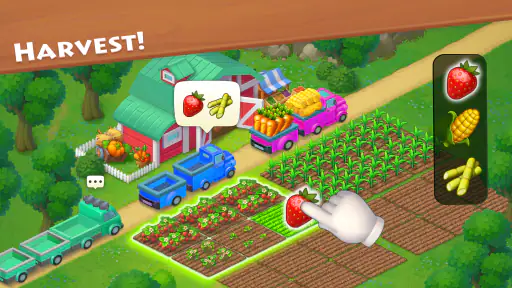
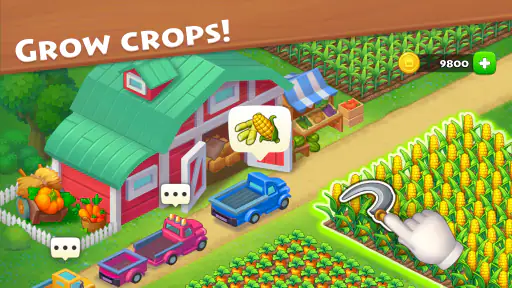
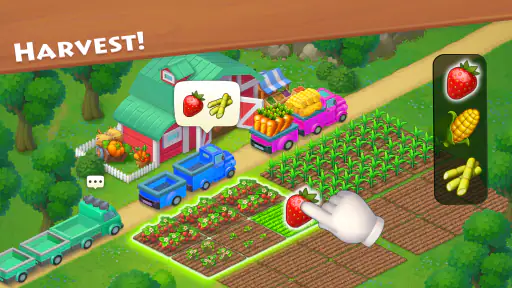
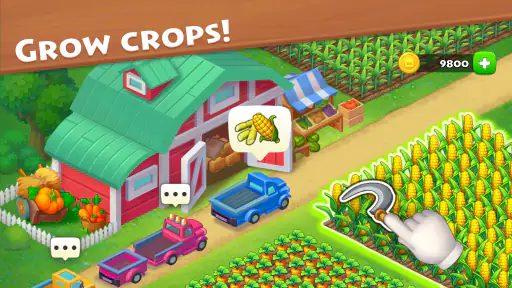
Crop timing gives the farming side a useful planning layer. I try to choose crops with the time I actually have in mind: something that fits a brief break is more sensible when I will be away soon, while longer waits make more sense when I know I will return later. That is a practical way to keep the game from dictating my schedule. The animals, including cows and chickens, add another part to the farm routine without making the basic idea hard to grasp.
For example, I might check in during a quiet moment, start a crop that suits the gap before my next task, and come back later to use the result toward town progress. It works best as a small, self-chosen routine, not as an obligation to open the game constantly. If I want a game that stays equally rewarding with no waiting or planning, a straightforward puzzle game may be a better fit.
Playing with others without losing your own pace
Co-ops and regattas give the game a social side, and they can make shared goals more motivating than solo town management. I like that this creates a reason to coordinate with other players, but a group commitment may not suit everyone. If I want a quieter experience, I can focus on my own town instead of treating team activity as the main measure of progress. Players should choose a group whose expectations fit their available time rather than joining one that makes a casual hobby feel like a duty.
Gaming Stories You May Enjoy

Dancing Road Turns Short Breaks Into a Test of Rhythm and Timing

Super Stylist Makes Every Outfit a Test of Taste and Patience

Dominoes on Your Terms: Who Should Play and Who Should Pass

Pokémon GO Makes the Familiar World Feel New

Chess.com Turns Rematches Into Rivalries, but Community Has Its Costs

Archery Battle 3D Review: Sharp Aiming, Unclear Feedback
Events and challenges also add changing objectives and rewards. They can give a familiar routine a fresh direction, though I would treat them as optional rather than a checklist that must be completed. A useful approach is to pick the event tasks that fit what I already planned to do, instead of reorganizing every session around a limited-time goal. That keeps the extra activity enjoyable and helps avoid feeling pulled in several directions.
Building Your Dream Town
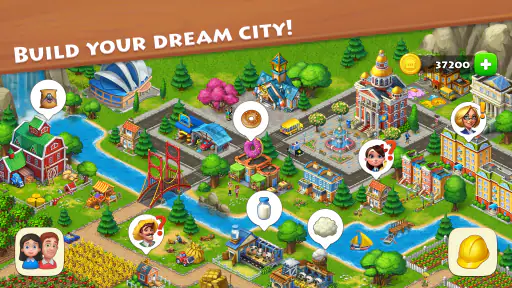
One of the first things you’ll notice about Township is how it smoothly integrates the elements of city-building with farming. It’s like having the best of both worlds right at your fingertips. You start with a small plot of land, and as you plant crops and harvest them, you earn money to expand your town. It’s incredibly satisfying to see your town grow and thrive. The game offers a variety of buildings, decorations, and even community buildings that you can add to make your town unique. I found myself spending hours just tinkering with layouts and choosing the perfect spots for my buildings.
The Farming Life
Now, let’s talk about the farming aspect. It’s not just about planting and harvesting; it’s about managing resources efficiently. You have to think ahead about what crops to plant and when, as different crops have varying growth times. Plus, you get to raise animals like cows and chickens, which add another layer of depth to the game. The farming mechanics are simple enough to understand but offer enough complexity to keep you engaged. It’s a balancing act that keeps things fresh and exciting.
Engaging Community Features
What truly sets Township apart from other city-building games is its strong community focus. You can join co-ops and participate in regattas, which are essentially team competitions. It’s a fantastic way to connect with other players and work together towards common goals. I’ve made some real connections within these community groups, and it’s always fun to strategize and help each other out. The social aspect of Township is incredibly well-done and adds a lot to its replayability.
Additionally, the game regularly hosts events and challenges that offer unique rewards. These events keep the game feeling fresh and give you something to look forward to each time you log in. Whether it’s a seasonal event or a special challenge, there’s always something happening in Township that pulls you back in.
Access, comfort, and trade-offs
For motor comfort, the game is built around repeated taps and small management choices, so how comfortable it feels will depend on the player and the device. I would avoid trying to rush through every task in one sitting; choosing a few actions and taking breaks is a more comfortable way to play. The crop cycle also lets me plan around interruptions, which is useful when I am playing in short bursts rather than settling in for a long session.
Township is free to download and rated for Everyone, which makes it easy to try as a family-friendly casual game. It does include in-app purchases, with items ranging from $0.99 to $149.99, so I would make purchase settings and expectations clear before handing a device to a child. The game can be enjoyed without making spending the focus, but optional purchases are worth keeping in mind if a player is sensitive to paid shortcuts or feels pressure to speed up progress.
On Android, the current version is 27.0.1 and the minimum operating system requirement is Android 5.0. Its long-running audience is reflected in an average rating of 4.8 from around 12 million ratings, alongside over 100 million installs. Those figures suggest broad reach, but they do not tell me whether its pacing will suit a particular player; the important question is whether crops, gradual expansion, and recurring goals sound enjoyable rather than slow.
Who will enjoy it—and who may prefer something else
I would recommend it to someone who likes to alternate between planning a small town and tending a farm, especially if they enjoy returning to an ongoing project. Compared with a match-focused casual game, Township offers more persistent building and resource planning; compared with a pure city builder, its crop and animal routines give the play a more hands-on rhythm. That combination is its main distinction, but it also means there is more to keep track of than in a simple puzzle game.
If I had only a few minutes between errands, I could check what is ready, choose one useful next action, and leave without needing to finish a whole level. On a quieter evening, I might spend longer arranging buildings or coordinating with a co-op. Those are different ways to use the same game, and neither requires me to treat every event as mandatory. It is a good fit for flexible play, but less suitable if I want a complete, self-contained session every time I open a game.
Some players will also find that gradual progress and recurring event prompts create a feeling of unfinished business. My advice is to decide what counts as a satisfying session before opening it: perhaps one farm cycle, one town improvement, or a brief check on a shared goal. That boundary makes it easier to enjoy the layered activities without letting them crowd out other plans. If constant progression is tiring, a short level-based game with a clear endpoint may be a better alternative.
Final Thoughts
Overall, Township is a game that I can wholeheartedly recommend to anyone who enjoys city-building and farming games. It’s an app that combines strategy, creativity, and community in a way that feels both rewarding and relaxing. Whether you’re a casual player or someone looking for a game with depth, Township has something to offer. So, if you haven’t tried it yet, I’d say give it a go. You might just find yourself hooked!
My inclusive verdict is positive, with a practical caveat: Township offers several ways to engage, from quiet town layout choices to crop planning and cooperative play, but it still asks for repeated tapping, attention to changing goals, and tolerance for waiting. I would start slowly, use the town-building side at my own pace, and treat events and purchases as optional. Playrix has made a welcoming casual game with broad appeal, yet the best experience comes when its ongoing pace fits the player rather than the other way around.
Township Pros and Cons
Pros
- Engaging gameplay with city-building and farming.
- Vibrant graphics and charming animations.
- Regular updates with new content and events.
- Variety of tasks keeps players entertained.
- Easy to learn for players of all ages.
Cons
- Requires internet connection to play.
- In-app purchases can be expensive.
- Progress can be slow without spending.
- Limited customization options for buildings.
- Frequent ads can be intrusive.
This Game in Other Languages
Frequently Asked Questions
What is Township, and how does it work?
Township is a unique blend of city-building and farming experiences. In this game, you can build your dream town, harvest crops, process them at your factories, and sell goods to develop your town further. Players also engage in mining, treasure hunting, and managing a zoo. It's a dynamic game that encourages strategic planning and creativity to expand and prosper your township.
Is Township free to play, and are there in-game purchases?
Township is free to download and play. However, it includes optional in-game purchases that can enhance the gaming experience. Players can buy T-cash and coins to speed up processes or purchase special items. While these purchases can add convenience, they are not necessary to enjoy or progress through the game.
What platforms is Township available on?
Township is available on both Android and iOS platforms. You can download it for free from the Google Play Store or the Apple App Store. The game is designed to work seamlessly across both mobile operating systems, offering a consistent gaming experience whether you're using a smartphone or tablet.
Does Township require an internet connection to play?
Yes, Township requires a stable internet connection to play. This connectivity ensures that players can interact with friends, join co-ops, and participate in global events. The online aspect enhances the game by allowing players to trade goods, collaborate on tasks, and compete in various challenges worldwide.
How can players progress quickly in Township?
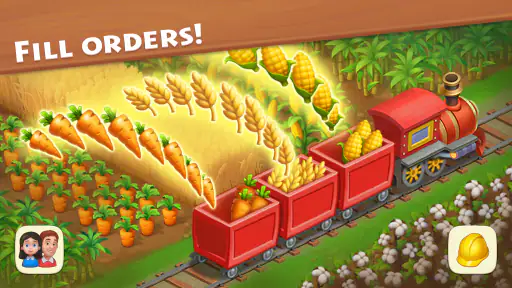
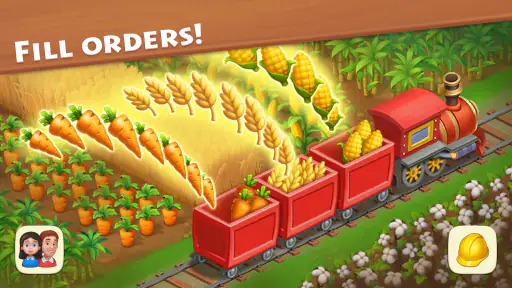
Progressing quickly in Township requires strategic planning. Focus on efficiently farming crops and producing goods in factories to maximize profits. Joining a co-op can also accelerate progress, as it allows for trading and collaborative tasks. Regular participation in events and completing orders are key strategies to earn rewards and develop your town efficiently.


