

Tower War - Tactical Conquest
- Reviews
- 4.4
- Version
- 1.24.2
- Installs
- 50,000,000+

Screenshots
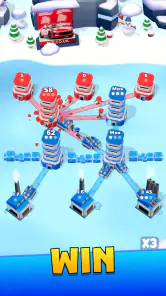
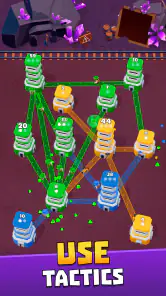

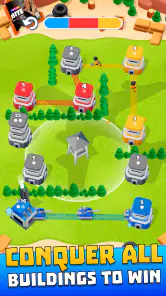
 Analysis by Frivlyz
When I pick up a strategy game for a short break, I want decisions to matter without needing a long session to understand the rules. Tower War - Tactical Conquest aims for that middle ground: it is an arcade game built around battles where planning your moves matters as much as reacting. I find it most appealing when I treat each match as a small puzzle rather than something to rush through.
The rhythm of a match
My most useful habit is to pause mentally before committing to an attack. I look at the towers I can influence, consider what a move might leave exposed, and then choose a direction instead of spreading attention everywhere. That simple routine makes the tactical side feel clearer, especially when a battle starts moving quickly. The satisfying moments come from seeing a plan work, but a failed move is useful too: it shows which part of my approach needs changing.
This is a better fit for focused bursts than for playing while distracted. If I have a few minutes between errands, I can settle into a battle, make deliberate choices, and stop when I need to. If I am half-watching something else, though, I am more likely to miss a useful opening or make a move without thinking through its consequences. The game rewards attention more than constant tapping.
Settings and habits that help
I would start by checking the available sound controls and choosing a level that suits the situation. The effects and music contribute to the feel of a battle, but they are not essential to the decision-making, so lowering the sound can make sense in a quiet room or when playing on the go. I also recommend taking a moment with the tutorial rather than tapping through it: learning the basic flow early makes later choices less confusing.
I would not assume that a setting or shortcut exists unless it is visible in the game. A reliable improvement comes from a repeatable habit, not from hunting for hidden controls: after each battle, think about the decision that helped most and the one that caused trouble. Carrying just one lesson into the next match is easier than trying to change everything at once.
Where the tactics get interesting
When I want to play more efficiently, I focus on the next meaningful decision rather than trying to micromanage every moment. I make a quick plan, watch how the situation changes, and revise it if an opponent’s move alters the balance. This keeps the game from becoming a string of impulsive reactions. It also gives me a practical way to judge progress: am I choosing moves with a reason, or merely responding to whatever looks urgent?
Against human opponents, unpredictability is part of the appeal. A familiar plan may work one match and fail in another because the other player does not respond as expected. That makes multiplayer more engaging than repeating a fixed sequence, but it also means losses are not always proof that a strategy is useless. I get more from a close defeat when I can identify one decision to reconsider than when I blame the entire match on chance.
Gaming Stories You May Enjoy

Dancing Road Turns Short Breaks Into a Test of Rhythm and Timing

Super Stylist Makes Every Outfit a Test of Taste and Patience

Dominoes on Your Terms: Who Should Play and Who Should Pass

Pokémon GO Makes the Familiar World Feel New

Chess.com Turns Rematches Into Rivalries, but Community Has Its Costs

Archery Battle 3D Review: Sharp Aiming, Unclear Feedback
A Strategic Delight
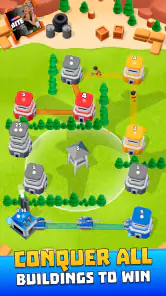
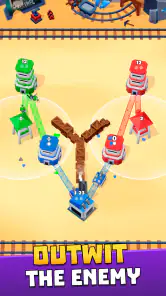
The game is all about strategy, and Tower War - Tactical Conquest does a fantastic job at keeping you on your toes. Right from the get-go, you’re introduced to a world where every decision matters. The gameplay revolves around building and upgrading your towers while simultaneously trying to conquer your opponent’s base. It’s like a game of chess, but with way more explosions and tactical maneuvers!
Each level presents a unique challenge that requires you to think critically and plan your moves meticulously. I found myself constantly re-evaluating my strategies, trying to outsmart my opponents. The variety of towers and upgrades available keeps the gameplay fresh and exciting. Plus, the thrill of watching your well-planned attack unfold successfully is truly rewarding.
Visuals and Sound
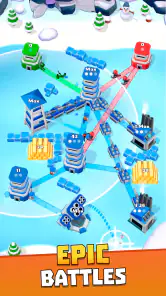
One of the first things you'll notice about the game is its vibrant graphics. The developers did an excellent job in creating a visually appealing world that draws you in. The animations are smooth, and the visual effects during battles are impressive. As for the sound, it complements the gameplay perfectly. The background score is engaging without being overwhelming, and the sound effects add a layer of immersion to the battles.
User Experience
I was pleasantly surprised by how intuitive the game interface is. Navigating through the menus and managing your towers is a breeze. The tutorial at the beginning does a great job of easing you into the game mechanics without overwhelming you with too much information at once. It’s perfect for both seasoned strategy gamers and newcomers alike.
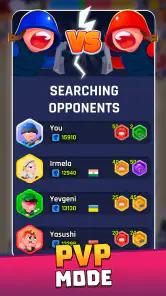
Another feature worth mentioning is the multiplayer mode, which adds a whole new dimension to the game. Competing against real players adds an element of unpredictability that makes each match exhilarating. The matchmaking system is fair, ensuring that you’re pitted against players of similar skill levels, which keeps the competition balanced and enjoyable.
What to expect before installing
SayGames Ltd develops this free-to-play arcade title, which is rated Everyone 10+. It has a 4.4 average from around 573,000 ratings and has passed 50 million installs. On Android, it requires version 8.0 or later; the current version is 1.24.2. Optional in-app purchases range from $0.99 to $99.99 per item, so I would check the purchase prompts carefully if I share a device with a younger player. The broad audience rating does not mean every player will enjoy the competitive pressure, and parents may want to decide whether the battle theme suits their household.
For a realistic everyday use, I can see myself opening it while waiting for a delayed pickup: one match gives me a compact problem to think through, and I can put the phone away afterward instead of committing to a long campaign. It is less suitable during a rushed walk or a conversation, because tactical choices are easier to make when I can give the screen my attention. I would also avoid treating it as a purely passive time-killer; its best moments come when I am actively weighing what to do next.
How it compares with other arcade strategy games
Compared with arcade games built around reflexes, this one gives more weight to choosing where and when to commit. Compared with larger strategy games, it is easier to approach in short sessions and does not ask me to manage a sprawling empire before I can enjoy a battle. That focus is a strength if I want tactical decisions without a heavy learning curve. It is a limitation if I am looking for deep long-term planning, a broad campaign, or a slower game where I can pause and inspect every detail.
That difference also helps answer who should skip it. Players who prefer solitary, predictable puzzles may find live competition less comfortable, while people seeking extensive base management may want a more involved strategy title. I would recommend this to someone who enjoys quick tactical contests and can accept that an opponent may disrupt a neat plan. For newcomers, the tutorial offers a gentler entry; experienced players will get more from reviewing their own decisions than from repeating a single opening every time.
Reading progress without chasing a perfect run
A practical way to improve is to make one small observation after a match: which move gave me control, and which move left me reacting? I would keep that reflection specific. “I should defend better” is too broad to guide the next game; “I committed before checking what that tower would leave vulnerable” is actionable. This habit is useful whether I win or lose, and it avoids turning every result into a judgment of overall skill.
There is a trade-off between speed and certainty. Acting quickly can keep pressure on an opponent, but a rapid choice made without considering what it exposes can undo a promising position. I try to reserve a moment for the decision with the largest consequence, rather than slowing down every move equally. That is a repeatable way to play more deliberately without pretending there is a secret shortcut or guaranteed winning pattern.
Limits that matter over time
The same focused design that makes a match easy to approach can also make the experience feel narrow if I want a lot of variation in how I play. The tower choices and upgrades give me reasons to reconsider tactics, but they do not turn the game into a broad, open-ended strategy sandbox. Multiplayer adds variety through human decisions, yet it can also make a session less predictable than a solo puzzle. I would choose another game if I wanted a fixed difficulty curve or a completely calm experience.
The free entry point is convenient, but the presence of optional purchases is worth keeping in mind. I would not buy anything just to solve a tactical problem before first deciding whether I understand why a match went badly. A purchase cannot replace learning how to judge the board, and a prompt is a good moment to stop and consider whether the item is genuinely wanted. That matters most on a shared device, where another player may not be the person handling payment choices.
Who I would recommend it to
I would suggest it to friends who like compact strategy challenges, enjoy adapting to another person, and do not mind losing while they learn. It also suits someone who wants an arcade game with more thought than reflex-only play. I would be more cautious recommending it to a player who dislikes competition, wants every session to unfold the same way, or prefers a deep single-player campaign. Those preferences are not flaws; they simply point toward a different kind of game.
For me, the most satisfying way to play is to keep sessions intentional: learn the controls, make a plan, notice what changes, and take one lesson into the next battle. That approach works better than chasing a supposedly perfect tactic, because a live opponent can always force a rethink. It also makes the game easier to enjoy in short breaks without confusing a quick match with effortless play.
Visuals and Sound
One of the first things you'll notice about the game is its vibrant graphics. The developers did an excellent job in creating a visually appealing world that draws you in. The animations are smooth, and the visual effects during battles are impressive. As for the sound, it complements the gameplay perfectly. The background score is engaging without being overwhelming, and the sound effects add a layer of immersion to the battles.
User Experience
I was pleasantly surprised by how intuitive the game interface is. Navigating through the menus and managing your towers is a breeze. The tutorial at the beginning does a great job of easing you into the game mechanics without overwhelming you with too much information at once. It’s perfect for both seasoned strategy gamers and newcomers alike.
Another feature worth mentioning is the multiplayer mode, which adds a whole new dimension to the game. Competing against real players adds an element of unpredictability that makes each match exhilarating. The matchmaking system is fair, ensuring that you’re pitted against players of similar skill levels, which keeps the competition balanced and enjoyable.
Final Thoughts
Overall, Tower War - Tactical Conquest is a must-try for anyone who enjoys strategy games. It combines the thrill of tactical planning with engaging gameplay and stunning visuals. Whether you’re looking to hone your strategic skills or just want to have some fun, this game has something for everyone. So, grab your device, download the game, and prepare to dive into the exciting world of tactical conquests. Trust me, you won’t be disappointed!
Tower War - Tactical Conquest Pros and Cons
Pros
- Engaging tactical gameplay keeps you hooked.
- Wide variety of units to strategize with.
- Intuitive controls enhance user experience.
- Frequent updates with new content.
- Offline mode available for uninterrupted play.
Cons
- In-app purchases can be quite pricey.
- Occasional bugs disrupt gameplay.
- Requires a stable internet for updates.
- May drain battery quickly during long sessions.
- Limited tutorial for new players.
This Game in Other Languages
Frequently Asked Questions
What is the main objective of Tower War - Tactical Conquest?
The primary goal of Tower War - Tactical Conquest is to strategically conquer and defend towers on a battlefield. Players must utilize strategic thinking and tactical prowess to outmaneuver opponents, capturing their towers while defending their own. It's a blend of real-time strategy and tactical planning, where each decision can turn the tide of war.
Can I play Tower War - Tactical Conquest offline?
As of the latest version, Tower War - Tactical Conquest requires an active internet connection to fully enjoy its features. The game incorporates real-time multiplayer elements that necessitate connectivity, allowing players to engage in battles with opponents worldwide. It's best experienced with a stable internet connection to ensure seamless gameplay.
Are there in-app purchases in Tower War - Tactical Conquest?
Yes, Tower War - Tactical Conquest offers in-app purchases. These can range from cosmetic enhancements to strategic power-ups that can aid players in their conquest. While purchases can enhance the gaming experience, they are entirely optional, and players can enjoy the core gameplay without spending money, relying on skill and strategy instead.
What platforms are supported by Tower War - Tactical Conquest?
Tower War - Tactical Conquest is available on both Android and iOS platforms. This ensures that a wide range of users can enjoy the game, whether on a smartphone or tablet. The developers have optimized the game for both operating systems, ensuring smooth performance and an enjoyable gaming experience across devices.
How does the matchmaking system work in Tower War - Tactical Conquest?
The matchmaking system in Tower War - Tactical Conquest pairs players with opponents of similar skill levels. This is achieved by analyzing player performance and ranking. The system aims to create balanced and competitive matches, providing a fair and engaging experience for all players, whether they are newcomers or seasoned veterans.


