

Total War: MEDIEVAL II
- Reviews
- 4.6
- Version
- 1.4.1RC5
- Installs
- 100,000+

Screenshots
 Analysis by Frivlyz
I approach mobile strategy games with one practical question: do they give me enough room to think, or do they reduce every decision to a quick tap? Total War: MEDIEVAL II clearly aims for the first kind of experience. It brings the scale and layered decision-making of a historical strategy game to a phone, so it suits players who enjoy planning a campaign as much as directing a fight. In my view, the main appeal is the contrast between a patient, turn-based map and battles that unfold in real time.
What you are paying for
This is a premium strategy game from Feral Interactive, priced at $13.49. That upfront cost matters: I would approach it as a substantial game to settle into, not a free pastime to sample casually. The game also lists in-app purchases at $6.49 per item, so there is more than one kind of spending attached to it. I would check the purchase options shown on your device before deciding what to buy; the prices alone do not tell me what an item contains or whether it is needed to enjoy the main experience.
There is a clear audience for that arrangement. If you already like deliberate empire management and hands-on battles, paying once for a full strategy experience may feel more appealing than choosing a game built around frequent short sessions. If you are unsure whether campaign management is your kind of play, though, the price makes this a bigger commitment than a free-to-start alternative. I would make the choice based on whether you want to spend time learning a deep game, not simply on the promise of medieval atmosphere.
Campaign decisions and battlefield pressure
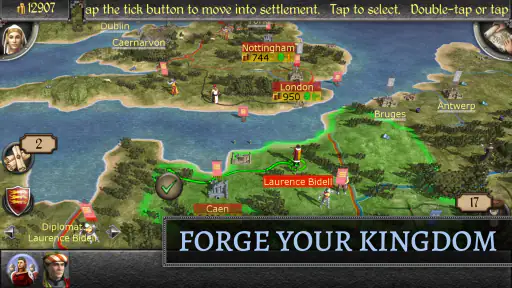
The important rhythm is not just “plan, then fight.” A campaign turn gives you space to consider expansion, resources, and diplomacy, but the consequences of those choices arrive in battles that ask for immediate attention. I found that contrast more compelling than treating the map as a menu between action scenes: decisions made away from the battlefield shape why a particular fight matters. That also means a careless campaign move can create pressure later, when a quick tactical fix may not be enough.
For a more manageable first session, I would resist the urge to push in every direction. Pick a clear objective, take time to learn what your current position demands, and treat diplomacy and resource management as part of your plan rather than chores to click through before the next battle. A useful habit is to pause after each significant result and ask what it changed on the campaign map. That small check helps connect individual victories with the larger aim of building an empire.
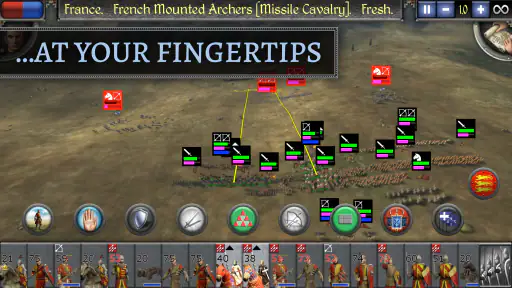
Real-time battles reward attention, but they may not be the best fit for every moment. On a busy commute or while you only have a few minutes free, the need to follow a fight and make tactical decisions can feel awkward. At home, with time to focus on the screen, the same pressure becomes part of the appeal. I would treat this as a game for intentional sessions rather than something I expect to play comfortably in every spare minute.
Fairness, challenge, and expectations
The challenge comes from having to make choices across two connected layers: the campaign and the field. The original review’s impression was that the AI was demanding without feeling unfair, and that distinction matters for a strategy game. Losing a battle can be frustrating, but it is more satisfying when I can trace the result to positioning, preparation, or a decision I made earlier than when defeat feels arbitrary. The game’s appeal is strongest when I am willing to learn from a setback rather than reload mentally and repeat the same approach.
Gaming Stories You May Enjoy

Dancing Road Turns Short Breaks Into a Test of Rhythm and Timing

Super Stylist Makes Every Outfit a Test of Taste and Patience

Dominoes on Your Terms: Who Should Play and Who Should Pass

Pokémon GO Makes the Familiar World Feel New

Chess.com Turns Rematches Into Rivalries, but Community Has Its Costs

Archery Battle 3D Review: Sharp Aiming, Unclear Feedback
Compared with lighter mobile strategy games, this asks for more sustained attention and offers more room to shape a campaign. Compared with a strategy game focused only on battles, it asks me to care about the decisions that lead up to them. That breadth is a strength, but it also raises the learning burden: a player who wants instant action may prefer a simpler tactical game, while someone looking for a quick daily loop may find the campaign too involved. I would choose it for depth, not convenience.
Its average rating is 4.6 from around 7,700 ratings, with over 100,000 installs. Those figures suggest a sizable audience for a premium mobile strategy release, but they cannot tell me whether its controls, pace, or difficulty will suit a particular player. The most useful test is whether you enjoy thinking through consequences over several turns and then staying engaged when a battle demands your attention.
A Medieval Journey
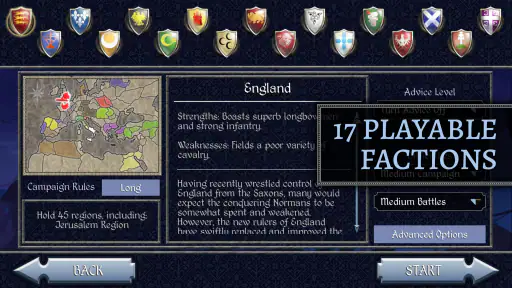
From the moment you launch Total War: MEDIEVAL II, you're transported into the tumultuous era of medieval warfare. The game does a fantastic job of blending real-time battles with turn-based strategy, offering a rich and immersive experience. I found myself genuinely engrossed in plotting my next moves while managing resources and negotiating with other factions. The game offers 17 playable factions, each with its unique strengths and challenges, which kept me on my toes.
Gameplay and Features
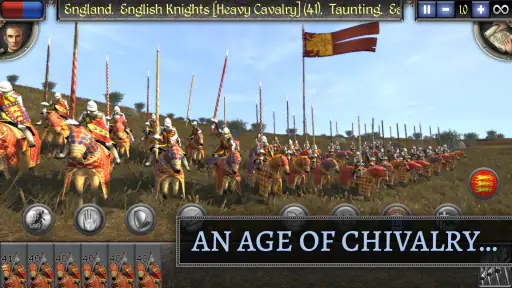
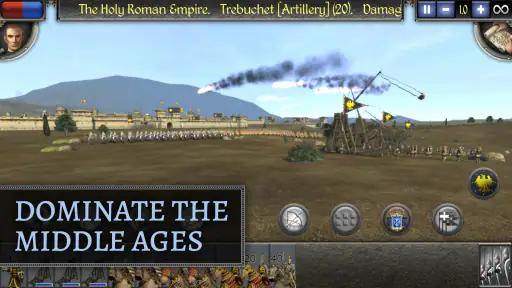
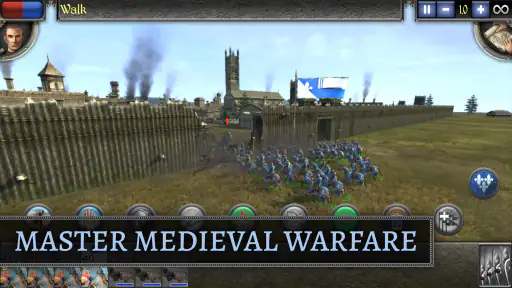
The depth of gameplay is impressive, to say the least. You're not just a warrior on the battlefield; you're a leader shaping the destiny of your empire. The real-time battles are intense and require tactical prowess, while the turn-based campaign map lets you strategize your empire's expansion. I appreciated the attention to detail in the historical accuracy of the units and the landscapes, which adds an extra layer of immersion.
One of the standout features is the game's AI. It's challenging enough to keep you engaged without feeling unfair. I often found myself rethinking my strategies and adapting to the AI's unpredictable tactics, which made each battle feel fresh and exciting. The controls are intuitive, and the touch interface is well-optimized for mobile, making it easy to command your troops or manage your empire's resources.
Visuals and Sound
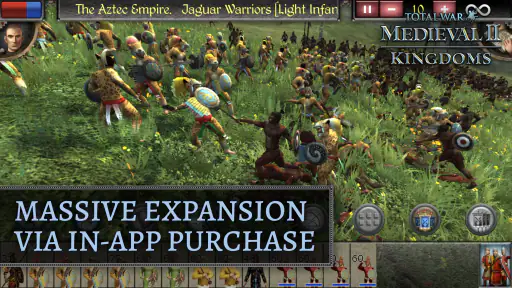
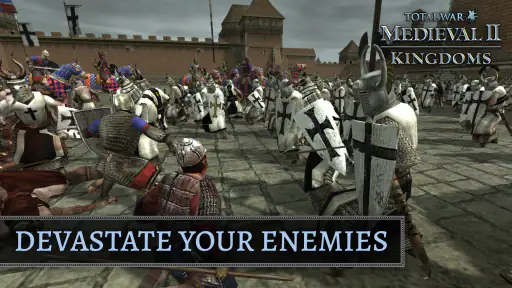
The graphics in Total War: MEDIEVAL II are nothing short of stunning. The detailed character models and realistic environments make you feel like you're part of a living, breathing medieval world. Coupled with a soundtrack that sets the tone perfectly, the game offers a sensory feast that enhances the overall experience. I often found myself pausing just to admire the scenery or listen to the music as my troops marched into battle.
Compatibility and fit
The game is rated Teen and requires Android 9 or later, so I would check the operating-system requirement before buying rather than assume an older device will run it. Its current version is 1.4.1RC5. Those details help establish basic compatibility, but the day-to-day fit still depends on how comfortable you are managing a large strategy game on a phone. If you prefer a small-screen experience built around quick rounds, I would look elsewhere; if you are happy to give a campaign your attention, the mobile format can make it easier to return to your plans when you have time.
A realistic way to use it is to begin a campaign at home, make a few considered moves, and stop at a natural break rather than trying to squeeze a full battle into a short pause. Later, when you can focus, you can return to the next decision or fight. I find that approach more satisfying than rushing because it lets the strategic map and the battlefield each have room to matter. The trade-off is that this is not ideal for someone who wants every play session to deliver a neat, fast conclusion.
Spending and what remains unclear
The purchase context is straightforward in one respect: there is a listed upfront price, and in-app purchases are also listed separately. I would not infer from that alone that extra spending is necessary, nor would I assume what each purchase provides. If the distinction between the main game and those items matters to you, inspect the purchase descriptions on your platform before paying. That is the sensible way to judge the total commitment without guessing at the contents.
The same caution applies to questions about how the game behaves across different devices or how a particular player will find its controls. The review’s experience was that touch commands felt intuitive, but comfort can vary with screen size and personal preference. I would make the purchase only if I am comfortable with a detailed strategy game on my own device and with the possibility that learning its pace takes patience. Nothing about a rating or an install count can make that personal fit decision for me.
Conclusion
In summary, Total War: MEDIEVAL II is a must-have for any strategy game enthusiast. Its blend of real-time battles and turn-based strategy offers a depth of gameplay rarely found on mobile platforms. The game's attention to historical detail, combined with its challenging AI and stunning visuals, delivers an epic medieval experience. Whether you're a seasoned player of the Total War series or a newcomer, this game is sure to capture your imagination and keep you coming back for more. So, arm yourself, strategize, and lead your empire to glory!
That enthusiasm comes with a qualification: “must-have” applies most to players who want a substantial campaign and are willing to learn its systems, not to everyone browsing mobile games. I would skip it if I mainly wanted quick matches, a low-cost trial, or a game that asks little attention during a short break. For a player who enjoys linking long-term choices to tactical battles, though, its specific mix is a strong reason to choose it over a simpler strategy alternative. My trust verdict is positive but practical: the price and purchase options are visible, while the value depends on whether this slower, more involved style is exactly what you want.
Total War: MEDIEVAL II Pros and Cons
Pros
- Rich and immersive historical strategy gameplay.
- Detailed and expansive campaign maps.
- Diverse unit types and factions to choose from.
- Engaging real-time battles with tactical depth.
- Modding community adds extensive replayability.
Cons
- Graphics may feel outdated for some players.
- Steep learning curve for newcomers.
- Occasional AI pathfinding issues.
- Limited multiplayer features.
- Some bugs and glitches still present.
This Game in Other Languages
Frequently Asked Questions
What is Total War: MEDIEVAL II, and what platforms is it available on?
Total War: MEDIEVAL II is a strategy game that combines turn-based management with real-time battles, set in the medieval era. Initially released for PC, it has now been adapted for Android and iOS, allowing users to experience the thrill of medieval warfare on their mobile devices. Players can immerse themselves in historical campaigns and command armies across Europe, the Middle East, and beyond.
What are the system requirements for running Total War: MEDIEVAL II on mobile devices?
Total War: MEDIEVAL II requires a device with iOS 14 or later, or Android 9.0 and above. Players should ensure their device has sufficient storage space, as the game is graphics-intensive and requires robust hardware for smooth gameplay. It's recommended to have at least 4GB of RAM and a quad-core processor to enjoy the game without performance issues.
How does the gameplay of Total War: MEDIEVAL II differ on mobile compared to the original PC version?
While Total War: MEDIEVAL II retains its core strategic elements, the mobile version has been optimized for touch controls, making it more accessible for handheld devices. The interface has been streamlined, and some features have been adjusted to fit smaller screens, ensuring a smooth and engaging gameplay experience without compromising on the depth and complexity that fans love about the series.
Is there a multiplayer mode available in Total War: MEDIEVAL II for mobile?
Total War: MEDIEVAL II offers a robust single-player campaign on mobile, focusing on historical accuracy and strategic depth. However, as of now, it does not include a multiplayer mode. The developers have concentrated on delivering an immersive single-player experience, but there may be potential updates in the future that could introduce multiplayer features.
What kind of in-app purchases are available in Total War: MEDIEVAL II?
Total War: MEDIEVAL II on mobile primarily offers a one-time purchase to unlock the full game, giving access to all campaigns and features. There are no additional microtransactions or in-app purchases, which ensures that players have a complete experience without the need for ongoing purchases. This approach allows gamers to focus on strategy and gameplay without interruptions.


