

Tonk 12: Tunk Rummy ZingPlay
- Reviews
- 4.4
- Version
- 1.10
- Installs
- 100,000+

Screenshots



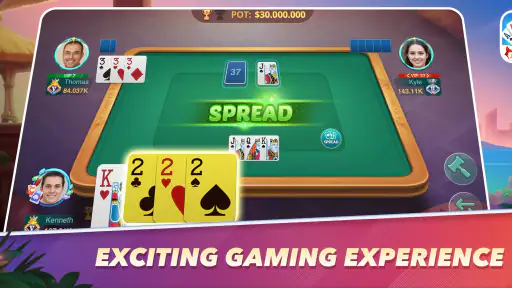
 Analysis by Frivlyz
I approached Tonk 12: Tunk Rummy ZingPlay as a quick card-game option rather than as a broad collection of unrelated activities. It comes from VNG ZingPlay Studio, sits in the card-game category, and is built around the Tonk 12 name. My first impression is that its appeal depends less on flashy presentation and more on whether you enjoy making fast decisions with a changing hand.
That distinction matters. A card game can look simple while demanding careful timing, memory, and restraint. I found this one most interesting in short sessions, when I wanted something more involved than passive scrolling but less demanding than a long strategy game. It is free to install, carries a Teen content rating, and has reached over one hundred thousand installs. Those details make it easy to try, but they do not automatically make it the right choice for every card player.
How Tonk 12 fits into the card-game space
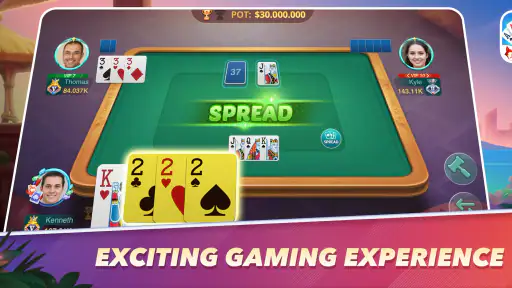
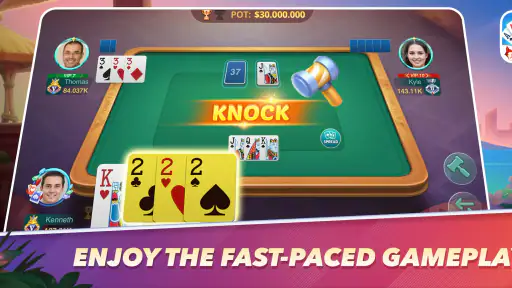
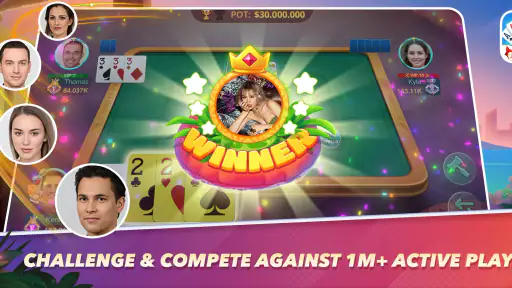
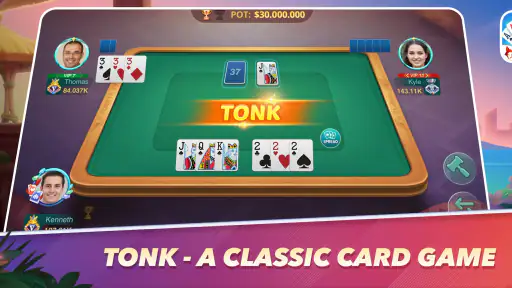
Tonk 12 is best understood as a focused digital take on Tonk-style play. The important word is focused: the experience is aimed at people who already like hand-management card games or want to learn one without committing to a large board-game platform. I would not choose it expecting a huge catalogue of different card modes. I would choose it because the central game is the reason to open it.
That focus gives the app a clearer identity than many general card hubs. In a typical multi-game card app, I often spend more time browsing tables, modes, and menus than actually learning one ruleset. Here, the Tonk 12 presentation points toward a narrower experience. That can feel refreshing if you want a repeatable game, although it may feel limited if variety is your main reason for installing a card app.
The developer is VNG ZingPlay Studio, and the current version is 1.10. It supports devices running Android 8.0 or newer. For someone using an older phone, the operating-system requirement is worth checking before downloading. On a reasonably current Android device, the practical question is not whether the game is accessible, but whether its particular style of card play matches your habits.
The kind of thinking the game rewards
My enjoyment came from the small decisions between obvious moves. Holding a card can preserve flexibility, but it can also leave a hand untidy. Discarding quickly may reduce immediate clutter, yet it can reveal a useful pattern to an opponent or remove a card that would have helped later. The strongest play is not always the move that makes the hand look best right away.
That makes Tonk 12 a better fit for players who like reading possibilities rather than simply waiting for a lucky draw. I also found that the game encourages a useful habit: before acting, I check whether I am improving my own hand or merely reacting to the previous turn. That pause is easy to skip in a fast mobile session, but it often separates a deliberate decision from an automatic one.
Gaming Stories You May Enjoy

Dancing Road Turns Short Breaks Into a Test of Rhythm and Timing

Super Stylist Makes Every Outfit a Test of Taste and Patience

Dominoes on Your Terms: Who Should Play and Who Should Pass

Pokémon GO Makes the Familiar World Feel New

Chess.com Turns Rematches Into Rivalries, but Community Has Its Costs

Archery Battle 3D Review: Sharp Aiming, Unclear Feedback
New players should expect a short learning period. Even when the basic card actions feel familiar, good play depends on understanding when to commit and when to keep options open. I recommend treating the first few rounds as practice rather than judging the game immediately. The early challenge is not just remembering the rules; it is learning what information a discarded card gives you and what it might suggest about another hand.
A realistic everyday session
Imagine having ten minutes before a train arrives or while waiting for an appointment. This is where I think the game makes the most sense. I can start with a clear purpose, play a few hands, and stop without needing to remember a large story or rebuild a complex strategy. The compact format makes it easier to fit into a spare moment than a full-length board-game adaptation.
There is also a useful middle ground for casual gatherings. If a friend already enjoys rummy-like games, Tonk 12 can give both of you something to compare and discuss. I would still explain the rules before expecting a new player to enjoy a competitive round. Card games are rarely relaxing when one person understands the rhythm and the other is guessing what each action means.
For a longer commute or an evening at home, the experience depends more heavily on how much you enjoy repetition. A focused card game can remain satisfying because each hand develops differently, but players who need constant novelty may reach its limits sooner than they would with a larger game collection.
What the free price really means
The installation price is free, which lowers the barrier to testing the game. That is the clearest value point: you can decide whether Tonk 12 suits you without paying for access first. For a card game whose appeal is strongly tied to personal taste, this try-before-you-commit approach is useful.
There are in-app purchases ranging from $0.99 to $199.99 per item. I would not treat the free entry point as proof that every part of the experience has equal value, and I would not assume that buying something is necessary to enjoy the core game. The sensible approach is to start without spending, learn how the sessions feel, and only consider a purchase if it solves a specific problem for you.
This is especially important for anyone sharing a device with a younger player. The Teen rating gives a general age signal, but purchase decisions still deserve attention. I prefer to separate the question “Can I play this for free?” from “Do I want to spend money inside it?” The first answer is yes; the second depends entirely on what the available items provide and whether that benefit matters to your way of playing.
Because the purchase range is wide, I would be cautious about judging value from the highest figure alone. A large maximum does not tell me that most players need it, nor does a small entry price guarantee that optional spending will remain small. If you install it, I recommend deciding on a personal spending limit before exploring any purchase screen. That keeps the free trial genuinely useful as a test of the game itself.
Where the experience earns its value
The main value comes from repeatable decision-making. I can return for another round without learning a new control scheme, and the familiar structure lets me focus on improving judgment. That is a different kind of value from a story game or a large strategy title. Tonk 12 does not need to occupy hours at a time to be worthwhile; it can earn its place through brief, mentally active sessions.
I also like the way a narrow ruleset can make progress feel personal. Instead of collecting unrelated modes, I can pay attention to whether I am discarding too quickly, protecting useful combinations, or overlooking what other players may be holding. These are practical improvements that carry from one hand to the next, which gives the game more depth than its simple card format might suggest.
Another non-obvious strength is that the game can work as a concentration reset. When I am tired of reading or watching something, a few careful turns require enough attention to break the routine without demanding the emotional investment of a competitive action game. That makes it suitable for short breaks, provided I am in the mood to think rather than simply relax.
Tradeoffs I noticed while judging it
The same focus that makes Tonk 12 approachable can also become its main limitation. If I want solitaire, a different rummy variation, a puzzle mode, or a collection of classic card games in one place, a broader card app is likely a better purchase of my attention. This title makes more sense when Tonk itself is the attraction.
There is also a difference between being easy to start and being easy to master. A new player may understand the basic turn flow quickly but still lose because they have not learned when a seemingly attractive hand is actually risky. That learning curve is not a flaw, but it can frustrate anyone looking for a completely casual game with little consequence attached to each choice.
Mobile card games can create another kind of friction: the temptation to play one more hand after a poor result. I find that the compact format makes this especially easy. If you are trying to limit screen time, use a natural stopping point, such as ending after a planned number of rounds rather than chasing a better outcome. The game is more enjoyable when I choose the session length instead of letting the last result choose it for me.
The purchase structure is another tradeoff. Free access is convenient, but the presence of optional items means I would pay attention to what I am being offered and why. Players who dislike in-app purchases on principle may prefer a paid card game with a clearly defined upfront cost. That alternative can provide simpler budgeting, even if it offers less flexibility for trying the game first.
Small habits that improve the play experience
My first practical tip is to avoid treating every promising combination as something that must be protected forever. A combination is useful only if it helps the hand you are actually building. Keeping too many possibilities alive can make the hand harder to manage and leave you reacting late.
Second, I pay attention to the rhythm of discards rather than looking only at my own cards. A card someone ignores can be as informative as one they take or build around. I do not read too much into a single action, but repeated choices can help me decide whether to hold a flexible card or remove it before it becomes awkward.
Third, I separate experimentation from competition. When I am learning, I deliberately try different approaches and accept that some will fail. Once I understand the consequences, I play more conservatively. This two-stage method is more effective than copying a supposed perfect strategy, because the right choice changes with the hand and the situation.
Finally, I would keep purchases out of the learning phase. Playing for free first gives me a cleaner answer to the most important question: do I enjoy the actual card decisions? If the answer is no, an item will not fix that. If the answer is yes, I can then judge any optional purchase against a real benefit rather than buying from curiosity.
Who will get the most from it
I think Tonk 12 is a good match for card players who like quick rounds, hand organization, and decisions that reward patience. It is also suitable for someone who wants to try a Tonk-style game without paying at the door. The free installation makes experimentation straightforward, while the Teen rating gives families a useful starting point for deciding whether it fits their household.
It may also suit experienced rummy players looking for a slightly different routine. Familiar instincts help, but they should not replace learning the specific flow of this game. I enjoyed it more once I stopped assuming that habits from other card games would always transfer cleanly.
I would skip it if your priority is a large variety of card games, a deep story, or a fully predictable one-time purchase. I would also be cautious if you are easily drawn into optional spending or find repeated competitive hands stressful. In those cases, a paid offline card title or a broader collection with fewer purchase prompts may be a better fit, even if it is less convenient to try.
My final recommendation
With an average rating of 4.4 from around three thousand seven hundred ratings and roughly nine hundred fifty written reviews, Tonk 12 has attracted a meaningful early audience. I treat that as encouraging rather than decisive: card-game preferences are personal, and a strong average cannot replace trying the actual rhythm yourself.
My verdict is to install it if you want a free, focused card game and are willing to learn through several hands. The strongest reason to choose it is the combination of low entry cost and compact, thoughtful play. The strongest reason to skip it is equally clear: it does not appear designed to satisfy someone who needs constant variety or a simple paid-once experience.
I would begin with no purchase, play during a few ordinary short breaks, and judge whether I am thinking about the next decision rather than merely waiting for the session to end. If the game makes you curious about improving your hand management, it delivers worthwhile value at the free entry point. If it feels repetitive after that trial, spending more is unlikely to change the underlying match between the game and your tastes.
For me, Tonk 12: Tunk Rummy ZingPlay works best as a compact mental challenge: easy to carry, inexpensive to test, and more nuanced than its basic card format first suggests. It is not the universal card app, but for the right player, that narrow focus is exactly why it is worth a place on the phone.
Tonk 12: Tunk Rummy ZingPlay Pros and Cons
Pros
- Quick rounds make it easy to play during short breaks.
- Simple rules and clear card controls suit beginners.
- Online matchmaking keeps games active at most times.
- Progression and rewards add motivation beyond basic matches.
- Runs smoothly on many mid-range Android and iOS devices.
Cons
- Requires an internet connection for most gameplay features.
- Random matchmaking can create uneven skill-level matches.
- In-game ads may interrupt the experience between rounds.
- Some rewards and features may encourage additional purchases.
- Limited regional availability can affect opponents and events.
Frequently Asked Questions
What is Tonk 12: Tunk Rummy ZingPlay?
Tonk 12: Tunk Rummy ZingPlay is a mobile card game inspired by the traditional Tonk or Tunk rummy-style game. It focuses on quick rounds, forming valid combinations, and reducing the value of cards left in your hand. The ZingPlay version adds a digital interface, online matches, player profiles, and competitive features, making it suitable for casual sessions as well as players who enjoy fast card-game challenges.
How do you play Tonk 12: Tunk Rummy ZingPlay?
The main objective is to organize your cards into combinations and finish the round with the lowest possible remaining value, depending on the specific rules of the match. Players generally draw and discard cards while trying to create groups or sequences. Because regional Tonk rules can vary, new users should read the in-game instructions and practice mode carefully before joining competitive tables or using any available virtual currency.
Can I play Tonk 12: Tunk Rummy ZingPlay offline?
The game is primarily designed for online play, especially when competing against other players through ZingPlay’s multiplayer system. An internet connection may be required for matchmaking, account synchronization, events, rankings, and rewards. Some versions may offer limited tutorials or practice content, but you should not assume that the complete game works offline. Check the current store description and permissions before downloading.
Is Tonk 12: Tunk Rummy ZingPlay free to download and play?
Tonk 12: Tunk Rummy ZingPlay is generally available as a free download, although it may include optional in-app purchases, advertisements, or virtual coins used within the game. You can usually begin playing without paying, but progression and competitive features may encourage additional purchases. Since pricing and monetization can change by region or update, review the app-store listing and configure purchase restrictions if children use the device.
Is Tonk 12: Tunk Rummy ZingPlay safe for children and suitable for everyone?
The game is easy to understand, but its suitability depends on the version, local age rating, chat features, advertising, and the way virtual currency is handled. Online multiplayer can involve interaction with strangers, while in-app purchases may create unexpected charges. Parents should check the official rating, privacy policy, and available parental controls before allowing younger players to use the app, particularly on shared mobile devices.


