

Tides of Conquest
- Reviews
- 4.0
- Version
- 1.1.770
- Installs
- 500,000+

Screenshots

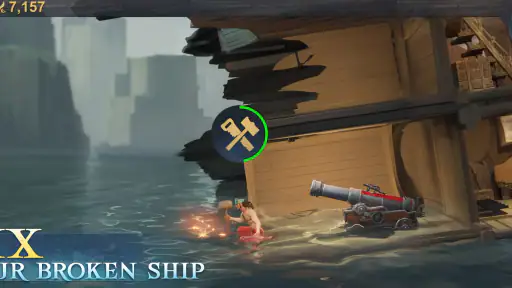


 Analysis by Frivlyz
I went into Tides of Conquest expecting a familiar mobile strategy game with a pirate theme, but its real appeal is more specific: it asks whether I enjoy making decisions about fleets, territory, timing, and risk often enough to stay engaged. This is a free strategy RPG from Puzala, built around commanding pirates and fleets rather than simply watching battles unfold. The setting gives the usual army-and-kingdom formula a more adventurous surface, while the underlying question remains the same: do my choices matter more than my patience?
That is the right way to approach it. I would not choose this game only because I like pirate artwork, and I would not recommend it blindly to someone who wants a quick arcade session. I found it more suitable for players who enjoy checking a developing campaign, adjusting a plan, and gradually becoming more comfortable with a complicated war map. It has enough role-playing flavor to make progression feel personal, but the strategy layer is the reason to keep returning.
What to consider before choosing it
The first decision is about the kind of strategy experience you want. If you prefer direct control, short matches, and an obvious winner within a few minutes, this probably will not be the best fit. Its appeal lies in longer-term thinking: deciding which fleet deserves attention, judging when to take a risk, and accepting that a strong-looking move can create a weaker position later. I enjoyed that tension, although it also means the game can feel slower than a conventional battle title.
The second decision is whether you want a strategy game with an RPG layer. The pirate command fantasy is not just decoration; it frames the progression and gives the campaign a sense of identity. Still, anyone looking for a deep standalone role-playing adventure should keep expectations measured. The game is best understood as a strategy experience with RPG elements, not as a traditional character-driven role-playing game that happens to include ships.
It is also worth considering how you feel about free games with optional purchases. Tides of Conquest costs nothing to start, but its in-app purchase range runs from $0.99 to $199.99 per item. That does not automatically make the game unsuitable, yet it changes how I evaluate progress. I recommend deciding early whether you are comfortable playing patiently without spending, because a free download can still become expensive if you treat every delay or obstacle as something to remove immediately.
The age rating is Teen, which is a useful signal for families making a quick decision. I would still look at the game together with younger players, especially because strategy games can encourage repeated sessions and optional spending. The rating alone does not tell me whether the tone will suit every child, but it does place the game outside the very youngest audience.
The first sessions: learning to think like a fleet commander
My first useful adjustment was to stop treating every available action as equally urgent. A new strategy game often encourages the player to tap through every visible option, but that approach can scatter attention. In this one, I found it more productive to identify the immediate objective, decide which fleet or resource supports it, and ignore distractions until that plan has a clear result.
Gaming Stories You May Enjoy

Dancing Road Turns Short Breaks Into a Test of Rhythm and Timing

Super Stylist Makes Every Outfit a Test of Taste and Patience

Dominoes on Your Terms: Who Should Play and Who Should Pass

Pokémon GO Makes the Familiar World Feel New

Chess.com Turns Rematches Into Rivalries, but Community Has Its Costs

Archery Battle 3D Review: Sharp Aiming, Unclear Feedback
That sounds simple, but it changes the feel of the opening. Instead of asking, “What can I upgrade right now?” I started asking, “Which upgrade helps the next decision?” That distinction matters in a game built around command. A stronger fleet is helpful, but a stronger fleet in the wrong place or at the wrong moment may not solve the problem in front of me.
A practical routine is to pause at the beginning of a session and review the map before committing to an action. I look for the safest useful move first, then consider whether a more ambitious option offers enough benefit to justify the risk. This habit is more valuable than rushing through early progress, because it teaches the player to connect movement, preparation, and combat rather than treating them as separate screens.
I also recommend keeping a mental record of what caused a setback. Was the problem insufficient strength, poor timing, a neglected fleet, or an overconfident attack? That small review turns failure into information. Without it, losing a battle can feel random; with it, the next attempt becomes a test of a specific correction.
Where the game is strongest
The strongest part of Tides of Conquest is the combination of theme and decision-making. Pirate fleets naturally make strategy feel more mobile and uncertain than a static kingdom-building setup. I found myself thinking in terms of routes, pressure, and opportunity instead of simply stacking power in one safe location. That framing gives ordinary strategic choices a little more personality.
The game also works well as a gradual commitment. I can play with a broad objective in mind without needing to master every system immediately. That is important for mobile strategy, where an intimidating opening can make a player quit before discovering what the game does well. Here, the most rewarding progress came from learning how the different decisions relate to one another, not from memorizing a single winning sequence.
Another advantage is that the RPG presentation gives progression an emotional hook. When a fleet improves, it feels connected to the larger pirate campaign rather than like an isolated menu upgrade. I would not call the experience purely narrative, but the role-playing framing helps the strategic loop feel less abstract.
The best reason to try it is the way it turns fleet management into a series of trade-offs rather than a simple strength check. I had more fun when I accepted that not every opportunity needed an immediate response. Sometimes preserving a useful position was better than chasing a tempting reward, and that kind of restraint is where the game feels more thoughtful than its store summary suggests.
Three habits that make the experience better
First, I would avoid spending resources merely because a button is available. Save flexibility for moments when the next objective is clear. This is especially useful early on, when a small improvement can look attractive but may leave you without enough options for a more important challenge. The game rewards planning more than constant activity.
Second, separate experimentation from commitment. If I am unsure whether an aggressive move will work, I treat the attempt as a lesson rather than building my entire session around it. When the result is poor, I can return to the safer plan without feeling that all progress has been wasted. This approach is helpful for players who dislike repeating mistakes.
Third, use short sessions for review and longer sessions for execution. A brief check-in is ideal for deciding what needs attention, while a more focused session gives enough time to carry out a fleet plan and see its consequences. Mixing those two purposes can make the game feel unfocused, but separating them makes the command layer easier to manage.
These are not flashy tricks, yet they address a common weakness in mobile strategy games: the temptation to confuse constant tapping with meaningful progress. Tides of Conquest becomes more satisfying when I treat it as a planning game with battles, not a sequence of notifications demanding immediate action.
Where other strategy games may suit you better
Players who want a highly competitive, tightly balanced match may prefer a dedicated real-time or turn-based strategy title. Those games usually make the battlefield the central event and provide a cleaner comparison between two opponents. Tides of Conquest is a better choice when the fantasy of commanding pirate fleets matters as much as the individual encounter.
On the other hand, someone who wants a relaxed city builder may find this game too focused on conflict and command decisions. A peaceful construction game offers a different kind of satisfaction: arranging buildings, improving a settlement, and watching steady growth. I would not switch to Tides of Conquest expecting that same calm rhythm.
Traditional RPG fans may also find a different game more suitable if they need extensive dialogue, exploration, or a large cast of deeply developed characters. The RPG label here supports the strategic campaign, but I would choose a more narrative role-playing game when story and character relationships are my main priorities.
The comparison is not about which category is better. It is about the source of enjoyment. Tides of Conquest fits the player who wants a pirate-themed command loop, while alternatives may be stronger for fast competition, peaceful construction, or story-first progression. Knowing that before downloading saves time and prevents the common disappointment of expecting one genre to behave like another.
What the free model means in practice
The free entry point makes it easy to test whether the command loop suits me before making a commitment. I appreciate that because strategy games can look appealing in screenshots but reveal their real quality only after I have made a few decisions and dealt with the consequences.
The important cost is not just the purchase price; it is the cost of changing my habits. If I begin by spending whenever progress slows, I may stop learning the systems and start treating payment as my default solution. I had a better experience when I first played patiently, observed where progress felt difficult, and only then decided whether optional purchases added enough value for my own style.
For that reason, I would not recommend buying anything during the first session. Give the game enough time to show whether its fleet decisions, pirate setting, and RPG progression hold your attention. If the main loop already feels repetitive without spending, purchases are unlikely to fix the underlying mismatch. If the planning is enjoyable, patience becomes a meaningful alternative to paying for every convenience.
The current version is 1.1.770, and the game supports devices running Android 7.0 or later. That makes it accessible to a broad range of Android users, although compatibility alone does not guarantee that every older device will feel equally comfortable during longer sessions. I would leave enough storage and battery headroom for any strategy game I expect to revisit regularly, particularly if I plan to keep a campaign active over time.
A realistic everyday use case
Imagine having a short break before work or between errands. I would open the game not to begin an ambitious campaign immediately, but to review my current position and choose one manageable objective. Perhaps I need to strengthen a fleet, prepare for an encounter, or decide whether a risky route is worth pursuing. That kind of session can feel productive even when I do not have time for a long play period.
Later, when I have more time, I can act on that preparation and see whether the earlier decision was sound. This two-stage rhythm is where the game fits my routine best. The short session is for assessment; the longer session is for action. Players who need every session to deliver a complete battle may find this less satisfying, but those who enjoy returning to an evolving strategic situation can make good use of it.
I would avoid opening it during moments when I need a completely distraction-free activity. The combination of planning, progression, and optional purchases can encourage “one more decision” behavior. Setting a personal stopping point is sensible, especially when a difficult encounter makes me want to keep trying until the result changes.
Who should play and who should skip it
I recommend it to players who enjoy pirate themes but want more than a decorative setting. It is also a good candidate for someone moving from simple mobile strategy games toward a more involved command experience, provided they are willing to learn through setbacks. The free download makes that trial relatively straightforward.
I would be more cautious for players who dislike waiting, resource trade-offs, or repeating a plan after a failed attempt. The game asks for patience, and its strengths are less visible when I rush. It is also not my first recommendation for a child who needs a simple, tightly bounded game session, given the Teen rating and the presence of optional purchases.
Players on Android devices should check that their operating system meets the Android 7.0 minimum before planning a download. For everyone else, the more important question is personal: do you want to command a developing pirate campaign, or do you want immediate action? That answer predicts enjoyment better than the theme alone.
How the audience response fits my experience
The game holds an average rating of 4.0 from around 3.6 thousand ratings, with about 90 written reviews. I read that as a generally positive but not unquestionable reception, which matches my own view. There is enough here to attract a substantial audience, yet the game is not so universally smooth that every strategy player will feel at home.
It has passed half a million installs, suggesting that the pirate-fleet concept has found a real audience on Android. I would not use popularity as proof that it is the right choice for me, but it does make the game feel like a serious option rather than an obscure experiment. The developer, Puzala, has positioned it clearly within mobile strategy while giving it a distinctive naval identity.
My recommendation
I recommend Tides of Conquest if you want a free-to-start strategy RPG in which pirate fleets give the usual decisions a more adventurous shape. Approach it as a game of planning, not constant action. Review your position, choose one objective, and let each setback teach you something about timing or preparation.
I would skip it if you are searching for a pure story RPG, a peaceful builder, or a quick competitive match with a clean finish. Those alternatives may fit your expectations better. I would also avoid spending until you know that the underlying command loop genuinely holds your attention.
For me, the game succeeds because it makes fleet decisions feel personal without pretending to be every kind of strategy game at once. Its limitations are tied to the same design: the slower progression and need for patience will frustrate players who want immediate results. But if the idea of guiding pirates through a developing war campaign sounds more appealing than simply tapping through battles, Tides of Conquest is worth trying as a measured, decision-focused addition to your strategy library.
Tides of Conquest Pros and Cons
Pros
- Engaging strategy gameplay with meaningful decisions each turn.
- Strong nautical theme adds personality to exploration and battles.
- Multiple paths to expand your influence across the map.
- Progression keeps new objectives and upgrades coming.
- Works well for players who enjoy slower
- thoughtful sessions.
Cons
- Some matches can feel lengthy
- especially during late-game turns.
- The learning curve may be steep for players new to strategy games.
- Limited variety may become noticeable after extended play.
- Certain upgrades can require considerable time or repeated actions.
- Small-screen controls may feel less comfortable on some phones.
Frequently Asked Questions
What is Tides of Conquest about?
Tides of Conquest is a strategy-focused game built around exploration, resource management, territory expansion, and tactical decision-making. Players develop their settlement, gather materials, improve their forces, and compete for control of valuable areas. Progress generally involves balancing construction, research, upgrades, and battles rather than relying on a single gameplay style, making planning important from the beginning.
Is Tides of Conquest free to download and play?
Tides of Conquest can generally be downloaded and started without an upfront purchase, but players should check the store listing for the current availability and pricing in their region. Like many modern mobile strategy games, it may include optional in-app purchases for resources, boosts, cosmetic items, or progression advantages. These purchases are not necessarily required, although they can affect the pace of development.
Does the game require an internet connection?
An internet connection is usually important for Tides of Conquest because the game may depend on online accounts, synchronized progress, live events, competitive features, and interactions with other players. Some menus or limited activities might load without a constant connection, but the main experience should be considered online. A stable connection is recommended to prevent lost progress, delays, or matchmaking problems.
Is Tides of Conquest suitable for beginners?
Tides of Conquest is approachable for newcomers, especially if they follow the early tutorials and complete the initial objectives before spending resources freely. However, the number of buildings, upgrades, units, missions, and strategic choices can become more demanding as the game develops. New players should expect a learning period and should pay attention to resource priorities, timers, and the strengths of different units.
What devices are compatible with Tides of Conquest?
Compatibility depends on the specific Android or iOS version, device hardware, available storage, and the requirements listed on the official store page. Before downloading, it is worth checking the supported operating-system version and ensuring that enough free space is available for installation and future updates. Older phones or tablets may experience slower loading, reduced graphics quality, or performance issues during busy scenes.


