

The Jackbox Party Pack 7
- Reviews
- 3.3
- Version
- 1.0.2
- Installs
- 5,000+

Screenshots




 Analysis by Frivlyz
I’ve found that party games are at their best when the rules are easy to explain and the people around the screen do most of the entertaining. The Jackbox Party Pack 7 is built for that kind of evening: it is a casual game collection from Jackbox Games, Inc., with five different games and a strong emphasis on conversation, improvisation, and shared jokes. It works best when the group is willing to be a little silly; it is less convincing as a game to play alone or as a quiet background activity.
Where the fun can snag
The first thing I’d plan for is not which game to pick, but how everyone will take part. A party collection can sound effortless, yet a room full of people may need a minute to understand what they’re expected to do, especially when a game asks them to write, draw, speak, or give clues. I’d introduce one game at a time and explain the basic aim before starting, rather than trying to describe the whole pack up front.
The tone of the group matters, too. Quiplash 3 depends on people enjoying playful answers and voting; Talking Points asks players to make a speech out of material they have not prepared; Champ’d Up gives the group a reason to laugh at drawings that may be rough around the edges. Those are strengths among friends who like improvising, but they can feel exposing to someone who dislikes being put on the spot. I’d let quieter guests watch a round first or choose a different game rather than treating participation as a test.
Another useful expectation: five games do not mean five equally suitable choices for every gathering. The group’s energy, comfort with speaking, and willingness to cooperate all affect which one lands. The Devils and the Details has a different social feel from a wordplay challenge, while Blather ‘Round puts the focus on explaining a phrase. I’d treat the variety as a menu, not a promise that every game will suit every person at the table.
Simple checks before game night
Before people arrive, I’d open the game and make sure the device I plan to use can run it. The Android release is listed for version 1.0.2 and requires Android 5.0 or later, so checking the device’s software first can prevent an avoidable surprise. The game is rated Teen, a detail worth considering if younger family members will be joining; I wouldn’t assume that a casual party format automatically makes it suitable for every age or household.
I’d also decide where the main screen will be and whether everyone can comfortably see and hear it. In a crowded room, people seated far away may miss prompts or presentation details, which can interrupt a round. A quick test with the group before starting is more useful than trying to fix seating after everyone is already invested. If you are gathering remotely, agree on how the host will share the game view and how participants will communicate before choosing a title that relies on spoken explanations or reactions.
There is a real purchase decision here, not just a casual download: the listed price is $29.99. The game has a 3.3 average from eight ratings, with three written reviews, and more than five thousand installs. Those figures give only a small snapshot, so I would not treat them as a reliable forecast of how your particular group will enjoy it. I’d judge the cost by whether you expect to bring the pack out repeatedly with a group that likes this style of play, rather than by imagining a single short session will suit everyone.
Gaming Stories You May Enjoy

Dancing Road Turns Short Breaks Into a Test of Rhythm and Timing

Super Stylist Makes Every Outfit a Test of Taste and Patience

Dominoes on Your Terms: Who Should Play and Who Should Pass

Pokémon GO Makes the Familiar World Feel New

Chess.com Turns Rematches Into Rivalries, but Community Has Its Costs

Archery Battle 3D Review: Sharp Aiming, Unclear Feedback
Recovering when a round loses momentum
If a game is not clicking, I wouldn’t force the group to finish it just because it was selected. A short explanation of the next game’s basic idea, followed by a quick change of pace, can help a mixed group find its footing. Someone who enjoys drawing may respond better to Champ’d Up than to an impromptu speech, while a player who prefers words may be more comfortable with Blather ‘Round. The practical advantage of having several different formats is the ability to change the social task, not simply to keep repeating the same kind of joke.
When the group gets confused, pause before restarting. Check whether people can still see the main screen, whether they understand the prompt, and whether the current game expects a response from them or from another player. A vague clue or an awkward answer can be part of the entertainment, but uncertainty about what to do next is not. I’d clarify the immediate goal in plain language, then continue if everyone is ready.
For a remote gathering, I’d keep the spoken conversation organized. Have one person explain the current round, leave a moment for everyone to respond, and avoid several people talking over each other when a game depends on listening. If the shared screen or audio becomes hard to follow, stop and sort out the call before restarting the round. That is a more useful recovery than blaming the game for a problem caused by the setup.
How the five games shape a session
So, what’s the deal with The Jackbox Party Pack 7? Well, it’s like opening a treasure chest of fun games designed to keep everyone entertained. This pack includes five different games: Quiplash 3, The Devils and the Details, Champ’d Up, Talking Points, and Blather ‘Round. Each one brings something unique to the table, ensuring there’s something for everyone.
Quiplash 3: The Ultimate Witty Battle
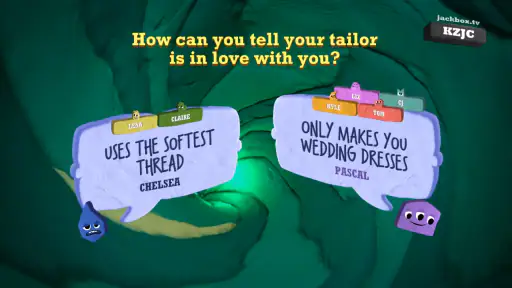
Starting with Quiplash 3, this game is all about being witty and quick on your feet. It’s a battle of humor where players answer prompts in the funniest way possible, and everyone votes on their favorite. Trust me, the laughter is contagious, and the creativity people come up with is mind-blowing.
My practical tip is to keep the mood generous: the aim is to enjoy the answers, not to make anyone feel judged for a less polished joke. It tends to work best when the group is comfortable riffing off each other. If people are shy or the humor styles in the room are very different, I’d start with another format and return to this one once everyone has loosened up.
The Devils and the Details: A Chaotic Family Drama
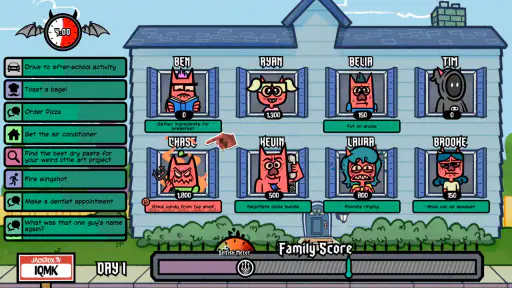
Next up, we have The Devils and the Details. Imagine a family trying to complete mundane tasks while chaos ensues. This cooperative game is perfect for those who love a bit of strategy mixed with hilarity. It’s all about teamwork and, sometimes, throwing your teammates under the bus for a good laugh.
That cooperative angle gives the pack a welcome change of rhythm. It is a sensible pick when the group would rather coordinate than compete over whose answer gets the biggest reaction. I’d choose it for friends who enjoy shared problem-solving, while keeping in mind that a group looking only for short, individual turns may prefer one of the more performance-focused options.
Champ’d Up: Unleash Your Inner Artist
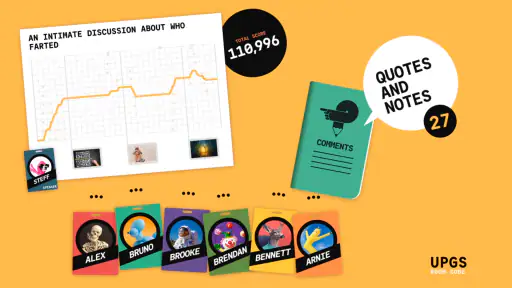
If you’ve ever wanted to create your own superhero, Champ’d Up is your chance. Players draw their champions and pit them against each other in epic battles. Even if you’re not a Picasso, the outrageous drawings and hilarious outcomes make this game a winner.
The roughness is part of the appeal, so I would not make artistic confidence a requirement. It’s a good choice for a group that enjoys visual jokes and playful invention, but less ideal if someone is uncomfortable having their work shown or discussed. Keeping the emphasis on the absurd character idea rather than drawing skill helps the game feel welcoming.
Talking Points: Become the Master Orator
Talking Points is for those who love to talk – or at least try to. Players give impromptu speeches on random topics, using slides that they’ve never seen before. It’s all about thinking on your feet and embracing the awkwardness. Spoiler alert: it’s incredibly fun!
This is the boldest pick for a group that enjoys a bit of theatrical improvisation. I’d save it for people who are happy to speak in front of friends, rather than using it as the opening game with guests who have just arrived. The fun comes from reacting in the moment, not delivering a polished talk, but that distinction may not be enough to reassure a player who dislikes public speaking.
Blather ‘Round: The Wordplay Challenge
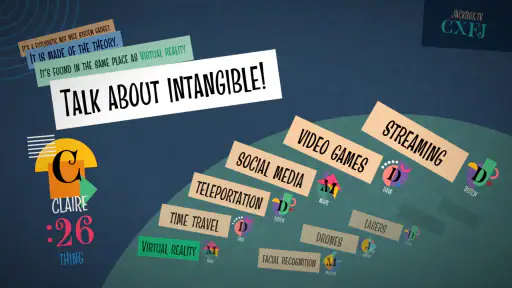
Finally, Blather ‘Round is a word game where players use obscure hints to get others to guess a secret phrase. It’s like charades but with words, and it’s perfect for those who love a linguistic challenge. The clues might be confusing, but that’s all part of the fun.
When clues get tangled, I’d encourage players to focus on communicating the broad idea instead of searching for a perfect hint. That makes this a useful option for a group that prefers words and deduction over drawing or performing. It may be a weaker fit for guests who dislike ambiguity, so I’d use the first round to see whether the group enjoys working through imprecise clues together.
Choosing it over other party games
Compared with a board game, this pack asks less of the host in terms of laying out pieces and keeping track of physical components, but it does ask for a shared screen and active participation. Compared with a simple conversation game, it supplies structured prompts and different activities, which can help a gathering that needs a starting point. The trade-off is that it is not as flexible as inventing your own questions or choosing a game that does not depend on a device.
For a casual evening where friends already enjoy group play, the variety is its clearest advantage: you can move between humor, cooperation, drawing, speaking, and clue-giving instead of staying with one format. For a small, reserved gathering, a traditional tabletop game or a low-pressure conversation activity may be a better choice. I would also skip this purchase if the group rarely meets, dislikes improvisation, or expects a solo experience; the pack’s value depends on having people ready to play together.
A realistic way to bring it out
For a relaxed weekend visit, I’d get the game ready before dinner, then invite everyone to try a less intimidating round once people have settled in. If the group warms up, I’d switch to a more performative choice; if not, I’d stay with a format that gives people more room to think. That small bit of sequencing matters: starting with the loudest, most exposed activity can make a newcomer feel as though the whole pack is not for them.
I’d also set a loose stopping point rather than trying to sample everything in one sitting. A good session is not a checklist. Let the group’s reaction decide whether to continue with a favorite or change direction, and make it easy for someone to sit out a round without turning that into a discussion. Those choices make the pack easier to use with a mixed group and help keep the evening social instead of making the game the only event.
When the game is not the problem
If a session feels flat, the cause may be the room rather than the game. People who cannot hear the speaker, see what is happening, or get a chance to respond will have a harder time enjoying any activity built around group interaction. Likewise, guests who are tired, distracted, or unfamiliar with one another may need a gentler start. I’d make those adjustments before deciding that the collection itself is a poor fit.
The same goes for technical friction: check that the device meets the stated Android requirement, that the screen is visible, and that a remote group can follow the shared view and conversation. If something stops making sense, pause, restate what the round asks for, and then continue. Simple checks do not guarantee every gathering will run smoothly, but they prevent basic setup confusion from becoming the main memory of the night.
My practical verdict
Overall, The Jackbox Party Pack 7 is a brilliant addition to any game night. It’s easy to set up and play, and you don’t need any special equipment – just a phone and an internet connection. Whether you’re physically together or hosting a virtual hangout, this game pack guarantees a good time.
I’d recommend it most to people who regularly host friends or family and know their guests enjoy jokes, teamwork, drawing, and spontaneous speaking. I would not call it a guaranteed hit for every gathering: the price is a substantial commitment if you are unsure whether your group likes these kinds of activities, and some of the games ask more confidence from players than others. The Android version was released on October 15, 2020, and carries a Teen rating, so both the age guidance and the device requirements deserve a quick check before planning a family session.
So, if you’re ready to laugh until your sides hurt and create unforgettable memories, grab your friends and dive into this whirlwind of fun. And remember, in the world of Jackbox, the more outrageous, the better!
The Jackbox Party Pack 7 Pros and Cons
Pros
- Wide variety of fun party games.
- Easy to set up and play with friends.
- Supports both local and online multiplayer.
- Hilarious and engaging content.
- Regular updates and new features.
Cons
- Requires multiple devices to play.
- Some games may not suit all audiences.
- Can get repetitive over time.
- Occasional connectivity issues.
- Limited single-player options.
Frequently Asked Questions
What is The Jackbox Party Pack 7?
The Jackbox Party Pack 7 is a collection of five party games that can be played using a single screen and participants' mobile devices as controllers. It includes games like Quiplash 3, The Devils and the Details, Champ'd Up, Talking Points, and Blather 'Round. The game is designed to be accessible and fun for players of all ages and is perfect for parties or virtual gatherings.
How do I play The Jackbox Party Pack 7?
To play The Jackbox Party Pack 7, one player must own the game on a supported platform such as PC, console, or streaming device. Once the game is launched, players can join the game room by entering a unique room code on their mobile devices via the Jackbox.tv website. Each player uses their device to participate, making it easy and user-friendly.
Can I play The Jackbox Party Pack 7 remotely with friends?
Yes, The Jackbox Party Pack 7 is designed for both local and remote play. You can play with friends and family over the internet using a video conferencing tool like Zoom or Discord. The host shares their screen, and participants join using the room code. This setup allows everyone to enjoy the games together, regardless of their physical location.
Is The Jackbox Party Pack 7 suitable for children?
The Jackbox Party Pack 7 includes games that are generally family-friendly, but parental discretion is advised. Some games may have themes or language that are more suited for mature audiences. However, the settings can often be adjusted to filter content and create a more appropriate experience for younger players. Always review individual game ratings and content warnings before playing with children.
What devices are compatible with The Jackbox Party Pack 7?
The Jackbox Party Pack 7 is compatible with a variety of devices and platforms. It can be played on Windows, Mac, PlayStation 4, Xbox One, Nintendo Switch, and other platforms. Mobile devices such as smartphones and tablets are used as controllers via a web browser, ensuring compatibility across different operating systems and making it easy for anyone to join in on the fun.


