

The Division Resurgence
- Reviews
- 4.5
- Version
- 1.60224.0
- Installs
- 1,000,000+

Screenshots

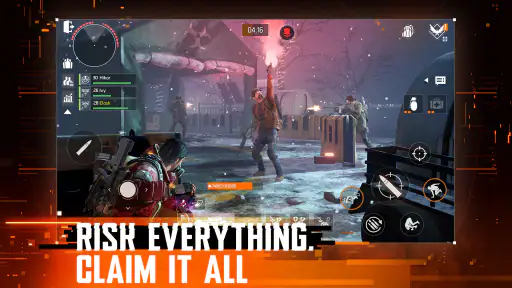

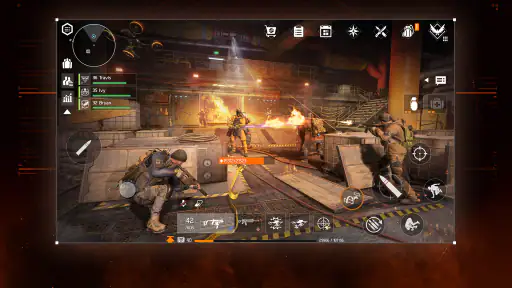
 Analysis by Frivlyz
The first thing I noticed about The Division Resurgence is that it asks for attention rather than treating a session as a quick distraction. This is an action game from Ubisoft Entertainment built around the fight to reclaim New York City, and its mature tone is clear from the start. I found the appeal strongest when I had enough time to settle into a mission, read the situation, and make deliberate choices instead of rushing through every encounter.
That makes it an interesting fit for players who want a substantial shooter on a phone or tablet. It is free to download, but optional purchases range from $0.49 to $99.99 per item, so I would approach it with a clear spending limit. The game is rated Mature 17+, requires Android 6.0 or later, and runs as version 1.60224.0. Those details matter because this is not a lightweight arcade game that I would recommend blindly to every mobile player.
After spending time with it, my overall impression is positive but qualified. The strongest part is the feeling of having a reason to keep moving through New York: complete the next objective, improve my situation, and see whether I can handle a tougher encounter. The weaker side is the pressure that can build around long-term progression and purchases. If you enjoy action games that reward patience and repeated play, this is worth considering. If you want a self-contained experience with no live-service-style pull, I would look elsewhere.
How the opening goals give each session direction
The early hours work best because they give me practical goals instead of asking me to understand everything at once. Reclaiming New York is a broad premise, but it becomes more useful when I treat each mission as a small step toward control. I am not simply wandering through scenery; I am working toward the next piece of progress, and that gives routine actions more meaning.
I like this structure because it creates a natural answer to the question many mobile players have: what should I do next? A good session begins with a clear intention. I might have enough time for one focused objective, or I might be ready to continue for longer. Either way, the game’s action framework gives the session a shape, which is more satisfying than loading into an open-ended activity with no obvious reason to continue.
The early goals also help reveal whether the game suits your habits. I prefer action games that let me improve through understanding rather than simply tapping faster, and this one encourages me to pay attention to encounters. Positioning, timing, and knowing when not to overextend become more important than blindly pushing forward. That is a useful distinction from simpler mobile shooters, which often make the first stretch feel like a tutorial that never really develops.
One practical tip is to avoid treating every available objective as equally urgent. I got more from the game when I chose a manageable target and finished it cleanly instead of constantly switching direction. That approach makes the progression feel less noisy and helps me notice which activities I genuinely enjoy. It is especially useful on a phone, where interruptions are common and a scattered session can make any action game feel less rewarding.
Gaming Stories You May Enjoy

Dancing Road Turns Short Breaks Into a Test of Rhythm and Timing

Super Stylist Makes Every Outfit a Test of Taste and Patience

Dominoes on Your Terms: Who Should Play and Who Should Pass

Pokémon GO Makes the Familiar World Feel New

Chess.com Turns Rematches Into Rivalries, but Community Has Its Costs

Archery Battle 3D Review: Sharp Aiming, Unclear Feedback
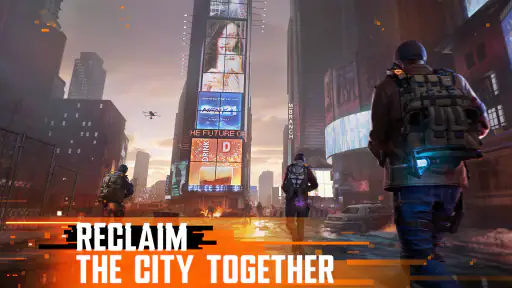
The setting also gives the opening a stronger identity than a generic series of arenas. New York is not just a backdrop for combat; it supports the larger sense of restoration and pressure. I found that this context helped keep ordinary objectives connected to the central conflict. The result is not a completely different genre, but it does make the early loop feel more purposeful than a collection of disconnected fights.
What progress feels like during regular play
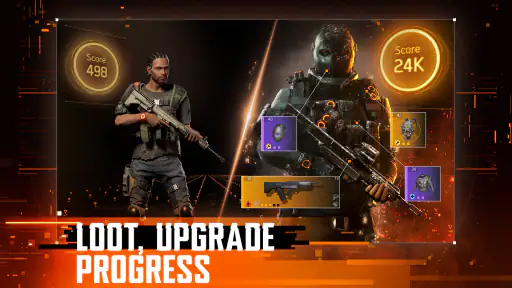
Progress is most convincing when I can connect it to a specific improvement in how I approach the next challenge. A new objective should not feel like a box being checked only for the sake of completion. In my experience, the better moments came when finishing one task made me more prepared, more confident, or more willing to attempt something that had previously felt uncomfortable.
That sense of movement is important because action games can become repetitive quickly on a touchscreen. The Division Resurgence avoids some of that problem by giving the player a broader reason to continue than simply chasing a higher score. I am encouraged to think about the next stage of the fight for New York, not just the next few seconds of shooting.
At the same time, the progression does not remove the need for judgment. Improving over time does not mean every encounter becomes automatic. I still had to decide how aggressively to play and whether a difficult situation was worth forcing. That is a healthy balance: progress should make me feel stronger, but it should not erase the challenge that makes the action interesting.
A useful way to play is to judge progress by three signals: whether I understand the objective better, whether I survive situations that once caused trouble, and whether my route through a mission becomes more efficient. Those signals are more meaningful than obsessing over every reward. They also help prevent the common mobile-game trap of confusing constant notifications or unlock prompts with genuine improvement.
This is where the game compares favorably with many quick-play alternatives. A typical mobile action title may deliver instant excitement but little reason to remember what happened after the session ends. Here, I was more likely to think about my previous attempt and adjust my approach. That does not make every mission equally memorable, but it gives repeated play a clearer purpose.
Challenge, pacing, and the point where patience matters
The difficulty curve is most enjoyable when I accept that progress is not supposed to remove friction completely. The game asks me to learn the difference between a situation I can handle and one that needs a more careful approach. That creates a better rhythm than simply increasing enemy toughness while leaving the player’s decisions unchanged.
I found the pacing strongest when I alternated between action and preparation. Rushing from one confrontation to the next can make the game feel like a test of endurance, while pausing to consider the objective gives the next encounter more weight. This is one of the less obvious strengths of the experience: the game rewards a measured player, even though its category and presentation naturally suggest constant movement.
For everyday use, I would play it when I can give it a reasonably uninterrupted block of time. Imagine finishing work or school and having enough space for a focused evening session. I would choose a goal before starting, keep the phone charged, and stop after a successful milestone rather than continuing until frustration takes over. That routine makes the pacing feel intentional. It is less suitable for someone who mainly plays in very short gaps while waiting in a queue.
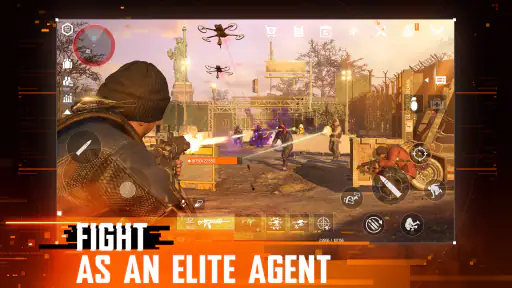
Touch controls can also change how the difficulty feels. Even when the underlying encounter is fair, a crowded screen or a rushed input can make failure feel more personal than it would with a controller. I recommend giving yourself time to become comfortable with the control layout before judging the game’s challenge. A player who immediately blames the difficulty may actually be fighting the interface.
Another tip is to treat setbacks as information. If I repeatedly fail after taking the same route or making the same aggressive push, repeating that behavior is unlikely to help. The better response is to slow down, identify the first decision that caused trouble, and change that part of the attempt. This sounds simple, but it is exactly the kind of habit that separates a satisfying action game from a tiring one.
The game is not the best choice for players who want instant mastery. It asks for some tolerance of repetition and a willingness to improve gradually. I would also skip it if your ideal action game is a short campaign with a fixed ending and no reason to revisit completed content. Its appeal depends on the ongoing loop, so players who dislike that structure may feel the pacing is stretched rather than sustained.
Why the long-term loop can keep pulling you back
The strongest retention pressure comes from the combination of unfinished work and visible improvement. There is always a reason to think about the next objective, the next difficult encounter, or the next point at which my current approach might become more effective. That can be motivating, especially when I end a session with a clear sense that I am close to overcoming a problem.
However, the same structure can become demanding. Free action games often make it easy to turn “one more mission” into a much longer session, and I felt that pull here. The mature presentation and ongoing conflict add urgency, while progression gives me a reason not to stop. I recommend deciding in advance how long you want to play, particularly if you are sensitive to games that encourage repeated engagement.
Purchases deserve a realistic discussion. The game costs nothing to start, but in-app items range from $0.49 to $99.99. That does not automatically make the experience unfair, yet it does mean I would not begin without checking my own habits. If you are comfortable ignoring optional offers, the free entry point is attractive. If you find it difficult to resist spending when progress slows, the pricing range is a genuine concern rather than a minor detail.
I also think the game’s audience size creates confidence without guaranteeing a personal fit. It has an average rating of 4.5 from around 102 thousand ratings and more than a million installs, which suggests that many players have found something worthwhile in it. I would read that as evidence of broad interest, not as proof that every player will enjoy the pacing or the ongoing commitment.
The most useful retention habit I found was setting a stopping point around an accomplishment rather than around exhaustion. Finishing an objective, learning a difficult encounter, or reaching a satisfying point in the story gives the next session a clean starting place. Stopping only after a frustrating failure can make the game feel harsher than it really is and encourages unproductive repetition.
Compared with a traditional premium action game, this structure is less predictable. A premium title may offer a clearer beginning and end, while The Division Resurgence is better suited to someone who likes returning to the same world over time. Compared with a simple competitive shooter, it offers more personal progression and context, but it may demand more patience before a session feels complete. Neither approach is universally better; the right choice depends on whether you value continuity or closure.
Who should play it, and who should choose something else
I would recommend this game to players who enjoy tactical action, a serious urban setting, and goals that build across repeated sessions. It is a good match for someone who wants more depth than a quick arcade shooter and does not mind learning through setbacks. Fans of the broader Division style may also appreciate having a mobile-focused way to spend time in this world, provided they are comfortable with the free-to-play model.
I would be more cautious about recommending it to young players because the content rating is Mature 17+. I would also steer away from it for children, casual players seeking a simple pick-up-and-play experience, and anyone who wants to avoid optional purchases entirely. The free price is a useful invitation, but it should not be confused with a completely frictionless experience.
Device compatibility is relatively approachable because the game requires Android 6.0 or later, but operating-system support alone does not tell me how comfortable every device will feel. Action games place more demands on responsiveness than slower genres. Before committing to long sessions, I would test the controls, check whether the phone remains comfortable in the hand, and make sure the screen gives enough room for accurate input.
One question many players will have is whether they can enjoy it without spending money. My answer is that the free starting point makes that possible, but your enjoyment will depend on how well you handle the presence of purchases. I would play first, learn the core loop, and avoid buying anything until I knew that the game’s objectives and pacing genuinely suited me. Spending early can make it harder to judge the experience on its own terms.
Another likely question is whether it works for short sessions. I think it can, but it is better when those short sessions have a clear purpose. Starting without a plan and leaving halfway through an objective may feel unsatisfying. If your schedule is unpredictable, choose smaller goals and treat each session as one deliberate step rather than expecting a complete arc every time.
My verdict on the progression and the overall experience
My final view is that The Division Resurgence succeeds when its goals, challenge, and setting work together. The fight for New York gives the action a reason to continue, while the gradual sense of improvement encourages me to return. I especially liked that the best progress came from becoming a more thoughtful player, not merely from pressing forward until the game gave me a stronger position.
Its weaknesses are tied to the same design. The ongoing loop can feel demanding, the touchscreen format may require adjustment, and the purchase range means I would keep a close eye on spending. Players who prefer short, self-contained campaigns may find the structure less satisfying than a conventional alternative. Those are not deal-breakers for me, but they should shape expectations before downloading.
Ubisoft Entertainment has made a mobile action game with enough ambition to ask for regular attention. The current version, 1.60224.0, represents a substantial ongoing experience rather than a disposable time-filler. I would recommend trying it free if you are at least 17, enjoy deliberate action, and want a game that can become part of a longer routine.
My recommendation is simple: try it for the progression loop, not just the name. If the early objectives make you curious about the next challenge and you can enjoy improvement without chasing every purchase prompt, the game has a strong chance of holding your attention. If you want immediate, uncomplicated fun with a firm ending, another action game will probably serve you better.
The Division Resurgence Pros and Cons
Pros
- Faithfully recreates The Division’s cover-based shooting on mobile.
- Large open-world map offers plenty of exploration and side activities.
- Solo and multiplayer missions provide flexible ways to play.
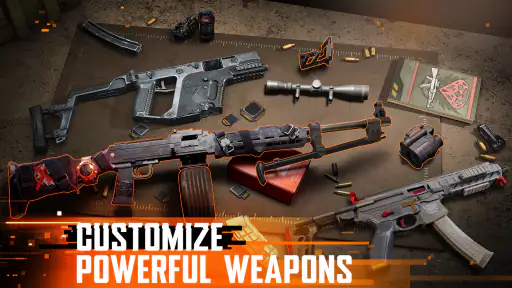
- Detailed character customization supports different combat styles.
- Regular events and updates can add fresh challenges over time.
Cons
- Requires a powerful device for smooth performance and better graphics.
- Large downloads and updates can consume significant storage space.
- Always-online access is required
- even when playing solo content.
- Touch controls may feel less precise than playing with a controller.
- Battery drain and device heating can be noticeable during longer sessions.
This Game in Other Languages
Frequently Asked Questions
What is The Division Resurgence?
The Division Resurgence is a free-to-play mobile third-person shooter and role-playing game set in Ubisoft’s The Division universe. It brings the series’ cover-based combat, open-world exploration, missions, loot, and character progression to Android and iOS devices. The story is designed as a separate experience, so players do not need to complete the console or PC games before starting.
Can I play The Division Resurgence offline?
No. The Division Resurgence requires a persistent internet connection because it is an online game with shared-world features, live events, matchmaking, account progression, and regularly updated content. A stable Wi-Fi or mobile-data connection is recommended, especially during missions with other players. Connection quality can affect loading times, combat responsiveness, and whether you remain in an activity.
Is The Division Resurgence free to download and play?
The Division Resurgence is offered as a free-to-play mobile title, allowing users to download and begin playing without purchasing the full game upfront. However, optional in-app purchases may be available for cosmetic items, convenience features, or other content. Players should review the store listing and parental controls carefully, since free access does not necessarily mean every item or feature is obtainable without spending.
What devices are compatible with The Division Resurgence?
Compatibility depends on the Android or iOS device, operating-system version, available storage, and hardware performance. Because the game features detailed environments, online multiplayer, and demanding visual effects, older or entry-level phones may experience reduced frame rates, heat, or longer loading times. Before downloading, check the official Google Play or App Store listing for the latest requirements and make sure sufficient storage is available.
Does The Division Resurgence support multiplayer and solo play?
The Division Resurgence supports solo progression while also encouraging cooperative multiplayer. You can explore, complete missions, and improve your agent independently, but some activities are more enjoyable or manageable with a squad. Online matchmaking and team-based content make communication and reliable connectivity useful. The exact availability of modes, events, and player-versus-player features can change as Ubisoft updates the live-service game.


