

The Detonator: Blast & Mine
- Reviews
- 4.5
- Version
- 1.6.9
- Installs
- 1,000,000+

Screenshots



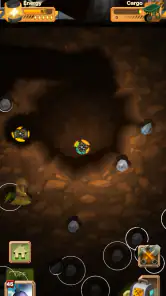
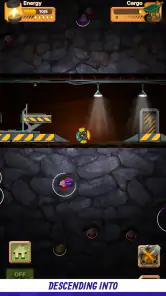


 Analysis by Frivlyz
I spent time with The Detonator: Blast & Mine as a pick-up-and-play adventure, paying particular attention to how comfortably it works in different situations rather than judging it only by its explosive theme. Developed by LootCopter Game Studio, this free game places the player in a digging-and-blasting setting where the central appeal is making progress through Earth’s depths. Its store summary, “Blast for Riches: Dig into Earth’s Depths!”, gives the right general impression, while “The Detonator” captures the simple, action-focused identity.
My first impression was that this is designed for short sessions. It is the kind of game I can imagine opening while waiting for an appointment, taking a few turns during a break, or returning to when I want something lighter than a story-heavy adventure. The presentation is easier to approach than a complicated role-playing game, but that simplicity also means the experience depends heavily on clear visual feedback and comfortable tapping.
The game is listed as an Adventure title, carries an Everyone age rating, and is free to install. That combination makes it approachable for a broad audience, although free access is accompanied by optional in-app purchases ranging from $0.99 to $99.99 per item. I would keep that in mind before handing the device to a younger player, especially if the phone or tablet is shared.
How clearly the digging adventure communicates what to do
I found that the game’s clearest guide is the link between a blast and what changes on screen, so this section looks at how that feedback helps me decide what to do next. I also consider a practical way to slow the action down when the display feels busy, before turning to how the game fits into everyday play.
Readability and navigation during a session
The most important part of a game like this is not a long tutorial; it is whether I can understand the current objective, the useful controls, and the result of each action without stopping to decode the interface. The Detonator benefits from having a focused premise. Blasting and digging are easy ideas to grasp, so the game does not need to explain a complicated fictional world before becoming playable.
That focus helps when I return after a few days away. I do not need to remember a large cast of characters or a dense collection of menus. The basic mental model is direct: make an action, see what it changes, and decide what to do next. For players who prefer games with immediate feedback, that is a real strength.
I also found that the visual relationship between action and reward matters more here than written instructions. When the screen makes the result of a detonation obvious, I can make decisions quickly. When several objects compete for attention, however, the same energetic style can become less comfortable. Explosive effects are useful for communicating success, but they can make it harder to distinguish a new objective from decoration if I am playing quickly.
Gaming Stories You May Enjoy

Dancing Road Turns Short Breaks Into a Test of Rhythm and Timing

Super Stylist Makes Every Outfit a Test of Taste and Patience

Dominoes on Your Terms: Who Should Play and Who Should Pass

Pokémon GO Makes the Familiar World Feel New

Chess.com Turns Rematches Into Rivalries, but Community Has Its Costs

Archery Battle 3D Review: Sharp Aiming, Unclear Feedback
One practical habit improved my experience: I paused mentally before triggering a blast instead of tapping as soon as something appeared interesting. That small delay made it easier to read the field, identify what I wanted to affect, and avoid treating every visible target as equally important. It is a useful approach for anyone who finds fast visual scenes tiring.
Navigation feels most suitable for people who like learning by doing. I would not choose this for somebody who expects extensive written guidance or a carefully narrated route through every stage. The game’s appeal is its immediate loop, not its explanation of every possibility. That can feel liberating, but it also places more responsibility on the player to notice patterns and learn from the consequences of each move.
Text, contrast, and visual workload
Readability is more than whether words are technically visible. It also depends on how much else is moving, flashing, or competing for attention. In a blast-centered game, the screen can become busy at exactly the moment I need to judge the outcome. I found it more comfortable to play with the device held steadily and the display set to a brightness level that separated the play area from surrounding reflections.
Players with reduced vision may find the experience easier when they use a larger screen, because a tablet gives more physical room for targets and interface elements than a small phone. That is not a replacement for dedicated accessibility controls, but it changes the practical experience. Someone deciding between devices should think about screen size before assuming the game will feel identical everywhere.
I would also avoid playing in a dim room with the display turned up aggressively. Bright effects against a dark environment can make a short session feel more tiring, particularly for people sensitive to glare or rapid changes. A moderate brightness setting and a comfortable viewing distance made the visual action easier for me to follow.
The game’s Everyone rating makes it broadly approachable in terms of intended audience, but an age label does not tell me how every player will respond to flashing effects, busy scenes, or small interface details. Parents and carers should watch a first session rather than relying on the rating alone. That is especially sensible when the player is very young or has difficulty describing visual discomfort.
Motor and sensory considerations
The Detonator is naturally more accessible to players who are comfortable with touch input and short, deliberate gestures. The basic appeal does not require the physical complexity of a platform game with constant directional movement, rapid jumps, and several simultaneous buttons. That makes it potentially friendlier for someone who prefers simple interaction.
At the same time, simple touch input is not automatically easy for everyone. A player with limited finger movement, tremors, joint pain, or difficulty making precise taps may find any action that depends on a small target frustrating. The game’s explosive theme suggests immediacy, but I would not assume that every blast can be triggered comfortably with a single casual touch in every situation.
My best advice is to use a stable grip and rest the phone on a surface when possible. That reduces the need to hold the device and tap with the same hand. It also helps when a player needs more time to identify the intended target. A stylus may improve precision for some people, although that depends on the device and personal preference rather than on a specific game feature.
For sensory comfort, the game is a better fit for players who enjoy visible action and do not mind a lively screen. It is less convincing for someone who needs a very calm, static presentation. I would test it in a quiet session first, with sound at a low level, rather than beginning during a noisy commute or in a crowded room. Lowering the volume can make the game easier to concentrate on, especially when environmental sounds already compete for attention.
Players who are deaf or hard of hearing may still be able to follow the central visual idea because the important interaction is visible on the screen. However, I would not treat that as proof that every piece of feedback is equally understandable without audio. A player should check whether any useful cues are primarily visual during the first few sessions and adjust their play style accordingly.
Situational access in everyday use
This is where the game makes the most sense to me. I can imagine playing it while waiting for a train, but only if I am seated and have enough attention to look at the screen. The quick-session structure is convenient, yet blasting while walking, crossing a street, or managing luggage would be a poor choice. The game asks for more concentration than its casual appearance might suggest once I start planning actions.
It also works well as a low-commitment evening game. I do not need to reserve a long uninterrupted block or remember a complicated plot. If I have only a few minutes, I can make progress and stop. That flexibility is valuable for parents, commuters, and anyone whose free time arrives in uneven pieces.
On the other hand, it is not ideal when my hands are occupied. Playing one-handed may be possible on some devices, but the comfort of that setup depends on screen size, grip, and the precision required by the current situation. I would not recommend it as a background activity while cooking, carrying a child, or doing anything that requires immediate attention.
For people who share a device, the free entry point is convenient, but the purchase structure deserves a deliberate approach. Optional items priced from $0.99 to $99.99 can create a very different experience depending on how the account is managed. I would enable purchase safeguards before letting a child explore the game, and I would explain that free installation does not mean every optional item is free.
The minimum operating-system requirement is Android 7.0, which gives the game a relatively broad technical starting point for Android users. The current version is 1.6.9. In practical terms, I would still check that the device has a comfortable screen and responsive touch input, because meeting the software requirement alone does not guarantee an easy experience for every player.
Where the usual alternatives may be better
Compared with a traditional narrative adventure, this game is much easier to enter but offers less reason to play for someone who wants character development, dialogue, or a carefully staged story. If I want exploration built around discovering a world, I would choose a story-led adventure instead. The Detonator is better when I want the physical satisfaction of making a clear action and seeing the underground environment respond.
Compared with a pure puzzle game, it has a more energetic identity. The digging and blasting theme gives decisions a stronger sense of impact than simply moving pieces into place. That will appeal to players who enjoy visible consequences. A quieter puzzle alternative may be better for someone who finds explosions, movement, or rapid visual changes distracting.
It also sits differently from a long-form mining simulation. I would not approach it expecting detailed resource management, realistic geology, or a slow economic model. Its appeal is the accessible fantasy of breaking into the depths, not the careful administration of a mining operation. That distinction matters because the wrong expectation could make the game feel shallow, while the right expectation makes its directness enjoyable.
One of the less obvious trade-offs is that a focused action loop can make the game easier to understand but harder to sustain for players who need constant novelty. I enjoyed its clarity, yet I would recommend a different adventure if your main motivation is a changing cast, branching choices, or a large world to map. This one is strongest when the act of detonating and progressing is enough to keep you interested.
Remaining barriers and practical ways around them
The biggest barrier is the gap between a simple premise and the precision that touch games can still demand. Someone may understand exactly what should happen but struggle to activate the right area. Playing on a larger device, using a stable surface, and taking an extra moment before each action can reduce that friction, but those workarounds do not change the underlying interaction.
Another barrier is visual fatigue. A game built around blasts naturally asks the eyes to process sudden changes. Shorter sessions are a sensible solution, especially for players who experience headaches, eye strain, or difficulty tracking animated scenes. I would treat the ability to stop easily as part of the game’s practical accessibility: it is much easier to fit around personal limits than a game that punishes every interruption.
Attention can also be a limiting factor. The game is casual in commitment, but not necessarily mindless in every moment. If I play while distracted, I am more likely to miss a useful opportunity or trigger an action without considering the result. For players with attention-related needs, a quiet environment and a clear routine—open the game, inspect the field, choose one action, then reassess—make the loop more manageable.
Purchases are another consideration for inclusive use. A player who relies on family-managed spending, a shared device, or a restricted budget may need safeguards before playing. The free price makes trying the game easy, but the optional purchase range means the surrounding device settings matter. I see that as a household-management issue rather than a reason to reject the game outright, provided expectations are set first.
Finally, the game may not suit players who need strong nonvisual interaction. Its central activity is inherently screen-led, and I would choose a different title for someone who requires audio-first navigation or highly adaptable controls. The Everyone rating should be read as an audience classification, not as a guarantee that every physical or sensory need is covered.
My inclusive verdict
After using it with these different contexts in mind, I see The Detonator as a friendly, focused adventure for players who enjoy short bursts of visual action and straightforward touch interaction. Its strongest quality is the clarity of its central idea: dig, blast, observe the result, and decide what comes next. That makes it easier to recommend to someone who dislikes complicated menus or lengthy tutorials.
Its audience is also reflected in its reach: the game has passed one million installs, holds a 4.5 average from around twenty-one thousand ratings, and has 541 reviews. Those figures suggest that the simple format has found a substantial audience, although popularity cannot tell me whether the controls will suit a particular player’s hands, eyesight, or sensory preferences.
I would recommend trying it on the device you actually plan to use, not judging it only from screenshots or from its free price. Check whether targets are comfortable to select, whether the visual effects remain pleasant after several minutes, and whether the feedback makes sense with sound turned down. Those three tests answer more practical questions than the store summary can.
For me, the game is a good choice when I want an accessible starting point for an adventure session without committing to a large story. I would skip it in favor of a calmer puzzle game if visual intensity is tiring, a narrative adventure if story is the priority, or a simulation if I want detailed mining management. The best reason to try it is its low-commitment blasting loop, while the main reason to be cautious is that simple touch gameplay can still create precision and sensory barriers.
LootCopter Game Studio has shaped this release around immediacy rather than complexity, and that is both its identity and its limit. With sensible device settings, a stable playing position, and purchase controls in place, I found it easy to fit into ordinary spare moments. It is not universally comfortable, but for the right player, this free adventure offers a direct and satisfying way to spend a few minutes underground.
The Detonator: Blast & Mine Pros and Cons
Pros
- Quick-to-learn controls make short play sessions easy to enjoy.
- Blast-based gameplay feels satisfying when clearing clustered obstacles.
- Increasing challenge keeps later levels engaging for experienced players.
- Bright visuals make hazards and interactive objects easy to recognize.
- Offline play is useful for gaming during travel or without a connection.
Cons
- Repeated explosion mechanics can become predictable after extended play.
- Some levels may depend more on trial and error than strategic planning.
- Small screens can make precise tapping difficult during busy moments.
- Progress may feel slow if upgrades or new content require repeated play.
- Players seeking deep story elements may find the presentation limited.
Frequently Asked Questions
What is The Detonator: Blast & Mine?
The Detonator: Blast & Mine is a puzzle and action game built around placing explosives, clearing mine-filled areas, and planning chain reactions. Instead of simply tapping to destroy everything, you need to think about timing, blast direction, obstacles, and the safest route through each level. Its short stages make it suitable for quick gaming sessions, while progressively harder layouts add more strategy and challenge.
How do you play The Detonator: Blast & Mine?
Gameplay generally involves exploring a level, identifying mines or destructible objects, and triggering detonations in the correct order. Explosions can open paths, remove barriers, and activate nearby elements, but careless placement may waste valuable moves or create hazards. Before downloading, players should expect a mix of timing, observation, and puzzle-solving rather than a traditional fast-paced shooting game.
Is The Detonator: Blast & Mine free to download and play?
The game may be available as a free download, but the exact model can depend on the Android or iOS version and the developer’s current settings. Free versions of games in this category may include advertisements, optional purchases, extra lives, boosters, or cosmetic content. It is worth checking the store listing for current pricing, in-app purchase details, and any restrictions before installing.
Can The Detonator: Blast & Mine be played offline?
Some levels may work without a continuous internet connection, which is useful for playing during travel or in areas with limited reception. However, online access may still be required for advertisements, cloud saves, updates, leaderboard features, or restoring purchases. Because offline availability can change between versions, players should test the game after installation rather than assuming every feature will function without internet access.
Is The Detonator: Blast & Mine suitable for children and casual players?
The game can appeal to casual players who enjoy simple controls, compact levels, and explosive puzzle mechanics. Its difficulty may increase as new obstacles and more complicated layouts are introduced, so younger players may need help with later stages. Parents should review the age rating, advertising policy, and in-app purchase options, especially if the game will be installed on a child’s device.


